
Often, when an autistic (neurodivergent) man speaks, he’s labelled “blunt”, “cold” or “difficult to talk to”. He misses the social cues and emotional nuances, when communicating with parents, coworkers, friends and others. He’s called “weird” or “rude” – but the real issue is missed. His communication isn’t “broken”, it’s different. And, it’s frequently misunderstood.
This isn’t a personality flaw. I see it as a translation issue, between two communication systems – each makes sense within its own context. If you understand this, it shifts the frame from judgement to interpretation. And that changes how we relate to autistic men in a way that truly improves connection.
What the Research Actually Says About Autistic Communication
Autism Spectrum Disorder (ASD) is defined by, amongst other things, differences in social communication and interaction. These differences affect how language is used and interpreted in social contexts. There is broad agreement in the research community that:
- Autistic people can use direct, precise, and literal language reliably and effectively.
- They often experience pragmatic language differences, such as challenges with how language is used in social contexts, rather than with vocabulary or grammar itself.
And these differences lead to misunderstandings with people using indirect or figurative language, implied meaning, and social nuance. That doesn’t make autistic communication “bad”, it just makes it structurally different to what Western culture is used to. And it becomes interpreted incorrectly, when filtered through neurotypical linguistic interpretation.
It’s Not About Intelligence or Insight — It’s About Pragmatics
Communication has two broad components:
- Structural language skills: grammar, vocabulary, sentence construction.
- Pragmatic language skills: context, implied meaning, social use of language.
Autistic individuals often show pragmatic language differences, even if structural language is intact. These differences are very pronounced especially in natural conversation and social interactions.
What is pragmatic language:
- Taking turns in conversation
- Understanding metaphors, sarcasm, and idioms
- Interpreting tone and implied intentions
- Adapting language based on the listener’s context
Literal interpretation and direct language are autistic strengths. So what is labelled as “difficulty” is actually simply a mismatch in contextual expectation, not a deficit in communication ability.
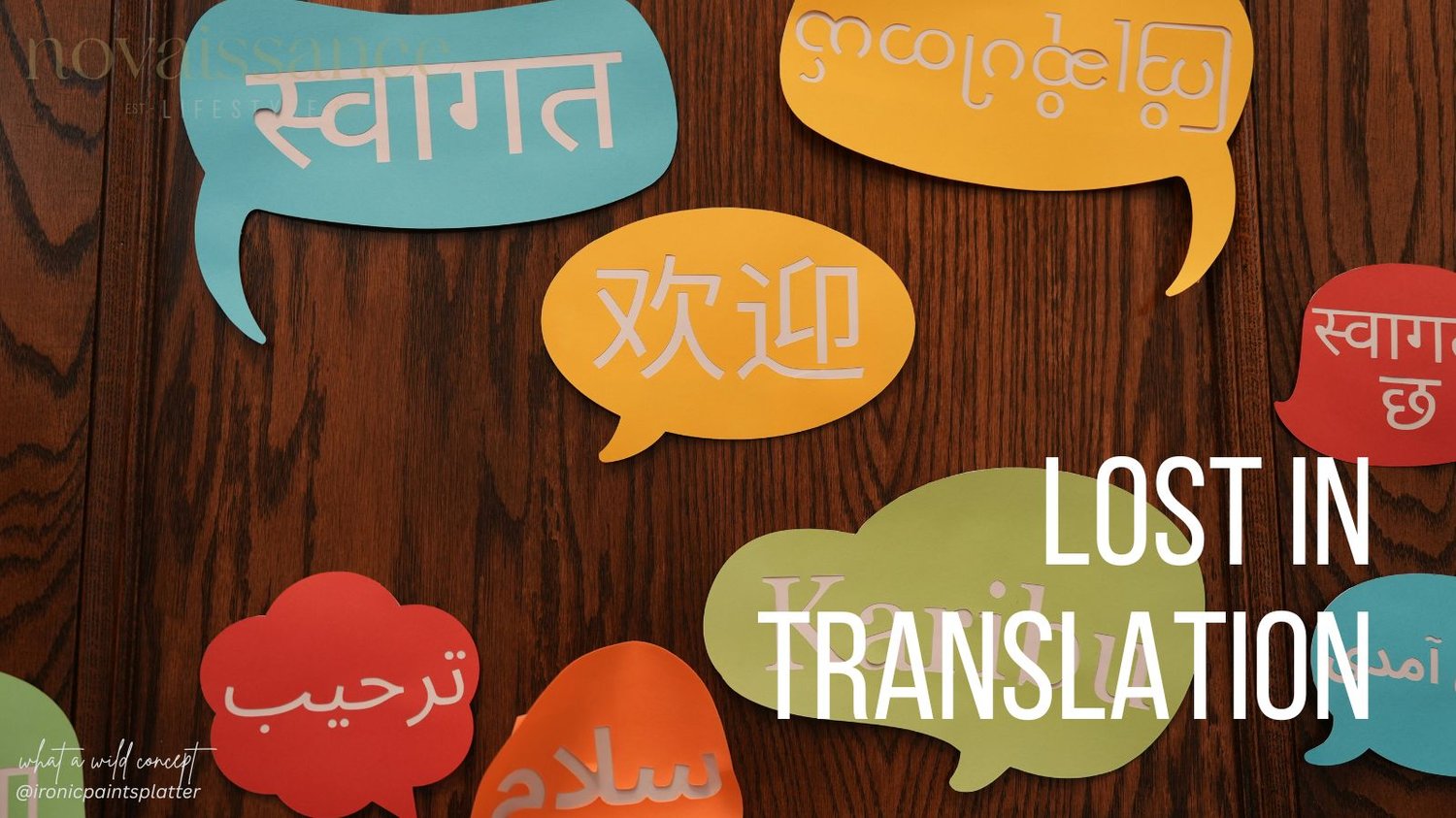
Meaning & Emotion, Lost in Translation
It’s often assumed, wrongly, by people who don’t understand or know what autism is, that autistic men “don’t have feelings” because they’re not expressive of their emotions, like neurotypical men would be.
This could not be further from the truth. Neurodivergent men experience feelings intensely. But the bridge between the feeling/emotion and the language to express it, isn’t there. Or, it’s a rickety suspension bridge over a yawning cliff and there’s a few planks missing, so getting over it to the other side is tricky, dangerous and difficult.
If however, they are allowed to express themselves in the manner they are comfortable speaking, in calm environments, where they are safe to unmask, neurodivergent men are capable of a wide range of incredible expressions.
A language analogy: a man speaking another language (Spanish, Chinese, Xhosa, take your pick) and very, very little English, in a conversation with a native English speaker, and ask him to describe something incredibly emotional, or something he’s passionate about, but specify it must be in English, what is your result? Fragmented, difficult explanations, frustration and irritation. But, if you let him speak in his own language, an amazing description full of passion and excitement emerges.
Let’s extend the metaphor: the native English speaker is able to learn languages without difficulty. The non-native speaker, is not. Therefore to reduce frustration and improve communication, the native English speaker learns enough of the non-native speaker’s language to be able to speak to him in his own language. Boom, communication problem resolved, frustration removed, relationship improved and bonus points for the native speaker on learning a new language!
Literal Language Isn’t Deficit, It’s a Communication Style
We all have certain assumptions about how language works. Neurotypicals rely heavily on implication, tone and subtext to convey their meaning. (This is exhausting, even to other neurotypicals.)
Autistic people rely on explicit, direct and literal language: what he said, is what he meant. But because the words come out in a flat affect, or the tone is neutral, a neurotypical listening to tone and subtext immediately assumes bluntness or rudeness when in fact, the neurodivergent’s default processing system is trying to maximize clarity and reduce ambiguity because they do understand and care about meaning.
One thing I learned when studying Odin’s language is that he genuinely interprets my figurative language as literal, and that causes confusion and misunderstanding.
This is a translation gap, not a lack of capacity. When I switched my figurative speech to clear, literal language, miscommunication ceased almost immediately. Literal speech is a real and reliable communication style – and not just for neurodivergents! Using literal speech in my every day communication means my meaning is immediately clear and it leaves little room for “hidden agendas” or invented drama.
The Cultural Context: Why This Is Primarily a Western Problem
The friction autistic men experience in communicating is highly culturally dependent. Western societies, especially English-speaking ones, emphasize:
- Indirect communication: hints, implied meaning, and social subtlety
- Emotionally nuanced conversation: tone, timing, and subtext often take precedence over literal meaning
- Small talk and social smoothing: a large portion of interaction is socially performative, rather than task-oriented.
If you’ve ever tried to make small-talk with an autistic man you’ll know it usually doesn’t go very well, and very often they come across as rude or blunt. They have no intention of being rude, but their language simply doesn’t allow it. Their OS doesn’t have that feature.
Again, it’s not a deficit. Because their OS can do other, fascinating and amazing things that our neurotypical one generally can’t.
Communication Isn’t One-Size-Fits-All: Autistic vs. Neurotypical Patterns
Let’s look at how the two systems prioritize information:
Communication System: Western Neurotypical
Priority: Social harmony
Example : “Are you going to finish that?”
Possible meanings: “I may want it” / “Hurry up, you’re taking too long” / “Put the plate in the kitchen”
Communication System: Autistic
Priority: Precision, truth
Example : “Are you going to finish that?”
Possible meanings: “Are you going to finish that?”
That’s it. No other meaning, no implication.
And here is why the mismatch comes in: when a neurotypical uses indirect requests like “are you going to finish that” to actually mean “put the plate in the kitchen”, a neurodivergent expects literal instruction.
The neurotypical is reading tone and subtext, and prioritizing emotion over directness, the neurodivergent is relying on the literal meaning of the words and prioritizing clarity over nuance.
There is no “one is better than the other” here. There are two different systems, each with their own pros and cons.
We just need to learn to collaborate.
The “Double Empathy Problem”: It’s Mismatch, Not Failure
The double-empathy problem has been articulated over the last decade by researchers. It suggests that communication breakdowns between autistic and neurotypicals are mutual misunderstandings, not one-sided deficits.
In other words, it’s not just that an autistic man fails to interpret others, it’s that neither side is speaking the other’s language intuitively. This creates confusion for everyone involved. That is not the same as being “bad at communicating”.
Why Male-Focused Context Matters
I am focusing specifically on male autistic communication here because it’s often interpreted through a gendered lens:
- Blunt language gets labeled as “rude” or “abrasive,” even when there’s no intention to offend.
- Lower use of social fillers like “um” and “uh” is interpreted as disinterest.
- Directness is mistaken for aggression.
- Minimal engagement in small talk is read as coldness.
Research shows that males with autism, compared to females with autism, sometimes exhibit more noticeable pragmatic differences. This is not because they’re less capable, but because they use fewer linguistic camouflage strategies to fit into neurotypical norms.
So they have a double penalty, being both autistic and male in a Western context, and it amplifies the visibility of communication differences.
Practical Strategies: How to “Translate” Between Styles
We can, however, resolve this. Neurotypicals generally have a higher ability for languages. So we can learn to “speak” the neurodivergent language, very easily. And when you treat communication differences as a translation problem, you get actionable solutions:
For Neurotypicals
- Avoid sarcastic or implied language when clarity is needed: instead of “well that went well” when something went wrong, say “That didn’t work, let’s try this instead.”
- Be explicit about expectations and context: instead of “I thought you’d figure it out” say “I need X, Y, Z done like you did A, B and C.”
- If something feels “off,” ask what was meant rather than assuming intention: instead of “That was rude”, try “When you said that, what did you mean?” (Without being defensive, you’re clarifying, not attacking.)
Real world examples:
Relationships
Neurotypical partner says:
“Do whatever you want.”
Autistic interpretation:
“Okay. I’ll make a decision independently.”
Actual meaning:
“I’m upset and want you to ask what I need.”
Translation fix:
Partner says:
“I’m upset and need reassurance right now. Can you check in with me before deciding?”
Social Settings
Neurotypical says jokingly:
“Wow, you’re really talkative today.”
Autistic interpretation:
Neutral observation.
Actual meaning:
Light teasing or discomfort.
Translation fix:
Say:
“I’m feeling overwhelmed and need a quieter moment.”
Autistic men don’t need to learn neurotypical indirect communication to function well. Expecting them to do so increases anxiety, masking, and burnout, without improving understanding.
When communication is explicit, autistic men perform better, misunderstandings drop, and relationships stabilise. This isn’t special treatment. It’s efficient communication design.
If a system only works when everyone can read minds, it’s a bad system.
Yet autistic men are routinely told they must learn implication, subtext, and social nuance to “meet others halfway,” placing a disproportionate cognitive burden on them and treating ambiguity as inevitable (it’s not, we have a choice).
A fairer model is simple: the person with the expectation states it, the person with the need names it, and meaning is carried by words rather than tone or implication. That isn’t lowering the bar, it’s making the bar actually visible.
Direct, explicit communication is the most reliable way to exchange information, in any conversation. And when meaning is stated clearly, autistic men don’t struggle to communicate at all, in fact they thrive.
So the issue isn’t an inability to adapt, but the neurotypical insistence that unnecessary ambiguity is “normal”.
Communication Is a Bridge
Autistic communication isn’t a failure of empathy or intelligence. It’s a different operating system for making meaning. When we frame misunderstandings as translation errors rather than personal flaws, we give autistic men, and the people who care about them, the language tools to connect meaningfully.
He’s not “weird”. He speaks in a different dialect of human language: one rooted in clarity, precision, and literal meaning. The misunderstandings are signs of difference, magnified in Western cultural contexts where indirectness and social nuance dominate, and anything that’s different to the norm is immediately classified as “wrong”.
Once we recognize and treat that difference with respect and curiosity, the “barrier” between communication becomes a bridge.
Let us, as neurotypicals, do the adapting. It is easier for us, fairer for autistic men, and the result is communication that is clearer, cleaner, and more honest.
-Nova
Comments ()