

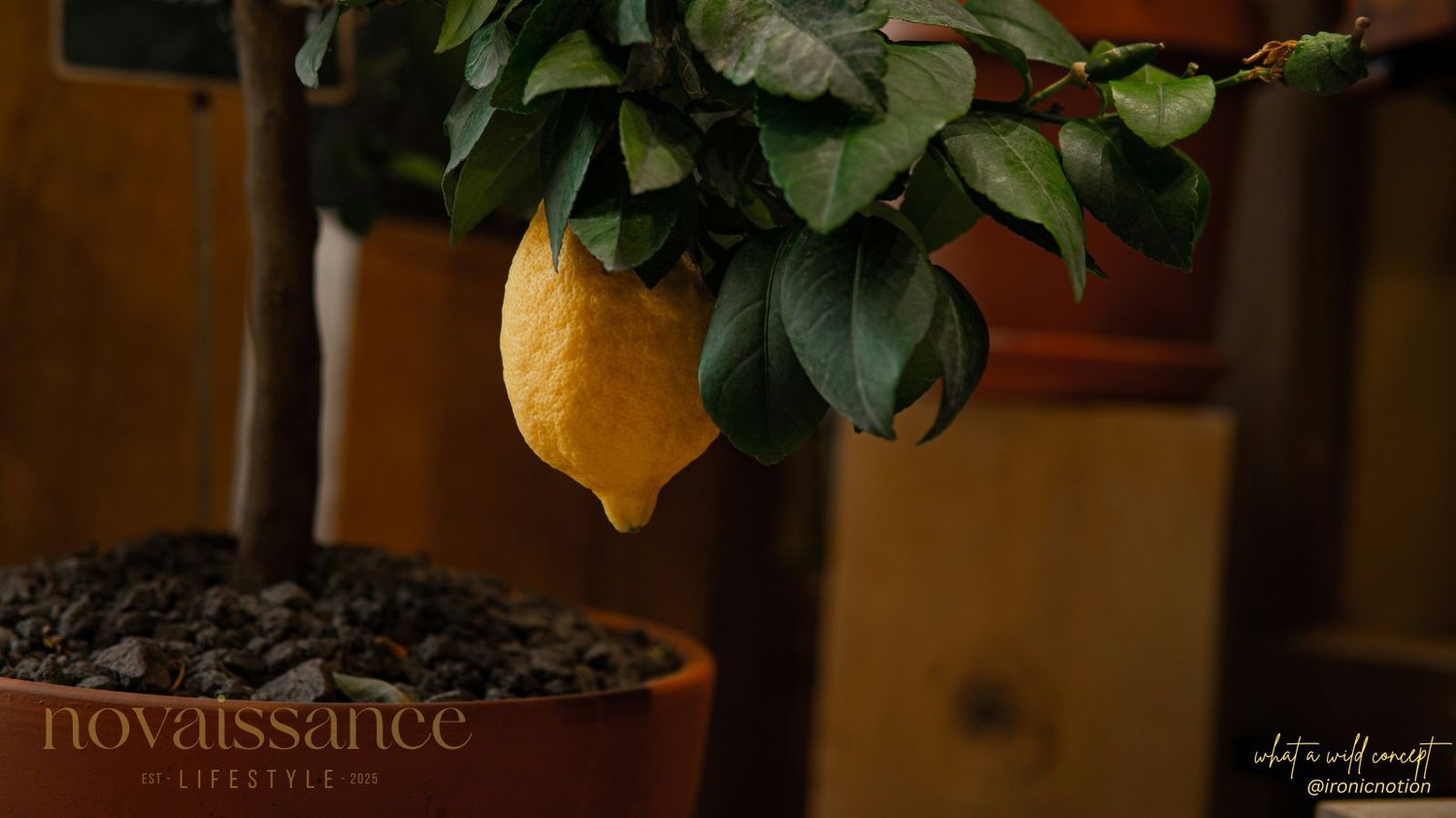
Growing a lemon tree in a container is one of the most rewarding things you can do in a small garden, on a balcony, or even a patio. It gives you citrus-scented flowers, glossy leaves, and — with care — fresh lemons. Here's how to get started (and keep it healthy):
1. Choose the Right Lemon Tree and Pot
- Tree: Go for a grafted or budded lemon tree from a reputable nursery. You want a healthy tree with a good rootstock.
- Variety: Meyer lemons are especially good for containers because they stay more compact.
- Pot: Use a large container with good drainage holes. Clay pots are ideal because they’re porous and help prevent waterlogging.
- Lift the Pot: Raise the container slightly off the ground (on bricks or stones) to improve airflow and drainage.
2. Use the Right Soil Mix
- Don’t use plain garden soil. Use a well-draining potting mix.
- For potted lemons, a mix of compost + coco peat + vermiculite (or perlite) works well.
- Make sure the soil is loose enough so water doesn’t just sit.
3. Position and Light
- Lemon trees want full sun. Put your pot in the sunniest spot you have.
- In colder or frosty zones: be ready to move the pot when it gets too cold.
4. Watering
- Water deeply, but don’t let the soil stay soggy. For potted lemons, check the top few centimeters of soil: when it’s dry, it’s time to water.
- In very hot weather, you may need to water often.
- If the container dries out completely, leaves may drop.
- Mulch the soil surface (in the pot) with ~5 cm of mulch to help retain moisture.
5. Fertiliser / Feeding
- Lemon trees are “greedy” — they need good nutrition.
- Use a citrus-specific fertiliser. Look for one with micronutrients like iron, zinc, manganese.
- If you’re in South Africa: feed every three months for potted lemons.
- When applying: spread fertiliser under the dripline (the area under the leaves), not too close to the trunk.
6. Pruning & Care
- Prune out dead, spindly or tangled branches to improve shape and light.
- Remove “water shoots” from below the graft union (these are often non-fruiting rootstock growth).
- Do light shaping pruning in early spring or late fall, when the tree is more dormant.
- Avoid heavy pruning too often — lemon trees do better with moderate, thoughtful cuts.
7. Dealing with Pot-Bound Roots
- Over time, the roots can fill the pot. That stunts growth.
- When repotting: choose a slightly larger pot, refresh the soil, and carefully loosen the root ball.
- The best time to repot is early spring, when the tree is ready to bounce back.
8. Watch for Pests & Common Issues
- Citrus trees can attract pests like psyllid, scale, and aphids.
- Keep an eye on the underside of leaves. Use organic or insecticidal soap if needed.
- Yellow leaves can signal a nutrient deficiency — especially of magnesium or iron. Using a balanced citrus feed helps.
9. Overwintering (If It’s Cold)
- If your region gets cold: move the potted tree indoors before freezing temperatures.
- Reduce watering in winter, but don’t let the plant dry out completely.
- Protect from drafts and sudden temperature drops.
Bonus: When & How to Prune Gardenias
Since gardenias are also a favorite, here’s a quick guide :
- Best Time to Prune:
- Prune immediately after the finishing of its main flowering cycle (late spring / early summer).
- Avoid pruning in fall / winter — you might remove developing flower buds.
- How Much to Cut:
- Do light trimming; don’t remove more than one-third of the plant at once.
- Remove dead, damaged, or crossing branches to improve airflow and shape.
- After Pruning Care:
- Water well.
- Maintain a slightly acidic soil (gardenias like pH ~5–6).
- Apply mulch around the base to retain moisture (but don’t pile it on the stem).
Why Gardening Matters
- Tending to a lemon tree or gardenia is therapeutic: daily or weekly watering, checking soil, pruning — it draws you out of your head and into your hands.
- The slow, gentle care of a slow-growing citrus or flowering shrub reminds you that growth takes time.
- Even when progress isn’t visible, the routine itself is a form of grounding: “I watered. I pruned. I showed up.”