
When an indoor plant struggles, most people look first at light or watering habits. While those factors matter, one of the most overlooked causes of poor growth is the soil itself. Potting soil is not just something that holds a plant upright — it is the environment in which the entire root system lives. If that environment is wrong, no amount of careful watering or perfect lighting will fully compensate.
Choosing the right potting soil for indoor plants is about understanding how roots function, how moisture and air move through a container, and how different plants evolved to grow. Once you understand these basics, selecting or adjusting potting soil becomes far less mysterious, and plant care becomes much more predictable.
Why Indoor Plants Need Special Soil
Indoor plants live in containers, which is a fundamentally different environment from growing in the ground. In nature, roots can spread freely, excess water drains away, and soil organisms help regulate moisture and nutrients. In a pot, everything is constrained. Water has only one way out, air enters slowly, and roots are limited to the space you provide.
Because of this, soil that works outdoors often fails indoors. Garden soil is usually too dense, holds too much water when confined, and compacts over time. This leads to poor drainage, lack of oxygen around the roots, and increased risk of disease. Indoor plants need a soil mix that balances three things at all times: moisture retention, drainage, and airflow.
Potting soil is designed to create this balance — but not all potting soils do it equally well.
What Potting Soil Actually Is
Despite the name, potting soil usually contains very little actual soil. Most modern potting mixes are soilless or nearly soilless, made up of organic and mineral components chosen for how they behave in a container.
A typical potting mix may include:
- Organic materials for structure and nutrients
- Lightweight components that improve drainage and aeration
- Ingredients that hold moisture without becoming waterlogged
The goal is to create a stable, loose medium that supports roots, holds water long enough for the plant to absorb it, and still allows excess moisture and carbon dioxide to escape.
Understanding the Core Components
Knowing what goes into potting soil makes it much easier to choose the right mix for your plants.
Organic Matter
Organic matter forms the backbone of most potting soils. This can include compost, aged bark, leaf mould, or other decomposed plant material. It provides nutrients and helps retain moisture.
Well-processed organic matter should smell earthy, not sour or rotten. Poorly composted material can break down further in the pot, reducing airflow and causing the soil to collapse over time.
Peat Moss or Coco Coir
These materials are used primarily for moisture retention. They absorb water and release it slowly, preventing the soil from drying out too quickly.
Peat moss has been widely used for decades but is increasingly replaced by coco coir, which is made from coconut husks. Both perform a similar function, though coco coir tends to rehydrate more easily after drying out.
Aeration Materials
Roots need oxygen as much as they need water. Aeration materials keep soil from becoming compacted and allow air to circulate.
Common aeration ingredients include:
- Perlite
- Pumice
- Coarse sand
- Grit or small gravel
These materials create air pockets that prevent water from sitting around the roots for too long.
Fertilisers and Nutrient Additives
Some potting soils include slow-release fertiliser pellets or nutrient-rich compost. These can support initial growth, but they are not a long-term solution. Over time, nutrients are depleted, and most indoor plants will still need supplemental feeding.
If you prefer more control over fertilising, a soil without added fertiliser can be a better option.
Matching Soil to Plant Types
There is no single potting soil that works perfectly for every indoor plant. Different plants have different root structures and moisture needs, and soil should reflect that.
Tropical Foliage Plants
Plants such as monstera, philodendron, pothos, and peace lilies come from environments where soil is rich but well-drained. They prefer a mix that holds moisture but never feels soggy.
A good tropical plant mix is:
- Light and airy
- Rich in organic matter
- Enhanced with perlite or bark for drainage
Succulents and Cacti
Succulents store water in their leaves and stems and are highly sensitive to excess moisture around the roots. Standard potting soil is almost always too dense for them.
Succulent soil should:
- Drain extremely quickly
- Contain a high percentage of sand, grit, or pumice
- Dry out between waterings
Ferns
Ferns tend to have fine root systems and prefer evenly moist soil. They do best in mixes that retain moisture without becoming stagnant.
Finer-textured potting soil with good organic content works well, as long as drainage is still adequate.
Orchids and Epiphytes
Orchids do not grow in soil at all in nature. Their roots cling to bark and absorb moisture from the air.
They require:
- Chunky, bark-based mixes
- Excellent airflow around the roots
- Minimal fine particles
Using regular potting soil for orchids will almost always lead to root failure.
Why “All-Purpose” Potting Soil Often Falls Short
All-purpose potting soil is designed to work acceptably for many plants, not optimally for any one plant. While it can be convenient, it often holds too much water for indoor use, especially in low-light conditions.
Common problems with generic potting soil include:
- Poor drainage in small pots
- Compaction over time
- Inconsistent particle size
- Over-retention of moisture
For many indoor plants, all-purpose soil works best as a base that is amended rather than used straight from the bag.
Improving Store-Bought Potting Soil
One of the simplest ways to improve plant health is to adjust potting soil before using it.
A basic indoor plant mix can be made by combining:
- 2 parts potting soil
- 1 part aeration material (perlite, pumice, or coarse sand)
- 1 part moisture-retaining material (coco coir or fine bark)
This improves drainage, airflow, and moisture balance without requiring specialised ingredients.
For plants that prefer drier conditions, increase the aeration component. For plants that prefer consistent moisture, increase the moisture-retaining component slightly.
The Role of Drainage Holes
Even the best potting soil cannot compensate for a pot without drainage holes. Excess water must be able to escape, or the soil will eventually become saturated.
If a decorative pot has no drainage holes, it should be used as a cache pot, with the plant kept in a removable inner pot that can drain freely.
Good soil and proper drainage work together. One without the other leads to problems.
Signs Your Potting Soil Is Wrong
Plants often show subtle signs before serious damage occurs. Pay attention to these indicators:
- Soil that stays wet long after watering
- Soil pulling away from the sides of the pot when dry
- A sour or unpleasant smell
- Fungus gnats appearing repeatedly
- Leaves yellowing despite correct watering
These symptoms often point to soil structure problems rather than watering mistakes.
Repotting and Soil Refreshing
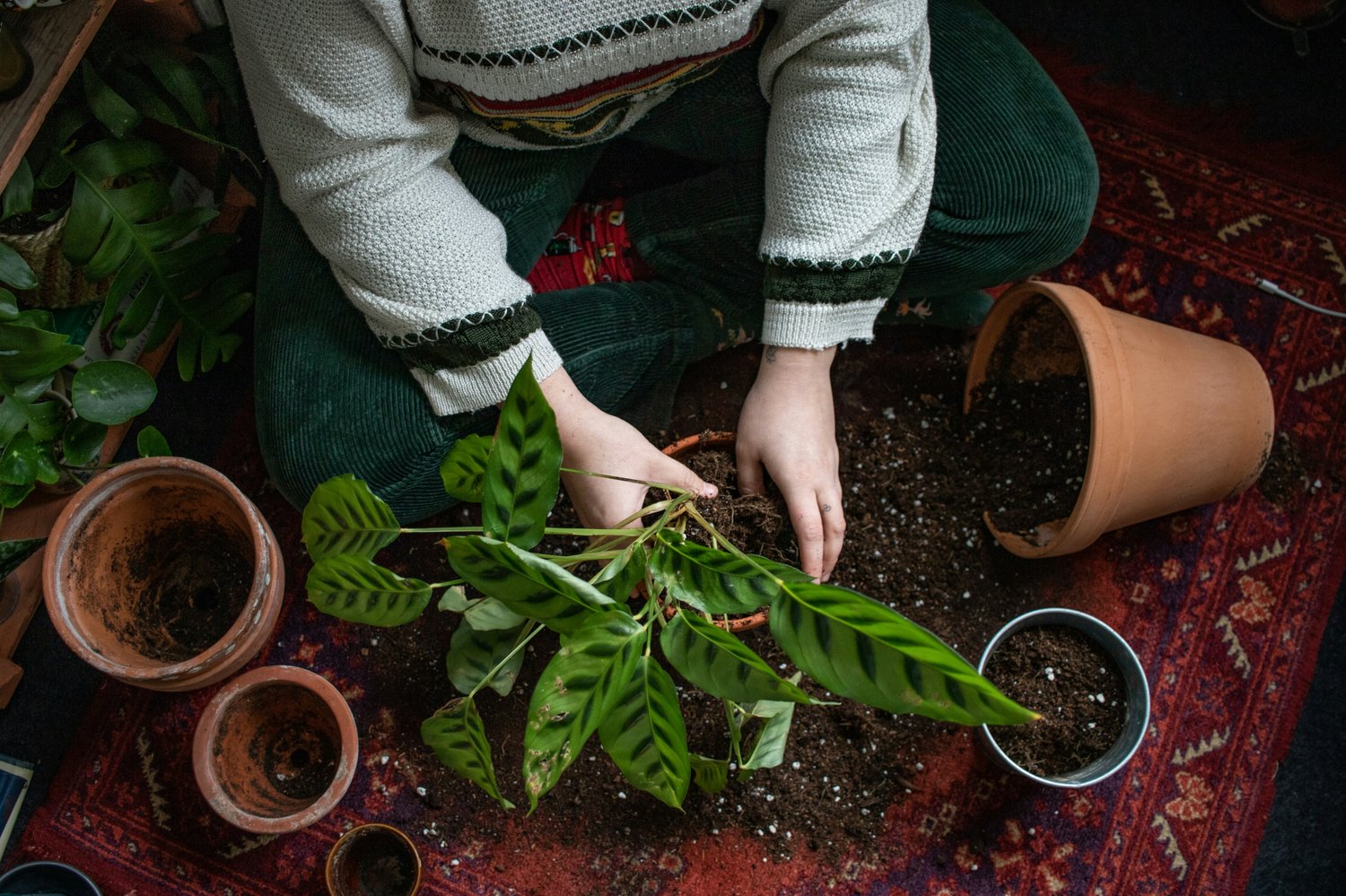
Potting soil does not last forever. Over time, organic components break down, reducing airflow and drainage. Even healthy plants benefit from fresh soil every one to two years, depending on growth rate.
Repotting allows you to:
- Replace compacted soil
- Inspect root health
- Adjust soil composition if needed
Fresh soil often results in noticeable improvement within weeks.
Final Thoughts
Choosing the right potting soil for indoor plants is less about finding a perfect product and more about understanding how soil behaves in a container. Roots need oxygen, consistent moisture, and physical support — and soil is the medium that provides all three.
When soil is right, plants become more forgiving. Watering mistakes matter less, growth becomes steadier, and problems are easier to diagnose. Good potting soil does not draw attention to itself. It simply allows the plant to do what it is designed to do.
Healthy plants begin below the surface.