
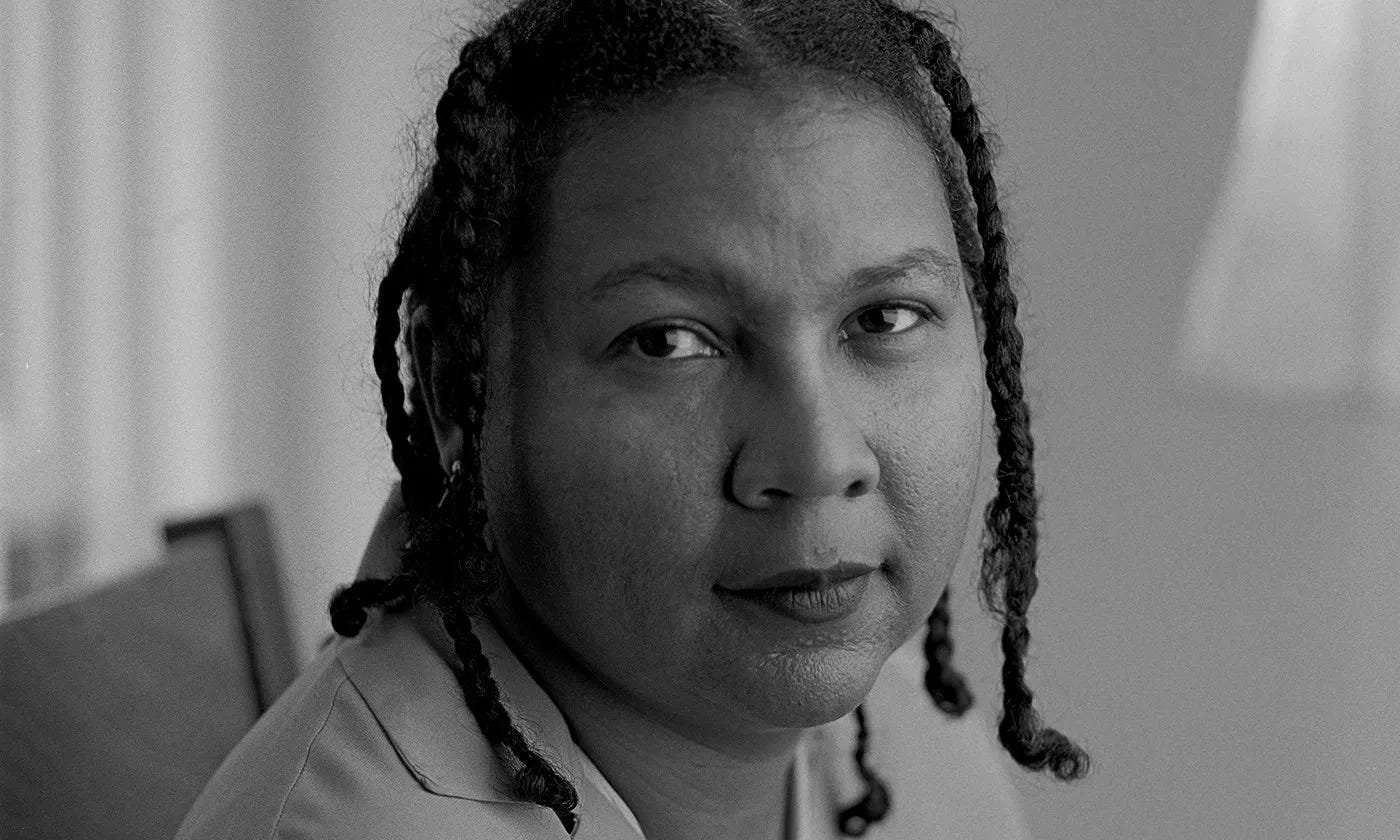
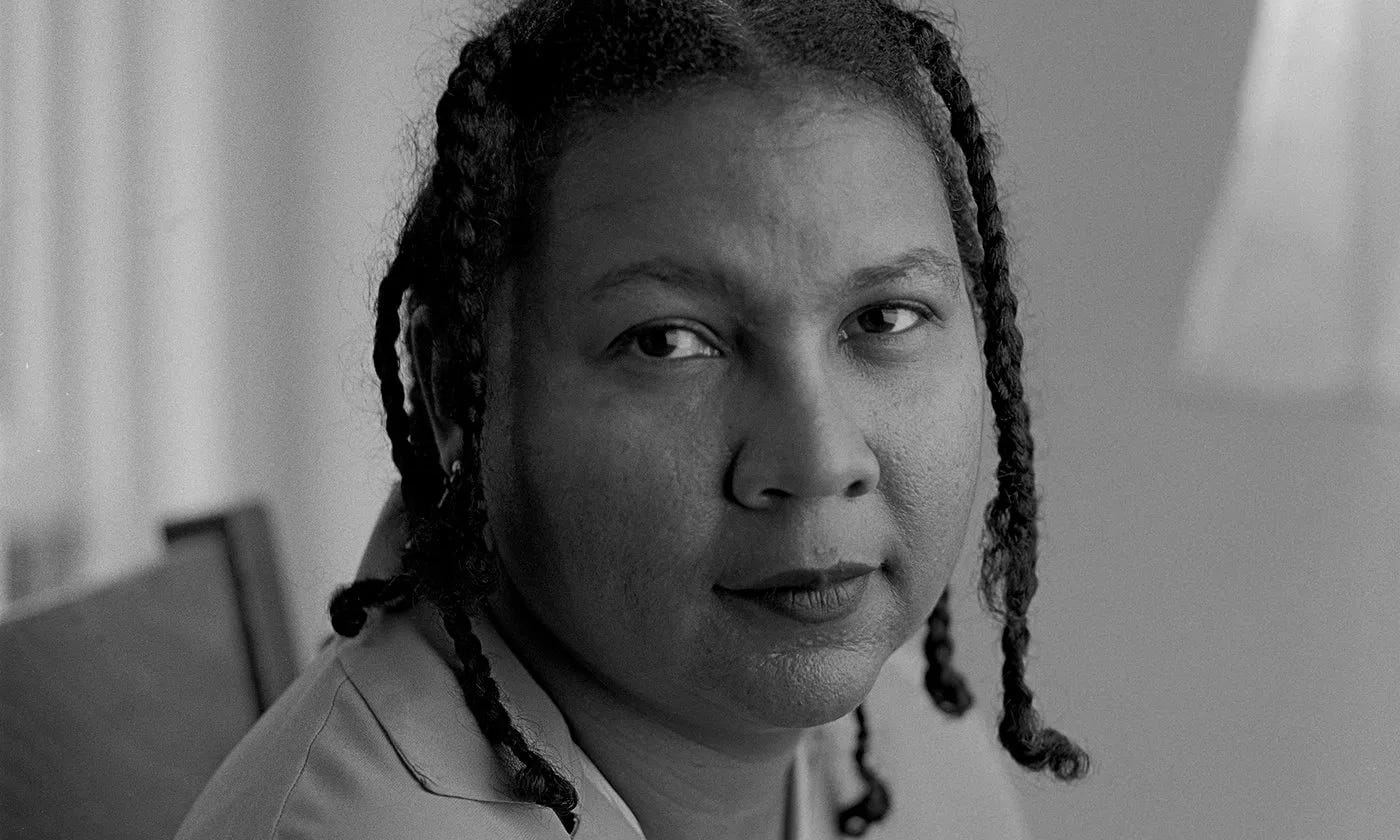
*There will be no bell hooks slander in this reflection*
bell hooks once wrote, “Knowing how to be solitary is central to the art of loving. When we can be alone, we can be with others without using them as a means of escape.”
This line is often quoted as a personal-development mantra to master privately so we don’t burden others with our unmet needs. But solitude, as she frames it, is not a self-help exercise. It is actually a confrontation. Go with me for a moment…
Solitude places you face-to-face with the mechanics of human connection. In other words, it’s how attachment forms, how you feel longing in the body, and how governing systems shape what you believe love is allowed to be. When you are solitary without numbing yourself, there is no distraction from the larger truth that our personal lives are not isolated problems to be “fixed.” They are collaborative circumstances unfolding within a structure that has been distorting relational math for centuries. To be solitary in this way is to see clearly.
What’s also inspiring me to unpack this right now is Charles Dickens’ short story, The Signalman. It’s also available to watch as a short film. YouTube has been recommending it to me for the past week, and today I decided to watch it. It’s a ghost story about premonition, madness, and inevitable tragedy. I personally am not drawn to those types of stories or films, but there was an intuitive nudge that pulled me in to watch. I fervently follow those nudges. Beneath the surface, I realize this story has something most of my video messages and digital essays lately have been pointing to so clearly. The story has more to do with a man who is positioned as a human intersection within a system that can’t hear him.
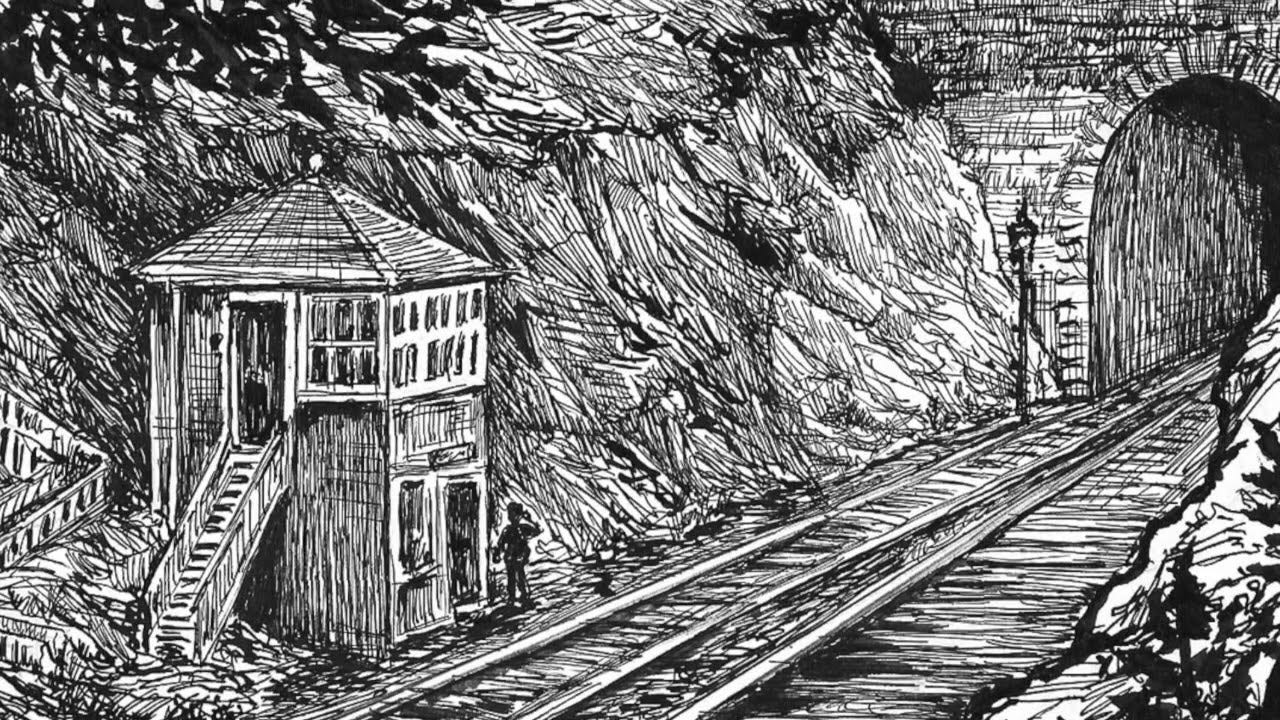
The signalman lives alone in a narrow cutting beside a railway track. His job is to watch, to warn, and to prevent disaster. And yet, when he begins receiving signals (eerie warnings that something is off), there is no structure around him capable of responding in time. He asks the only rational questions available: Why show me the warning if nothing can be done? Why not tell me where it will happen? Why me?
It became clear to me that this man is not afraid of death. He is exhausted by the suspension of clear answers. The tragedy of The Signalman is not that disaster happens. It’s that clarity arrives without a clean landing. The system around him continues to move at full speed in a distorted way, while he is left isolated, self-contained, and slowly destabilized by the weight of holding awareness alone.
To bring it back to hooks’ quote, this is what solitude reveals when it is lived rather than romanticized. Being solitary does not mean being disconnected. It means being undistracted enough to notice how human connection has been engineered. When you are alone long enough—truly alone, without numbing, without constant relational substitution—you begin to see how urgency is mistaken for intimacy, chemistry is confused for compatibility, “support” arrives in fragments that keep you functional but never rested, and how systems subtly train you to blame yourself for relational exhaustion rather than question the structure producing it.
We live inside a relational grid that rewards half-connection and penalizes coherence. In this grid, being too clear is destabilizing. Being too precise is inconvenient. And needing clean reciprocity is often reframed as being “too much.” This gets misidentified as “perfectionism.” Everything is perfect. But not everything is honest.
Those who can feel this mismatch early often become human intersections where pressure accumulates. Their bodies register what people and systems refuse to process; symptoms appear, and fatigue sets in because the connection or the structure offers no middle ground. Like the signalman, they are alert not by choice, but by necessity.
Solitude in this context is containment. It is the place where one learns to hold clarity without collapsing into self-blame or spiritual bypassing. It is where you stop using others as escape routes and start seeing how deeply relational life has been shaped by extraction.
bell hooks understood solitude as preparation for ethical, honest connection. When you know how to be solitary, you no longer settle for resonance that cannot calibrate into shared life. You become capable of being with others without turning them into stabilizers, saviors, or distractions from systemic strain.
The tragedy of The Signalman is not inevitable. It becomes inevitable only because the system refuses to reorganize around honest math in real time.
What we are remembering—slowly, collectively—is that clarity without structure costs lives and sanity. Solitude, when misunderstood, can look like madness to those still insulated by distraction. But solitude, properly held, is the recalibration point. It is where we recognize that loving well requires more than personal growth. It requires structures that can hear signals, share load, and respond before collapse.
Until then, many of us remain in our own signal boxes—watching, documenting, holding the line—not because we want to, but because distorted math has its own timeline for catching on to the rhythm of honest math. And still, we remain intact.
In the meantime and between time, please be kind and gentle with yourself, as I do the same.
Comments ()