
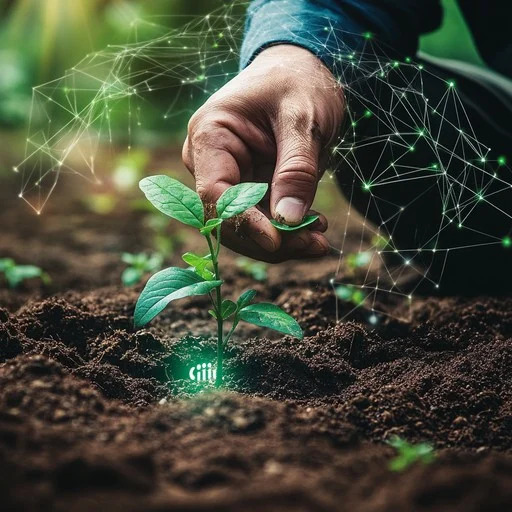
This article was sparked by recent conversations circulating on social media around digital justice and algorithm culture. These conversations were informed by the work of scholars like Safiya Umoja Noble, whose groundbreaking research on algorithmic oppression, and André Brock, whose critical examination of Black digital practice has added important texture to our understanding of race and technology. Their work, along with others in the digital justice space, has been naming the extractive architecture of digital platforms with increasing precision.
However, what I want to do here is ground that conversation into something more personal and more practical. I want to offer a different call to action that isn’t about revolt or rejection but honest discernment and nervous system integration as a form of practical resistance.
What was once enforced through land ownership, legal theft, and physical containment is now running through platforms, algorithms, and attention economies. The mechanisms look very different, but the extractive logic is very identical. Most people participating in it as creators, consumers, and users are doing so because the material cost of not participating is genuinely high.
Colonial extraction was fundamentally about who owned land, who worked it, and who received the harvest. The plantation model required human laborers, an overseer to manage output, and an owner to collect the yield. The workers didn’t own the land or the harvest. They owned only the labor they put in, and often not even that.
The story told to justify this arrangement was one of civilization, order, and natural hierarchy. The enforced story was an intentional miscontextualization. It was not an honest account of what was happening but a narrative designed to make the arrangement feel inevitable and correct.
What most people don’t examine honestly is that this template did not only extract from enslaved and colonized people. It was extracted from poor white and working-class people across Europe long before it was exported globally. The colonial template colonized its own first. This is part of why so many people inside it can’t see it clearly and are going to great lengths to not reconcile if they do. The disconnection from land, honest community, and genuine self-sufficiency predates the awareness of it.
The digital platforms now own the land. Every creator, user, and consumer on a digital platform is working on land they don’t own. The content (the labor) gets uploaded. The platform controls distribution. The algorithm decides who sees what, when, and how often. The attention generated becomes the harvest. And the harvest gets sold to advertisers, data brokers, and the infrastructure of the attention economy.
The creators receive some visibility, income for some, and community for others. Just enough to keep the labor coming and just enough to make the arrangement feel like an opportunity rather than an extraction.
This is algorithmic farming. An algorithmic auction. It runs on the same logic as every extractive template before it and is currently in use. It's where it draws the focus to the preferred crop at the top, distributes just enough at the bottom to maintain the labor supply, and controls the story about what’s actually happening.
The story currently being told is one of democratized access, creative independence, and community building. Just as genuine human connection existed inside every previous extractive container, the story exists inside the template. The template doesn’t require total misery to function. It requires enough benefit to maintain participation and enough control to shape what gets seen.
Here’s the part of the conversation that’s the hardest to sit with in honesty. The algorithmic farming and auctioning work as effectively as they do because of what people bring to it from inside themselves. When someone is operating from urgency and desperation, trying to meet basic needs, trying to be seen, trying to validate their worth through external confirmation, that internal state becomes the fuel the platform runs on.
We're constantly facing urgency clicks. Desperation engagement. Fear-based shares. Rage-bait comments. The platform didn’t create those internal states. The extractive template that preceded it did. They did it through the systematic underfunding of basic needs, the moralization of scarcity, and the manufactured competition among people who share the same foundational deficit.
But the platform is very good at finding those states and amplifying them. As well as keeping people in the scroll because the scroll is managing something the internal world hasn’t resolved yet.
It’s all an honest accounting of what’s actually happening when someone reaches for the phone at lonely hour, not because they’re looking for something specific, but because the discomfort of stillness is louder than the discomfort of the feed.
The internal world that contributes to the external extraction is the part that the digital justice conversation doesn’t always reach. Naming the platform’s harm is necessary and insufficient. The platform is harvesting what’s already present. Reducing what’s available to harvest through honest nervous system integration and interrogating the beliefs that make urgency feel like the only available mode are the individual contributions to disrupting the cycle.
Please be careful if you're reading this as an ultimate solution. It’s a practice.
None of this is a call to leave the platforms, reject the digital economy, or position the current template as purely evil. That framing is its own form of moralization. It requires a villain, a rebellion, and a clean exit that doesn’t actually exist for most people navigating real material constraints.
What this is is an invitation to see the template clearly, without the moralized story it tells about itself.
Racism, classism, colonialism, and capitalism aren’t inherently wrong in the sense that stories are inherently wrong. They are deliberately miscontextualized accounts of how power moves, how we give our power away without questioning the moves, and who gets to hold it after it's been given away. Seeing the miscontextualization doesn’t require rejecting everything inside those containers. It requires being honest about what the containers were built to do and who they were built to serve.
You can participate in the digital economy with that clarity. You can create content, build community, and generate income through platforms you don’t own. You can do all of that while being honest about the extractive current running underneath it. All while building, slowly and practically, toward containers that don’t require your desperation to function. Practice makes progress. Not perfection.
That’s discernment, and when it’s practiced consistently, and from a grounded space of honest self-connection, it changes what you’re willing to keep feeding.
This is the long-winded way of saying: change the way you see things, and the way you see things changes.
In the meantime and in between time, please be kind and gentle with yourself, as I do the same.
Comments ()