
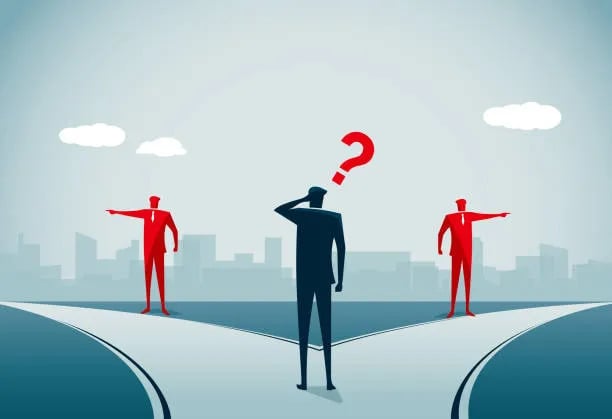
We are not as socially or technologically advanced as we think. We’re actually conveniently policed in our collective grief-avoidance. The bar for what counts as advancement consistently gets lowered to whatever the current dysregulated, unintegrated system can produce, and then it’s celebrated as progress.
If emotional regulation and metaphysics were part of our global human developmental training, many things within our society would look different today to reflect that education. Three key areas come to mind. Let’s unpack them here.
1.Conflict would be recognized as a regulatory event before it becomes a political one.
Most policies, wars, laws, or punishments are driven by unregulated emotional systems moving through those in power. If emotional regulation were taught as a basic skill as part of everyday learning, the first question in any big conflict would be: What’s the emotional state of this system? Escalation would be seen as a physical response before it’s viewed as an ideological fight. Everything from diplomacy to justice and government would have a very different vibe.
2.Death, grief, and discontinuity would be structurally integrated rather than structurally avoided.
Metaphysical training is often boxed into esoteric philosophy. In practical terms, it’s about a society that's gotten comfortable with fluidity enough to stop organizing entire economies and political systems around the fear of it. Consumerism, resource extraction, and hoarding are ways we avoid grief. When people remember at the cellular level to accept endings, change, and the unknown as natural parts of life, they tend to think very differently about accumulation, legacy, and what it even means to feel secure.
3.The body would serve as a main focus of epistemology, not just a productivity unit.
Imagine if our felt sense of resonance or discomfort carried real authority. Fields like medicine, education, law, architecture, urban design would be guided by questions like: How does this affect our nervous system over time? Instead of focusing on productivity, our environments would prioritize body-level truth and well-being. People who are good at reading body wisdom—often those from traditions that never separated the body from knowledge—would be recognized as experts rather than dismissed as non-scientific or emotional.
We wouldn’t just be smarter about these things. The entire scaffolding of what counts as intelligence, safety, progress, and maturity would be restructured from the ground up.
Instead, we have what we have in this timeline of our humanity. And it’s a grief those with an awareness of this have to bear.
What we have are systems that move faster than the people inside them. Conflict is seen as just political trouble rather than a sign of a deeper regulatory concern. Grief gets turned into consumption before it can really be felt. Bodies are treated like machines for output while their intelligence gets systematically dismissed. We’ve got technology that speeds up our unresolved issues without actually clarifying anything. Our institutions are built by unintegrated nervous systems, for unintegrated nervous systems, trained to keep the chaos going just enough to sustain itself. And the social structure is so good at avoiding its own depth that it’s almost forgotten that depth was ever an option.
The grief is in the space between what humans are naturally capable of and what we’ve mostly decided to create instead. People who see that gap can't forget it. They just get used to carrying it and reminding those opened enough to listen and integrate while they keep moving forward.
Growing up, I kept silent. I called myself shy and an introvert, but that wasn’t really true. I had a lot to say, but I was often silenced. Sometimes what I wanted to say was pretty direct, even if it was coming from a pure and clean place. I soon realized most people don’t really want sharp or direct honesty. They want it softened up or made messy enough to match their own views. That’s when I realized something else: most people don’t really have a stable middle ground. They are heavily policed in either extreme.
This made it extremely difficult for people to connect with me. I could connect with them, but who I truly was underneath my introverted mask had no clean external reflection. So, I played the part—the cute, quiet boy with the big head and the dimples. Then I started singing. That became the safe space for my voice and the deeper parts of myself I had to meet later on. Singing helped me navigate everyone else’s masks.
But life had an intelligent way of taking off my mask while still letting me keep my dignity. I got back to writing—something I did before my music artist journey. That moved into creating digital content, then books, then recording music. All the while, I didn’t even realize I was building an entire ecosystem that’s become its own kind of filter relationally, materially, and financially.
The filter shows where someone really stands. Each stage of access gives a hint about their actual progress, not just where they think they are or want to be. The digital content naturally sorts itself. The paywall isn’t extractive; it’s an honest signal from the nervous system. Basically, being willing to pay shows someone has moved beyond just feeling it and is actually invested.
It's like the Batman signal lighting up in the sky. Those who see it and relate to it can follow along. But only the curious, who are on their own similar journey, can truly share and resource what’s inside. This takes away a lot of the hard work of persuading or marketing to people who aren’t ready. It’s allowed me to stay open and honest, trusting that the right people will cleanly locate themselves through my clarity.
Comments ()