
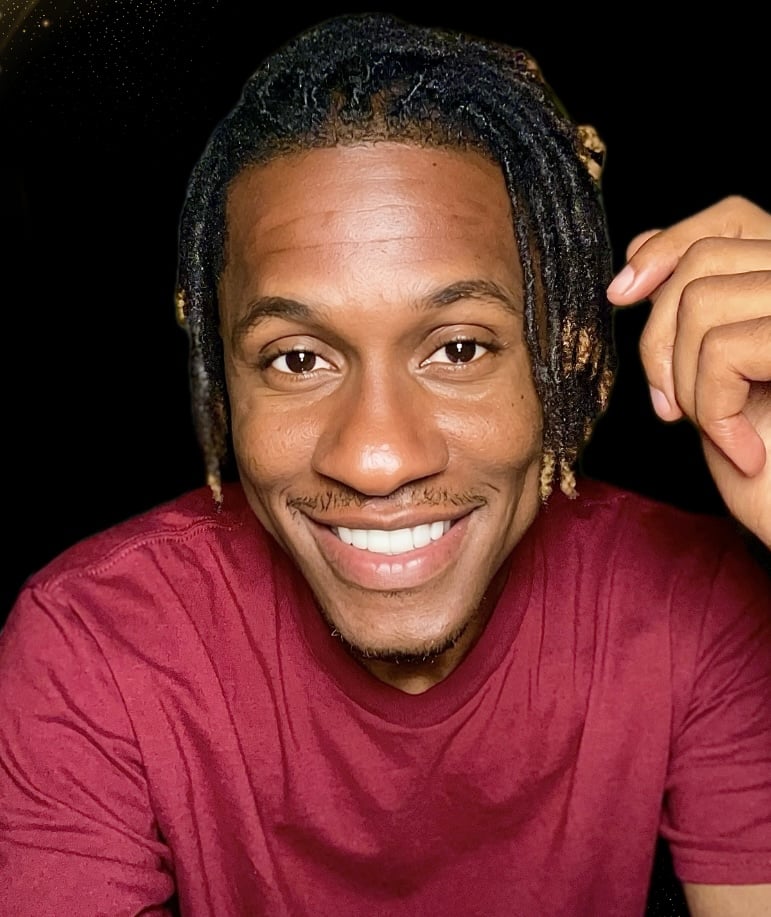
People assume that being extremely particular about connection means I'm chasing perfection. For you astrology girlies and fellas, I’m a Virgo, Taurus, and Aquarius. For you Human Design enthusiasts, I’m a Manifestor. For you MBTI folks, I’m an INFP. For you numerology folks, my life path number is 9. For you church folks, I’m a believer in the gospel of Jesus Christ. Now, I’m laying all of that out because I’m about to unpack how limiting it is in this conversation. I want to walk through what's actually happening, because none of those are it, and the difference matters.
Connection isn't a checklist
It’s good that those frameworks are used as tools for self-exploration, but they are not compatibility tools for relationships. As a result, I don’t run them as a mental checklist of traits. Anyone who does, you’re telling me more about what’s not processed within you than what my cosmic toolkit is saying about me. However, on paper, I do have non-negotiables. I'll name them plainly so I can show you why they aren't what they look like:
No alcohol. No substances. No smoking or vaping. No reliance on pornography. And I practice celibacy because I prefer an equal in that practice, at least a full year.
Read as a checklist, those things look rigid. Read correctly, it's the opposite. Because what I'm screening for isn't the presence or absence of the behavior. It's someone's relationship to it, which reveals their relationship to their respective cosmic toolkit. It shows me whether the stimulant is doing a deeper job or covering a gap between them and something they can't sit with. Those aren't my coping mechanisms, and I don't want to share intimacy with someone running those mechanisms actively, because I'd be sharing a field with an avoidance pattern I don't carry and would have to calibrate for both of us.
A checklist screens for fixed traits. This screen for relationship to those traits is a completely different instrument. Two or more people with identical habits read completely differently through it. The habit isn't the data; what the habit is in service of is the data.
This is also exactly why I don't use dating apps anymore, and why I don't use social media as a dating profile. Dating apps are build-a-bear. People assemble an avatar with the right photos, the right prompts, the right curated traits, and the avatar exists to fulfill an often unprocessed story about who they're supposed to be and who they're supposed to want. None of it reveals the nuance that an honest conversation would. You're matching with the costume, not the person underneath it.
And when you've actually processed some things, and you're living from a state of unmasked honesty, you start to read as "rare," because so few people are operating without the avatar. That rarity bleeds into real-life connection, too, where the barriers are even thicker. Online is more direct because the buffer is thinner. In real life, you have to move through physical textures, scents, niceties, and formalities, and it's far easier to hide inside all of that and lean on the social stimulants to get through it.
What I'm actually reading
When someone enters my awareness with a charge, I pay attention to that pull because it usually means there's something to see, which prompts me to start reading patterns beyond the surface.
If someone's emotionally guarded and deliberately steers away from sensitive topics, I get curious about their relationship to sex and pornography. That sounds unrelated. It isn't. A lot of emotionally guarded people use it to suppress the need for intimacy, because it lets them compartmentalize everything tender into something contained and manageable. The guardedness and the habit are often the same move.
If someone's forward, extroverted, and/or endlessly accommodating, I get curious about their relationship to alcohol and substances. The ease might be chemically assisted. Or the accommodation itself might be the coping mechanism for something underneath.
I'm not primarily concerned with the substance. I'm concerned about what's being avoided and whether it has a high potential to bleed into a connection with me. The gag is that I'll feel it before it's named. It's quite literally how my system’s sensitivity is wired. So I'd rather name the hard thing early, in a casual conversation, than have it surface later when everyone's too entangled to deal with it cleanly.
The passion tells me the most
I pay close attention to what someone's passionate about, for two reasons.
One, it tells me whether their coping is integrated with their passion or compensates for it. A passion that's genuinely coherent doesn't need stimulants to carry as much weight.
Two, it tells me whether their passion connects to something greater than themselves, or whether it's survival-primed, driven by fear, or generating a stress they can't calibrate. Most people's passions, like most of their lives, are survival-primed. It’s the default condition almost nobody was trained out of.
And I'll admit a personal preference here, clearly, as a preference and not a universal law, and it’s that I need their passion to overlap with mine. Some people thrive connecting across totally different worlds. I don't. The shared passion is the terrain where real intimacy would actually happen for me. That's not a standard I'm holding everyone to. It's an honest read of what my particular life needs to be fed.
I move very fast
I'm quick to say "next" when something's off. And I know how careless that looks.
But there's a slowness that's aligned—the patient, genuine accrual of two people actually meeting over time—and a slowness that's misaligned—the drag of unprocessed stuff that was never going to land. They look identical on the surface. Both feel like taking your time. Only one builds anything.
Most people can't tell the difference, so they pour months, even years, into misaligned slowness and call it depth. Being able to quickly read which one a connection is going to be, before the entanglement, is what protects the conditions for the aligned kind to even be possible. The speed at the gate makes room for the patience that follows.
I’m often read as arrogant and self-righteous
When I get sharp and precise about nuance, people often hear combativeness. They hear someone who needs to be right.
That's not me AT ALL. The mechanical reason this gets misread is that precision about nuance only registers as a threat to someone whose own relationship to being wrong is unresolved. They hear the sharpness as an attack on their position because they're defending a position. Someone secure enough doesn't experience it as combat. They experience it as someone who cares about getting it clean and clear, which is a form of respect for the context of the dynamic.
When someone stays open to my sharpness, they're not just tolerating a personality trait; they’re embracing it. They're showing me that their self-honesty is developed enough that 'precision' doesn't read as an attack. And that openness means the sharpness can become a shared tool between us, and something they integrate into their own life, rather than a wall they guard against.
What my North Star actually is
I want to be able to love how someone loves themselves.
That's the whole thing underneath all of this. I'm not looking to complete someone or be completed. I'm looking to witness self-love that's already there and resonate with it. Everything I've described is really just reading whether someone actually loves themselves, or is managing a relationship with themselves through avoidance. You can't love how someone loves themselves if the self-relationship is mostly coping.
The clearest sign of that love, at least the version I can recognize as undeniable, is that it has usually survived solitude. Self-love that's only ever existed inside a relationship and has only been witnessed through another person hasn't been tested in solitude. It might be real. But the love that's been alone with itself and still loves what's there can't be faked for an audience, including me. I'm not saying that's the only way self-love forms. I'm saying it's the version my own body can verify as real.
This isn't perfection, arrogance, or superiority
None of this is a demand for a perfect person. It's clarity born from being blindsided in ways that didn't make logical sense, enough times that I'm no longer surprised by the visible choices. Honestly, I'd be pleasantly surprised if I weren't so consistently unpleasantly surprised.
The desire to be pleasantly surprised, to find someone who lands outside the pattern, is the part of me that's still open. I don't want the pattern broken. I want it integrated. I'm not looking for a single exception that disproves the rule. I'm looking for the dynamic where the whole thing evolves into something workable between two people, myself included.
The day I stop wanting that surprise is the day this becomes cynicism. I'm not there. I'm just tired of being right about something I'd genuinely rather be wrong about.
So the sharpness isn't superiority. It's not a checklist, and it's not perfectionism. It's a body shaped by history, pointed at deeper patterns, held by someone who is still—after everything—rooting for someone to walk in and make the precaution unnecessary.
That’s the hope that protects clarity.
Comments ()