

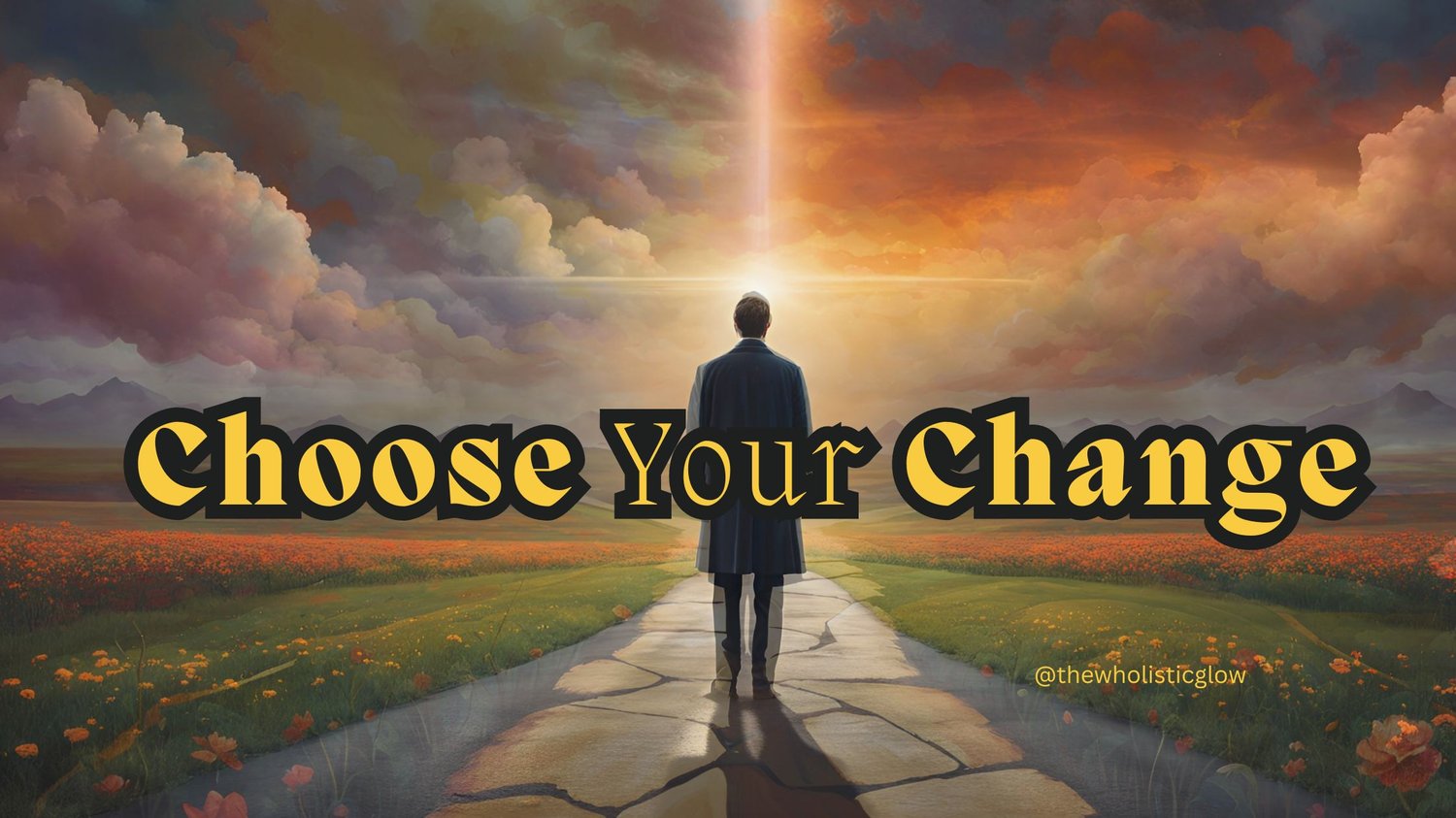
So, you want to change your life?
In order to change your life, you'll have to change yourself, because without changing yourself, it's impossible to expect change in your life, your environment, your relationships, or anything you’re involved with.
First and foremost, let's talk about why someone would need to change. To make things clear: change is part of the natural process of life. We have two options in life: either we go with the flow of change or we resist it. There are really only two ways to navigate this life – we either choose to grow, or we choose to remain where we are. However, since change is a natural process that’s always happening, when we stay in the same place, we’re actually being left behind.
In other words, we’re either growing and expanding, or we’re contracting and staying stuck. A good example of this is someone who tries to maintain their current lifestyle for a long time. Let's imagine they have a good job, decent income, and they’re pretty comfortable with where they are. Their intention is to stay the same – not intentionally trying to grow or change, just wanting things to remain as they are. In the present moment, that might seem fine. But what if they keep doing the same thing for the next five years? What do you think will happen?
Let’s take inflation as a simple example. If they don’t try to grow as a person – whether financially, in their career, their lifestyle, or their networks – they’ll eventually be left behind. They’ll find themselves struggling to keep up with the way things have changed around them.
So, as human beings, it’s not only important that we keep growing and changing with the world around us, but it’s also crucial that we intentionally direct that change in our lives to the best of our abilities. If we don’t, we might find ourselves dealing with a backlog of change we should’ve embraced earlier. And this often shows up in life as a crisis – whether it’s a midlife crisis, a quarter-life crisis, or any other kind of crisis.
These crises are signs that we’ve strayed away from living authentically or aligning with our true path.
When a crisis hits, it usually requires drastic measures to fix. If you’ve been living comfortably for a long time without trying to grow or improve, one day you might realize your life has hit rock bottom. Maybe you haven’t been taking care of yourself physically, financially, spiritually, or mentally, and that neglect shows up as a big problem later. For example, if you’ve been eating whatever you want and not moving your body, eventually that could turn into a health crisis, where you’re overweight, have low energy, and it’s affecting your mental health, body image, and relationships.
Everything is connected. When one part of our life is affected, it starts impacting other areas too. This is how a crisis happens, affecting almost every part of our lives. Dealing with these crises takes a lot of self-responsibility, accountability, and awareness. Many of us have experienced that moment where life suddenly catches up to us, and we find ourselves asking, “How did I get here?”
If you’ve experienced this – whether it’s a quarter-life crisis or a midlife crisis – the best way to deal with it is to stop, assess the situation, and implement the necessary practices to get back to peace, harmony, balance, and structure. This involves looking at yourself first because you are the common denominator in everything that’s happening in your life. Everything starts from where you are internally.
So, take time to assess where you are mentally, spiritually, emotionally, and physically. Whether we like it or not, the results in our lives reflect what’s happening inside us. Understanding this is the first step toward freeing yourself from feeling stuck in a crisis.
Remember the question: “Why would anyone want to change?” Now we know – people usually want to change when they feel stuck, hit rock bottom, or are in a life crisis. And when you reach this realization, it’s actually a turning point. It’s the moment you understand that you are responsible for the life you’re creating. If you’ve reached this point, congratulations, because you’re about to start taking control of your life.
When you take responsibility for your life, you realize how empowering it is. You now know that you have the power to change your circumstances, rather than just accepting them as they are. People who direct intentional change in their lives understand the importance of self-responsibility. Those who don’t often place their energy on external things they believe are responsible for their situation. This leads to a victim mentality – where people feel powerless, blame others or their circumstances, and feel stuck.
If you don’t want to be that person, embrace change. Love change. Don’t get stuck in one place, whether mentally, physically, spiritually, or emotionally. Growth is our birthright, and so is transformation. Human beings are capable of intentional change, and it all starts with us. If we can’t control ourselves or change who we are, how can we expect to change anything in our lives?
If you want your life to be in order, make sure you’re in order first. Reflect on who you are and how you’re showing up in all aspects of your life, holistically. This is the starting point for your intentional transformation. At Wholistic Glow, we’re here to provide guidance, support, and resources to help you transform yourself and your life so you can live with joy and fulfillment.
Many people are going through a quarter-life crisis or a life crisis in general. If that’s you, continue following @TheWholistic Glow. Our goal is to help people get unstuck, find their power, and live a life of alignment and fulfillment. When we empower ourselves, we create a positive ripple effect – not just in our own lives, but in the world around us.
Comments ()