
If everyone owns an action, no one owns it!
The Common Mistake
Meetings often assign actions like:
“Team to review proposal”
This creates confusion and inaction. "It's clearly not a priority for me. Someone else will do it!"
What Clear Responsibility Looks Like
Every action must have:
- One named owner
Example:
“Sarah to review proposal and either provide feedback or approve it for submission.”
When Multiple People Do the Same Action
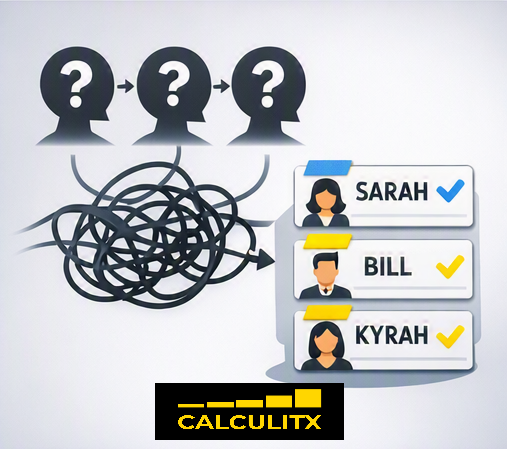
If you want 3 people to review the proposal, then create 3 actions and assign them to each individual person.
Example:
“Sarah to review proposal and either provide feedback or approve it for submission.”
“Bill to review proposal and either provide feedback.”
“Kyrah to review proposal and either provide feedback.”
Sarah, Bill and Kyrah now know you are seeking specific feedback from each of them, and Sarah now knows it's her job to approve it. Only close out each person's action when they individually finish their own personal task.
Why This Works
Clear ownership:
- Removes ambiguity - it's no longer possible to assume it's someone else's action
- Drives accountability by making the action personal
- Ensures follow-through by tracking each person's action individually
Are Decisions Different?
Yes. Decisions can be owned by and individual OR the whole team. If the decision was by consensus, then the "person" responsible is "All". Give everyone a pat on the back for making the decision.
Meeting Discipline
Always ask:
- “Who owns this action?”
Always assign one action to one person OR write the action out multiple times, once for each person who needs to perform the task.
Tip
The CalculitX Project Action Tracker assigns one action to one actioner. It also allows you to replicate actions easily. Try it now!
#productivity, #projectmanagement, #meetingmanagement, #meetingminutes, #actionitems, #responsibility.
Comments ()