

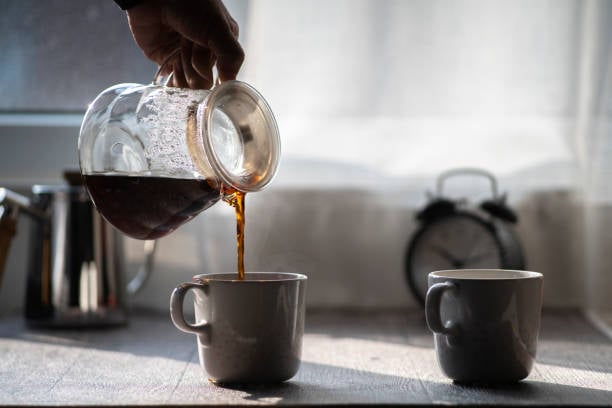
It took me years before I could drink black coffee. And honestly? I thought all coffee just tasted bitter or like dirt.
Looking back, turned out what I didn't like was bad coffee. The kind that tastes burnt before it even hits your tongue, that leaves a bitter film in your mouth you can only survive with a heavy pour of flavored syrup and enough sugar to qualify as dessert. I didn't know any different, so I assumed all coffee tasted like that — just gross, and something you drank out of obligation rather than enjoyment.
That changed when I got properly trained.
The Day My Entire Understanding of Coffee Shifted
When I started working at a café in Wilmington, they did something I didn't expect: they sent us to train with their roaster, Counter Culture Coffee. Not just a quick "here's how to pull a shot" rundown. It was a real, intentional education in what specialty coffee actually is.
We did a coffee cupping. Think of it like a beer flight, or a wine tasting. With the small cups, multiple origins, all brewed the same way so you're tasting the bean itself, not the preparation. And I was completely caught off guard by what I tasted.
One coffee was bright and citrusy, almost like a squeeze of lemon or a ripe berry. Another was earthy and savory, deep like a tomato soup. Another had this smooth sweetness of caramel and milk chocolate, that I had never associated with coffee before without syrup. And none of it came from added flavors or syrups. All of that complexity came purely from where the coffee was grown and how it was roasted.
That was my first real "wait, what?" moment in coffee.
The Secret Is in the Soil
Here's something that still fascinates me after 12+ years: coffee is a fruit. The beans that are roasted and brewed are actually seeds from a cherry-like fruit that grows on trees. And just like wine grapes, the soil, altitude, rainfall, and climate of where that coffee is grown dramatically affect how it tastes in your cup. This is what coffee people call terroir; it's not just a wine term.
Coffee from Ethiopia might taste floral and fruity, which is my favorite. Coffee from Colombia tends toward bright citrus and sweetness. Beans from Sumatra are often earthy, full-bodied, and almost savory. Beans from Guatemala might carry chocolate and brown sugar notes. Which I love as an "all day" coffee.
None of that is artificial. None of that is added. It's just the land, doing what it does.
Then the roaster gets involved. A skilled roaster tastes the green (raw) coffee first, researches the farm and origin, and decides exactly how much heat and time to apply to unlock the best version of what that bean has to offer. Too light and it can taste grassy or sour. Too dark and you've scorched away everything interesting — which, by the way, is exactly what mass-market chains tend to do. A heavy roast hides a lot of inconsistency, which is why so much commercial coffee tastes the same: they're covering their tracks.
At the training, they also handed us a Coffee Flavor Wheel a visual tool developed by the Specialty Coffee Association to help tasters identify and describe what they're experiencing. Fruity. Floral. Nutty. Chocolatey. Spicy. Fermented. Roasty etc. Having a reference for flavors was a revelation. Suddenly I wasn't just guessing. I was actually tasting with intention.
Your Palate Has Been Asleep. Here's How to Wake It Up
Most of us walk around with under-trained taste buds. Not because there's anything wrong with us, but because we've never been given reason to pay attention. Food and drink are often rushed. Something we consume between obligations and to wake up with, rather than something we experience.
When I started cupping coffee, something shifted. The more I tasted intentionally, the more I could actually detect. Tasting the nuances and complexity I'd initially dismissed as pretentious started making sense. I could tell the difference between a washed Ethiopian and a natural processed one. I could tell when milk was steamed correctly versus when it was scalded (more on that in a second).
And here's something wonderful that the science backs up: your palate changes over time. What you couldn't appreciate at 22 you might love at 35. As our bitter sensitivity gradually diminishes through adulthood, we become bolder and more open, broadening our tastes through exposure and experience. Taste receptors are constantly dying off and regrowing, about once every ten days which means your palate is literally renewing itself all the time. Taste is not fixed. It's a living, evolving sense, and you can train it. According to Discover Magazine.
Milk Matters More Than You Think
Beyond the coffee itself, the training at Counter Culture taught us something I still teach my clients today: steamed milk can make or break the entire drink.
When milk is steamed correctly, it becomes silky and almost velvety. Think, the texture of melted ice cream if it were warm. The steam wand works with the milk, not against it. It should sound like a low, soft hiss. Subtle. Almost gentle.
If you're sitting in a café and you can hear the steam from across the room, that screaming, gurgling shriek, that's a sign the milk is being overheated or steamed incorrectly. It breaks down the natural sugars in the milk, which is what makes properly steamed milk taste gently sweet without adding anything. Scalded milk tastes flat and almost papery by comparison.
This is actually one of my favorite things to look for when I try a new coffee shop. The quiet ones are more likely the good ones.
What's In a Name?
And then there were the drinks themselves. Espresso. Macchiato. Cortado. Cappuccino. Flat white. Americano. Latte.
The names can feel like a foreign language, because many of them literally are. These drink names are rooted in Italian and European café culture, where espresso has been a way of life for generations. The names aren't just fancy labels; they tell you the ratio of espresso to milk, and the size and texture of the drink.
Here's the full list of coffee and espresso meanings.
The flavored syrups, like vanilla, caramel, mocha, those are largely an American addition. Not a criticism of anyone who loves them (I still enjoy a mocha on occasion), but it's worth knowing that in traditional espresso culture, the coffee is flavorful enough on its own that syrups aren't the point. Because, science!
You Don't Know What You Don't Know
That phrase has stuck with me throughout my entire coffee career. And it's not meant as a criticism — it's an invitation.
Most people's reference point for coffee is whatever was served in a break room, poured from a gas station, or ordered at a drive-through chain. And that becomes "normal." But those coffees are often made with older beans, over-roasted to compensate for staleness, and brewed inconsistently at scale. The general public starts to believe that's just what coffee tastes like.
It doesn't have to be.
Specialty coffee is fresh whole beans sourced from farms that are paid fairly, roasted with intention, and brewed with care, tastes genuinely different. The difference between a commercial coffee and a freshly roasted single-origin bean is brewed at the right temperature and ratio is not subtle. It's like the difference between a fast-food burger and one made with quality beef from a butcher you trust. Both are technically burgers. But the experience is incomparable.
So, Is Coffee an Acquired Taste?
Yes. And in my experience, almost everything worth loving is.
Good wine. Good cheese. Dark chocolate. Craft beer. These are all things that require a little patience, a little curiosity, and the willingness to taste with an open mind rather than a closed conclusion.
Coffee is no different. The bitterness that turns people off is often not the coffee's fault. It's bad espresso pulls, old beans, or a roast that was too aggressive.
Specialty coffee, brewed right, doesn't taste like the thing that drove you to sugar and cream in the first place.
And when you find that first cup that genuinely surprises you? The one that's smooth, or bright, or quietly complex in a way you didn't expect? That's the beginning of a whole new relationship with your mornings.
Brewing with Intention Changes Everything
Here's something I've noticed over years of working with coffee and people: the way you make your coffee in the morning, and setting up your day with intention, sets a tone for your entire day.
When you rush to grab whatever's convenient, pour it in a travel mug before it's even finished brewing, drink it in the car while checking your phone, you've already told your nervous system that the day is something to survive rather than experience.
But when you slow down, even just by ten minutes? When you grind your beans fresh, heat your water, and actually pause to breathe in that first wave of aroma as your coffee brews? Something shifts. You're not just making a drink. You're making a choice to begin your day with presence.
This is what I mean when I talk about mindful mornings, what I mean. It's not about having a perfect kitchen or an expensive setup. It's about treating that small ritual — the grind, the smell, the warmth of the mug in your hands, the first sip, as something that deserves your attention. Because you deserve that kind of start.
The coffee ritual is one of the gentlest ways I know to practice intentionality. And there's something almost meditative about it when you let it be. The process itself invites you to slow down, and in doing so, it teaches you something. That good things, like good coffee, unfold on their own timeline. You just have to be present for them.
So if you're someone who's never thought much about what's in your cup, I'd invite you to start there. Not because coffee is the point, but because how you begin is the point. Your morning ritual is the first conversation you have with yourself each day. Shouldn't it be a good one?
I'm here for that journey with you. And I promise, if you're curious enough, it's worth it.
Ready to explore what your mornings could feel like? Contact me to chat about where to start.
— Jennifer Founder, Demitasse Endeavors | Specialty Coffee + Mindful Mornings
Comments ()