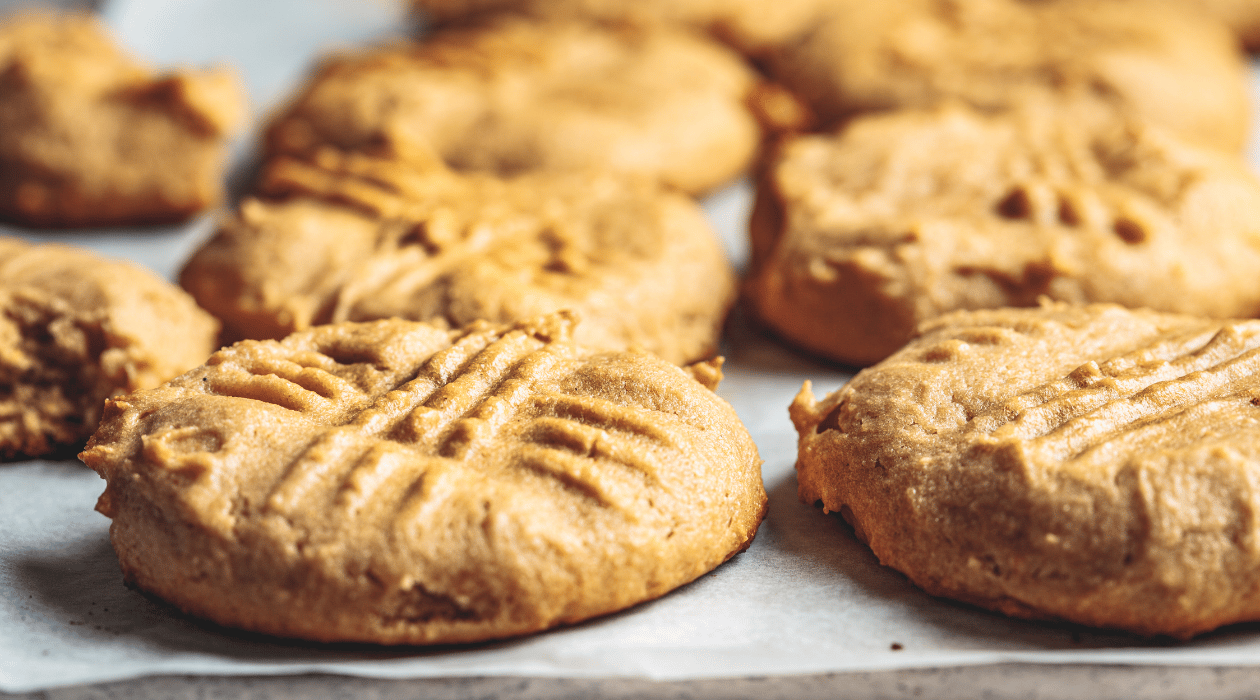
Bake a batch of peanut butter pumpkin cookies for yourself and simple pumpkin treats for your pup using many of the same pantry ingredients.
⏱ Time: 25 minutes
🍽 Servings: About 12 cookies and 12 dog treats
⭐ Difficulty: Easy
Ingredients
Peanut Butter Pumpkin Cookies (For Humans)
- 1 cup oat flour
- ¼ cup natural peanut butter (unsweetened, xylitol-free)
- 2 tablespoons pumpkin puree
- 1 tablespoon honey or maple syrup
- ½ teaspoon ground cinnamon
- ¼ teaspoon ground nutmeg
- ¼ teaspoon baking soda
- Pinch of salt
Dog-Friendly Pumpkin Treats
- 1 cup oat flour
- ¼ cup natural peanut butter (xylitol-free)
- 2 tablespoons pumpkin puree
- 1 tablespoon water
Instructions
Peanut Butter Pumpkin Cookies
- Preheat the oven to 325°F (165°C). Line a baking sheet with parchment paper.
- In a mixing bowl, combine the oat flour, peanut butter, pumpkin puree, honey, cinnamon, nutmeg, baking soda, and salt until a soft dough forms.
- Roll the dough into small balls and gently flatten, or roll out and cut with cookie cutters.
- Bake for 12–15 minutes, until the edges are lightly golden.
- Let the cookies cool completely before serving.
- If desired, drizzle with melted chocolate or additional peanut butter.
Dog-Friendly Pumpkin Treats
- In a separate bowl, combine the oat flour, peanut butter, pumpkin puree, and water until a soft dough forms.
- Roll out the dough and cut into desired shapes.
- Transfer to a parchment-lined baking sheet.
- Bake for 12 minutes.
- Cool completely before serving to your dog.
Quick Notes
- Always use peanut butter that does not contain xylitol, as it is toxic to dogs.
- Store the human cookies in an airtight container in the refrigerator for up to 5 days or freeze for up to 2 months.
- Store the dog treats in the refrigerator for 2–3 days or freeze for up to 1 month.
- Feed dog treats in moderation based on your dog's size and dietary needs.
🐾 Vet Disclaimer
This recipe is intended as an occasional treat and is not a substitute for a complete and balanced diet. Always consult your veterinarian before introducing new foods, especially if your dog has allergies, medical conditions, or dietary restrictions. Every dog is different, and what’s safe for one may not be safe for another. If your pet shows any signs of discomfort or adverse reaction, discontinue feeding immediately and contact your veterinarian.
This content is for educational and entertainment purposes only and should not be considered professional advice.