
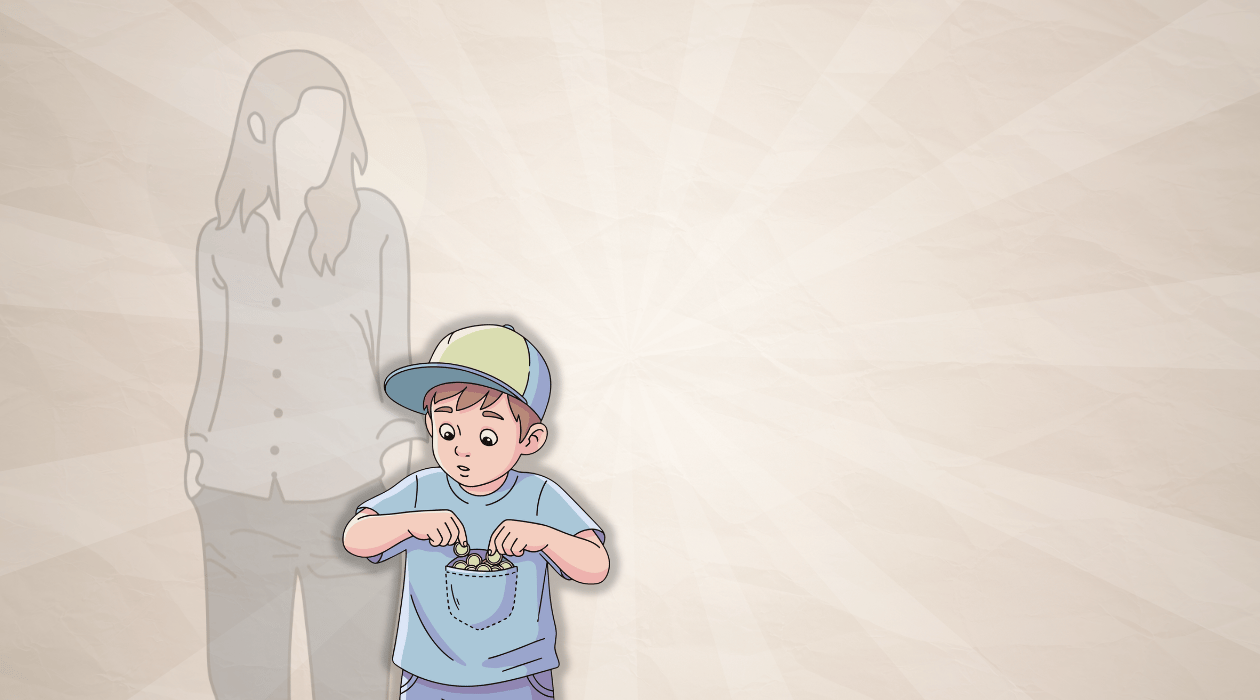
Toddlers are weird.
Like… really weird. 😳
They do bizarre, confusing stuff that feels like it was personally designed to push your buttons.
(Am I right?)
They’ll rearrange your living room, fill their pockets with rocks (that end up wrecking your washing machine 🧺 because—of course—you didn’t find all of them), and then just when you think you’ve hit your limit… they’ll look you dead in the eye and do the exact thing you just told them not to.
(Sound familiar?)
And the worst part?
You’re not even sure if it’s normal 😕—or if you’re supposed to be doing something about it.
But what if I told you that the problem isn’t them?
It’s you.
(👉Stay with me here...)
Not because you’re a bad parent or there's anything wrong with you—you’re just thinking like a grown-up.
And when you look at this toddler behavior through adult eyes, of course, it seems ridiculous.
But here’s the truth:
- This behavior isn’t random
- It’s not personal
- It’s not bad
- Isn't something you need to fix
🧠 It’s just something you need to understand.
Because when you do?
You can stop taking it personally and start supporting your toddler's development (and maybe even reclaim a little peace of mind).
So let’s break down five of the most common, weird, annoying toddler habits that leave parents everywhere scratching their heads (and sometimes screaming)—and I’ll show you why they’re not just normal…
✨They’re necessary.
And...
I’ll give you some sanity-saving tips to help you work with these habits instead of constantly fighting them—because these weird little quirks?
They’re actually signs that your toddler’s brain is busy doing some very important work (even if it doesn’t look like it).
Here Are My Top 5 Weird Toddler Behaviors Decoded:
#1 Moving Furniture.
Toddlers are wired to build their big muscles right now.
Their brain is sending strong signals that say, “Move! Push! Lift!”—because this is the stage where their brain is programmed to get their body stronger and more coordinated, and those instinctive movements will help make that happen.
So they look for the biggest things in their environment to lift and move, and in our modern lives, furniture fits the bill.
What you can do to dial down the annoyance factor:
👉Pro Tip: Make like Anna and Elsa and “Let it go.” Let them move stuff—and accept that your house is going to look like it was staged by a toddler (because, well, it was).
Instead of following them around all day and putting everything back while yelling at them through gritted teeth, try resetting the space at set times—like during nap or after bedtime.
OR
👉Pro Tip: Set up a playroom or space with lots of big things they can move safely. Think soft blocks, old couch cushions, or anything they can stack, climb, or jump off. Put one chair that's theirs to push anywhere within the space.
Maybe even designate certain rooms as places they're allowed to rearrange and make rules about a few other rooms you'll designate as your "adult space."
OR
👉Pro Tip: If it’s really driving you bananas, the best solution is always fresh air: give them at least an hour outside every day where they can push, lift, drag, climb, and run to their heart’s content so they can get all that toddler energy out while building those big muscles the only way they know how.
That's the best place for them to do it anyway—and this way, your living room doesn’t have to take the hit. 😉
BEST OPTION:
👉Combine all three. Create a lifestyle that gives them indoor and outdoor options to build those big muscles every day. The more options and freedom they have to fulfill this urge in mom-approved ways/toddler-friendly ways, the less likely they’ll be to wreck your stuff trying to meet that need.
#2 Filling Their Pockets.
Toddlers love collecting random treasures and stuffing them into every pocket they can find. Tiny toys, small rocks, crumbs, dryer lint, if it's tiny and they can pick it up, they will keep it.
To them, this is magic. ✨
Every time they reach back into that pocket and find something still there, it’s like a tiny miracle because they’re still developing a brain skill called object permanence—the understanding that things continue to exist even when we don't see them.
A baby will start to notice this at around 8 months (think about how much they love to play peek-a-boo and how happy they are when you reappear from behind your hands), but the idea doesn’t fully settle in until closer to age 2, and even then, toddlers are still driven to test the theory.
That’s why pockets are so fascinating to them: they’re like little mystery boxes where they can keep checking to see if reality still works the way they think it does.
But there's more going on here than just object permanence.
Pocket-filling also taps into early executive functioning skills, like:
- Working memory: remembering what they put in.
- Impulse control: deciding what to put into their pocket and what to leave behind and being able to tolerate knowing something is in their pocket without becoming anxious if they're not always holding it and looking at it
- Categorization: grouping or sorting their treasures.
Plus, it gives toddlers a way to control their environment in a small but meaningful way. Filling a pocket with “their stuff” provides a sense of ownership, comfort, and predictability in a world that often feels too big and chaotic.
So no, it never gets old for them—until all of these brain systems mature, it is a surprise every time.
They're not just being weird; they’re running little cognitive experiments... one rock and LEGO piece head at a time.
What you can do to dial down the annoyance factor:
👉Pro Tip: Choose one go-to coat (or a couple) that your toddler always wears for walks and outside time. Then, every time you head out, gently remind them: “Remember to put your treasures in your coat pockets.” 😊
Don't mention shirt or pants pockets—just focus on reinforcing the habit you want. (Keeping the message simple makes it easier for them to follow.)
It’ll take some time, but with gentle, consistent reminders, they’ll catch on, and eventually, putting their treasures into the assigned pockets will just be what they do. If you see them slipping something into a pants pocket, just casually redirect with something like: "Let’s tuck that into your coat pocket instead—it's easier to reach."
Not only does this give all their little treasures a predictable home base (which helps build a sense of safety and permanence), but it also saves you from discovering surprise loads of gravel in the laundry. 🧺😉
👉Pro Tip: Use a separate laundry basket just for your toddler’s clothes that have pockets. At bedtime, when you’re changing them, toss anything without pockets into one basket (safe to wash as-is), and anything with pockets into the other.
That way, you’ll always know which clothes need a quick pocket check—and which ones you can toss straight into the wash without worrying about surprise pebbles, crayons, or snacks. 🧺✨
#3 Carrying Things Around In Bags.
You’ve probably seen your toddler dragging around a tote bag, backpack, or doll stroller loaded up with random stuff. And while it might seem chaotic and messy to you, there’s actually a lot of brain development going on when they do this.
Carrying things from place to place helps your toddler feel a sense of ownership and control over their environment.
At this age, they’re just beginning to understand the idea that they’re separate from the world around them, so being able to gather, hold onto, and take things with them to different places gives them a little bit of power in a world where so much is out of their control.
This kind of behavior is actually part of something called "schema play"—which is just a fancy term for the ways kids repeat specific actions over and over to figure out how the world works.
In this case, it’s what’s known as the “transporting” schema, where toddlers feel a strong urge to move or "transport" things from one place to another.
Not only does this help them build those big muscles (from lifting and carrying stuff), but it also helps them practice important brain skills—like planning, organizing, and following through on an idea.
When your toddler fills a bag and hauls it from the living room to the kitchen, they’re not just playing—they’re actually working on how to make a plan and see it through.
👀🎉That’s a big deal!
There’s also an emotional layer: having a bag full of their things provides a sense of predictability and safety, especially for anxious or highly sensitive children. Just like a security blanket, a stuffed bag can offer a feeling of control and comfort:
- They know what’s inside.
- They know it belongs to them.
- They know where it is.
This behavior also connects to object permanence and working memory—they’re remembering what they packed and where it went, reinforcing their brain’s ability to hold onto information over time.
(And then they'll move into that sweet, sweet stage, where they want to organize everything!!!)
So even though it might seem like your toddler is just collecting random junk in their Paw Patrol backpack, there’s actually a lot more going on than meets the adult eye.
They’re not just messing up your house—they’re learning, growing, and building important brain connections and emotional confidence… one crumpled napkin and broken crayon at a time. 💪🧠
What you can do to dial down the annoyance factor:
👉Pro Tip: Let them do their thing. Ask what’s in the bag. Get curious instead of trying to control it. When you let go of your adult expectations and just allow the behavior, something surprising happens—it usually fades faster.
Why?
Because when toddlers feel safe and in control, they stop needing to prove it so much. So for now, let them carry their treasures. It’s actually a pretty brilliant little coping strategy—and it’s doing more good than you think.
👉Pro Tip: To keep your house a little neater, you can give your toddler a special bag (or a few) just for collecting. Call them their “treasure bags” and let them use them every time.
Gently guide them to use the same bags (like you did with the rocks in the coat pockets) by saying things like: “Here’s your bag—you can put all your stuff in here!” when you see them hoarding.
👉Pro Tip: If they leave it lying around, no big deal. Just pop it into a designated “clean-up spot” after they go to bed so it's out of the way for you, but easy to find in the morning for them.
If you do this enough, they'll just wake up and know where to go to find them. (Also, make sure they can reach the bags by themselves when they want them.)
The key? Do it the same way every night. (Toddlers thrive on consistency—it helps them feel safe and in control, which is what the collecting is all about in the first place.)
#4 Repetitive Behavior.
Toddlers repeat things—a lot. Sometimes it’s cute, sometimes it’s weird, and sometimes it’s just plain irritating.
But here’s the thing: learning takes time.
And repetition is how the toddler brain locks in what it’s learning.
So when you see a toddler doing the same thing again and again—lining up blocks, spinning wheels, dropping rocks, opening and closing drawers—it’s not meaningless.
It’s deep learning in action. Even if it looks strange or “pointless” to you, this is their way of building understanding, confidence, and mastery.
Any time a toddler in my care did something repeatedly, I left them alone.
I didn’t try to hurry the process or discourage the behavior because I knew it was happening for a reason.
I knew their brain was trying to get closure on a lesson, and it needed to do whatever it needed to do to get that closure.
True Story: I cared for a little boy who, when he first came to me, spent hours each day sitting quietly in a corner of my yard, dropping small toys and rocks from the same spot.
He did this for months.
But I didn’t interfere (luckily, because of my Montessori training, I knew what was going on and could see it from a developmental standpoint).
I could see that his brain was trying to make sense of something. He had a language delay, along with some behavior challenges, and this repetitive action was his way of working something out and soothing his nervous system.
Eventually, he stopped. The need passed. The lesson, whatever it was, had been absorbed.
If I had interrupted him or felt like I needed to redirect him away from the activity, I would have cut that process short and probably disrupted something important that his brain was trying to do.
So, if your toddler gets “stuck” on a repetitive action, try not to rush it.
Resist that adult feeling that tells you it's unproductive and the urge to hurry them along or let it bug you because it's weird.
As long as it’s safe, it’s probably doing them more good than you realize.
Repetition is your toddler’s brain saying, “I’m not done learning this yet.”
But rest assured, when they’ve gotten what they need, they’ll move on—in their own time.
What you can do to dial down the annoyance factor:
👉 Pro Tip: Create a safe space where your toddler can explore their repetitive behavior without constant interruptions. It might be a cozy corner with their favorite toys or a backyard spot where they can drop rocks or line up sticks to their heart’s content.
When they have a space like this, it’s easier for you to step back—because you’ll know they’re safe. (That doesn’t mean you stop paying attention; you just don’t have to hover.) It gives them the freedom to focus and you a chance to stop feeling so bugged.
👉 Pro Tip: Reframe the repetition. When your toddler repeats something over and over (and over 😵💫), try not to stop them—zoom out instead.
That “pointless” behavior is actually their brain doing important work. They’re experimenting, making sense of the world, and building mastery one tiny loop at a time. Seeing it as learning in action can help you stay calm and grounded. You don’t need to fix it—just support it.
👉 Pro Tip: Use the moment to regulate yourself. If your toddler's stuck in a repetition loop and it’s making you twitchy, take that as a cue to pause.
Unclench your jaw, drop your shoulders, and take a deep breath. Think of their steady rhythm as a gift—an invitation to slow down and settle your own nervous system. Be thankful for the quiet moment and take it as a cue to pause.
#5 Not Listening.
Toddlers are wired to push boundaries.
It’s not because they’re little jerks (even though it does feel like it sometimes 😵💫)—it’s because their brains are in full-blown cause-and-effect mode.
They’re constantly trying to figure out:
- What happens if I do this?
- How far can I go?
- Do the rules stay the same every time?
This isn’t “bad behavior”—it’s data collection.
When toddlers test a boundary, they’re trying to figure out how the world works and where they fit in it.
But here’s where it gets tricky for you: if there are no clear rules—or if the rules change all the time—your toddler gets confused.
Inconsistent discipline makes their job harder because the "data" they’re collecting is unreliable. So they just keep testing. Again. And again. And again. Until a clear pattern emerges.
That’s why they’ll keep doing the thing you told them not to do.
Especially if they sometimes get away with it and sometimes don't.
They’re not trying to make you mad (although this is an excellent way to do that). They’re just trying to understand the pattern—and if the pattern keeps changing, they’ll keep digging until they find it.
So, the next time your toddler gleefully breaks a rule while making direct eye contact, don’t take it personally. They’re not being bad. They’re just doing their job: learning what’s allowed, what’s not, and who’s really in charge (hint: it’s still you 😉).
Also...
Your toddler’s brain is still figuring out how language works.
They don’t process sentences the way you do.
Right now, their developing brain is wired to focus on action words—so when you shout, “Don’t touch that!” what they actually register is: “Touch that!” 😬
Why?
Because the brain at this stage latches onto the most concrete part of the sentence—usually the verb—especially under stressful or fast-moving moments. The “don’t” part is abstract and easy to miss when your language processing skills are still under construction.
So if you’re constantly saying things like “Don’t run,” “Stop yelling,” or “No jumping on the couch,” but not following up with a consequence—or showing them what to do instead—you’re actually training them to ignore your words.
You’re also accidentally teaching them that words don’t mean much and actions don’t have consequences—which can make life even harder in the long run (for both of you).
What you can do to dial down the annoyance factor:
👉 Pro Tip: Clear, calm, consistent limits are your best friend. You don’t need to be harsh—just steady. Because once your toddler fully understands a rule and the outcome becomes predictable, the need to test it fades.
👉 Pro Tip: Use simple, clear language—especially when your toddler is doing something they shouldn’t. Say exactly what you want them to do.
- Instead of “Don’t run,” say “Walk, please.”
- Instead of “Stop touching that,” try “Hands down” or “Come stand beside me.”
Positive, specific language is easier for their brain to latch onto—and way more effective in the long run, so you're keeping the peace in the moment and teaching your toddler how to listen, understand, and follow directions.
🚨And if they’re doing something you really want to stop, say “No”—firm and clear. Then either give an immediate consequence or physically guide them toward the behavior you do want.
- For example, if they’re touching something off-limits, gently remove their hands while saying, “No.” If they do it again, calmly repeat the action.
Yes, it will take a few tries (or many), but it works. I used this exact approach in my daycare, because it always worked. Stick with it, and your toddler will catch on.
Weird Today, Wonderful Tomorrow
Here’s the truth: most of the weird, confusing, button-pushing stuff your toddler does isn’t random, rebellious, or “bad”—it’s development in motion.
It’s their brain doing exactly what it’s supposed to do, even if it drives you absolutely bonkers in the process. 😅
And the more you understand what’s really going on, the easier it gets to stay calm, pick your battles, and support your little one with confidence—even when your living room looks like a scene from Hoarders: Toddler Edition.
When you stop seeing these behaviors as problems and start seeing them as part of the plan, you shift out of frustration and into trusting the process.
And when that happens, not only will your toddler thrive—you will, too. 💛
So go ahead—embrace the weirdness with confidence now that you know those wacky, button-pushing behaviors are actually part of the plan.
With a little know-how and a whole lot of love, you’ll be able to support your toddler through their weirdest moments—and give them everything they need to grow into their full, fabulous selves. 🎉
Don’t fight it, Mama. Get on board.
You’ve got this—even when it’s weird.
And I’ve got you. 💪
Want more grounded toddler wisdom like this?
Check out these posts if you want to learn more about your tiny human:
Toddler brain development explained:
Are The First Five Years Really As Important As Everyone Says? Your toddler’s growing fast on the outside—but what’s happening on the inside is even more incredible.
More blogs about why toddlers do the things they do:
- Do All Toddlers Freak Out When They Have To Wait, Or Is My Kid Just "Bad"?
- Why Does My Toddler Have So Many Tantrums? And What Can I Do About It?
Then, grab one of the FREE TOOLS in my resource library made just for toddler moms like you!
Not sure where to start? Why not start here:
- 🎉The Grounded Toddler 7-Day Routine Reset Plan FREE Download
- 🎉The Grounded Toddler: 6-Step Patience Plan FREE Download
- 🌼 The Mindful Mama: Awareness Tools For Grateful Parenting 🌼 FREE Download