
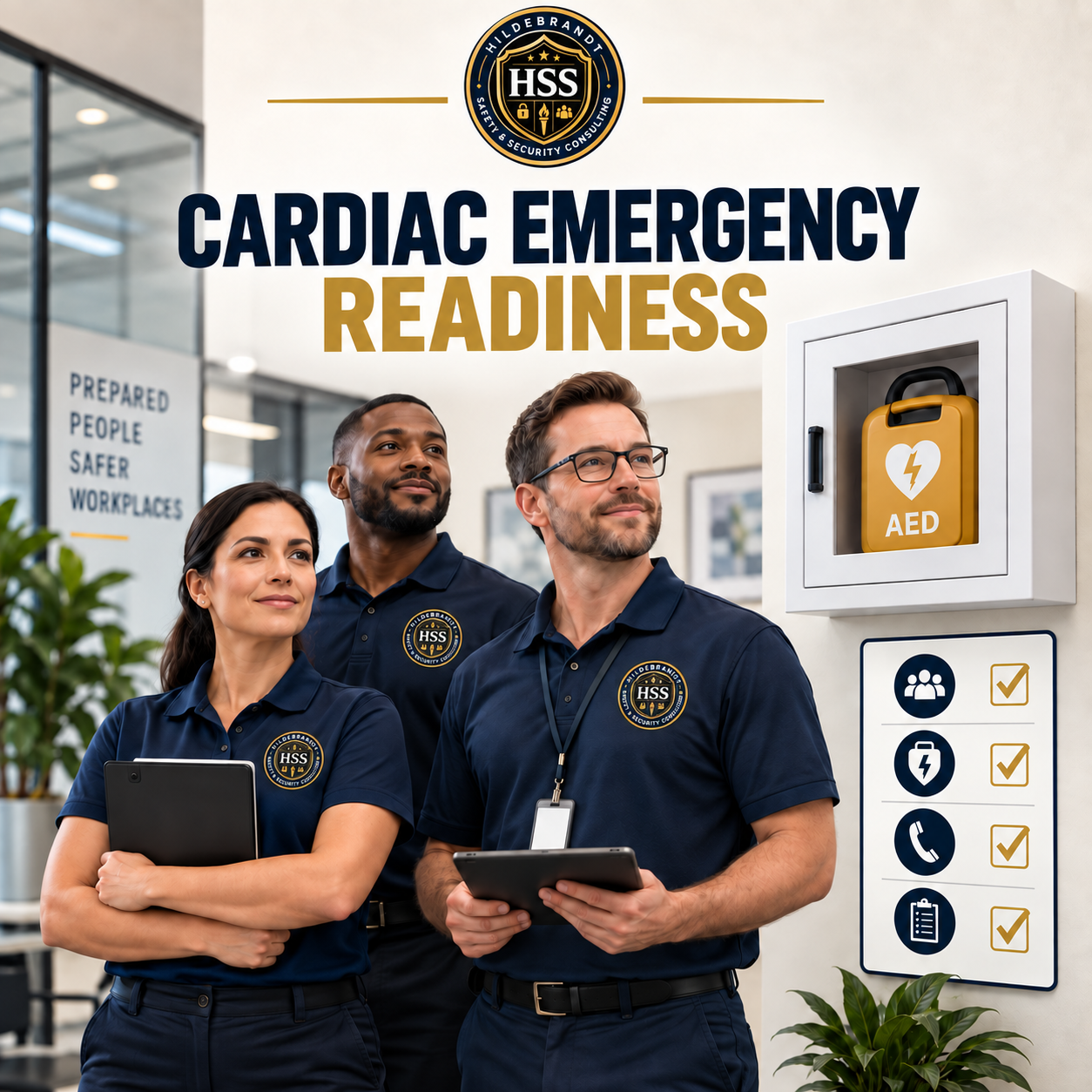
Owning an AED is an important step, but equipment alone does not make a workplace ready for a cardiac emergency. Readiness depends on whether employees can find the device quickly, call for help, begin CPR within their training, and carry out clear emergency roles.
Can employees find the AED?
Employees should know where the AED is located before an emergency happens. Include its location in new-employee orientation, safety meetings and refresher training. Clear signs and simple directions can reduce uncertainty when every action matters.
Is the AED accessible?
An AED should not be hidden behind supplies, blocked by furniture or kept in an area employees cannot reach. Keep access routes clear and include the device in routine readiness checks performed according to the manufacturer’s guidance and your organization’s process.
Who calls 911?
Staff should understand who will call 911, who will provide the exact location and entry information, and who will meet emergency responders. If roles are not assigned in advance, people may assume someone else is handling them.
Are trained responders identified?
Know which employees have current CPR/AED or BLS training and whether trained coverage is available across shifts, locations, absences and schedule changes. A contact list is useful only if it stays current and employees know how to activate the response.
Do CPR and AED readiness work together?
A useful plan connects the full response: call 911, retrieve the AED, begin CPR within the responder’s training, and use the AED according to its prompts and that training. A brief drill or tabletop discussion can reveal delays, unclear roles and access problems without simulating a real medical emergency.
Are emergency roles clear?
Beyond the person providing CPR, someone may need to retrieve the AED, direct coworkers, clear the area, meet emergency responders, bring first-aid supplies or contact organizational leadership. Defining those roles supports a more organized response.
Can responders reach the person?
Hallways, doors and work areas should allow employees and emergency responders to reach the person quickly. Keep access routes clear and consider how gates, locked doors, elevators, large facilities or remote work areas could affect response.
What happens after an event or drill?
Document what occurred according to organizational requirements, protect private information, and review what worked or caused delay. Assign corrective actions, identify an owner and verify completion instead of allowing the same gap to remain.
Why an AED alone is not enough
An AED is valuable, but workplace readiness also requires access, trained people, clear communication, emergency roles, maintained equipment and management follow-through. Reviewing those connections helps an organization turn equipment ownership into a practical response plan.
Training and workplace-readiness education do not replace emergency medical services or organization-specific medical and emergency procedures. In an emergency, call 911 and follow the directions of emergency responders.