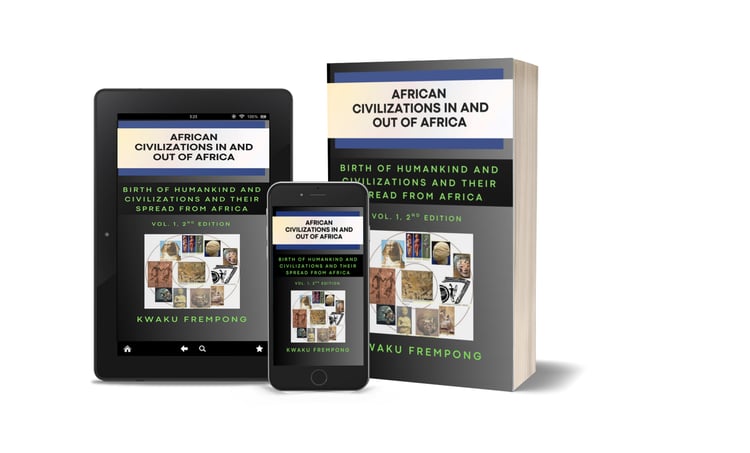
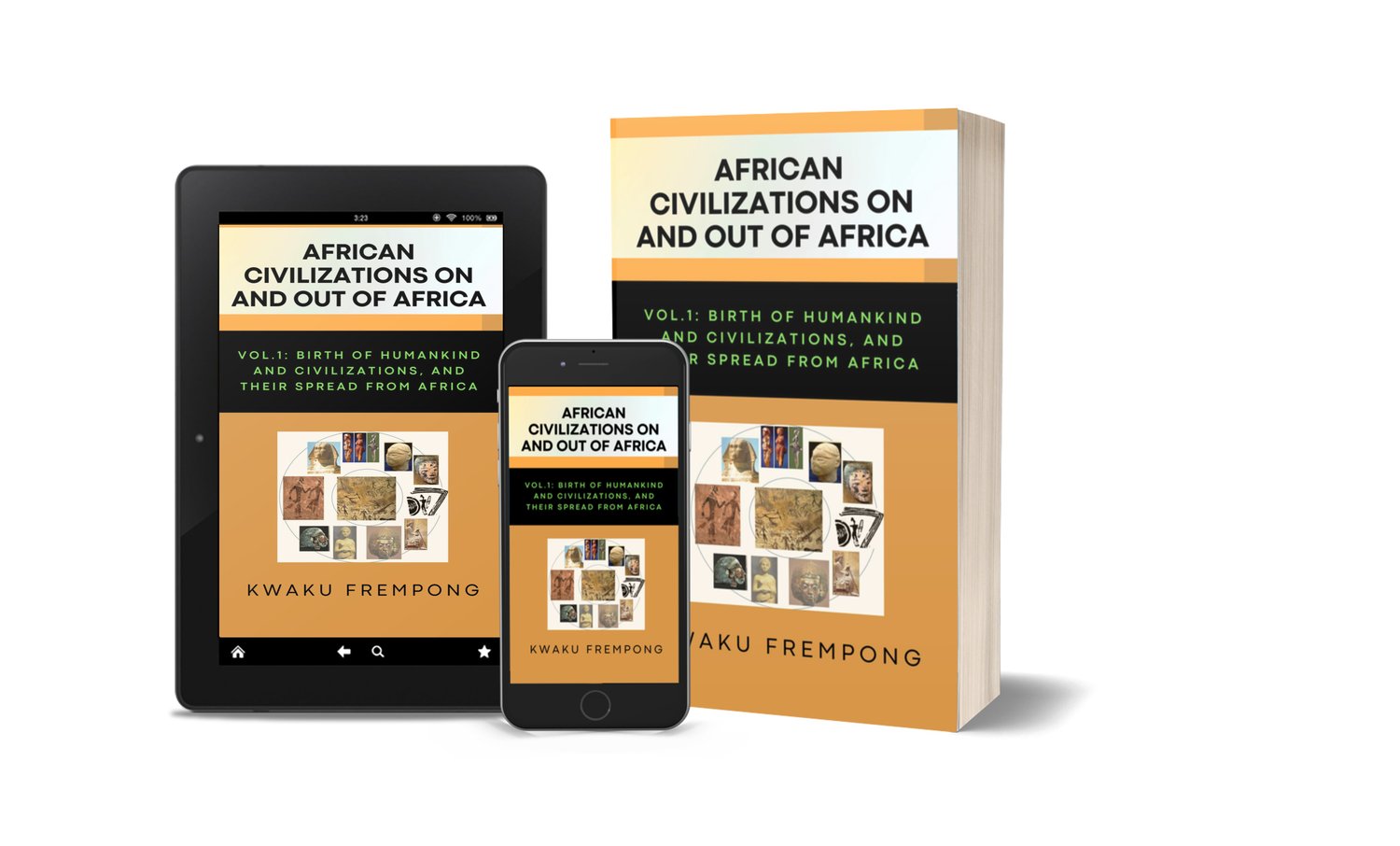
African Civilizations on and out of Africa, Vol.1, 1st Edition: Birth of Humankind and Civilizations, and their Spread from Africa
On Sale
CAD18.99
CA$18.99
Africa, over the years, has been denied her place in world history. Africa’s contribution to world history of humankind is unparalleled. Yet, some people write and portray Africa as though she has no history, no historical accomplishments; and some even go to the length of questioning what Africa has done to contribute to human civilization and history. What is often forgotten is that Africa is the mother of humankind as well as civilizations. It was her children who left the continent of Africa and peopled other parts of the world, as well as bringing civilizations to wherever they settled. In this book, the author places Africa in her proper place of world history and civilizations. This is an introductory volume, which would be followed by other follow-up volumes. Get volumes 2 and 3 for a complete understanding and evidence of the treated topics.
Book details:
Publisher: Kwaku Frempong (Independently published)
Format: PDF (eBook) [for paperback print copy purchase, see products main page for link]
Number of pages: 478
File size: 20MB
Language: English
Publication year: 2022
Dimension: 15.24cm (6inches) x 22.86cm (9inches)
Table of Contents
TOPICS TREATED:
1) Chapter 1: INTRODUCTION
2) Chapter 2: ORIGIN OF HUMANS: SCIENTIFIC VIEWS
- Dawn of humanity in Africa, the cultures (arts, etc.) and their spread from Africa: from about 2million years ago.
3) Chapter 3: EARLY MODERN HUMANS:
- World's earliest civilization created by Africans in Southern Africa over 70,000 years ago: paintings, artistic shop, writing system, mathematics, accounting system, etc.
- African (Khoisan-type) people- "Grimaldi" of Europe, (Asia, in continental Africa, etc.), creating the painted artistic culture.
- African global megalithic civilization is also discussed.
- Africanness of the Aurignacian, Gravettian, etc.
- Ancient African Saharan Civilization as demonstrated in rock arts; and rock arts across continental Africa: from >23,000 BCE to Medieval periods (CE) (>25,000 years ago).
4) Chapter 4: LINGUISTIC CLASSIFICATIONS OF AFRICANS
- Linguistically, morphologically, archeologically, historically, ancient Near-Easterners were Africans, and that Near-East (including Arabia) was viewed by the ancients as an extension of Africa. Deliberate attempts that were made to portray Near-East as different from what is considered "Africa" (proper) and why are discussed.
5) Chapter 5: RECONSTRUCTING MISAPPLIED TERMS
- Misapplied terms that are used to make distortions. An example is use and application of the word "Berber".
- Also discussed are people whose racial identity have been distorted: Celts, etc.
6) Chapter 6: DESCENDANTS OF BIBLICAL NOAH
7) Chapter 7: “RACES” BY KEMET (EGYPT)
8) Chapter 8: MORPHO-ANATO-METRIC STUDIES
- The Africanness of the ancient Egyptians (and Near-Easterners), and the attempts that were made to assign ancient Near-Easterners a different race ("white race").
SELECTED AFRICAN CIVILIZATIONS OUTSIDE AFRICA (those on the continent will have separate volumes):
9) Chapter 9: INTRODUCING MESOPOTAMIAN CIVILIZATION
10) Chapter 10: SUMERIAN CIVILIZATION
- The African origin of the Kushite Sumerians (and perhaps Akkadians).
11) Chapter 11: SUMERIAN LEGENDS AND GODS
12) Chapter 12: MINOAN CRETE CIVILIZATION
- The African origin of Minoan Cretans, and their civilization, language, culture, etc.
13) Chapter 13: THE CANAANITE CIVILIZATION
- Their African origin.
14) Chapter 14: HEBREWS (AND PHILISTINES)
- Their indirect African origin, but direct African origin of their Hebrewic culture via Egypt, and indirect via Sumer/Babylonia and Canaan.
15) Chapter 15: ELAMITE CIVILIZATION
- Their African Kushite origin.
- Medo-Persians: another group of indirect African origin via Anatolia/Aegean.
16) Chapter 16: INDUS VALLEY CIVILIZATION(S)
- Primarily, the Dravidian origin of Indus Valley Civilization (especially, Harappa).
- Kushite African origin of the Dravidians.
17) Chapter 17: ANCIENT CHINA CIVILIZATION
- African origin of Kushite Shang, (and the Xia).
CONCLUSION
REFERENCES
SELECTED BIBLIOGRAPHY
INDEX