
The Physiology of Deep Pressure Input
The Physiology of Deep Pressure Input — Educational Infographic (Printable, A2)
You will receive the printable unwatermarked version of this infographic
A comprehensive, research-grounded visual explaining why firm body input can calm, organise, and ground the nervous system.
This infographic covers:
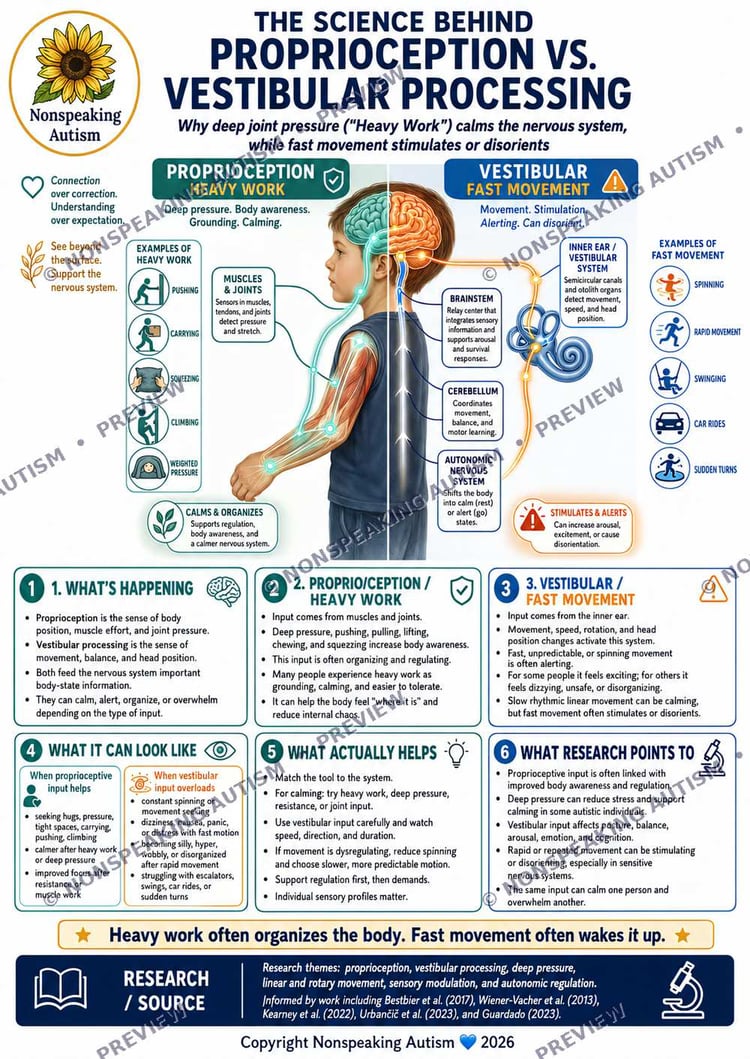
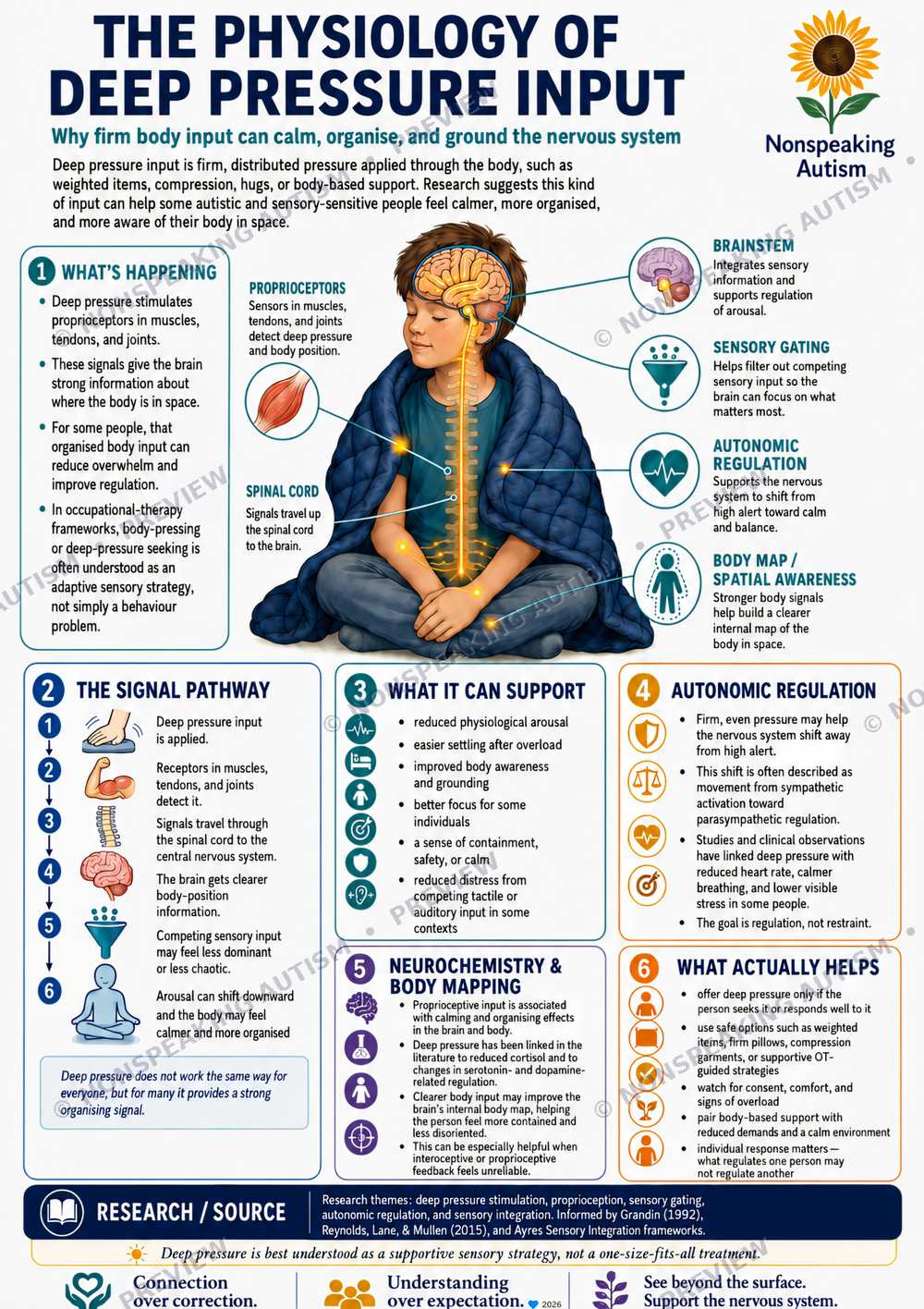
- What's happening: deep pressure stimulates proprioceptors in muscles, tendons, and joints, giving the brain strong information about where the body is in space
- Anatomical detail: proprioceptors, spinal cord, brainstem (integrates sensory information, supports arousal regulation), sensory gating, autonomic regulation, body map/spatial awareness
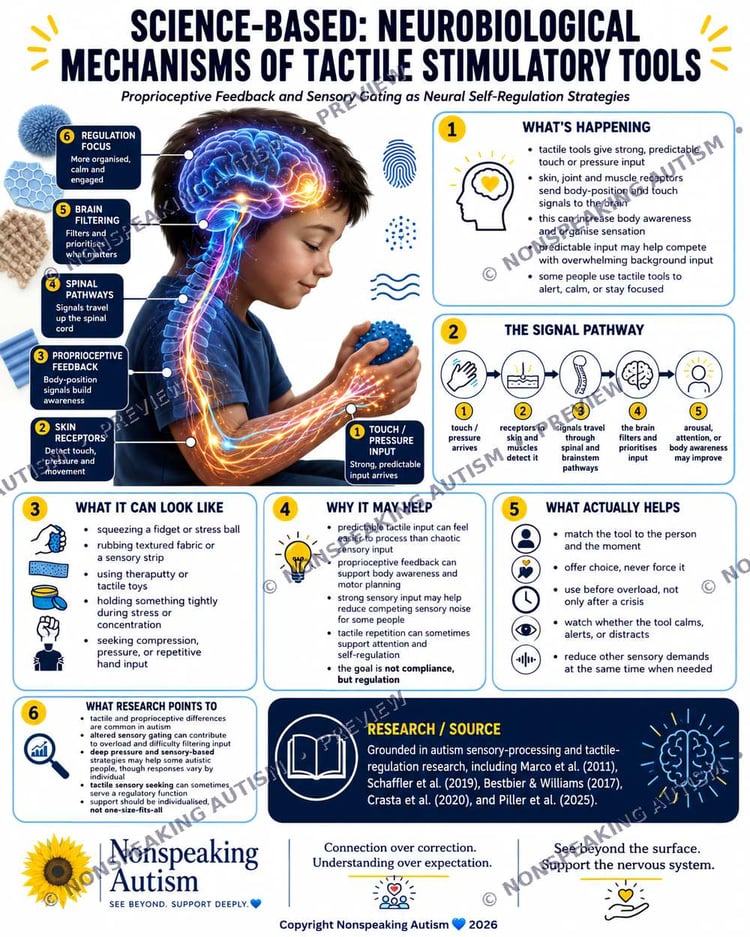
- The signal pathway: deep pressure input is applied → receptors detect it → signals travel through the spinal cord → the brain gets clearer body-position information → competing sensory input may feel less dominant → arousal can shift downward
- What it can support: reduced physiological arousal, easier settling after overload, improved body awareness, better focus, a sense of containment and calm
- Autonomic regulation: firm even pressure may help shift the nervous system from sympathetic activation toward parasympathetic regulation; studies link deep pressure with reduced heart rate and calmer breathing
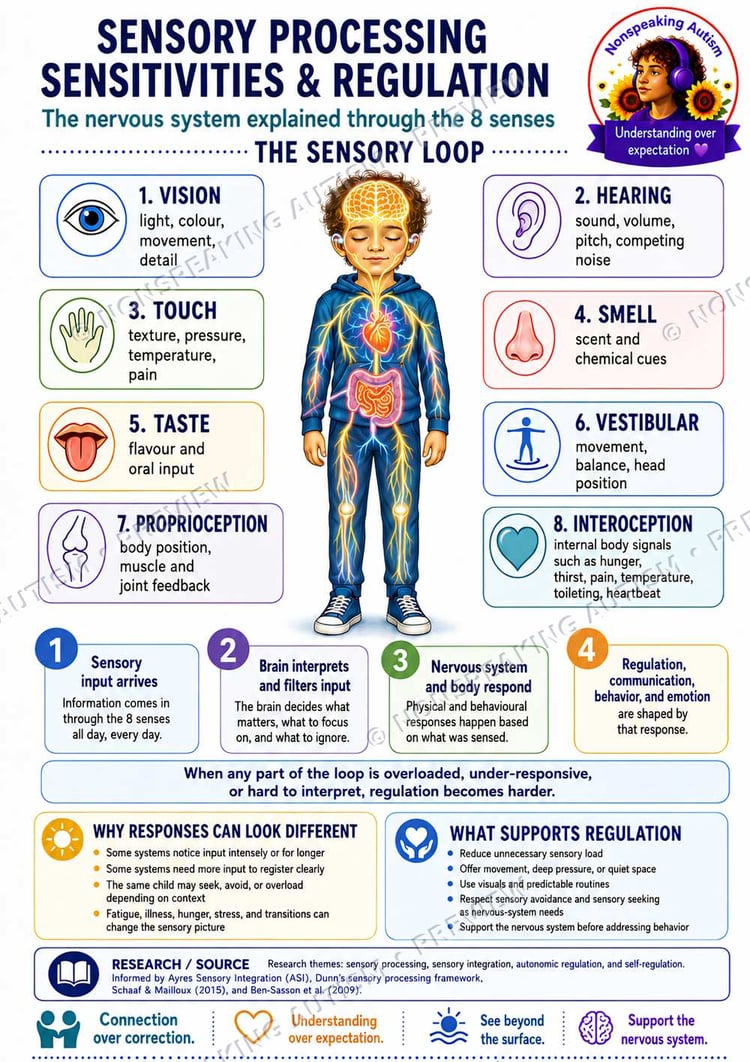
- Neurochemistry & body mapping: proprioceptive input associated with calming effects; deep pressure linked in the literature to reduced cortisol and changes in serotonin/dopamine-related regulation
- What actually helps: offer deep pressure only if sought or well-received, use safe options (weighted items, compression garments, OT-guided strategies), watch for consent and signs of overload
- Grounded in research including Grandin (1992); Reynolds, Lane & Mullen (2015); Ayres Sensory Integration frameworks
What you get:
- High-resolution PDF, print-ready and scalable up to A2 (420 × 594mm)
- Instant digital download
Perfect for: SEND and OT training, therapy rooms, staff CPD, parent carer forums, and personal understanding.
For personal, classroom, and professional educational use. Not for resale or redistribution.
© Nonspeaking Autism
Disclaimer:
This resource is intended for educational and informational purposes only. It is designed to support understanding of autism, sensory processing, nervous system regulation, and behaviour from a neurodevelopmental perspective.
The information provided is not medical, psychological, therapeutic, or legal advice and should not be used as a substitute for assessment, diagnosis, or treatment by a qualified healthcare professional.
Every autistic person is unique. Strategies and supports should always be tailored to the individual's needs, strengths, and circumstances.
If a child displays a sudden change in behaviour, severe distress, signs of illness, injury, or behaviours that place themselves or others at risk, seek appropriate medical advice or emergency assistance where necessary.
While every effort has been made to ensure the information is accurate and reflects current understanding, knowledge in autism and neuroscience continues to evolve.
This resource is for the purchaser's personal, educational, or professional use only. It may not be copied, redistributed, resold, edited, shared publicly, or reproduced in whole or in part without prior written permission.
© Nonspeaking Autism 💙