
Science-Based: Neurobiology of the Flight Response
Science-Based: Neurobiology of the Flight Response — Educational Infographic (Printable, A2)
You will receive the printable unwatermarked version of this infographic
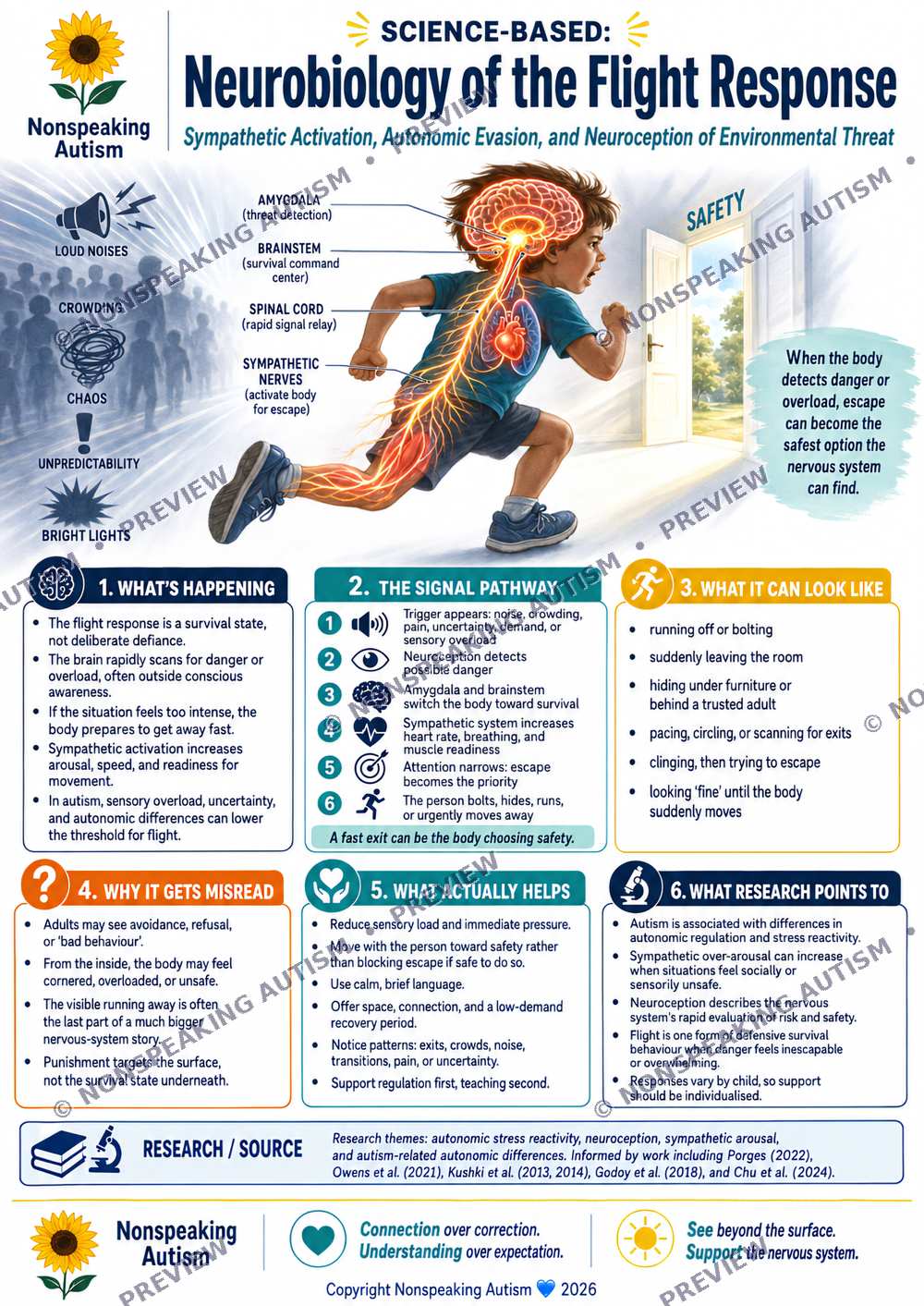
A research-grounded visual explaining sympathetic activation, autonomic evasion, and neuroception of environmental threat — why running off or bolting is a survival state, not deliberate defiance.
This infographic covers:
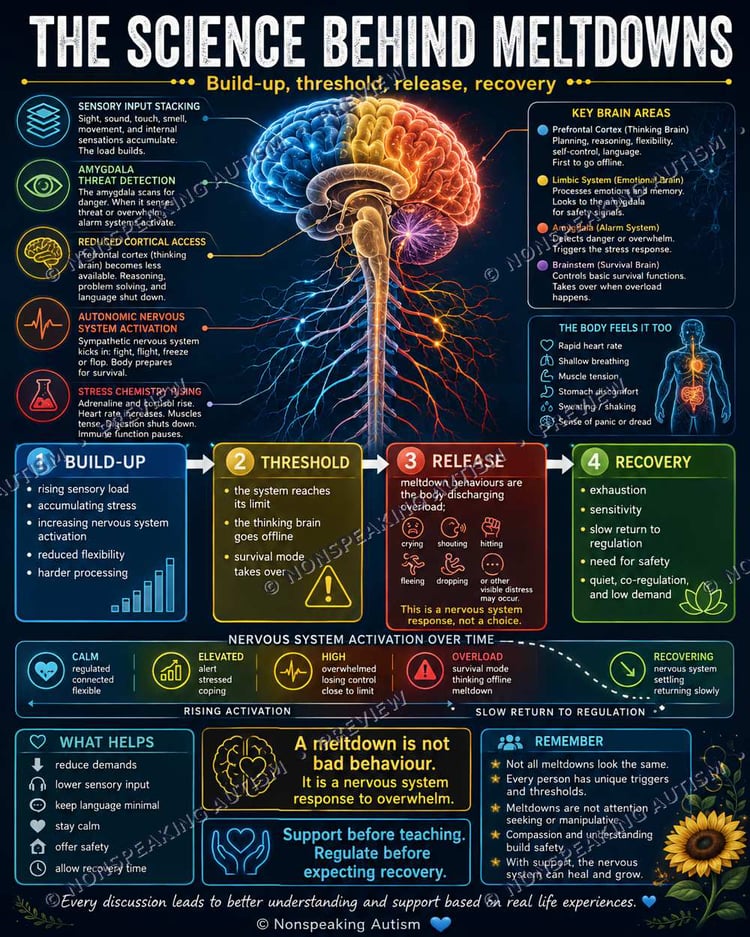
- Anatomical pathway: amygdala (threat detection), brainstem (survival command center), spinal cord (rapid signal relay), sympathetic nerves (activate body for escape)
- Common triggers: loud noises, crowding, chaos, unpredictability, bright lights
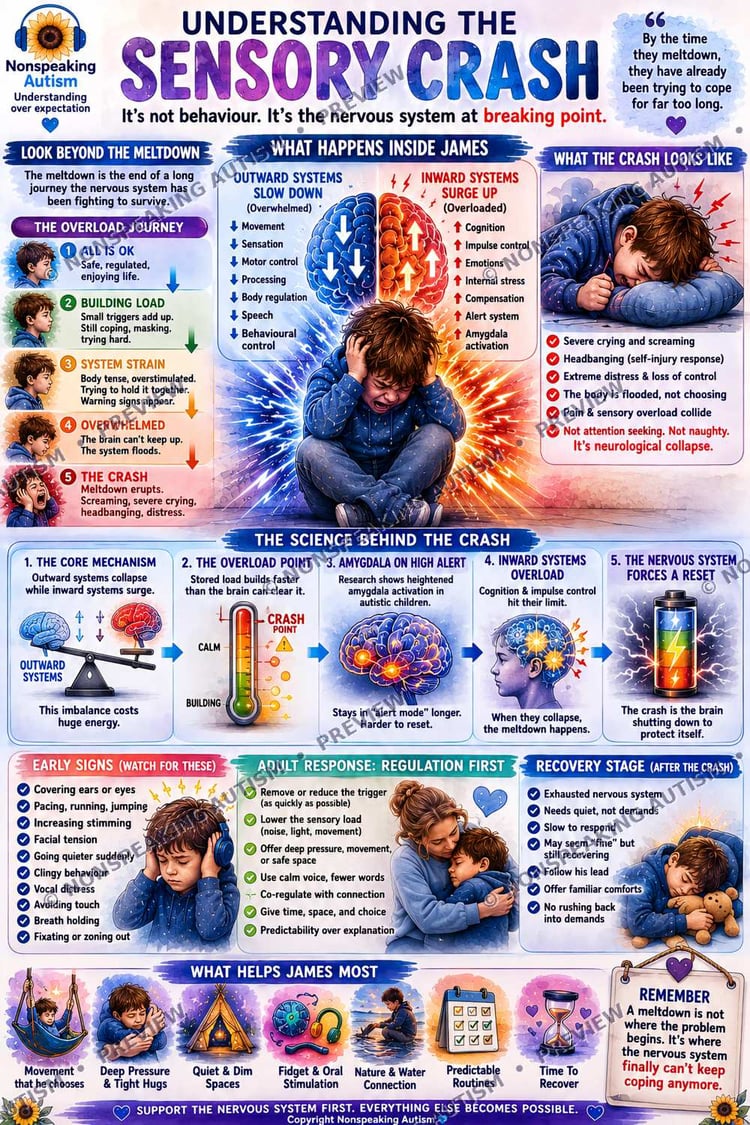
- The signal pathway: trigger appears → neuroception detects possible danger → amygdala and brainstem switch the body toward survival → sympathetic system increases heart rate/breathing/muscle readiness → attention narrows to escape → the person bolts, hides, runs, or urgently moves away
- What it can look like: running off or bolting, suddenly leaving the room, hiding under furniture, pacing or scanning for exits, looking "fine" until the body suddenly moves
- Why it gets misread: adults may see avoidance or "bad behaviour," but the visible running away is often the last part of a much bigger nervous-system story
- What actually helps: reduce sensory load and immediate pressure, move with the person toward safety rather than blocking escape, use calm brief language, notice patterns (exits, crowds, noise, transitions), support regulation first
- Grounded in peer-reviewed research (Porges 2022; Owens et al. 2021; Kushki et al. 2013, 2014; Godoy et al. 2018; Chu et al. 2024)
What you get:
- High-resolution PDF, print-ready and scalable up to A2 (420 × 594mm)
- Instant digital download
Perfect for: SEND and clinical training, therapy rooms, staff CPD, parent carer forums, and personal understanding.
For personal, classroom, and professional educational use. Not for resale or redistribution.
© Nonspeaking Autism
Disclaimer:
This resource is intended for educational and informational purposes only. It is designed to support understanding of autism, sensory processing, nervous system regulation, and behaviour from a neurodevelopmental perspective.
The information provided is not medical, psychological, therapeutic, or legal advice and should not be used as a substitute for assessment, diagnosis, or treatment by a qualified healthcare professional.
Every autistic person is unique. Strategies and supports should always be tailored to the individual's needs, strengths, and circumstances.
If a child displays a sudden change in behaviour, severe distress, signs of illness, injury, or behaviours that place themselves or others at risk, seek appropriate medical advice or emergency assistance where necessary.
While every effort has been made to ensure the information is accurate and reflects current understanding, knowledge in autism and neuroscience continues to evolve.
This resource is for the purchaser's personal, educational, or professional use only. It may not be copied, redistributed, resold, edited, shared publicly, or reproduced in whole or in part without prior written permission.
© Nonspeaking Autism 💙