
School Sensory Profile & Accommodation Checklist
School Sensory Profile & Accommodation Checklist
Understand sensory needs. Create supportive environments. Reduce distress. Increase access and participation.
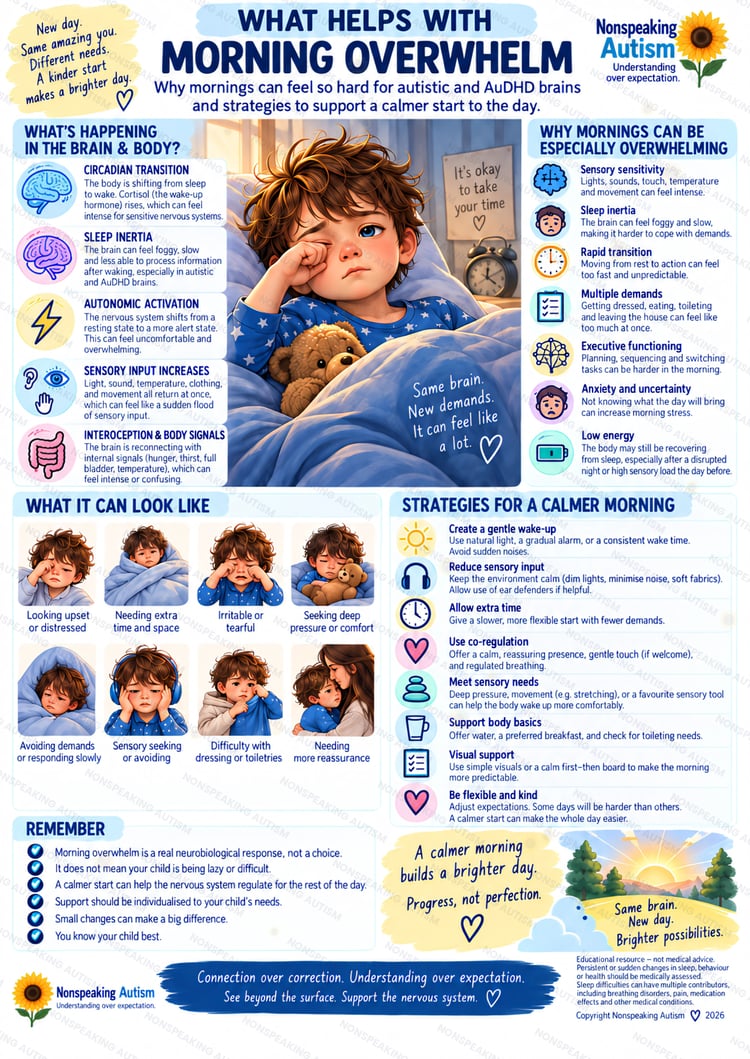
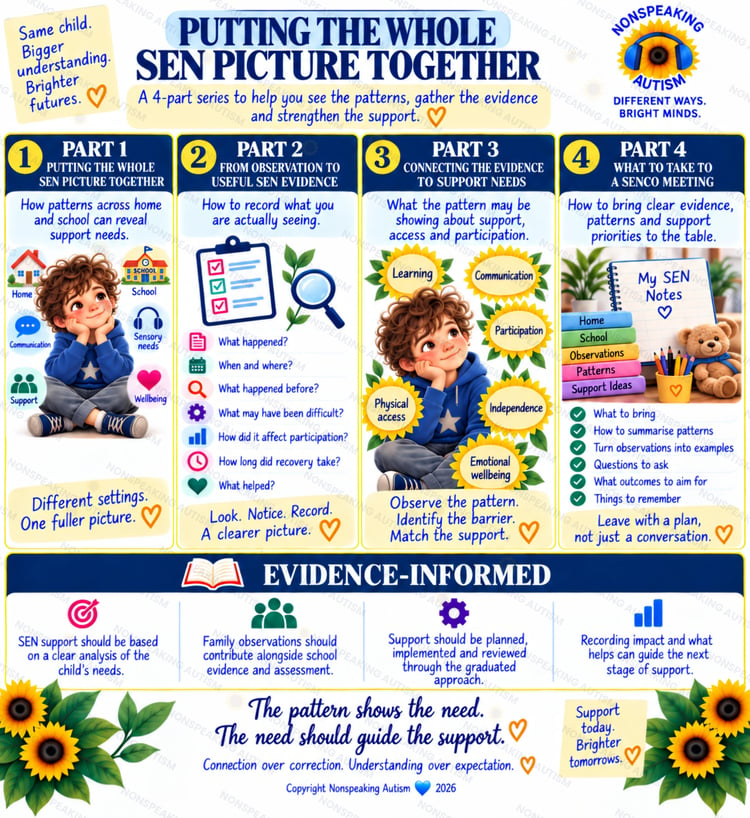
A student who covers their ears in assembly, struggles to sit still, avoids the dining hall, becomes distressed by clothing, needs movement throughout the day or appears overwhelmed in a visually busy classroom may not simply be “distracted” or “difficult.”
The environment may be placing demands on their sensory system that make learning, communication, regulation and participation harder.
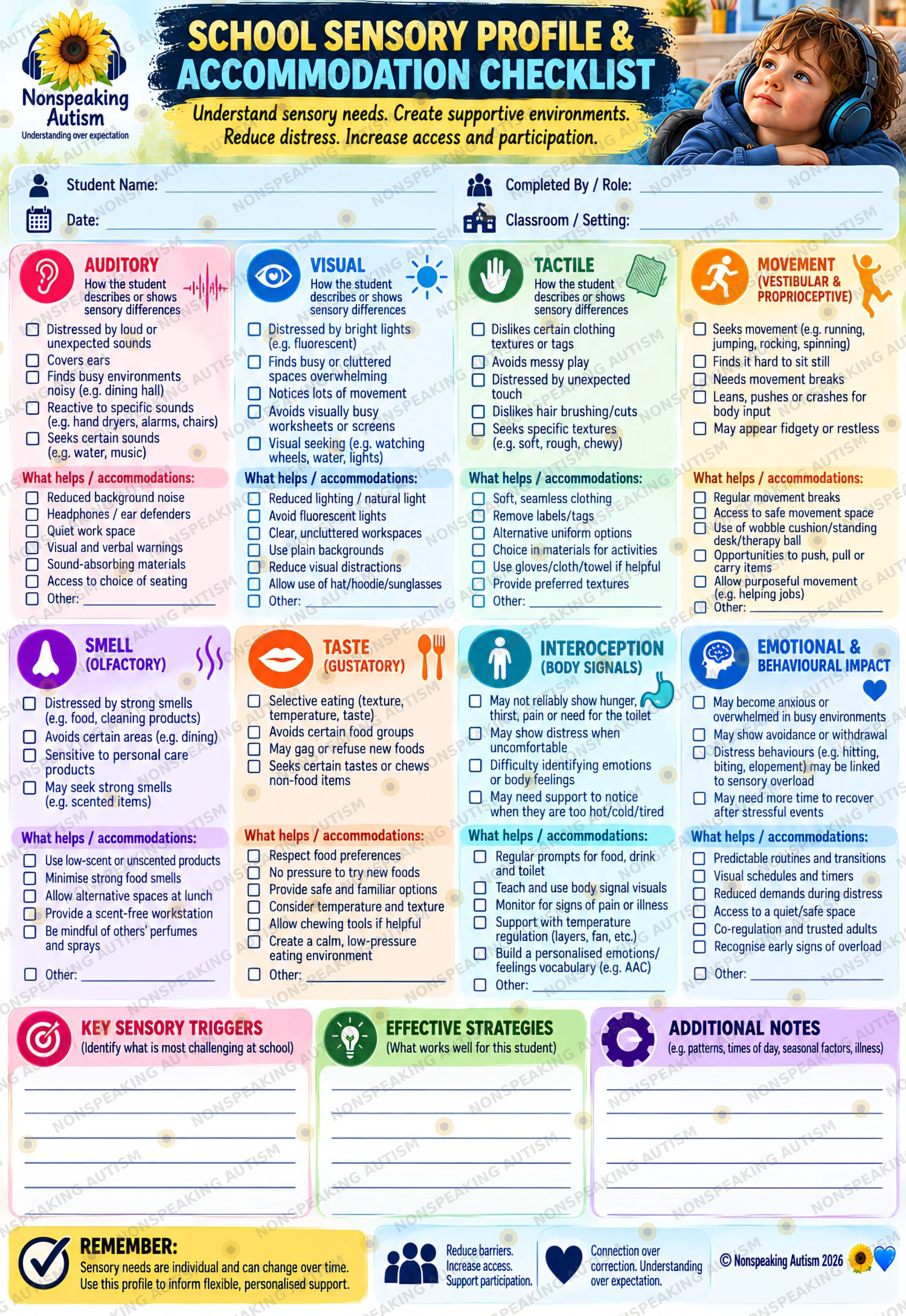
The School Sensory Profile & Accommodation Checklist is a practical, neurodiversity-affirming printable designed to help schools, families and professionals observe patterns, identify possible sensory barriers and record accommodations that may help an individual student.
It brings multiple areas of sensory experience together in one easy-to-use document so that support can move beyond:
“What behaviour are we seeing?”
towards:
“What might be making this environment harder to access — and what can we change?”
🧠 What This Checklist Covers
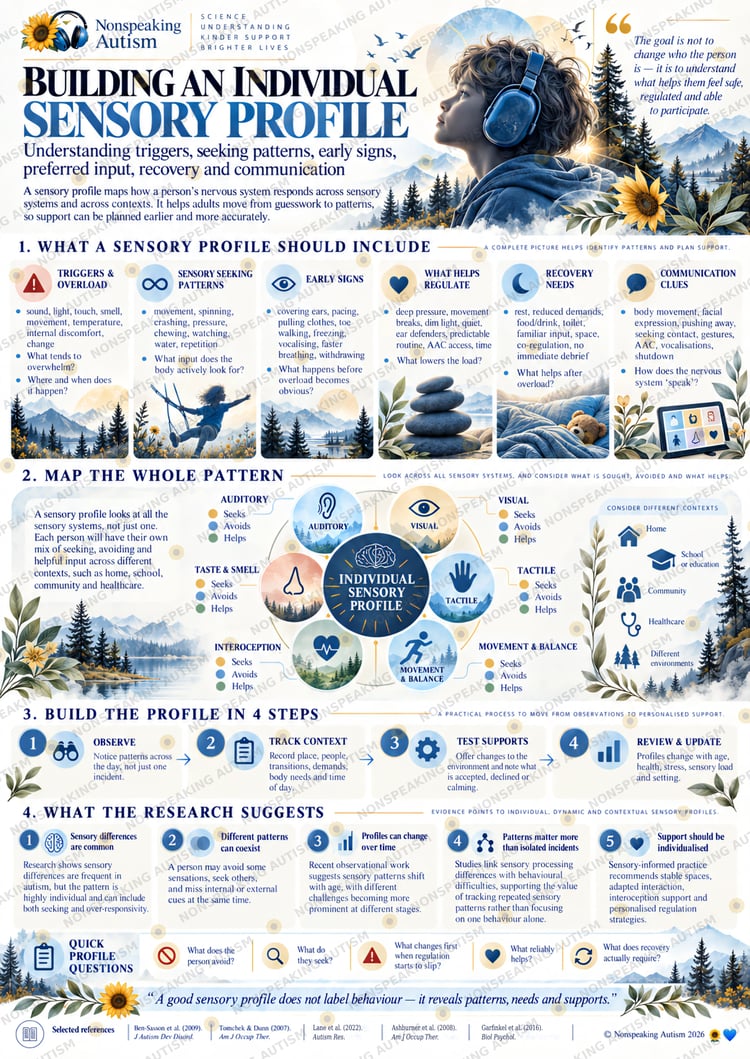
The resource provides dedicated sections for:
👂 Auditory Processing
👁️ Visual Processing
✋ Tactile Processing
🏃 Movement — Vestibular & Proprioceptive Input
👃 Smell — Olfactory Processing
👄 Taste — Gustatory Processing
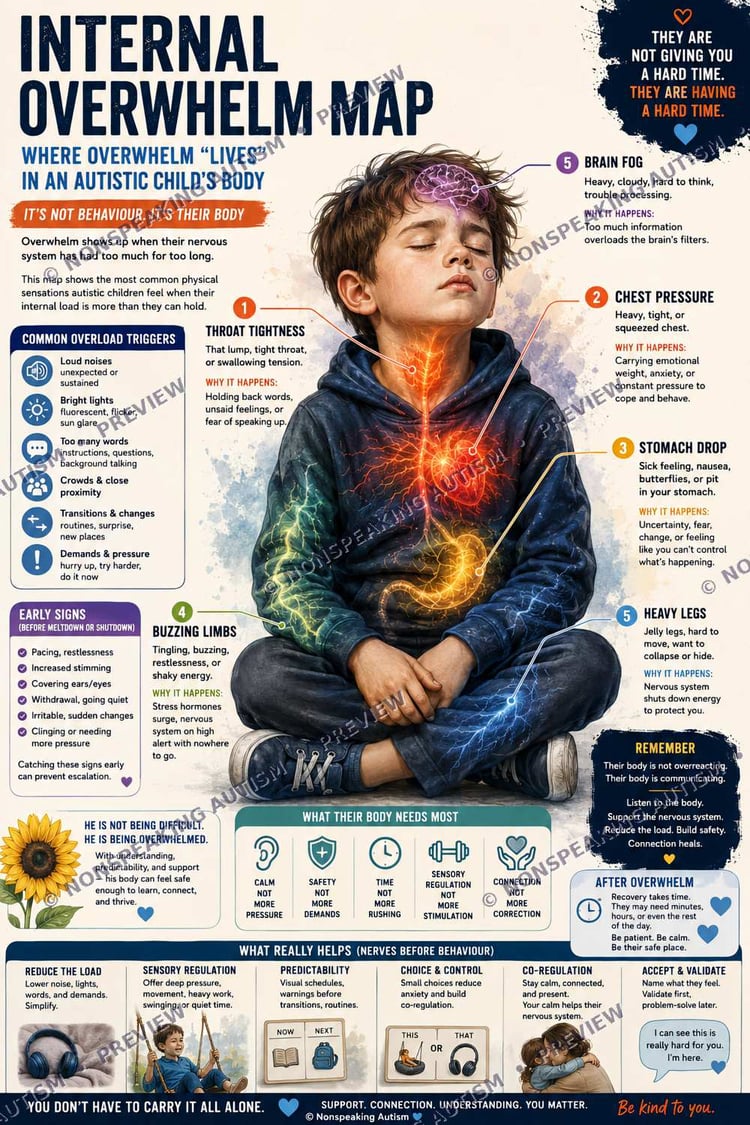
🫀 Interoception — Internal Body Signals
💙 Emotional & Behavioural Impact
Each section includes examples of possible sensory differences alongside a practical “What helps / accommodations” checklist.
There is also space to record:
Key Sensory Triggers
Effective Strategies
and
Additional Notes
so the finished profile can reflect the individual student rather than a generic sensory checklist.
👂 Auditory — Sound
School can be an extremely demanding auditory environment.
Possible patterns may include:
distress around loud or unexpected sounds
covering the ears
finding dining halls or busy classrooms overwhelming
reacting strongly to hand dryers, alarms or scraping chairs
or
seeking particular sounds
Potential accommodations listed include:
reducing unnecessary background noise
headphones or ear defenders where appropriate
access to quieter workspaces
advance warning before predictable loud sounds
sound-absorbing materials
and
choice of seating
The aim is not necessarily to make the student tolerate more noise.
Sometimes the appropriate intervention is simply to make the environment less unnecessarily overwhelming.
👁️ Visual — Light & Visual Information
Sensory load is not limited to sound.
Some students may find:
bright or fluorescent lighting
visual clutter
busy walls
crowded worksheets
rapid movement
or highly stimulating screens difficult to process.
Others may actively seek visual input such as watching lights, movement, wheels or water.
Possible accommodations include:
reduced or natural lighting
clearer, less cluttered workspaces
plain backgrounds
reducing unnecessary visual distractions
allowing appropriate hats, hoods or sunglasses where suitable
The important question is:
Does the visual environment help this student access learning — or compete with it?
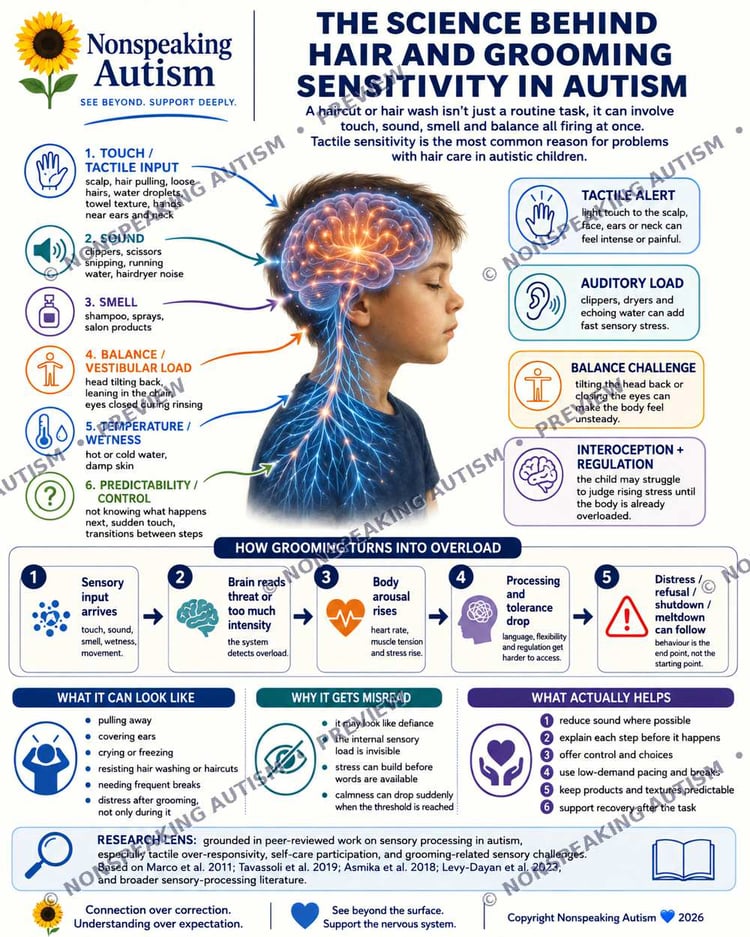
✋ Tactile — Touch
Touch differences can affect much more than whether a student likes being hugged.
Consider:
clothing textures
labels and seams
messy play
unexpected touch
hair brushing
particular materials
and the student's own preferred textures.
Support may include:
soft, seamless clothing
removing irritating labels
alternative uniform arrangements where appropriate
choice of materials
gloves, cloths or towels where useful
access to preferred textures
A sensory accommodation should increase access — not become another demand the student has to tolerate.
🏃 Movement, Vestibular & Proprioceptive Needs
Some students regulate more effectively when they can move.
They may:
run
jump
rock
spin
fidget
lean
push
crash into objects
seek pressure
or struggle significantly with prolonged sitting.
Rather than viewing movement automatically as off-task behaviour, consider what function it may be serving.
Possible supports include:
regular movement opportunities
access to an appropriate movement space
alternative seating or positioning
opportunities to push, pull or carry appropriate objects
purposeful movement through classroom jobs
The goal is not necessarily:
“How do we make this child sit still?”
It may instead be:
“What does their body need in order to participate?”
👃 Smell — Olfactory Processing
School contains many smells adults may barely notice:
food
cleaning products
perfume
deodorant
art materials
toilets
dining areas
and other people's personal-care products.
For someone highly sensitive to smell, these can become substantial environmental barriers.
Possible adjustments include:
low-scent or unscented products
minimizing strong food smells where feasible
alternative eating spaces
a lower-scent workspace
and awareness of strong perfumes or sprays.
A smell that seems minor to one person may be extremely intense to another.
👄 Taste — Gustatory Processing
Eating at school can involve several sensory demands simultaneously.
The student may respond to:
texture
taste
temperature
smell
appearance
and unfamiliarity.
The checklist encourages adults to consider:
respecting food preferences
avoiding unnecessary pressure to try unfamiliar foods
providing familiar and accepted options
considering temperature and texture
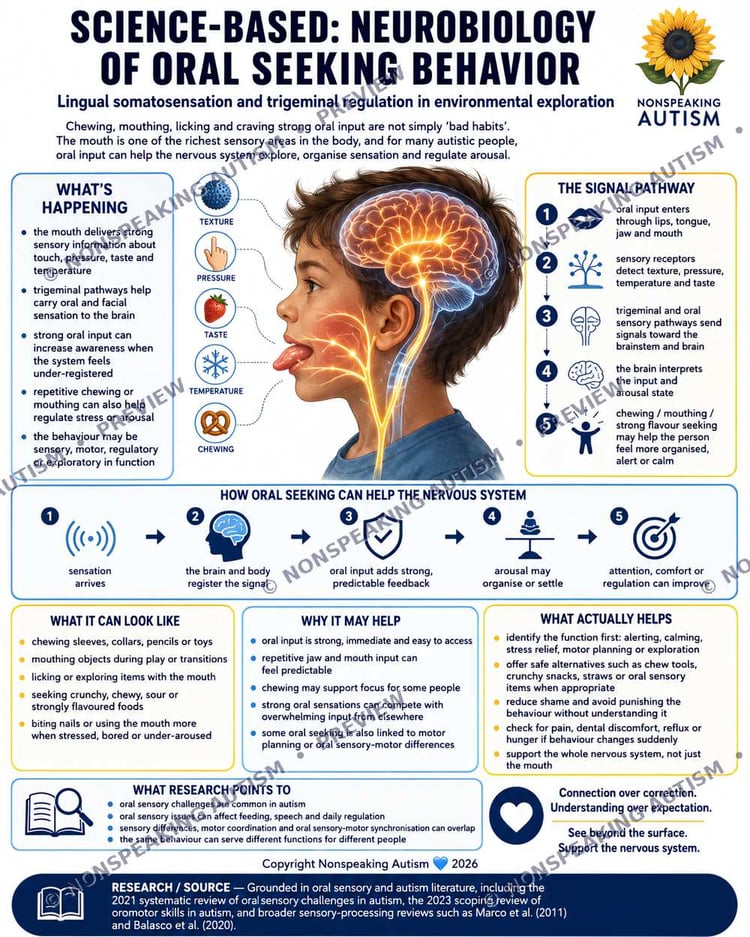
allowing appropriate oral-sensory alternatives where needed
and creating a calmer, lower-pressure eating environment.
Food restriction can have many causes, however, and significant nutritional, swallowing, growth or feeding concerns require appropriate professional assessment.
🫀 Interoception — Internal Body Signals
Interoception refers broadly to sensing signals arising from inside the body.
These can include signals associated with:
hunger
thirst
toileting
temperature
pain
fatigue
and emotional/body states.
Some students may notice or interpret these signals differently or inconsistently.
Possible support may include:
predictable opportunities for food, drink and toileting
body-signal visuals
watching for possible signs of pain or illness
temperature-regulation support
and building an individualized vocabulary or communication system for internal sensations.
This should never mean assuming every behavioural change is sensory.
Pain and illness must remain part of the picture.
💙 Emotional & Behavioural Impact
Sensory overload can affect far more than comfort.
A student who is overwhelmed may:
become anxious
withdraw
seek escape
require additional recovery time
or communicate distress through changes in behaviour.
Behaviours such as hitting, biting or attempting to leave an environment can sometimes occur during severe overload — but they should never automatically be attributed to sensory processing.
Possible contributors such as:
pain
illness
communication barriers
fear
demands
fatigue
learning needs
relationships
and environmental factors should also be considered.
Helpful supports may include:
predictable routines
visual schedules
timers
reduced demands during distress
access to quieter spaces
co-regulation
and learning the student's earliest reliable signs of overload.
📝 Identify the Individual Pattern
One of the most useful parts of this printable is the space to record:
🎯 Key Sensory Triggers
What appears to create the greatest difficulty at school?
💡 Effective Strategies
What has actually helped this particular student?
⚙️ Additional Notes
Record patterns such as:
particular times of day
specific lessons
transitions
seasonal changes
fatigue
illness
staffing changes
environmental differences
or other useful observations.
Over time, this can help turn disconnected observations into a clearer picture.
🌻 Accommodations Should Be Individualized
A sensory strategy is not automatically helpful because it appears on a sensory-support list.
Ear defenders may be invaluable for one student and unpleasant for another.
Movement may regulate one person but increase arousal for someone else.
A quiet space may help one student recover while another feels isolated there.
The checklist should therefore be used to generate possibilities to explore, not prescriptions.
Observe → Try → Monitor → Adjust
Support should respond to the individual.
🤝 Student Voice Matters
Wherever possible, involve the student themselves.
Depending on their communication profile, this may happen through:
speech
AAC
symbols
visual choices
writing
typing
gesture
drawing
observation combined with accessible choices
or another reliable communication method.
Adults should not assume they know what a sensory experience feels like simply from observing behaviour.
A strong sensory profile is created with the student wherever possible, not merely about them.
🏫 Using the Checklist in School
This resource can help inform conversations between:
families
teachers
teaching assistants
SENCOs
occupational therapists
speech and language therapists
pastoral staff
school leadership
and other professionals supporting the student.
It may also provide a useful starting point for discussing reasonable adjustments and individualized classroom support, although completing the checklist itself is not a formal assessment and does not automatically establish eligibility for any particular provision.
🔬 Research-Informed
Sensory processing differences are well documented in autism research and are recognized within current diagnostic descriptions of autism.
Research also shows substantial individual variation. Autistic people may experience heightened responses, reduced responses or sensory-seeking patterns, and the same person's responses can differ according to context and state.
Environmental accommodations can therefore be an important part of improving access and participation.
The purpose of sensory support should not be to make a student appear less autistic.
It should be to reduce unnecessary barriers and support meaningful participation, comfort, communication and learning.
📚 Research & Guidance Behind This Resource
This resource is informed by research examining sensory processing differences in autistic children, the relationship between sensory processing and everyday participation, classroom outcomes, environmental accessibility, food selectivity, interoception and pain communication.
Selected research includes:
Tomchek, S. D., & Dunn, W. (2007). Sensory processing in children with and without autism: A comparative study using the Short Sensory Profile. American Journal of Occupational Therapy, 61(2), 190–200.
Ben-Sasson, A., et al. (2009). A meta-analysis of sensory modulation symptoms in individuals with autism spectrum disorders. Journal of Autism and Developmental Disorders, 39(1), 1–11.
Ashburner, J., Ziviani, J., & Rodger, S. (2008). Sensory processing and classroom emotional, behavioral, and educational outcomes in children with autism spectrum disorder. American Journal of Occupational Therapy, 62(5), 564–573.
Ismael, N., Lawson, L. M., & Hartwell, J. (2018). Relationship between sensory processing and participation in daily occupations for children with autism spectrum disorder. American Journal of Occupational Therapy, 72(3), 7203205030.
Dunn, W. (2007). Supporting children to participate successfully in everyday life by using sensory processing knowledge. Infants & Young Children, 20(2), 84–101.
Pfeiffer, B., Stein Duker, L., Murphy, A., & Shui, C. (2019). Effectiveness of noise-attenuating headphones on physiological responses for children with autism spectrum disorders. Frontiers in Integrative Neuroscience, 13, 65. Frontiers
Black, M. H., et al. (2022). Considerations of the built environment for autistic individuals: A review of the literature. Autism, 26(8), 1904–1915.
Cermak, S. A., Curtin, C., & Bandini, L. G. (2010). Food selectivity and sensory sensitivity in children with autism spectrum disorders. Journal of the American Dietetic Association, 110(2), 238–246. PubMed
Garfinkel, S. N., et al. (2016). Discrepancies between dimensions of interoception in autism: Implications for emotion and anxiety. Biological Psychology, 114, 117–126.
Kinnaird, E., Stewart, C., & Tchanturia, K. (2019). Investigating alexithymia in autism: A systematic review and meta-analysis. European Psychiatry, 55, 80–89.
Johnson, E., van Zijl, K., & Kuyler, A. (2023). Pain communication in children with autism spectrum disorder: A scoping review. Paediatric and Neonatal Pain, 5(4), 127–141. PubMed
National Institute for Health and Care Excellence (NICE). (2013). Autism spectrum disorder in under 19s: Support and management (CG170).
🔬 Evidence Note
These references support the overall principles and individual sections of the resource, rather than implying that every checklist item has been independently validated as a specific intervention.
Sensory experiences vary substantially between autistic people. A strategy that helps one student may be ineffective or uncomfortable for another. This checklist should therefore be used to identify possible patterns, guide discussion and inform individualized accommodations, not as a diagnostic or standardized sensory assessment.
👨👩👧 Who Is This Resource For?
This checklist may be useful for:
- autistic students
- students with identified or suspected sensory differences
- parents and caregivers
- teachers
- teaching assistants
- SENCOs and SEND teams
- occupational therapists
- speech and language therapists
- pastoral teams
- learning-support staff
- special schools and mainstream schools
- alternative provisions
- home-education settings
- multidisciplinary teams
It can also support communication between home and school when sensory needs appear differently across environments.
📦 What You Receive
This download includes:
1 × School Sensory Profile & Accommodation Checklist
1 × high-resolution printable PDF
The downloaded resource is supplied clear and without the promotional preview watermark shown on the Payhip listing image.
Watermarks visible on the listing images are used for preview and copyright protection only and will not appear on the downloadable resource.
💛 FREE DIGITAL DOWNLOAD
This resource is provided free of charge through Payhip to help make practical sensory-support information accessible to families, schools and professionals.
Digital download only — no physical product will be shipped.
⚠️ Important Educational & Professional Disclaimer
This checklist is provided for educational, observational and planning purposes only.
It is not a diagnostic tool, standardized sensory assessment, medical assessment, occupational therapy assessment, psychological assessment, behaviour assessment or individualized treatment plan.
Checking an item does not establish a diagnosis, determine the cause of a behaviour or prove that a particular sensory system is responsible.
Sensory responses are individual and can change according to environment, health, fatigue, stress, communication demands, development and other circumstances.
Strategies and accommodations should be individualized. Where appropriate, decisions should involve the student, their family, school and suitably qualified professionals.
Changes in behaviour, eating, toileting, movement, communication or sensory tolerance should not automatically be attributed to autism or sensory processing. New, severe, persistent or unexplained changes — including suspected pain, illness, hearing or vision difficulties, feeding concerns or other health problems — warrant appropriate professional assessment.
This resource should not be used to encourage forced exposure to distressing sensory input, suppress harmless self-regulation or replace reasonable individualized accommodations.
💛 The Message Behind the Resource
Sometimes a student does not need another reminder to:
sit still
stop covering their ears
ignore the noise
wear the uncomfortable clothing
cope with the dining hall
or
try harder to concentrate.
Sometimes the environment needs to change.
A pair of ear defenders.
A different seat.
A movement break.
Less visual clutter.
A familiar food.
A quieter workspace.
More processing time.
A way to communicate:
“This is too much.”
Small adjustments can remove very large barriers.
The aim is not to create a child who tolerates everything.
It is to create environments in which the student has a better chance to feel safe, communicate, learn and participate.
Understand sensory needs. Create supportive environments.
Reduce barriers. Increase access. Support participation. 💙
Connection over correction. Understanding over expectation.
© Nonspeaking Autism 2026 🌻💙