
Whole-Body Feelings Wheel (Ages 6 to 9 / 10 to 12 / 13 to 17)
Whole-Body Feelings Wheel (Ages 6 to 9 / 10 to 12 / 13 to 17)
Your body often knows what you feel before your brain does.
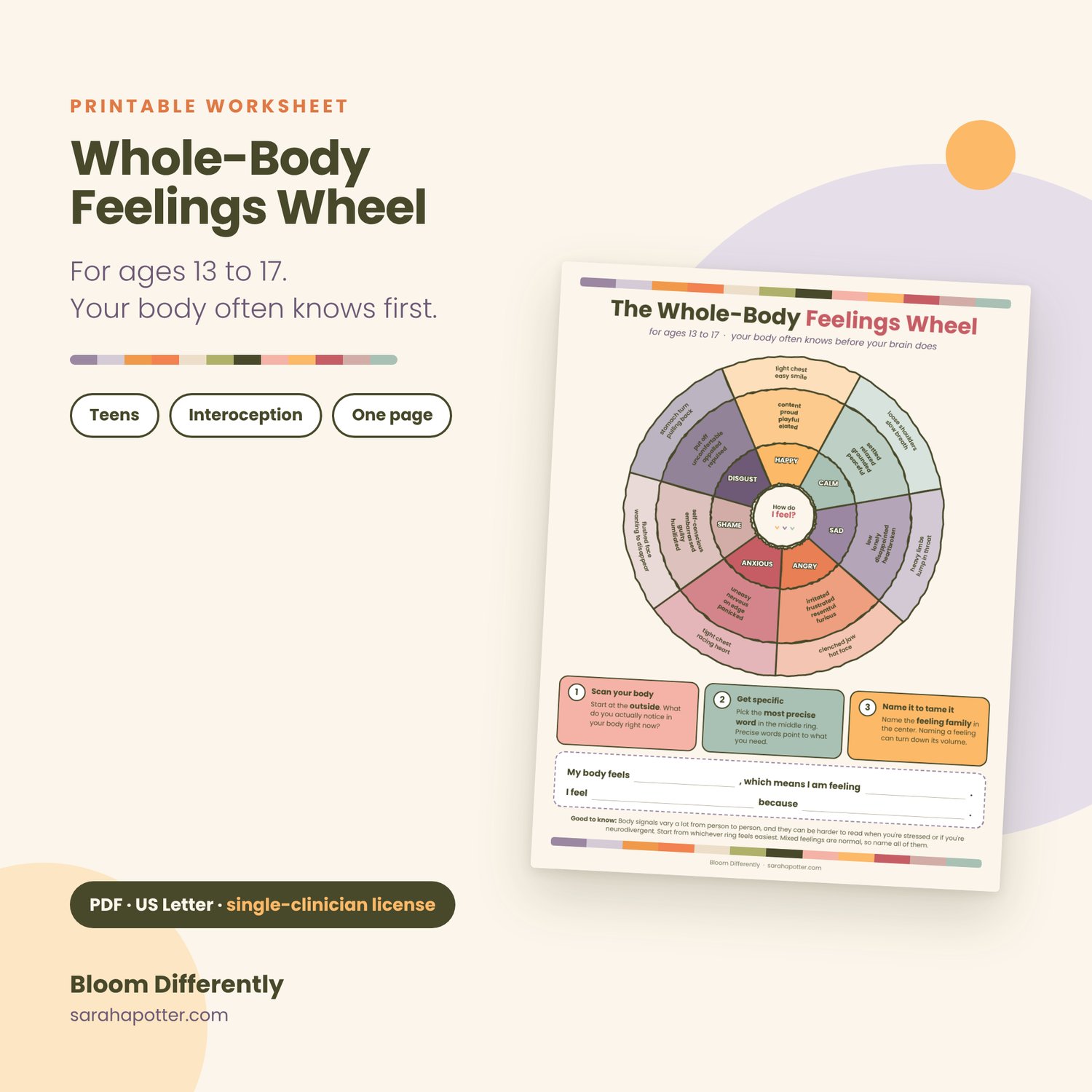
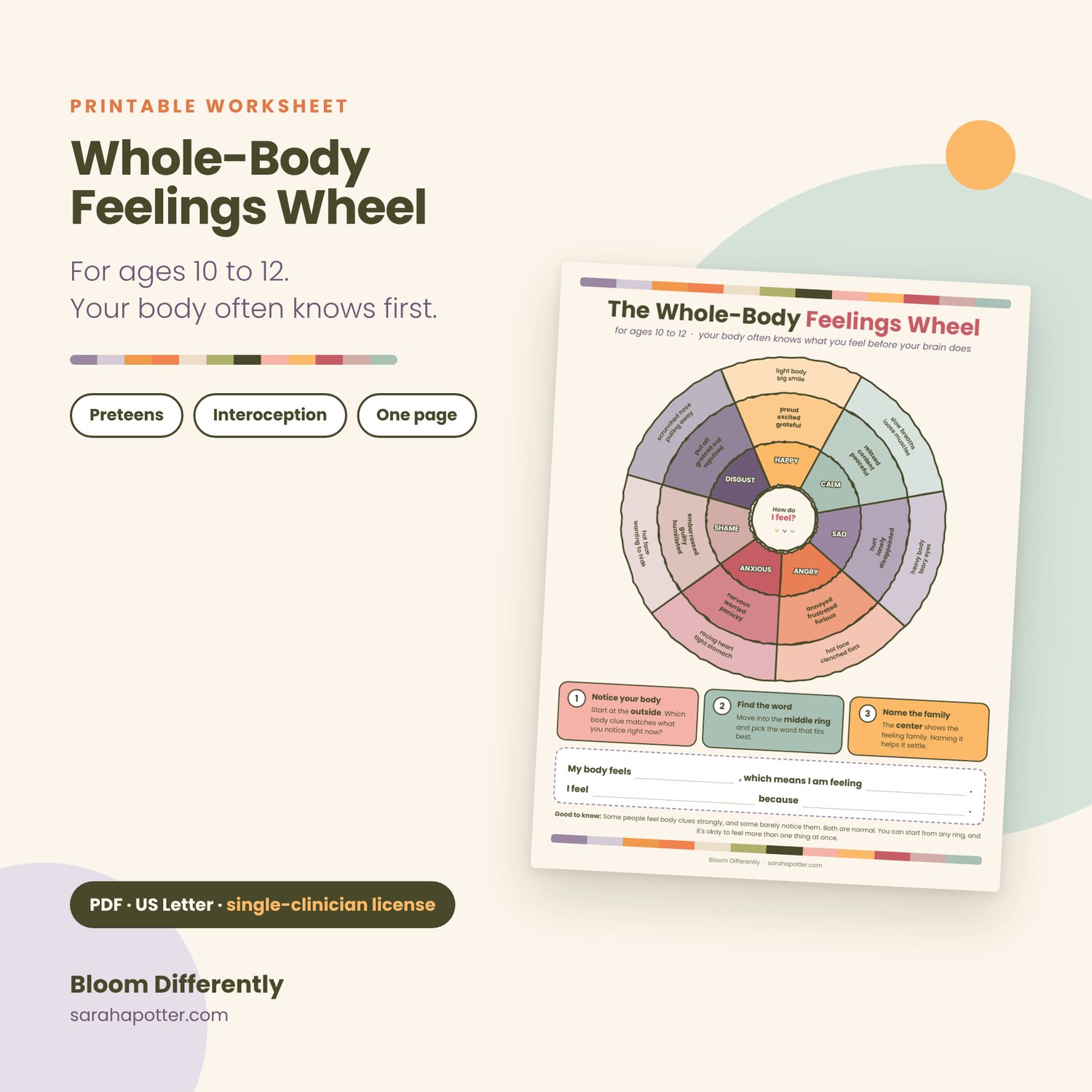
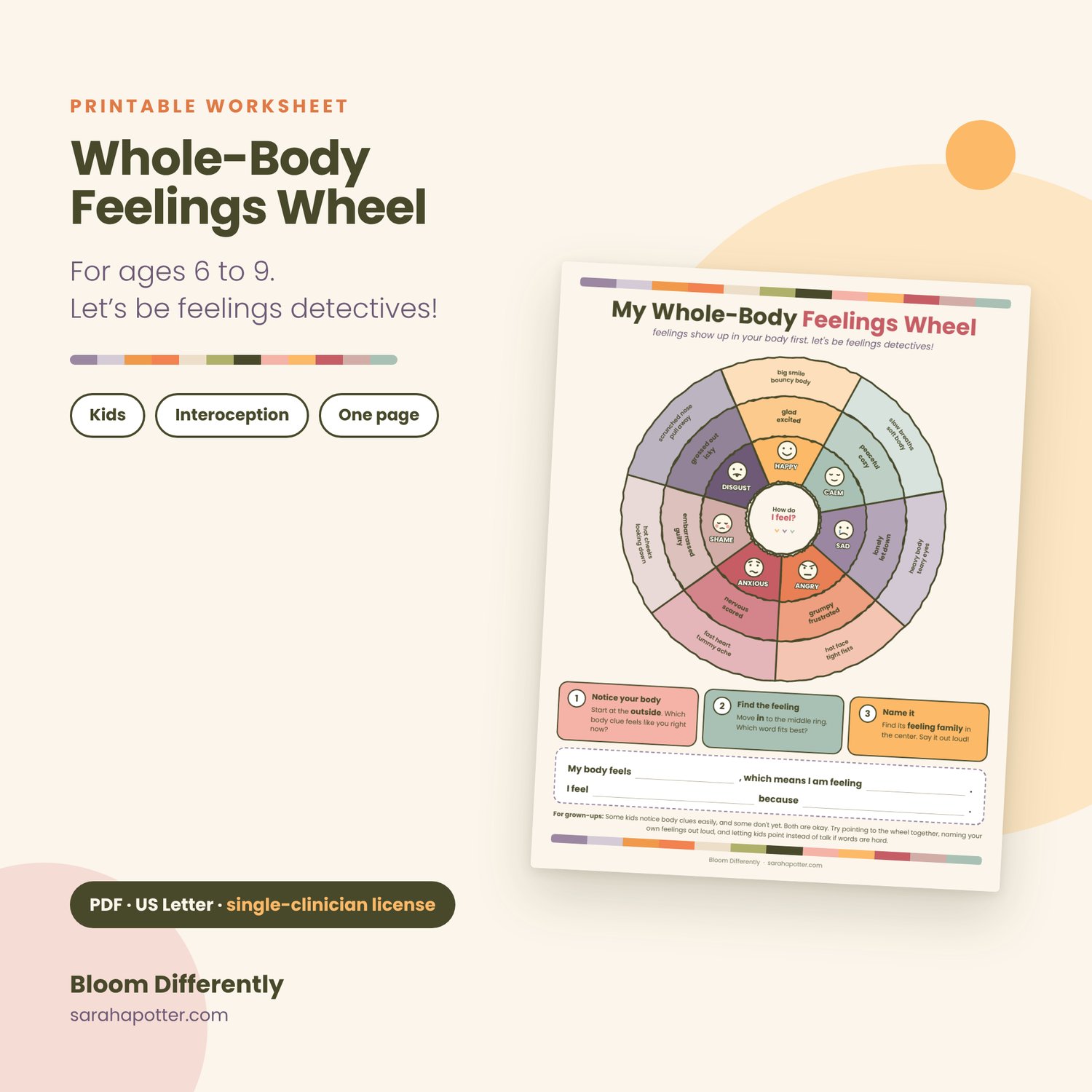
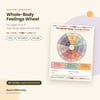
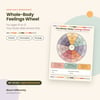
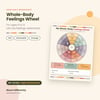
Traditional feelings wheels start with words, but many kids and teens feel it before they can say it. This one-page wheel flips that: you start on the outside with body clues, like a hot face, heavy limbs or a tight throat, and work inward to a precise feeling word. It builds interoception and emotional vocabulary at the same time.
What’s inside (all three ages)
- A three-ring wheel: body sensations on the outside, specific feeling words in the middle, and seven feeling families in the center (happy, calm, sad, anxious, angry, shame and disgust).
- Three simple steps: notice your body, find the feeling, and name the family. The teen version adds “name it to tame it.”
- A fill-in sentence: “My body feels ___, which means I am feeling ___ because ___.”
- A neurodivergent-friendly note: body signals vary from person to person and can be harder to read under stress or for neurodivergent folks, so start from whichever ring feels easiest, and mixed feelings are normal.
Ages 6 to 9: “My Whole-Body Feelings Wheel”
Playful “let’s be feelings detectives!” framing, with simple body clues like a bouncy body or a heavy body, little faces in the center to support pre-readers, and a note for grown-ups. Great for play therapy, school counseling and family sessions.
Ages 10 to 12
More detailed body clues and feeling words for preteens who are ready for nuance, without feeling babyish. Ideal for upper elementary and middle school counseling.
Ages 13 to 17
Mature design and vocabulary, with more precise words like humiliated, self-conscious and pulled in. “Get specific” and “name it to tame it” prompts help teens with alexithymia, anxiety and emotion regulation work.
Ways to use it
- Use it as a session check-in: “Start with your body. What do you notice?”
- Laminate it for repeated use with a dry-erase marker.
- Pair it with any emotion regulation lesson as the “name it” step.
- Keep one in a calm-down corner, backpack or locker.
Why it’s different
Body first, words second. It meets kids and teens where they actually are, especially autistic, ADHD and sensory-sensitive kids, and those who freeze when asked “How do you feel?”
What you get
A one-page printable PDF, US Letter, available as an instant download. Single-clinician license included.
Pairs well with: the Emotions 101 sheet for the same age, Feelings + Needs Inventory, and the Coping Skills sheet for the same age.
These three would also make an easy bundle, especially for school counselors who work with every age.