
Sensory Decoding: Hot Weather
Sensory Decoding: Hot Weather — Educational Infographic (Printable, A2)
You will receive the printable unwatermarked version of this infographic
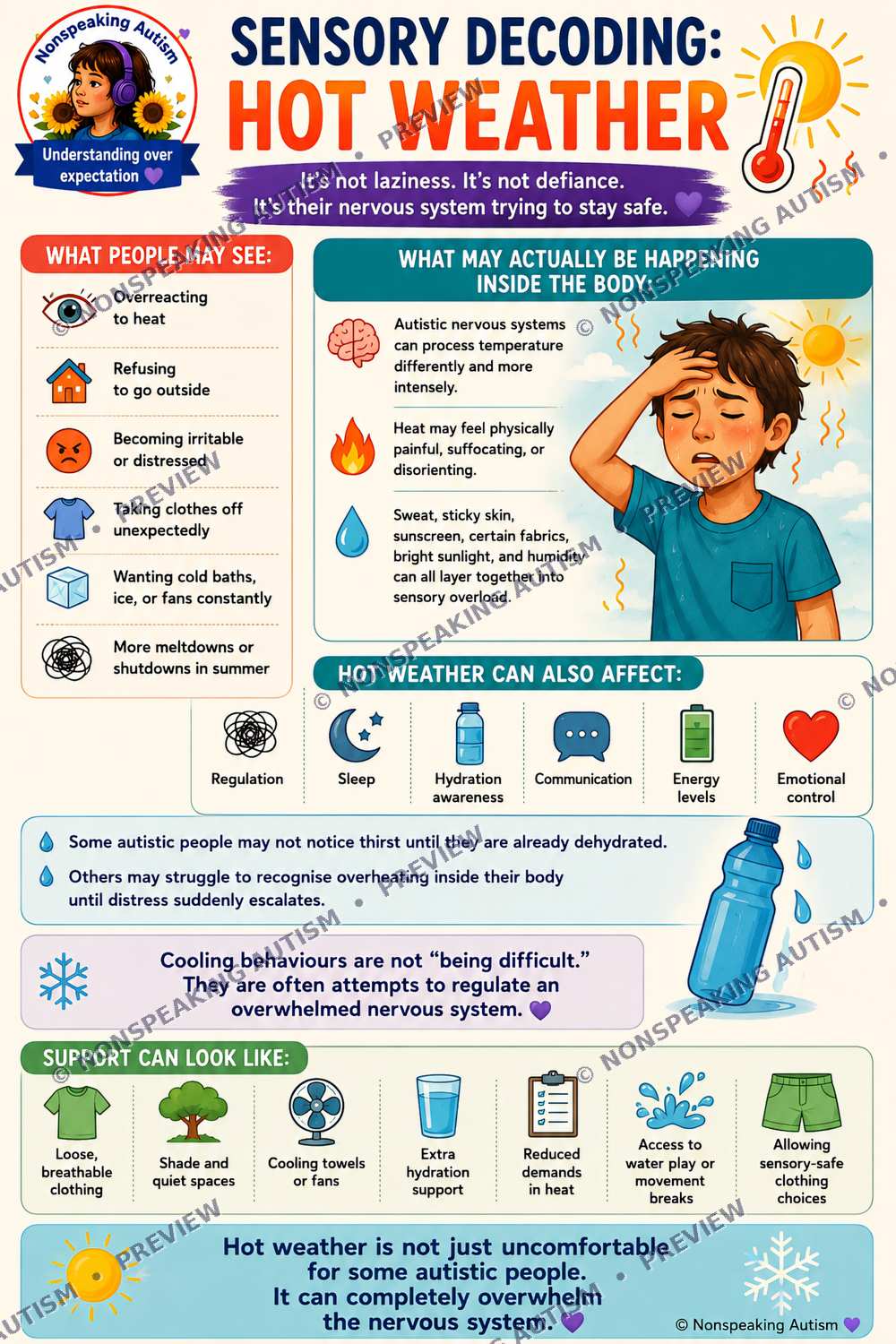
A clear, compassionate visual explaining why hot weather can be so much more than uncomfortable for autistic people — it's their nervous system trying to stay safe.
This infographic covers:
- What people may see: overreacting to heat, refusing to go outside, taking clothes off unexpectedly, wanting cold baths/ice/fans constantly
- What may actually be happening inside the body: heat processed differently and more intensely, feeling physically painful or disorienting, sensory layering (sweat, sunlight, fabrics, humidity)
- How hot weather can also affect regulation, sleep, hydration awareness, communication, energy, and emotional control
- Why cooling behaviours aren't "being difficult" — they're regulation attempts
- Practical support: loose breathable clothing, shade, cooling towels, hydration support, reduced demands, sensory-safe clothing choices
What you get:
- High-resolution PDF, print-ready and scalable up to A2 (420 × 594mm)
- Instant digital download
Perfect for: SEND training, therapy rooms, classrooms, parent carer forums, and home use.
For personal, classroom, and professional educational use. Not for resale or redistribution.
© Nonspeaking Autism
Disclaimer:
This resource is intended for educational and informational purposes only. It is designed to support understanding of autism, sensory processing, nervous system regulation, and behaviour from a neurodevelopmental perspective.
The information provided is not medical, psychological, therapeutic, or legal advice and should not be used as a substitute for assessment, diagnosis, or treatment by a qualified healthcare professional.
Every autistic person is unique. Strategies and supports should always be tailored to the individual's needs, strengths, and circumstances.
If a child displays a sudden change in behaviour, severe distress, signs of illness, injury, or behaviours that place themselves or others at risk, seek appropriate medical advice or emergency assistance where necessary.
While every effort has been made to ensure the information is accurate and reflects current understanding, knowledge in autism and neuroscience continues to evolve.
This resource is for the purchaser's personal, educational, or professional use only. It may not be copied, redistributed, resold, edited, shared publicly, or reproduced in whole or in part without prior written permission.
© Nonspeaking Autism 💙