
Part 1 — Putting the Whole SEN Picture Together
🌻 Part 1 — Putting the Whole SEN Picture Together
How Patterns Across Home and School Can Reveal Support Needs
A child's support needs do not always appear in one obvious place.
A child may cope throughout the school day and struggle afterwards. Sensory overload may appear separately from communication changes. Difficulties with transitions, movement, social understanding, emotional regulation or recovery may be noticed by different adults at different times.
Viewed individually, these experiences can appear unrelated.
Viewed together, they may reveal a much clearer SEN picture.
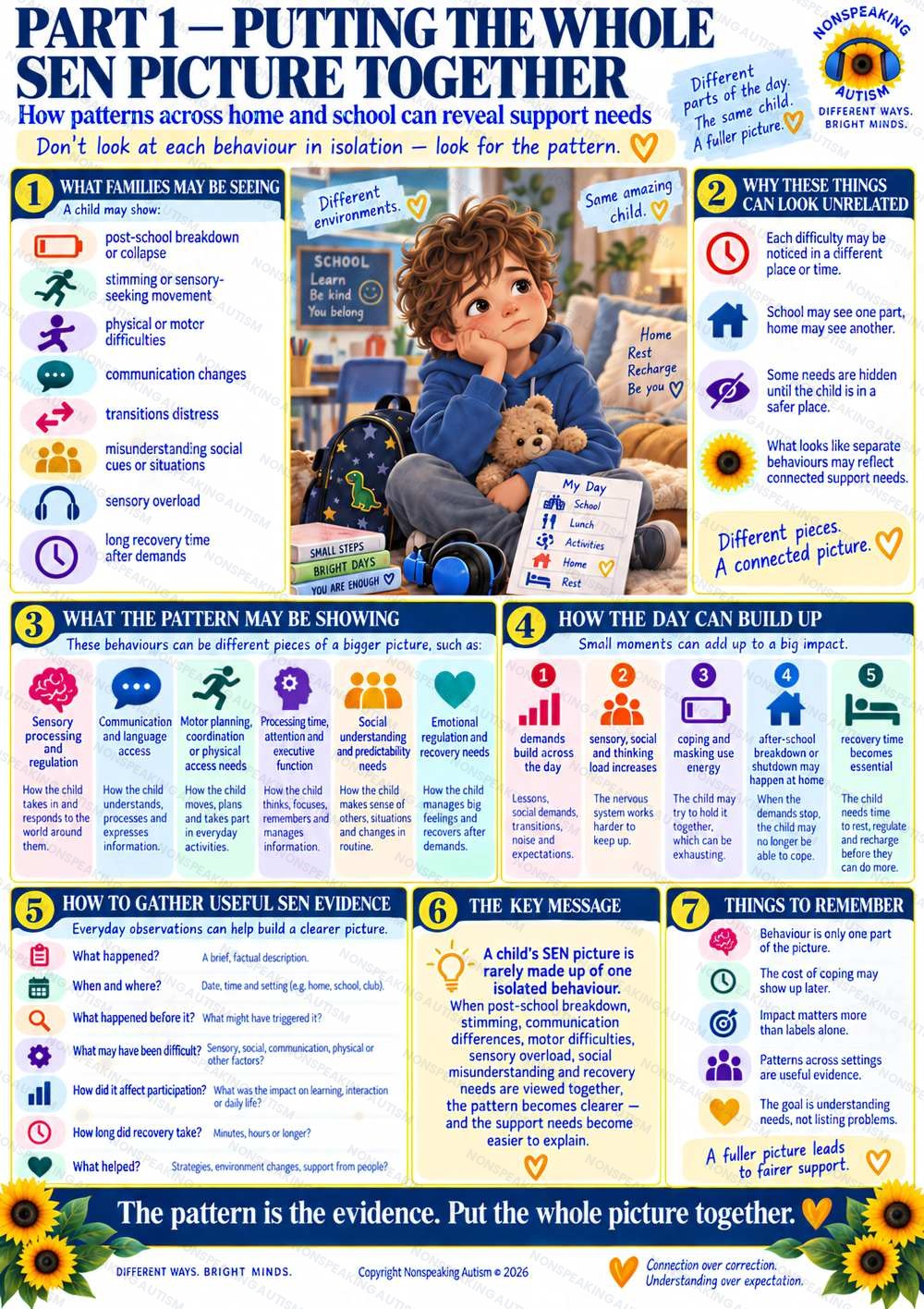
Part 1 — Putting the Whole SEN Picture Together is an evidence-informed educational poster designed to help families and professionals look beyond isolated behaviours and identify patterns across environments, demands and experiences.
The central message is:
Don't look at each behaviour in isolation — look for the pattern.
💙 What Families May Be Seeing
The poster brings together everyday experiences that families may notice, including:
- Post-school breakdown or collapse
- Stimming or sensory-seeking movement
- Physical or motor difficulties
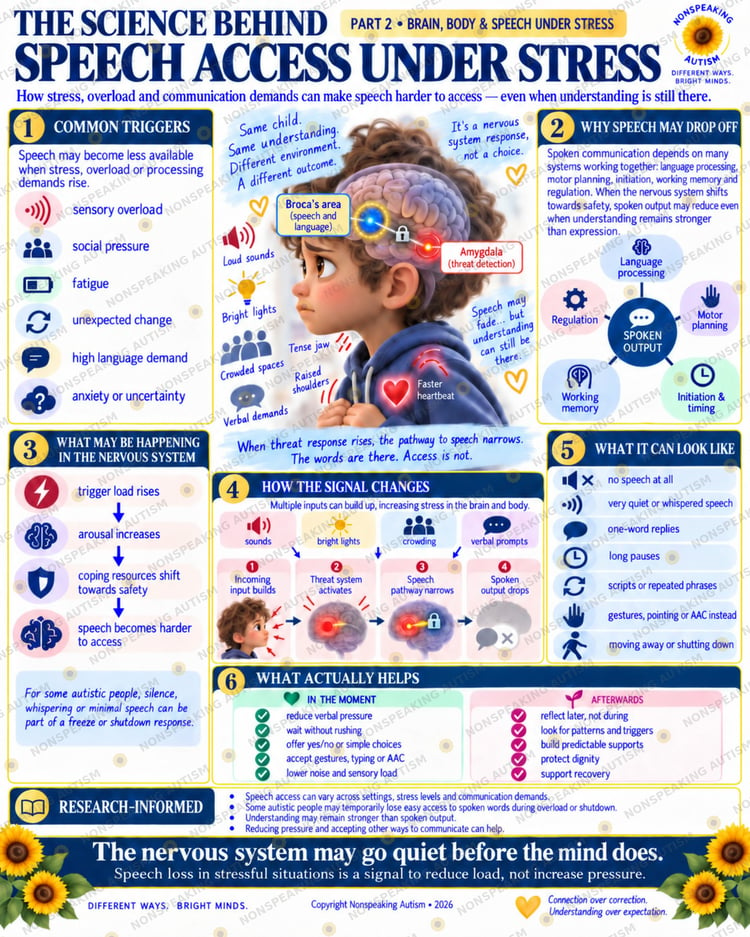
- Communication changes
- Distress around transitions
- Difficulty understanding social cues or situations
- Sensory overload
- Long recovery periods after demands
Rather than assuming each observation represents a separate problem, the poster encourages families to consider whether they may be different parts of a connected picture.
🏠 Home and School May See Different Parts
A child's presentation can change considerably depending on the environment.
School may see one part of the child's experience while home sees another. Some needs may become more visible only once the child reaches a familiar or lower-demand environment.
This means information from both home and school can matter when trying to understand the child's needs.
Different environments. Same amazing child.
🧠 What the Pattern May Be Showing
The poster introduces several areas that may contribute to the wider picture, including:
Sensory processing and regulation — how the child takes in and responds to sensory information.
Communication and language access — how the child understands, processes and expresses information.
Motor planning, coordination and physical access needs — how the child moves, plans and participates in everyday activities.
Processing time, attention and executive function — how the child thinks, focuses, remembers and manages information.
Social understanding and predictability needs — how the child makes sense of people, situations, routines and changes.
Emotional regulation and recovery needs — how the child experiences intense feelings and recovers after demands.
The aim is not to diagnose the reason behind every behaviour. It is to help build a more complete picture of what may require further observation, discussion or support.
📈 How the Day Can Build Up
Small demands can accumulate.
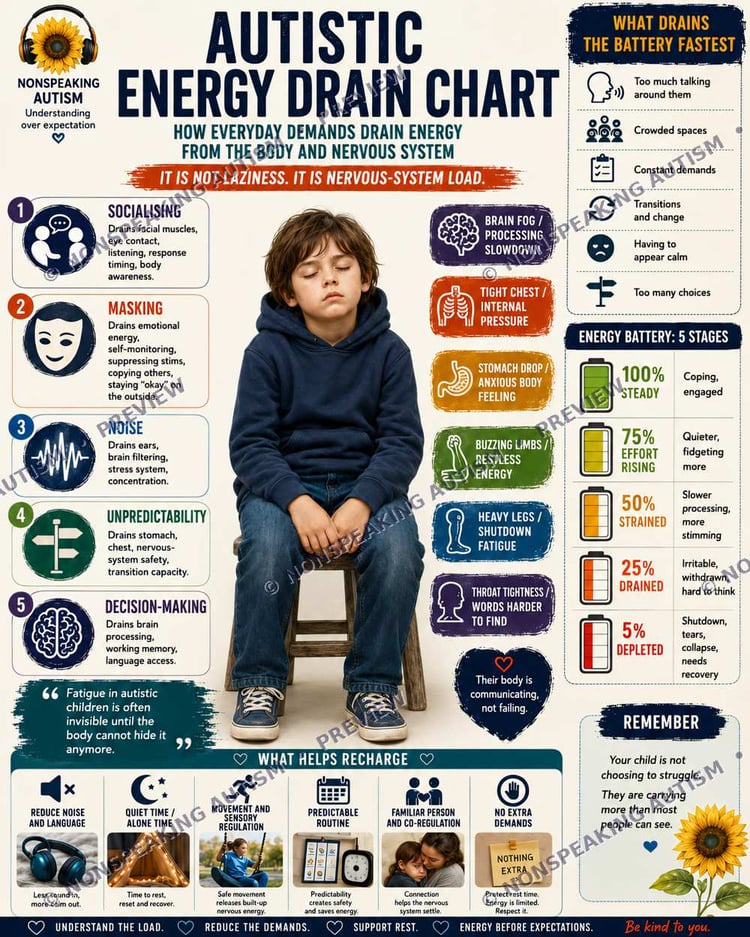
Lessons, social demands, transitions, sensory input, noise and expectations may gradually increase load throughout the day.
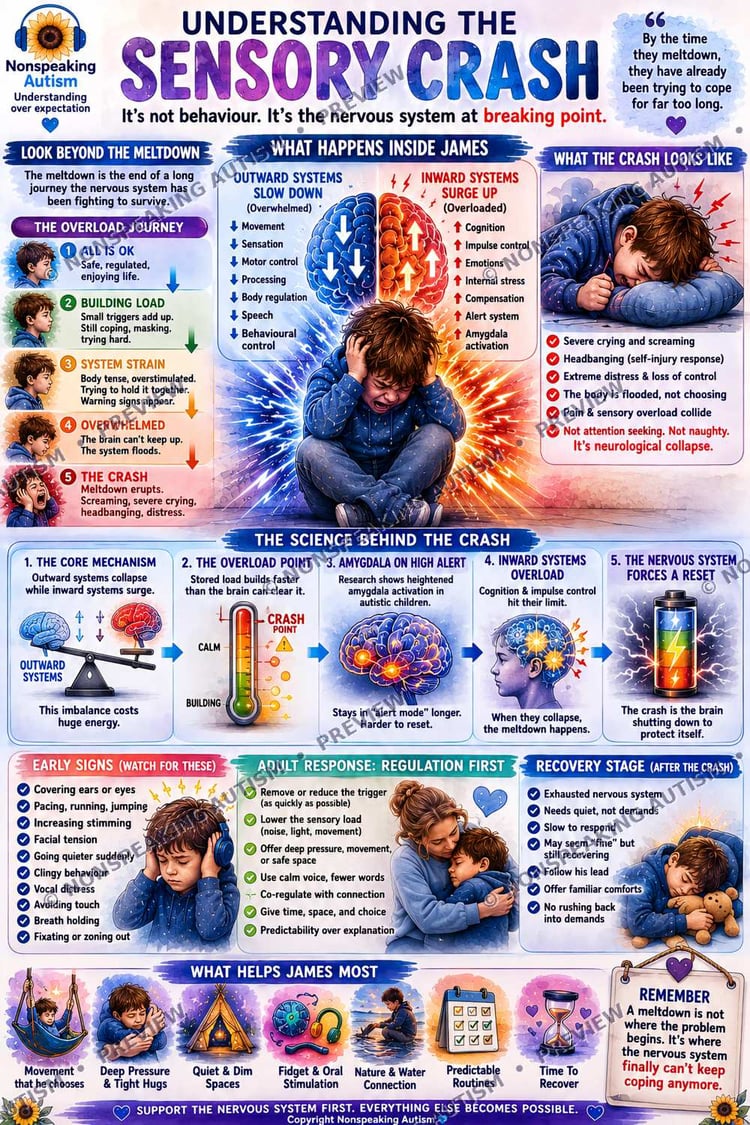
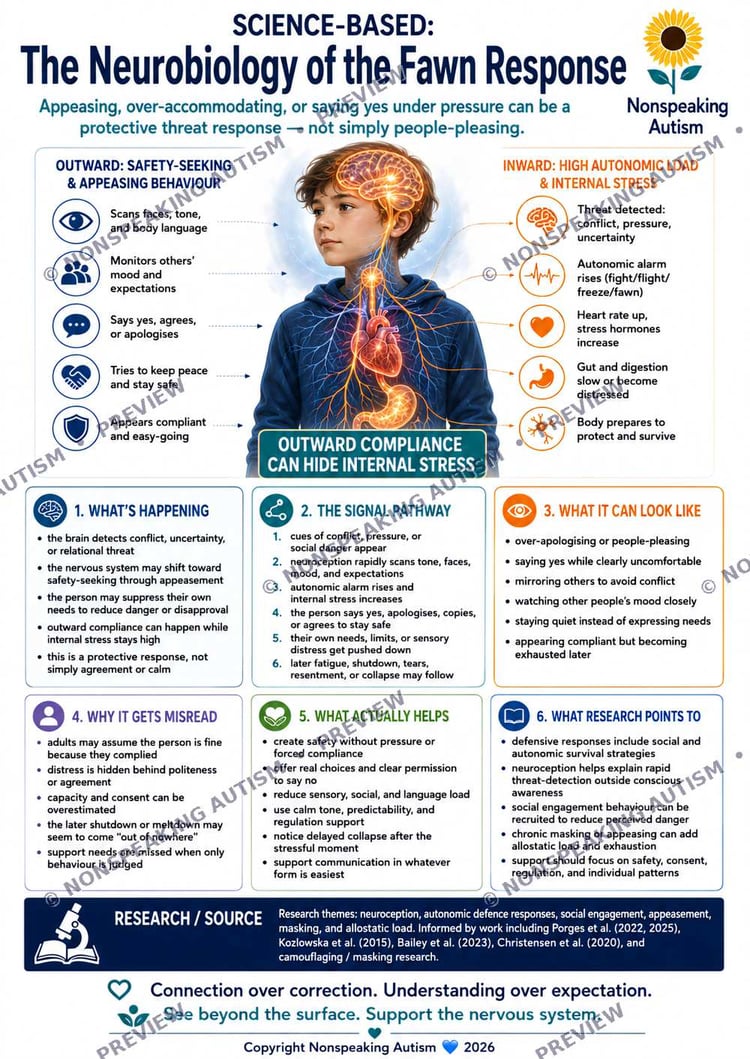
A child may use significant energy coping or masking until their available capacity becomes reduced. Distress may therefore appear after the demands have ended, including once the child returns home.
Recovery time can itself be valuable information.
The question becomes not simply “What happened?” but also:
What came before it, how much had already accumulated, and how long did recovery take?
📝 Gathering Useful SEN Evidence
The poster provides a practical framework for recording observations:
What happened?
Record a brief, factual description.
When and where?
Record the date, time and setting.
What happened beforehand?
Consider possible triggers or demands.
What may have been difficult?
Consider sensory, social, communication, physical or other factors.
How did it affect participation?
Consider the effect on learning, interaction or everyday life.
How long did recovery take?
Minutes, hours or longer can all provide useful context.
What helped?
Record strategies, environmental changes or support that appeared useful.
Over time, these observations may make recurring patterns easier to recognise.
💛 The Key Message
A child's SEN picture is rarely made up of one isolated behaviour.
When experiences involving communication, sensory processing, movement, transitions, social understanding, emotional regulation and recovery are considered together, the pattern may become clearer.
And when the pattern becomes clearer, it can become easier to discuss what support may be needed.
The pattern is the evidence. Put the whole picture together.
📦 What You Receive
Your purchase includes:
1 × Part 1 — Putting the Whole SEN Picture Together
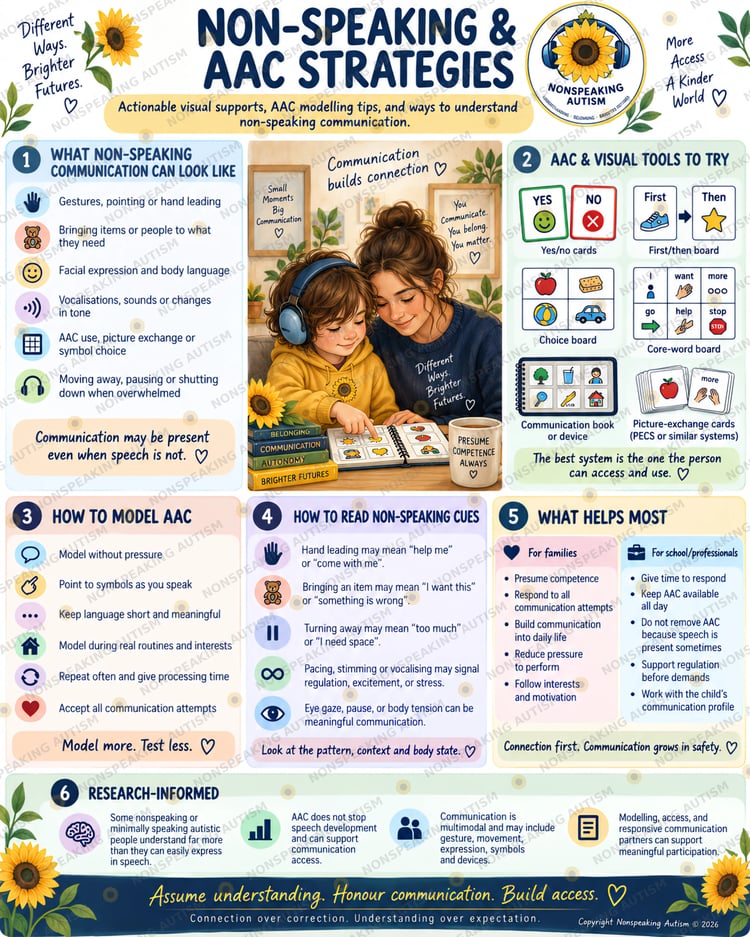
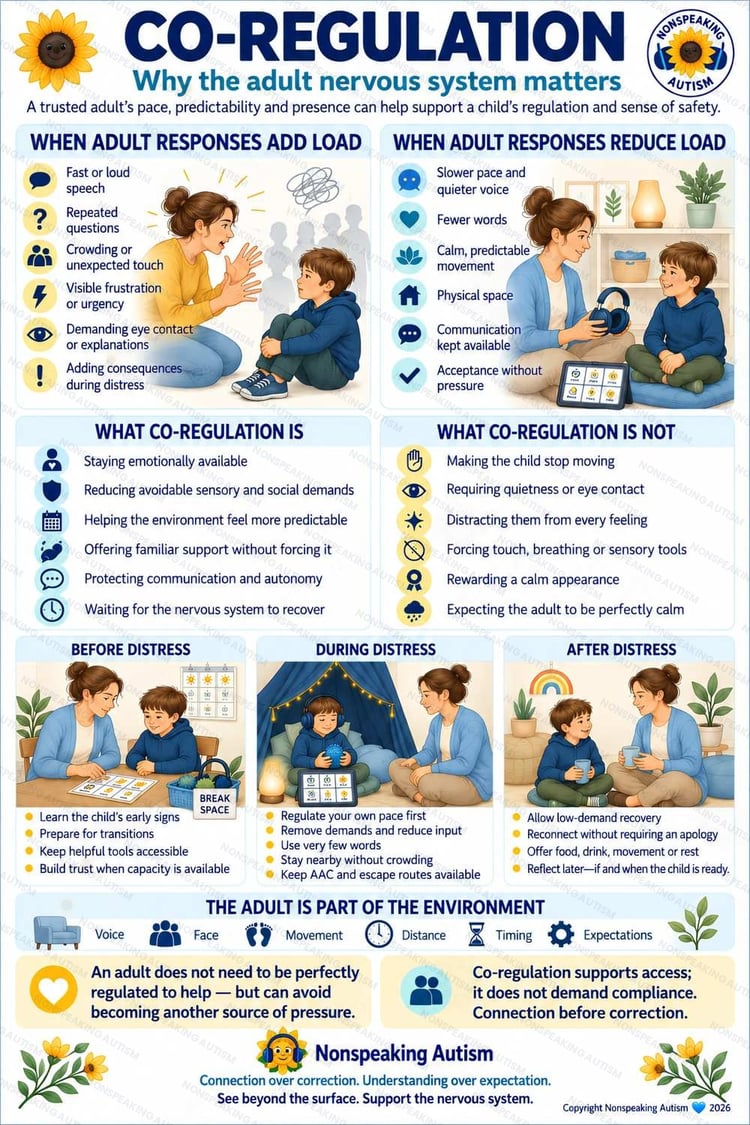
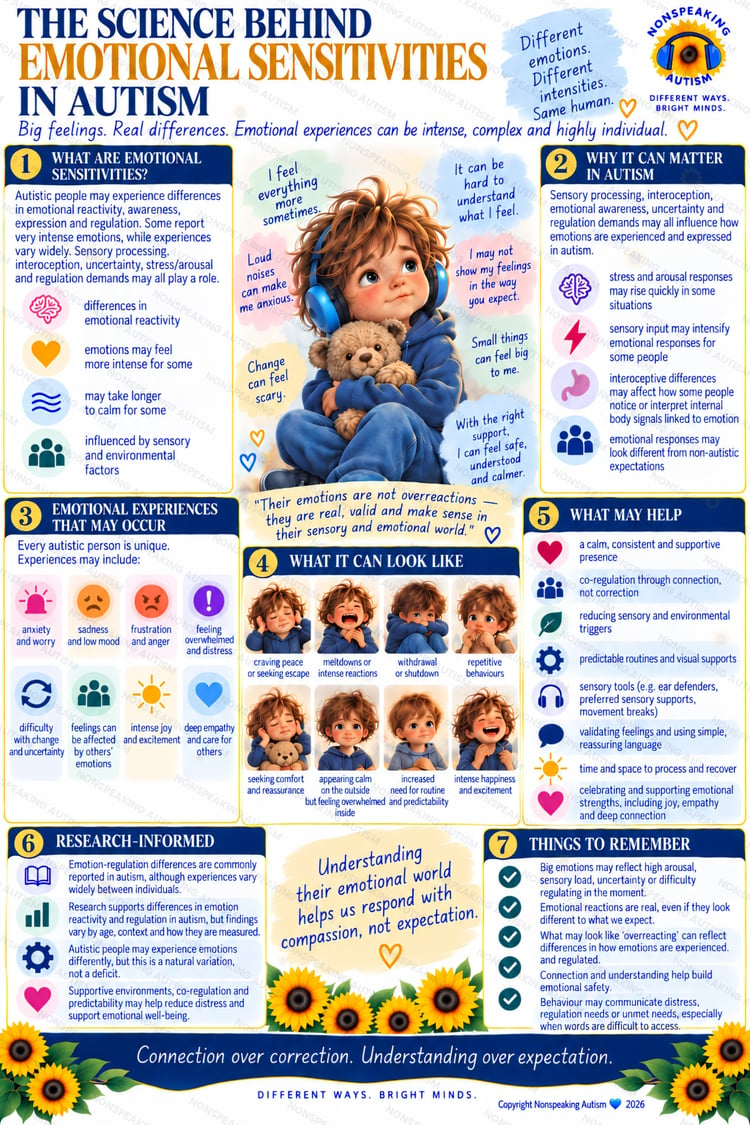
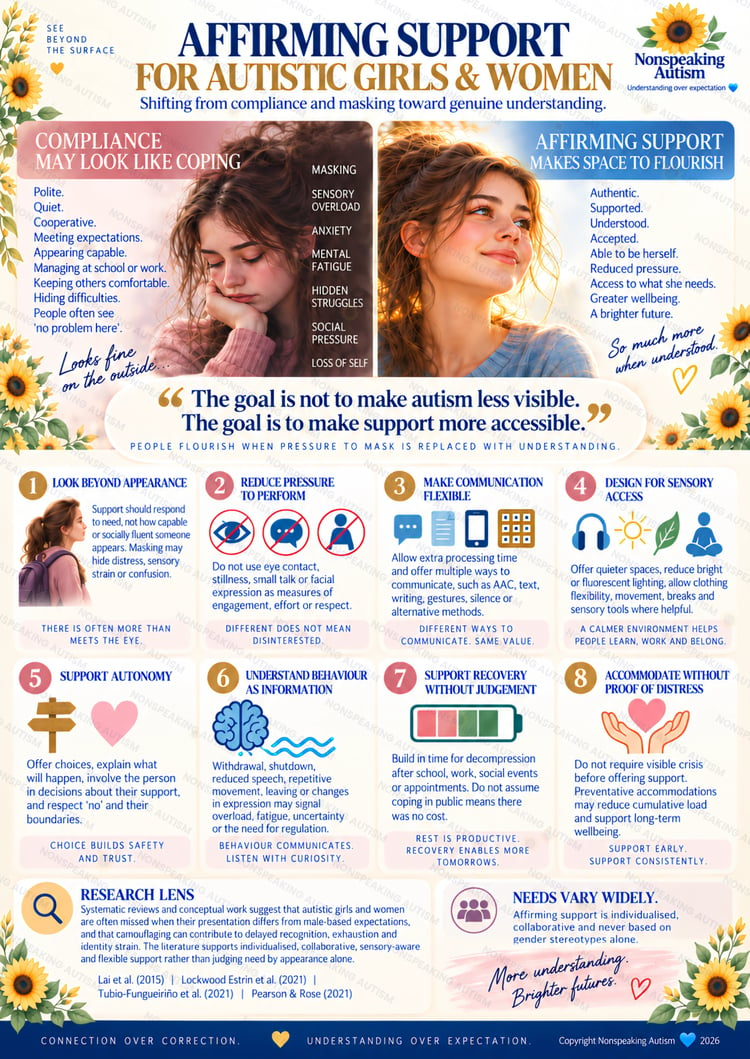
This is a digital educational poster from Nonspeaking Autism.
The purchased version is supplied as a high-quality A2 PDF — exact 420 × 594 mm page size, suitable for professional or home printing.
The purchased PDF is supplied clear and without the promotional preview watermark. Watermarks visible on Payhip listing images are used only for preview and copyright-protection purposes.
Digital PDF download only — no physical product will be shipped.
🏫 Ideal For
This poster may be useful for parents and caregivers preparing for SEN discussions, teachers, SENCOs, SEN/SEND staff, teaching assistants, support workers and other professionals seeking to understand a child's needs across different settings.
It can also be used alongside observation notes and the remaining posters in the Putting the Whole SEN Picture Together 4-Part Series.
⚠️ Educational Disclaimer
This resource is provided for educational and informational purposes only. It does not diagnose autism, ADHD, sensory processing differences, learning difficulties or any other developmental, medical or psychological condition.
It does not replace individualised assessment, professional advice or the formal processes used to determine a child's special educational needs or provision.
Every child is different. Observations should be considered alongside information from the child, family, educational setting and relevant professionals where appropriate.
© Copyright & Permitted Use
Copyright © Nonspeaking Autism 2026. All rights reserved.
Purchase permits use by the purchaser for personal or individual professional educational purposes.
The digital file may not be resold, redistributed, shared publicly, uploaded to file-sharing platforms, reproduced as another commercial product or claimed as another person's work without permission.
Different ways. Bright minds. 💙
Connection over correction. Understanding over expectation.