
The Science Behind Transition Distress
The Science Behind Transition Distress
Part 1 — The Reframe
What Happens When the Nervous System Has to Disengage, Predict and Reorganise
A transition can look simple from the outside:
Stop this → move on → start something else.
But for an autistic person, that change may involve several demands happening at once — disengaging from the current activity, shifting attention, predicting what comes next, managing uncertainty, reorganising action and adapting to new sensory or social information.
What looks like refusal, resistance or unwillingness may sometimes reflect a person who needs more predictability, processing time, communication support or reduced load.
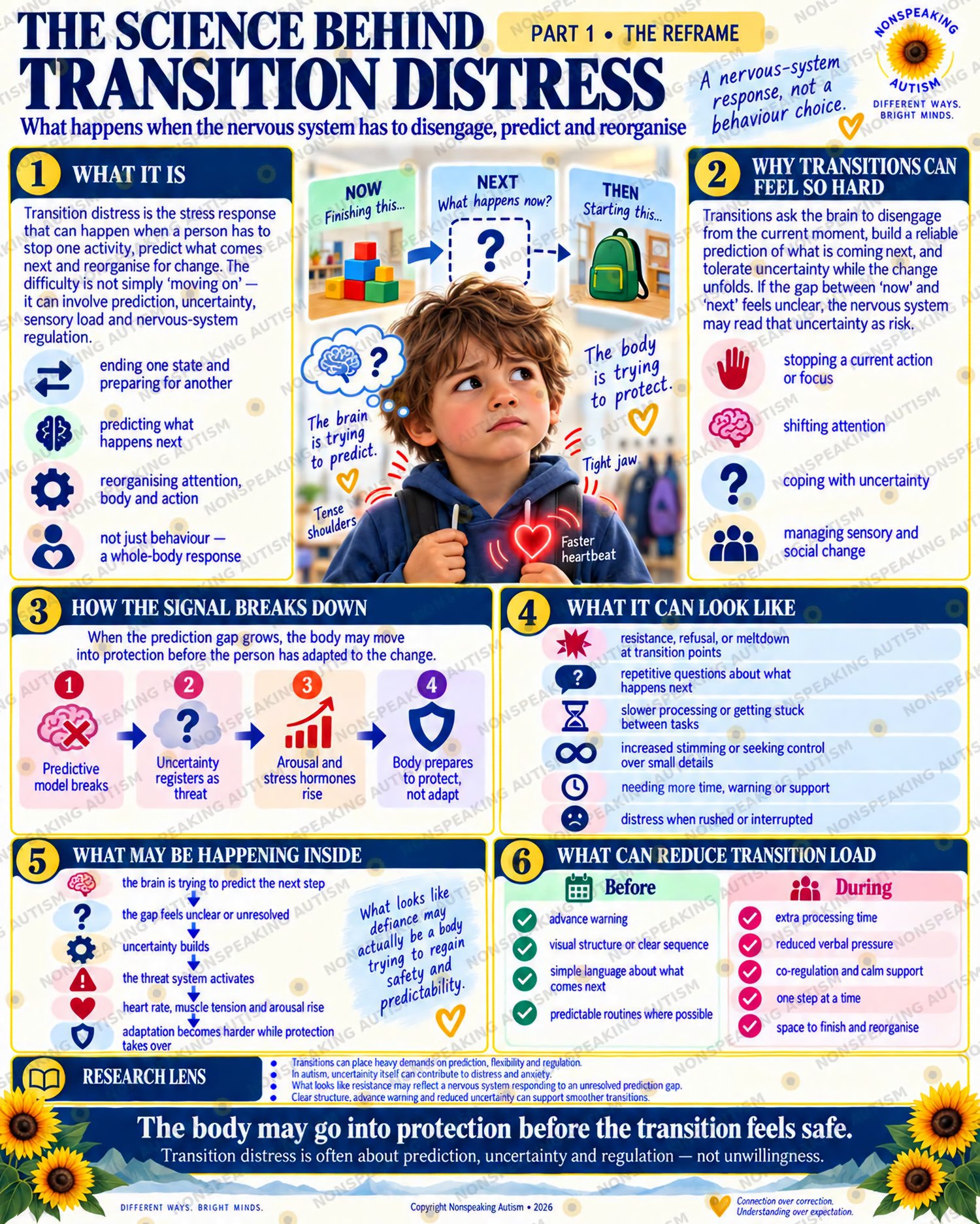
The Science Behind Transition Distress — Part 1: The Reframe is a research-informed educational poster designed to help parents, carers, educators and professionals look beyond the surface of transition-related behaviour.
The central message is:
The body may go into protection before the transition feels safe.
Transition distress can involve prediction, uncertainty and regulation — not simply unwillingness.
🧠 What Is Transition Distress?
In this resource, transition distress is used as an accessible educational term for distress that may occur when a person needs to stop one activity, shift attention, anticipate what is coming next and reorganise for change.
A transition might involve:
- ending a preferred activity
- beginning a new task
- leaving home
- arriving at school
- moving between classrooms
- changing staff
- switching activities
- getting dressed
- going to an appointment
- unexpected changes to a plan
- moving from one environment to another
The difficulty may not simply be the physical act of “moving on.”
For some people, the challenge may include uncertainty, sensory load, cognitive flexibility, attention shifting, communication demands and emotional regulation.
🔄 Why Transitions Can Feel So Hard
Transitions can place several demands on the person simultaneously.
They may need to:
✋ Stop a Current Action or Focus
Stopping something can itself require considerable cognitive effort — particularly when somebody is deeply engaged, highly focused or using the activity for regulation.
🧠 Shift Attention
The brain needs to disengage from one stream of information and redirect attention towards another.
❓ Cope With Uncertainty
Questions such as:
What happens next?
Where are we going?
How long will it take?
Who will be there?
What will I have to do?
can add substantial uncertainty.
👥 Manage Sensory & Social Change
A transition can also mean a completely different sensory environment.
Noise, lighting, people, movement, smells, expectations and communication demands may all change at once.
❓ The Prediction Gap
Predictability can matter.
If the person does not have enough information about what is happening next, uncertainty may increase.
The poster uses a simplified educational pathway:
Prediction becomes difficult
↓
Uncertainty increases
↓
Arousal and stress may increase
↓
The body may move towards protection rather than adaptation
This should not be interpreted as a proven neurological sequence that occurs during every difficult transition.
It is an accessible framework for understanding why uncertainty and prediction may be relevant to transition distress.
❤️ What Transition Distress Can Look Like
Transition difficulty will not look the same in every person.
Possible outward signs may include:
- resistance or refusal around transition points
- significant distress or meltdown
- repeated questions about what happens next
- slower processing
- appearing to become “stuck” between activities
- increased stimming
- seeking greater control over small details
- needing more warning
- needing additional processing time
- distress when interrupted or rushed
None of these behaviours has one fixed meaning.
The same behaviour can arise for many reasons.
Look at the individual, the environment and what happened immediately before the distress.
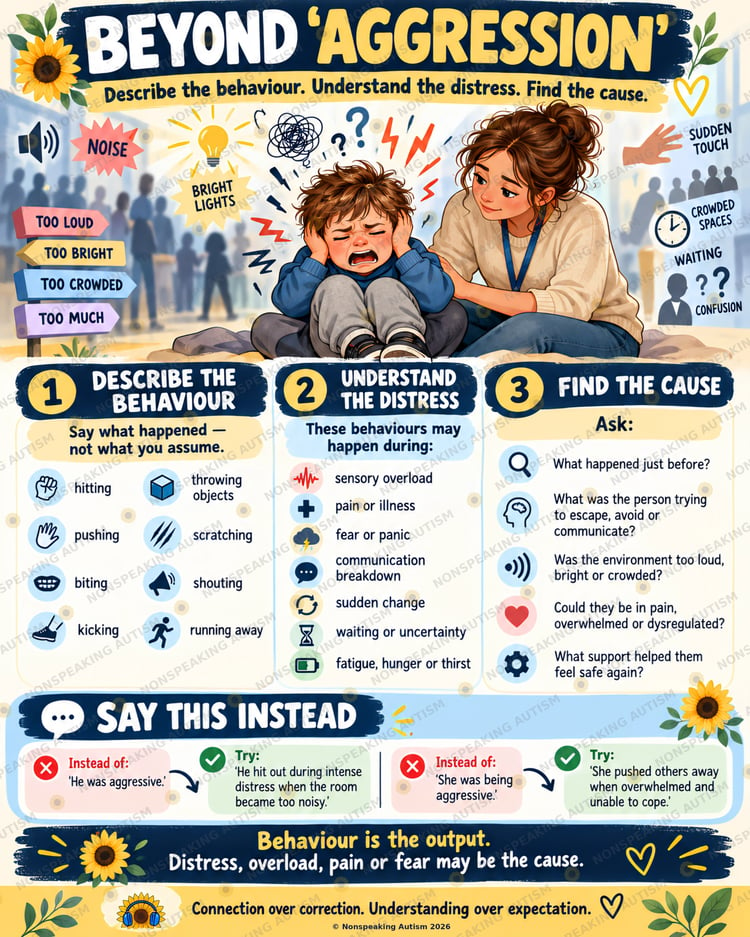
🌻 Reframing “Defiance”
One of the most important aims of this resource is to challenge automatic assumptions about behaviour.
When somebody repeatedly struggles with transitions, adults may interpret the response as:
“They won't move on.”
“They're refusing.”
“They're being difficult.”
“They know what they're supposed to do.”
But another useful question is:
“What is making this transition difficult to access?”
The person may need:
greater predictability
more processing time
less verbal pressure
a clearer sequence
sensory accommodation
communication support
or simply more time to finish and reorganise.
Understanding a possible source of distress does not mean every transition can be avoided. It means we can consider whether the transition itself can be made more accessible.
🗓️ What Can Reduce Transition Load?
Before the Transition
Support may include:
⏰ Advance Warning
Give meaningful notice before a change where possible.
👁️ Visual Structure
Visual schedules, written information, pictures, objects, timers or other individualized cues may help some people understand what is happening.
➡️ Clear Sequences
Showing:
NOW → NEXT → THEN
can make an otherwise abstract transition more concrete.
💬 Simple Information
Explain what is coming next without adding unnecessary verbal information.
🔄 Predictable Routines
Where possible, consistency can reduce the amount of uncertainty the person has to process.
💙 During the Transition
When distress is already increasing, adding more demands may make the situation harder.
Consider:
⏳ Additional Processing Time
Give the person time to process the change rather than immediately repeating instructions.
🔉 Reduced Verbal Pressure
More language is not always more helpful.
Shorter, familiar communication may be easier to process during stress.
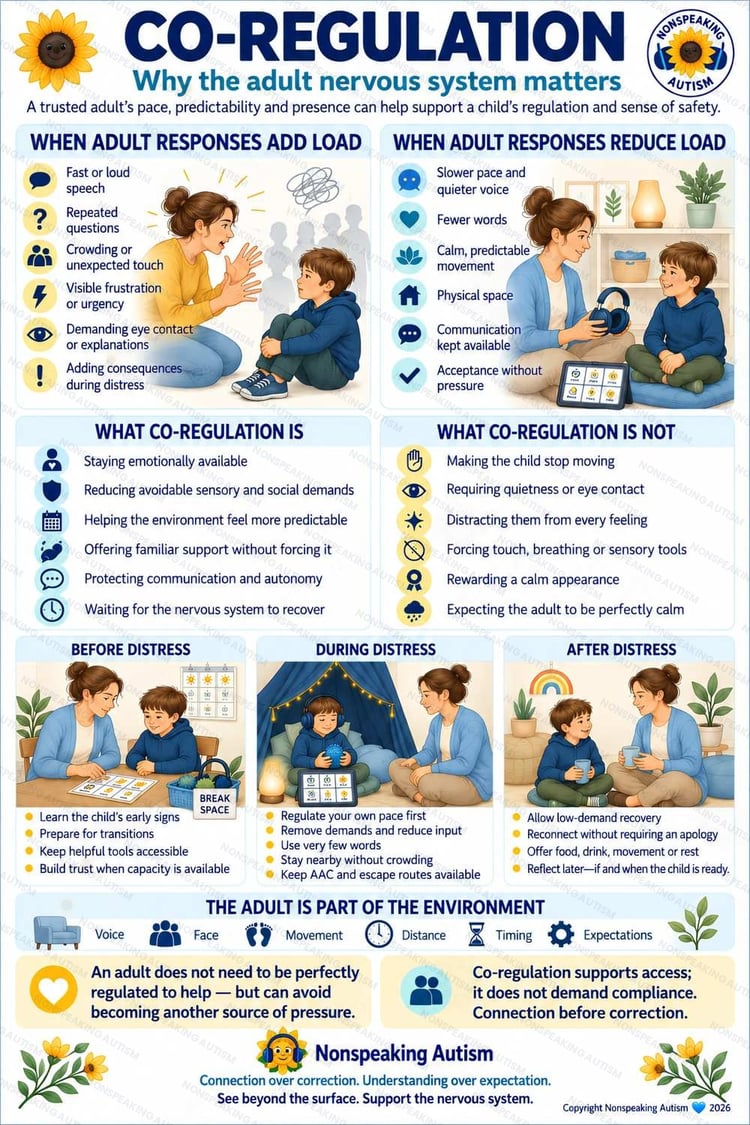
🤝 Calm Co-Regulation
A supportive adult can reduce rather than add to the pressure of the situation.
1️⃣ One Step at a Time
Breaking a transition into smaller steps may make it more manageable.
🌿 Space to Finish & Reorganise
Where practical, allow enough time for the person to disengage from one activity before expecting full engagement with another.
Predictability Does Not Mean Removing Every Change
The aim is not to create a world in which nothing unexpected ever happens.
That would rarely be possible.
Instead, support can help make change more understandable and manageable.
Over time, individualized support may help a person participate in transitions without assuming that the way to build flexibility is simply to expose them repeatedly to distress.
Support first. Build understanding. Adjust as the person's needs change.
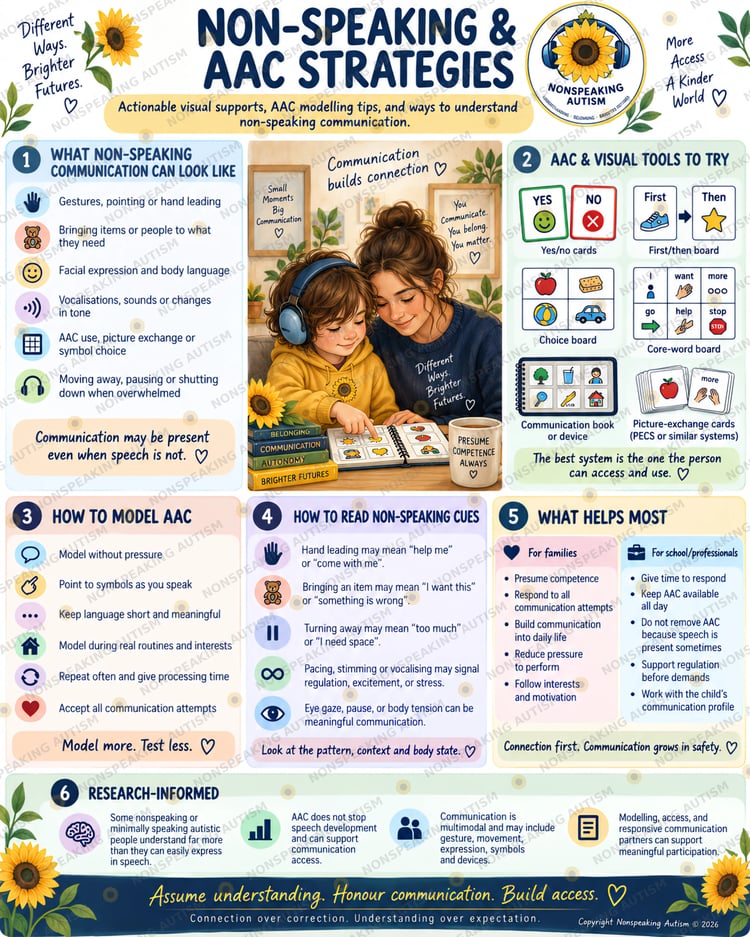
💬 Communication Must Remain Available
Transition distress can make communication more difficult for some people.
Do not assume reduced speech means the person:
doesn't understand
has nothing to say
or
is deliberately ignoring an instruction.
Where relevant, continue access to:
AAC • visual information • gesture • pointing • writing • typing • symbols • familiar yes/no communication • speech
Communication support should become more accessible when demands increase — not disappear because the person is distressed.
🔬 What the Research Suggests
Research provides support for several broader principles relevant to this poster.
Studies have found strong relationships between intolerance of uncertainty and anxiety in autistic people, although this does not mean uncertainty explains every difficult transition.
Research on executive functioning in autism also identifies differences at the group level in areas including cognitive flexibility and shifting, which may be relevant when considering the demands involved in stopping one activity and moving to another. These findings should not be used to assume the abilities or internal experience of an individual autistic person.
Clinical guidance also recommends considering factors such as changes to routines, sensory environment, communication needs, predictability and physical or social environment when supporting autistic children and young people.
📚 Selected Research & References
Jenkinson, R., Milne, E., & Thompson, A. (2020). The relationship between intolerance of uncertainty and anxiety in autism: A systematic literature review and meta-analysis. Autism, 24(8), 1933–1944.
Leung, R. C., Vogan, V. M., Powell, T. L., Anagnostou, E., & Taylor, M. J. (2016). The role of executive functions in social impairment in Autism Spectrum Disorder. Child Neuropsychology, 22(3), 336–344.
NICE. (2013, updated 2021). Autism spectrum disorder in under 19s: support and management (CG170). National Institute for Health and Care Excellence.
🔎 Evidence Note
The evidence supports the broader principles that uncertainty, flexibility, sensory/environmental demands and predictability can be relevant when supporting autistic people.
It does not establish that every transition difficulty is caused by a specific “prediction gap,” stress hormone response or threat mechanism.
The neurological pathway shown on the poster is therefore best understood as a simplified educational framework, rather than a validated biological sequence or diagnostic model.
Individual experiences and causes of distress vary.
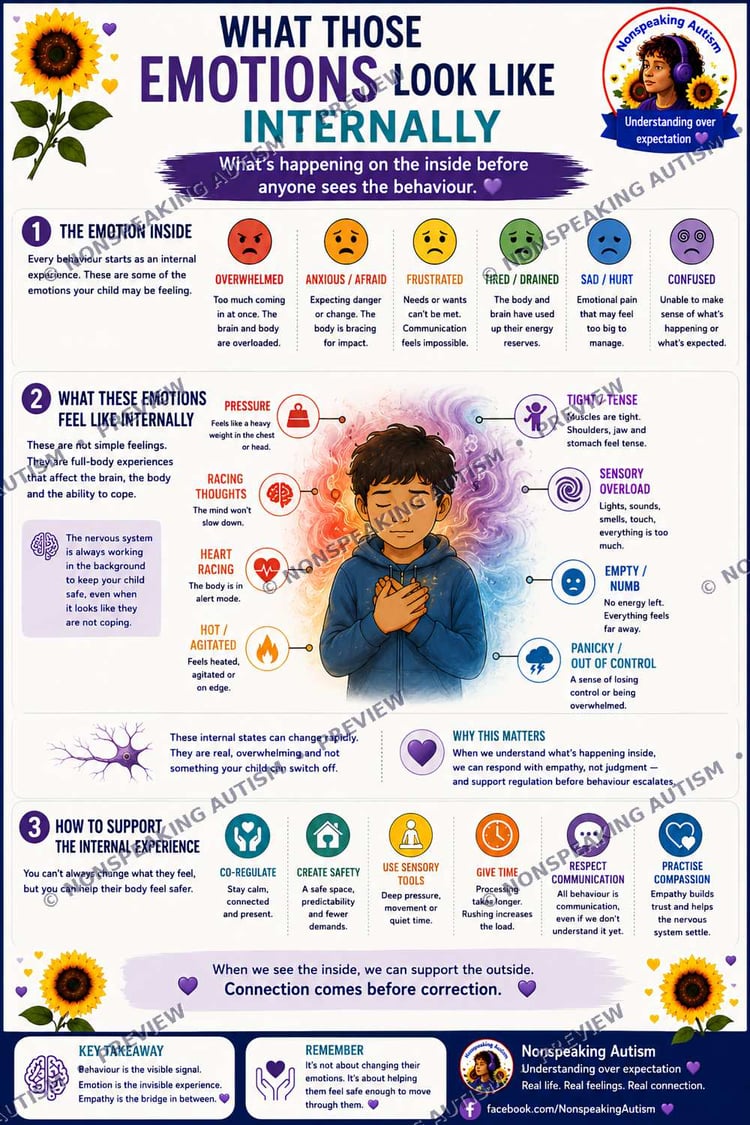
👨👩👧 Who Is This Resource For?
This poster may be useful for:
- autistic people and their families
- parents and carers
- teachers and teaching assistants
- SENCOs and SEND teams
- mainstream and specialist schools
- occupational therapists
- speech and language therapists
- psychologists
- healthcare professionals
- support workers
- respite and social-care teams
- autism and disability organisations
It can be used for parent/carer education, staff training, professional reflection and conversations about making transitions more accessible.
📦 What You Receive
Your purchase includes:
1 × The Science Behind Transition Distress — Part 1: The Reframe
1 × high-resolution printable digital PDF
The purchased file is supplied clear and without the promotional preview watermark shown on the Payhip listing image.
Watermarks visible on promotional images are used for copyright and listing protection only.
Digital download only — no physical product will be shipped.
⚠️ Important Disclaimer
This poster is a research-informed educational resource.
It is not a diagnostic tool, medical advice, psychological assessment, occupational therapy assessment, behavioural assessment, functional behaviour assessment, therapy programme or individualized treatment plan.
“Transition distress,” “prediction gap” and the illustrated nervous-system pathway are used as accessible educational concepts. They should not be interpreted as a diagnosis or proof of a particular neurological mechanism in an individual person.
Resistance, distress, freezing, repetitive questioning, increased movement or other behaviour around transitions can have multiple possible causes, including sensory factors, communication barriers, uncertainty, anxiety, fatigue, pain, illness, environmental demands and other circumstances.
Sudden, severe, unusual or unexplained changes in behaviour, communication or physical functioning should receive appropriate professional or medical assessment where indicated.
©️ Copyright & Permitted Use
Copyright © 2026 Nonspeaking Autism. All rights reserved.
Purchase permits use for personal/home use, your own classroom or educational setting, your own clinic or individual professional educational practice, and direct educational/support work with people you support.
The file may not be resold, redistributed, file-shared, uploaded elsewhere, commercially reproduced, altered for resale or incorporated into another product for sale or distribution.
💛 The Message Behind the Resource
A difficult transition is not automatically a battle for control.
Sometimes there is far more happening beneath the surface.
The person may be trying to finish.
Trying to predict.
Trying to process.
Trying to understand.
Trying to regulate.
Trying to regain a sense of safety and predictability.
Instead of beginning with:
“How do we make them move on?”
we can begin with:
“What would make this transition easier to understand and access?”
The body may go into protection before the transition feels safe.
Different Ways. Bright Minds.
Connection over correction. Understanding over expectation. 💙🌻
© Nonspeaking Autism 2026