
The Science Behind Behaviour
The Science Behind Behaviour
You will receive the printable unwatermarked version of this infographic
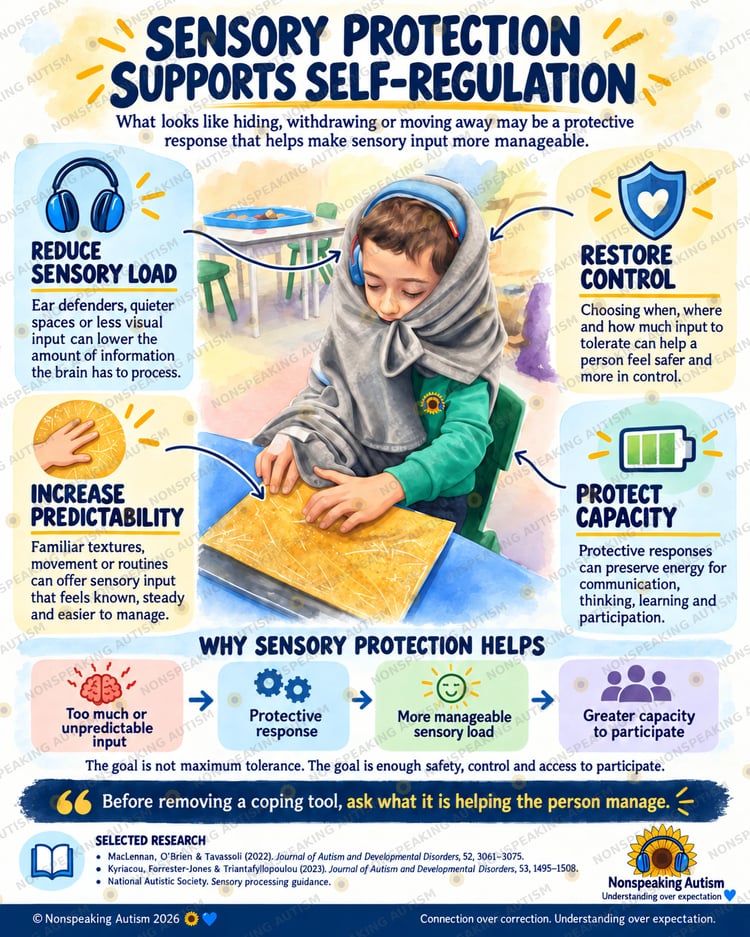
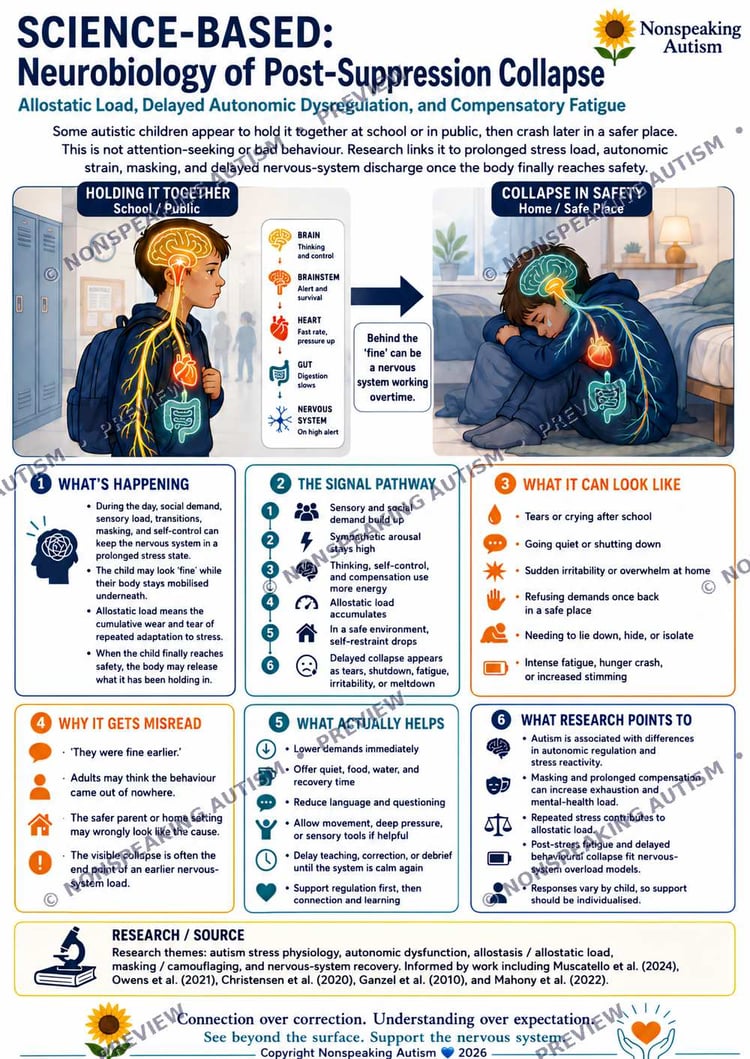
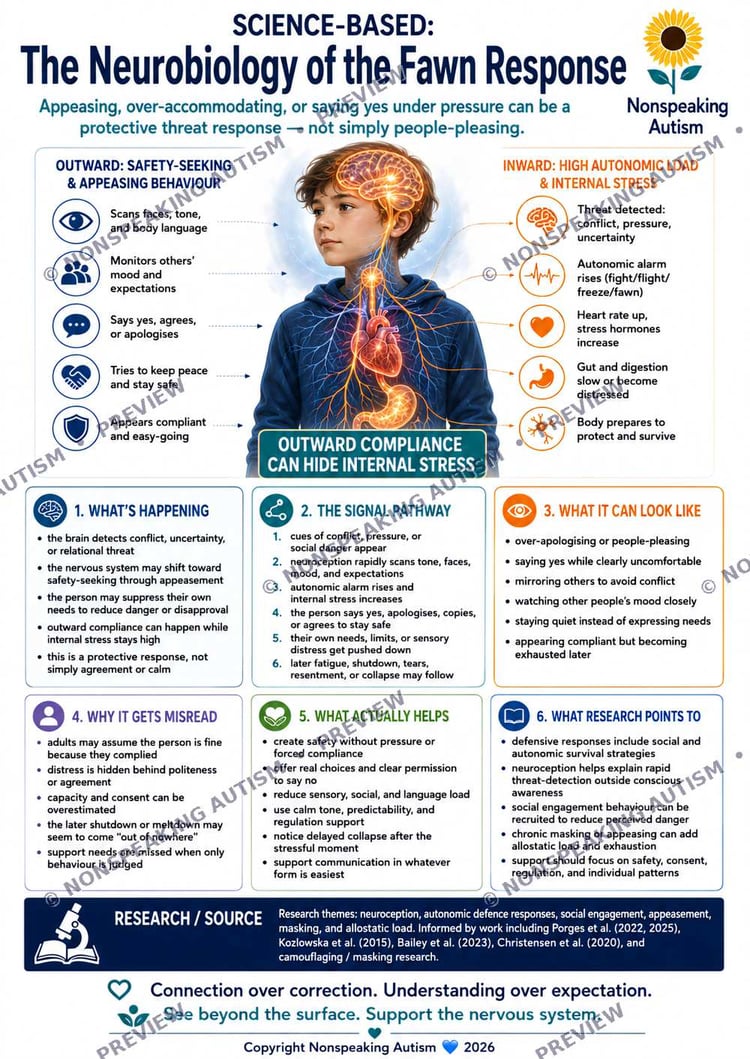
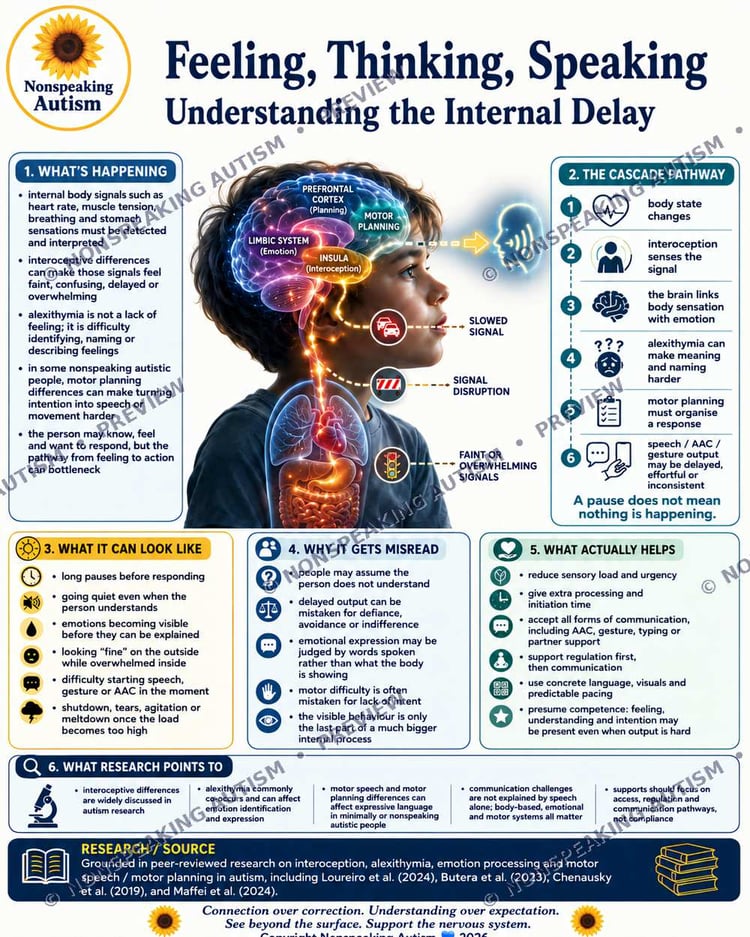
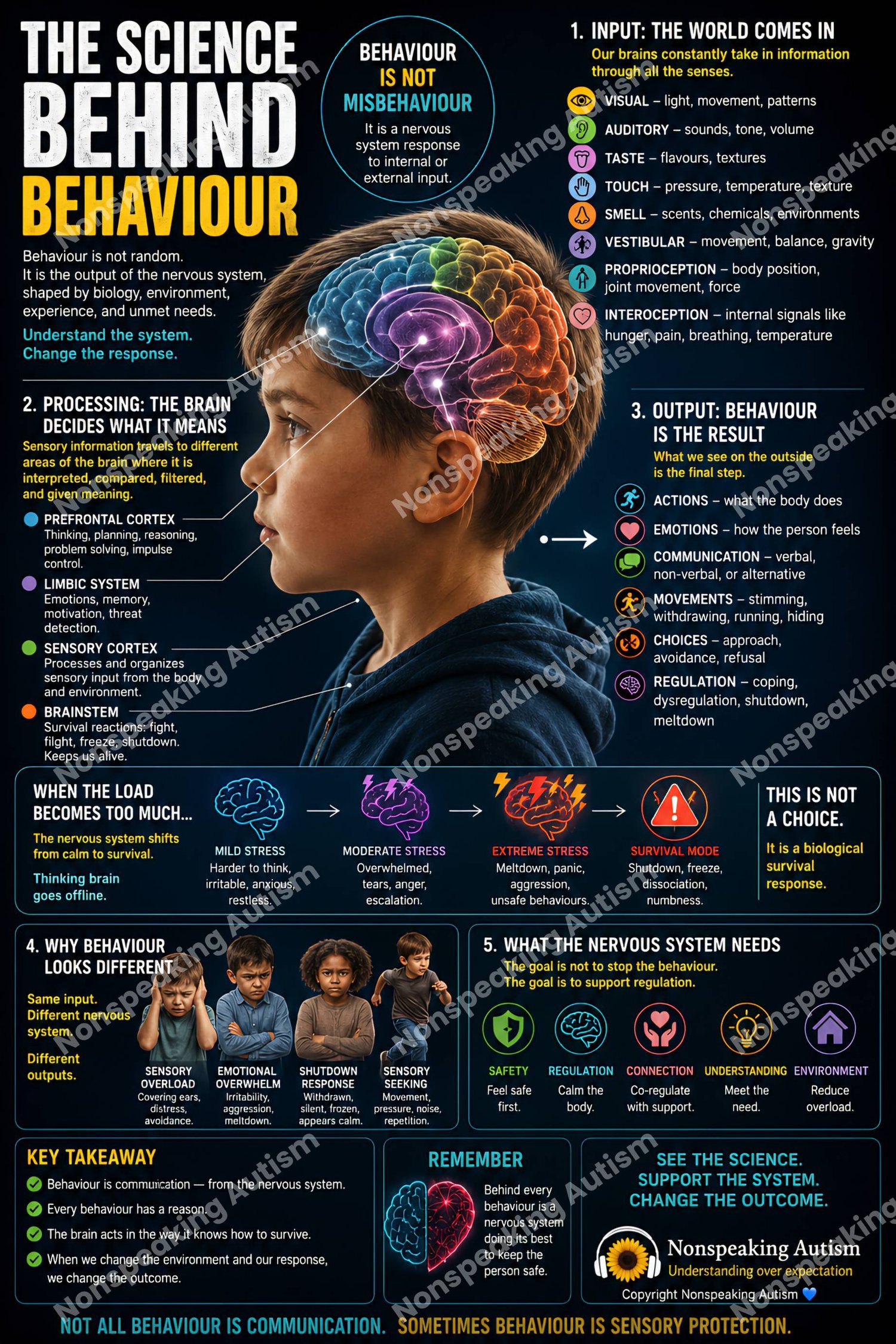
Behaviour is not random. It is the output of the nervous system, shaped by biology, environment, experience and unmet needs. This infographic walks through exactly how that happens, from sensory input arriving through the senses, to the brain processing and interpreting that information, to behaviour as the final visible output.
It covers what happens when the load becomes too much, moving from mild stress through to survival mode, why the same input can look completely different across different nervous systems, and what the nervous system actually needs to move back towards regulation.
Perfect for parent carers who want a clear, visual explanation of why behaviour happens, and for professionals and educators looking for a science based framework to share with teams and families.
What is included:
Full breakdown of the input, processing and output model of behaviour
The four brain regions involved and what each one does
The stress escalation pathway from mild stress to survival mode
Why behaviour looks different from person to person
What the nervous system needs to feel safe and regulated
A high resolution digital download, ideal for printing, sharing with schools and professionals, or keeping as a quick reference when behaviour needs understanding rather than managing.
See the science. Support the system. Change the outcome.
© Nonspeaking Autism 💙
Disclaimer:
This resource is intended for educational and informational purposes only. It is designed to support understanding of autism, sensory processing, nervous system regulation, and behaviour from a neurodevelopmental perspective.
The information provided is not medical, psychological, therapeutic, or legal advice and should not be used as a substitute for assessment, diagnosis, or treatment by a qualified healthcare professional.
Every autistic person is unique. Strategies and supports should always be tailored to the individual's needs, strengths, and circumstances.
If a child displays a sudden change in behaviour, severe distress, signs of illness, injury, or behaviours that place themselves or others at risk, seek appropriate medical advice or emergency assistance where necessary.
While every effort has been made to ensure the information is accurate and reflects current understanding, knowledge in autism and neuroscience continues to evolve.
This resource is for the purchaser's personal, educational, or professional use only. It may not be copied, redistributed, resold, edited, shared publicly, or reproduced in whole or in part without prior written permission.
© Nonspeaking Autism 💙