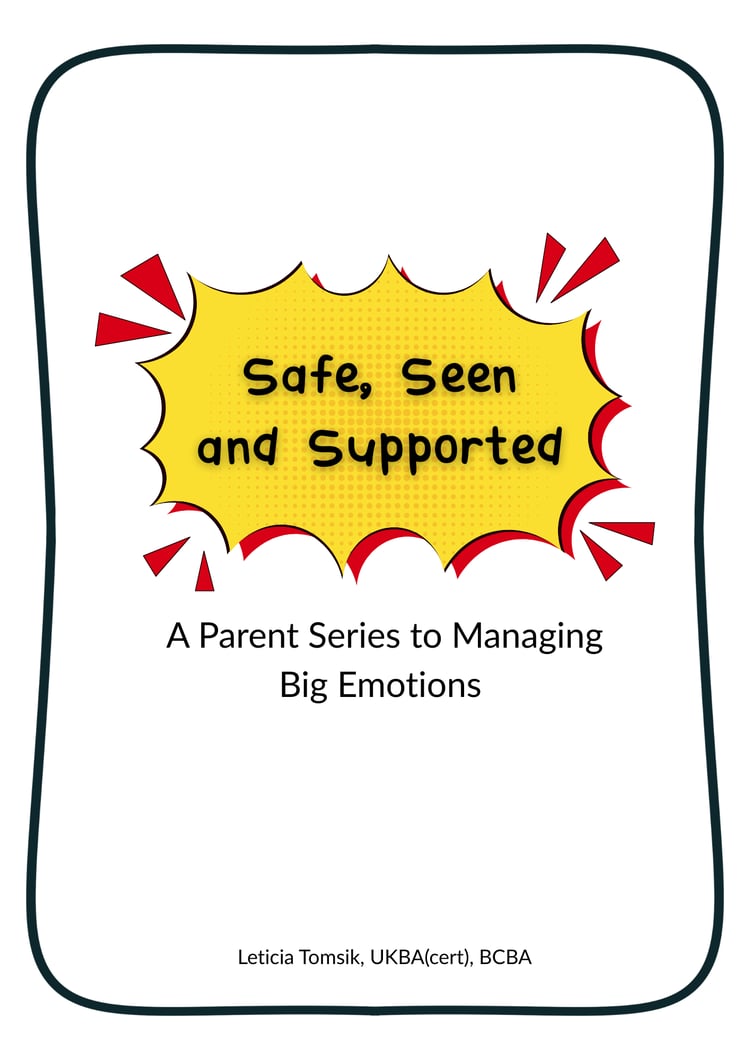
The School Word Web: A Free Language Guide for EBSA & Demand-Avoidant Profiles (+ Free Interactive Companion)
Why one word can set off a full-body alarm — and the small language shifts that help it loosen. Includes a free interactive Swap Finder tool.
Is your Sunday evening ruined by Monday morning?
You've probably noticed something stranger than school refusal itself: it's not only school that's hard for your child. Talking about it is hard. Sometimes just hearing the word is enough — the shoulders go up, the door slams, the tears start, or they disappear inside themselves.
You haven't caused this, and you're not imagining it. There's a well-researched reason why a single word can trigger a full-body alarm — and understanding it changes what you do next.
Introducing: The School Word Web
A free, practical language guide for parents of children with EBSA or a demand-avoidant profile, built around a simple idea: every word your child knows is threaded to memories, feelings, and other words. When "school" is spoken, it doesn't arrive alone — it drags its whole web with it. Some of that web was built by things that happened. A lot of it was built by nothing at all, just ordinary conversation, repeated.
The good news: if words can feed a web, words can also loosen one.
What's inside
- Why a word can feel like a threat — the science behind school-word associations, explained without jargon, plus the same mechanism from a professional's chair (Dymond et al., Kearney et al.) on a page written to hand straight to school
- The kind words that accidentally feed the web — the four most common loving-but-unhelpful habits (the interrogation, the threat-naming reassurance, the countdown, the logic lecture), and why each one pulls a thread you didn't mean to pull
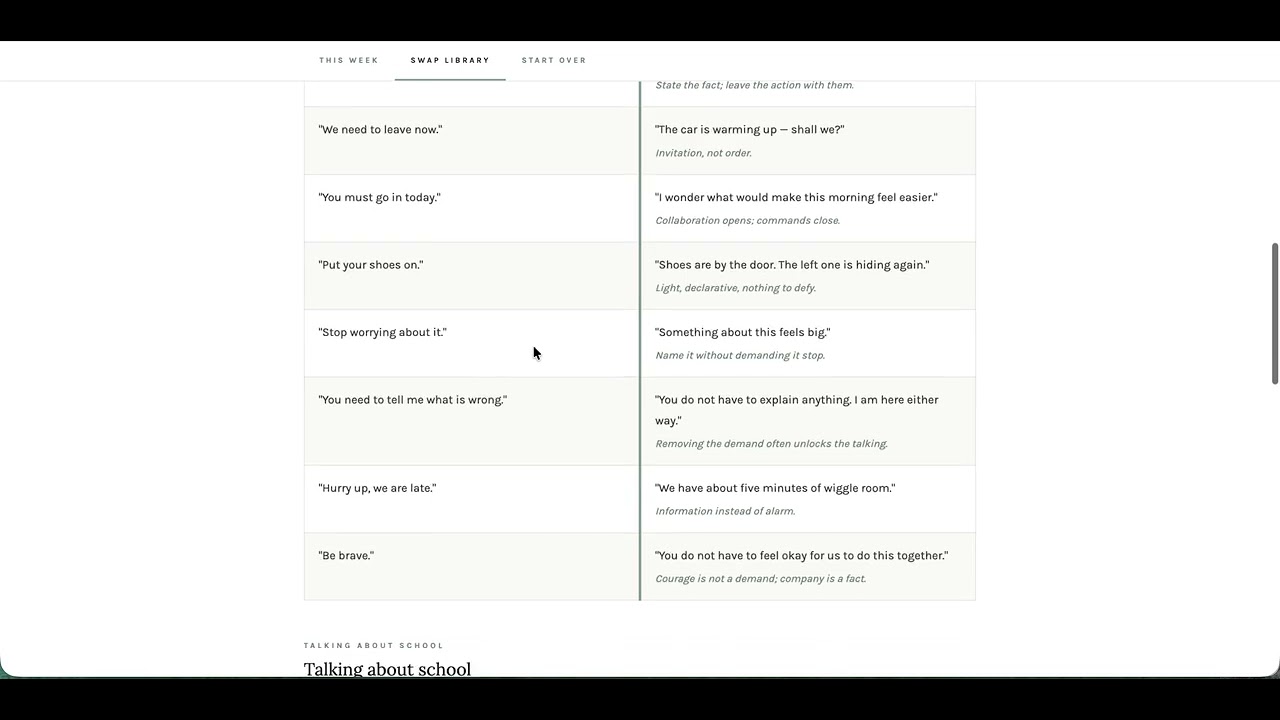
- How to mention Monday without triggering Sunday — a full instead-of/try swap table for everyday school conversation
- When "you have to" is the loudest threat in the room — a second swap table for demand-avoidant profiles, where command words carry their own alarm entirely separate from school
- Quietly connecting school words to safety and strength — three weaving techniques (the no-agenda thread, noticing instead of praising, identity threads) that build a new web alongside the old one
- Pause. Redirect. Reward. — what to do when the alarm goes off anyway, and your job shifts from teaching to co-regulating
- One swap a day — a simple 7-day practice sheet so you're changing one sentence at a time, not everything at once
Nothing in this guide asks you to force anything, bribe anyone, or pretend everything is fine. It asks you to change roughly a dozen sentences you already say every week. That's the whole plan — and it's more powerful than it sounds.
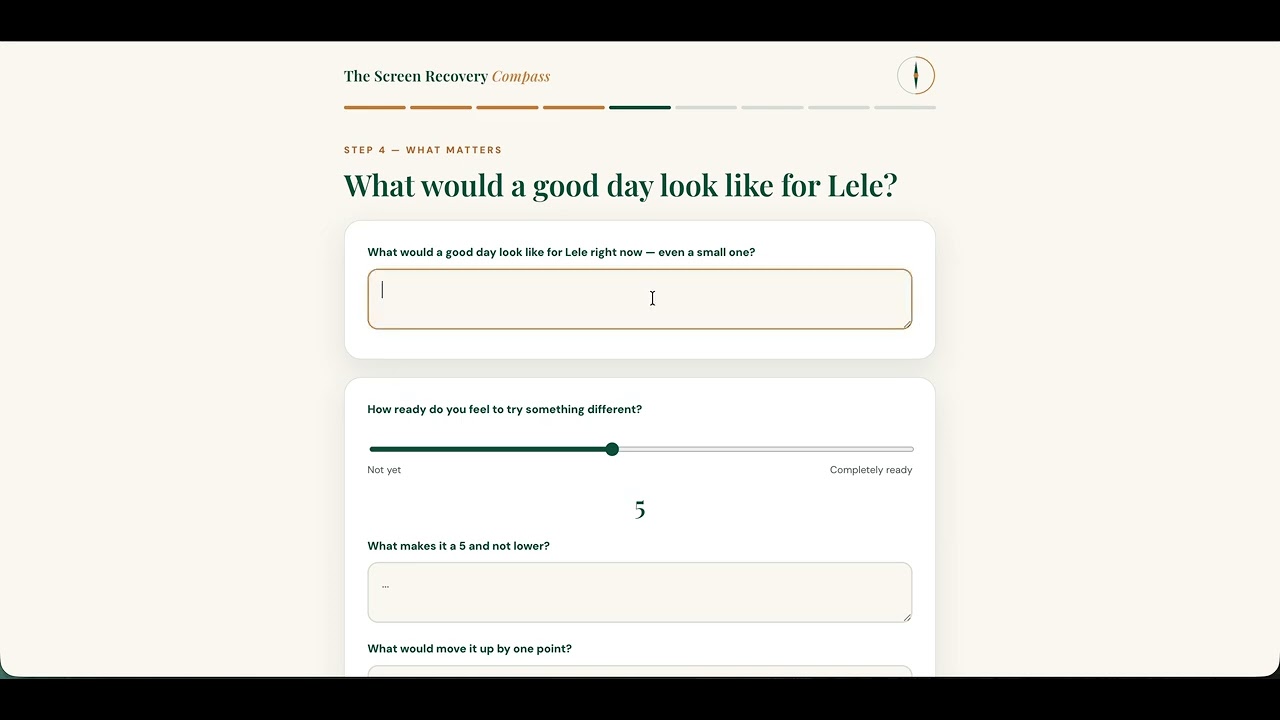
Included free: The Swap Finder companion tool
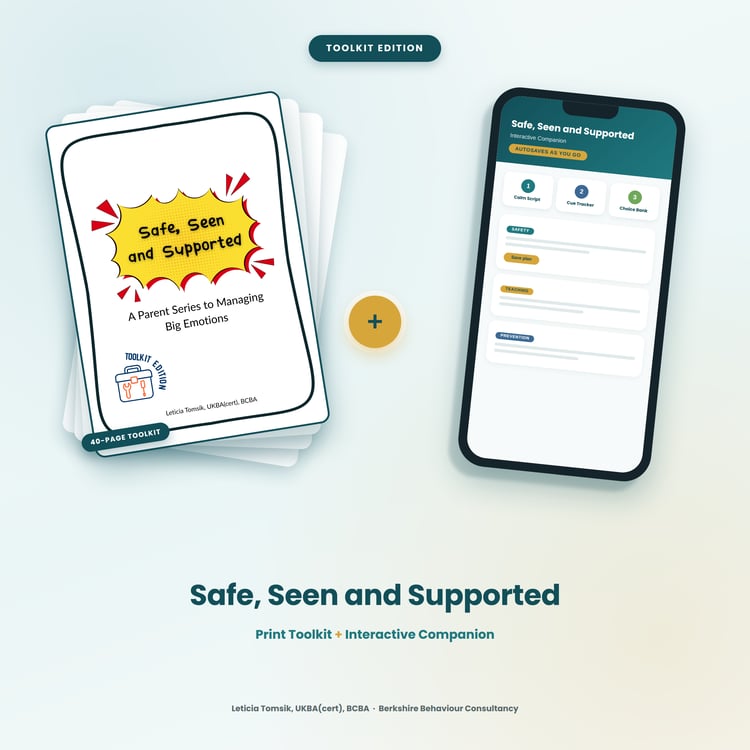
Reading the guide is one thing. Finding the right sentence in the moment right before you speak is another. That's what the free interactive companion is for:
- See the Web — an animated version of the guide's word-web diagram, so you can watch the old web and the new one side by side
- Swap Finder — all twenty swaps from the guide, searchable and filterable, with a save-to-favourites option
- Grab One Now — a one-tap random swap for when there's no time to browse
It works instantly in any browser, saves your favourites on your own device, and asks for no login, no email, and no account.
If you're ready to turn this into a week of guided daily practice, The 7-Day Gentle Rewire tool is the natural next step — one swap a day, a place to note what changed, and a web that visibly re-weaves as the week unfolds. (Already own the PDA Home Support Bundle, or a Calm Circle membership? It's already included — no need to buy it twice.)
Who this is for
Written primarily for parents navigating EBSA and demand-avoidant profiles, in warm, plain language throughout. School professionals — SENCOs, teaching assistants, pastoral leads — are welcome to use it too: the closing page is written to be handed straight to school, with the behavioural science named plainly for colleagues alongside the parent-facing explanation.
This guide is for information and support and does not replace individualised professional advice.
About the author: Leticia Tomsik, UKBA(cert), BCBA, is a Behaviour Analyst working with families and schools across Berkshire and beyond, with a special interest in demand-avoidant profiles and school attendance difficulties.
If you're in the thick of it right now, you're not failing. You're parenting a child whose alarm system is doing exactly what alarm systems do. The web can be rewoven — and this is where you start.