
Radical Acceptance
Radical Acceptance
Letting go of fighting what you can’t change.
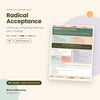
Some things hurt and can’t be undone. Radical acceptance means fully accepting reality as it is right now, with your mind, heart and body, especially when it’s painful and out of your control. This one-page DBT distress tolerance worksheet shows how to lower the suffering that comes from fighting what already is.
What’s inside
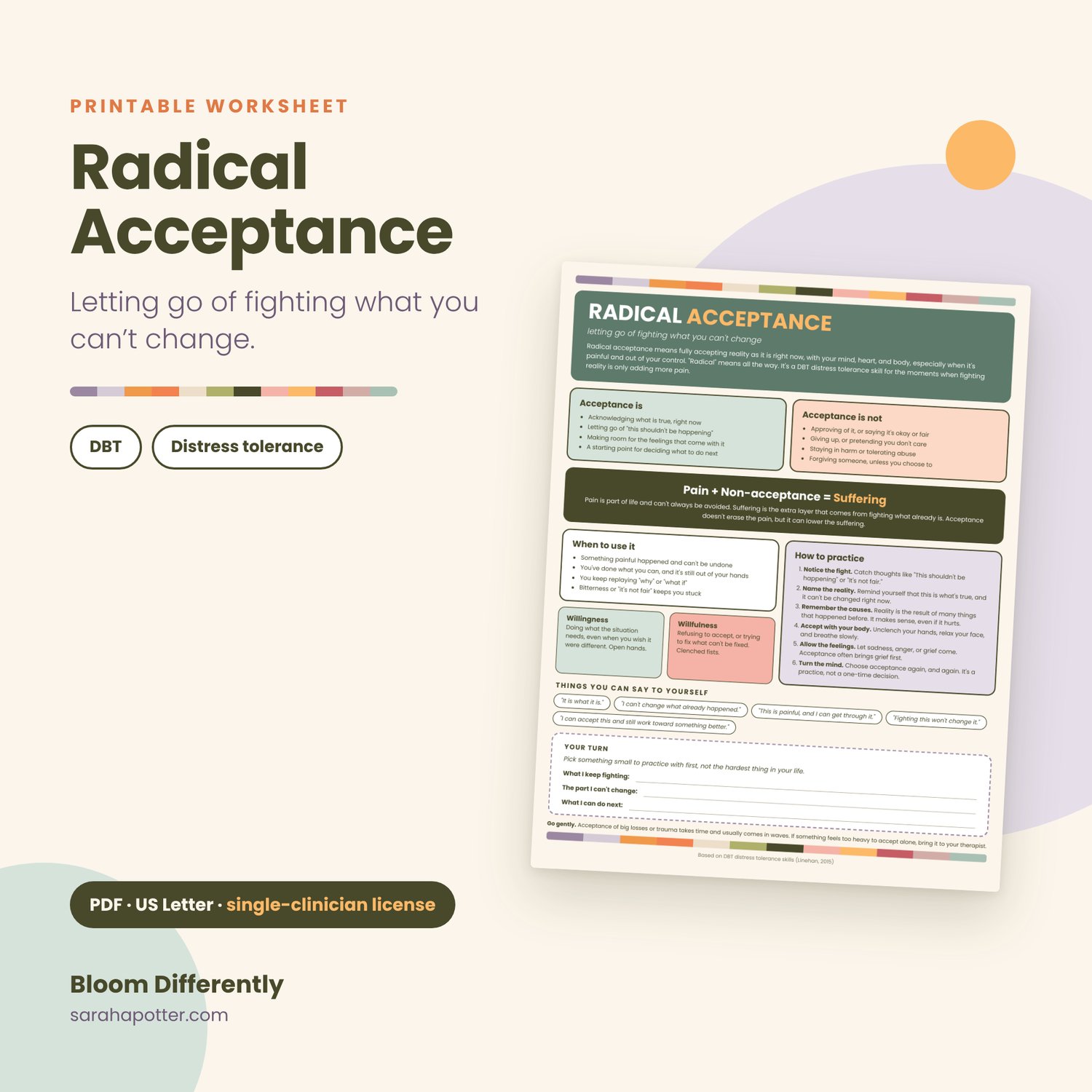
- What acceptance is, and what it is not: acknowledging what’s true and making room for feelings. It is not approving, giving up, staying in harm, or forgiving unless you choose to.
- Pain + non-acceptance = suffering: a simple explanation of why acceptance doesn’t erase pain but can lower the extra layer of suffering.
- When to use it: replaying “why” or “what if,” feeling stuck in “it’s not fair,” or having done everything you can.
- Willingness vs. willfulness: open hands versus clenched fists.
- Six steps to practice: notice the fight, name the reality, remember the causes, accept with your body, allow the feelings, and turn the mind again and again.
- Things you can say to yourself: ready-made coping statements like “This is painful, and I can get through it.”
- A “Your Turn” section: what I keep fighting, the part I can’t change, and what I can do next.
Who it’s for
Teens and adults dealing with grief, loss, family changes, chronic stress, disappointment or situations that feel unfair. It’s useful for therapists, school counselors and DBT groups.
Ways to use it
- Teach radical acceptance in DBT skills groups or individual sessions.
- Support grief and adjustment work, like a move, divorce, diagnosis or loss.
- Practice it on a small frustration first before a bigger one.
- Keep the coping statements handy for hard moments.
Why it’s different
It’s safety-aware and gentle. It makes clear that acceptance never means tolerating abuse or staying in harm, it encourages starting small, and it reminds readers that acceptance of big losses or trauma comes in waves and is worth bringing to a therapist.
What you get
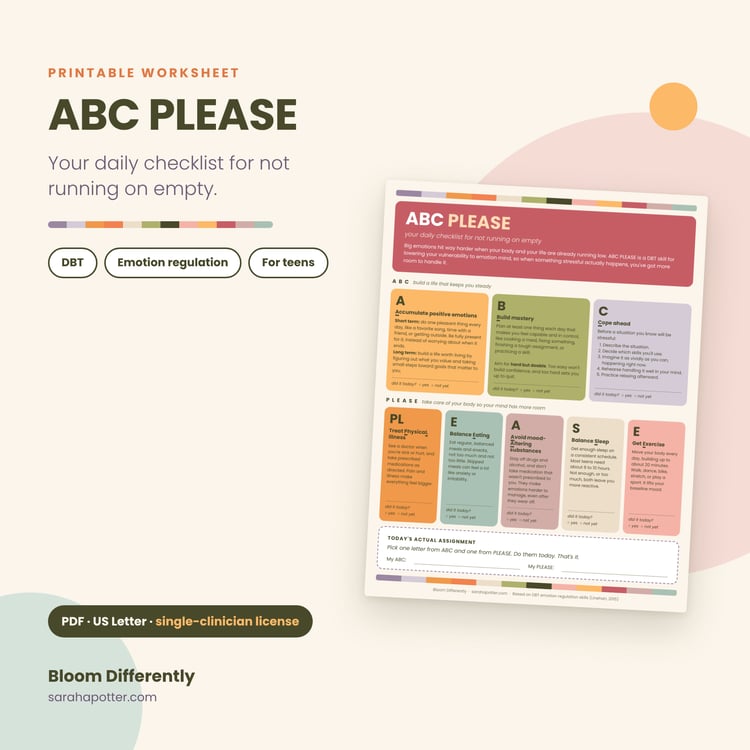
A one-page printable PDF, US Letter, available as an instant download. It’s based on DBT distress tolerance skills (Linehan, 2015). Single-clinician license included.
Pairs well with: STOP Skill, DBT Skills Toolkit, What’s In Your Control?