

My child is self-harming
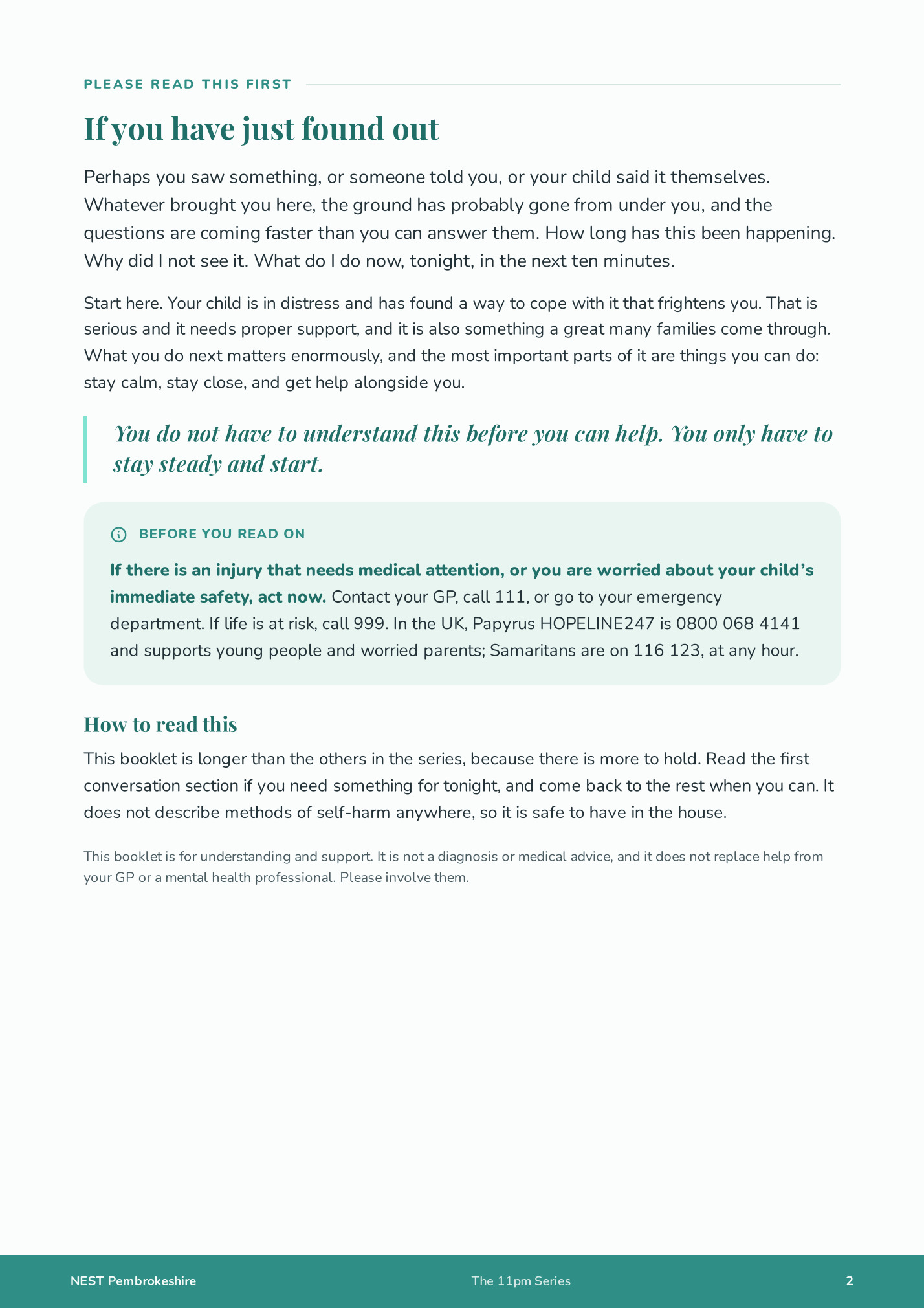
Important content note: this booklet is about a child who is self-harming. It is written with care, it does not describe methods, and it includes crisis helpline details.
My child is self-harming and I don’t know what to do.
If you have just found out that your child has been hurting themselves, this is written for exactly that moment, when the questions are coming faster than you can answer them and you do not know where to begin. It is calm, practical and gentle. It explains what self-harm usually is and what it usually is not, why neurodivergent young people can be more vulnerable, and what to say in that first conversation so your child keeps talking to you rather than taking it underground.
There is a full section on keeping them safer at home without destroying their trust, on getting help from your GP and mental health services, and on how to talk to school, including precisely what to ask for. The most important crisis information sits right at the front.
It is a longer booklet than the others in the series, because there is more to hold.
Please read with care.
This guide is for understanding and support, and it is grounded in current UK clinical guidance, including NICE. It is written from many years of experience supporting neurodivergent young people and their families in education, not from a clinical role, and it is not medical, psychological or crisis advice, nor a diagnosis. It does not replace help from your GP, a mental health professional or the emergency services, and it encourages you to involve them. If your child is in immediate danger, or you are frightened for their safety, please contact your GP, call 111, or in an emergency call 999. In the UK, Papyrus HOPELINE247 is 0800 068 4141 and supports young people and worried parents; the Samaritans are on 116 123, at any hour.