Your Cart
Loading

Six Projects. One Connected Learning Journey.

A complete early learning journey built around six hands-on projects — designed to connect, extend and grow with children’s curiosity.

DentBloom — Bloomy’s Magic Garden brings together six complete early learning projects for nursery and preschool children.

Each project has its own learning focus and resources, but they have been intentionally designed to connect.

Children can:

  • ♻️ Recycle & reuse
  • 🌱 Plant, care & investigate how things grow
  • 🥕 Prepare food, build independence & explore composting
  • 💚 Discover their amazing bodies
  • 🦷 Build healthy smile habits
  • 🔎 Think, investigate & discover through Discovery Lab


One Journey. Six Different Ways to Explore.

The main learning journey moves naturally from:


♻️ RECYCLE → 🌱 GROW → 🥕 COOK & COMPOST → 💚 BODY → 🦷 SMILE

And Discovery Lab extends curiosity across them all:


🔎 THINK • LOOK • DISCOVER

Children can revisit questions from Recycling, Gardening, Cooking & Compost, Healthy Body and Healthy Smile through simple hands-on investigations and early science experiences.


Nothing starts from nowhere — and the learning doesn’t stop when one project ends.


Why It’s One Connected Journey — Not Six Separate Packs

Many early learning resources are used once and then put away.

Bloomy’s Magic Garden was designed differently.

Each project can stand on its own, but what children make, grow, explore and discover in one project can continue into another.


♻️ Recycling — I can care for my world.

🌱 Gardening — I can care for something living.

🥕 Cooking & Compost — I can prepare food and discover what can happen next.

💚 Healthy Body — I can understand and care for my body.

🦷 Healthy Smile — I can care for my teeth and smile.

🔎 Discovery Lab — I can think, look and discover.

The journey can begin with something as simple as a clean 3L milk bottle.

In Recycling, children transform milk bottles into a planter and watering can.

Those resources move into Gardening, where children grow and investigate plants under different conditions.

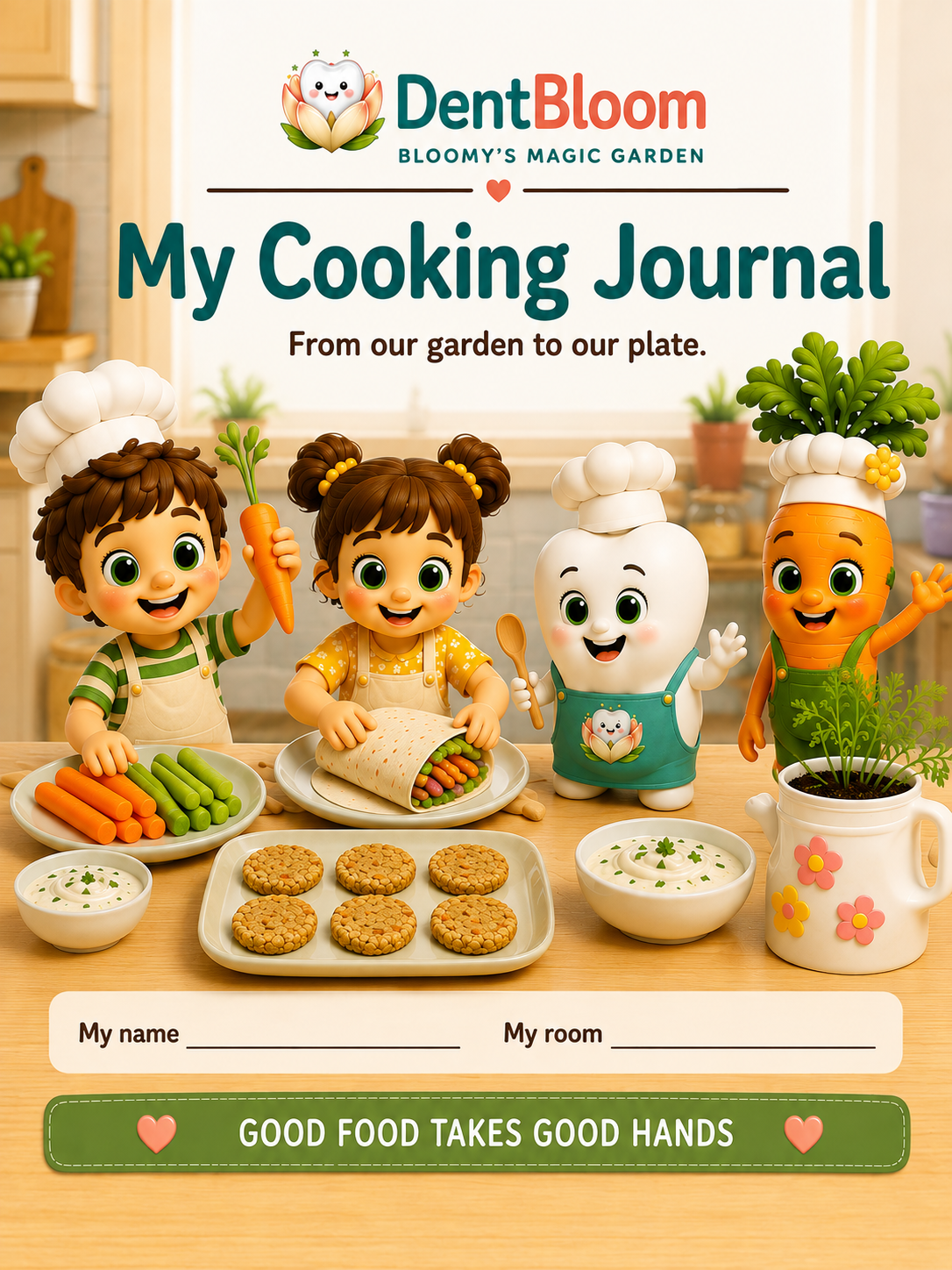
The carrots they grow can move into Cooking & Compost, where children practise handwashing, explore ingredients and prepare food together.

Suitable food scraps can then continue through the project’s Compost & Garden Connection, helping children discover how compost can support soil and reconnect food with the garden.

Food learning leads naturally into Healthy Body, where children explore why their bodies need food, water, movement and rest.

Healthy Body then connects to Healthy Smile, where children discover how to care for their teeth and smiles.

And throughout the entire journey, Discovery Lab gives children opportunities to investigate the questions that naturally emerge.


One project can lead to another. One question can lead to many discoveries.


♻️ 1. RECYCLING PROJECT

I can care for my world.

The learning journey begins with reuse.

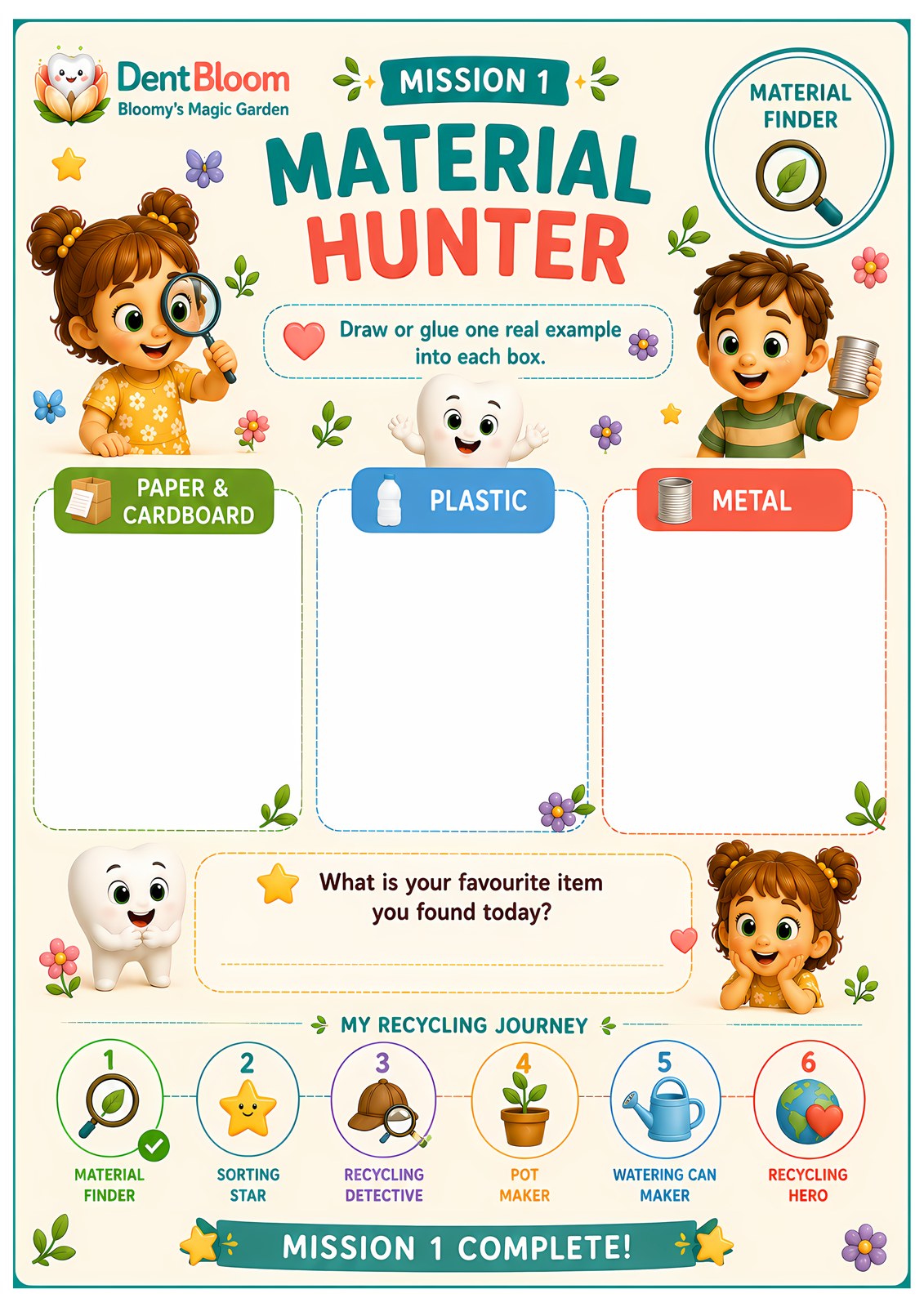
Children explore, sort and compare everyday materials and discover that something normally thrown away can become useful again.

Two clean 3L milk bottles are transformed into:

  • a planter pot
  • a working watering can

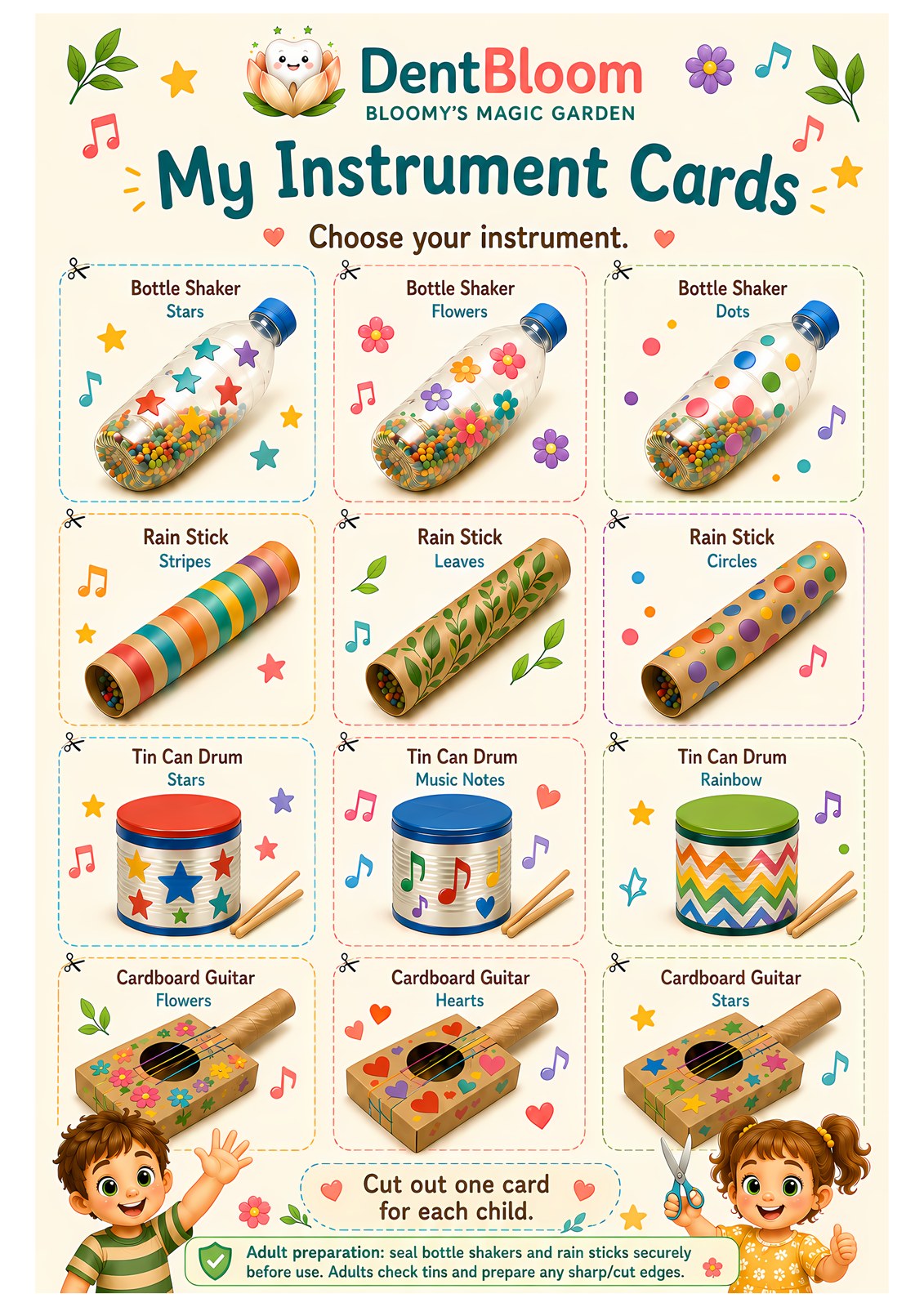
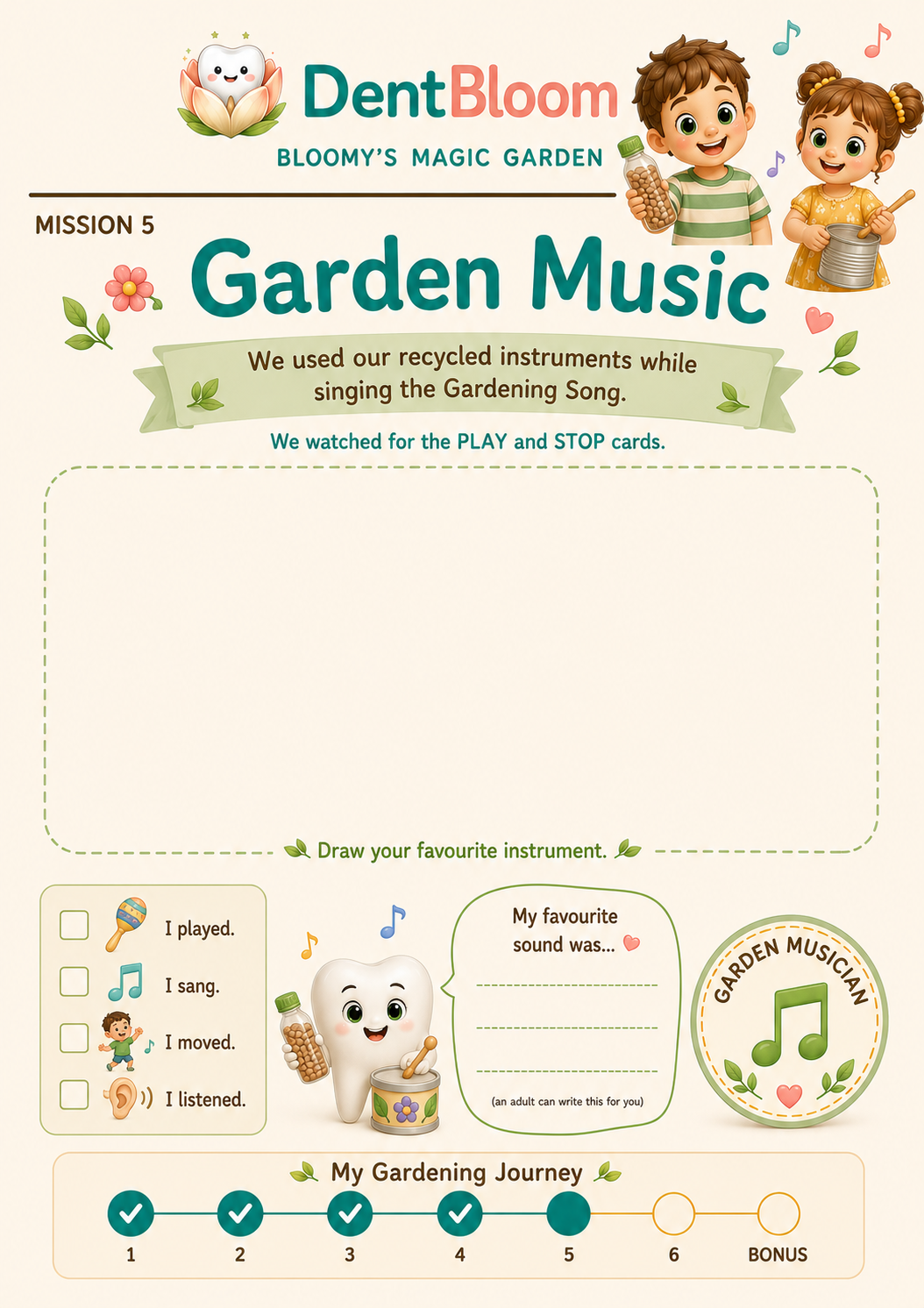
Children also create recycled musical instruments using carefully prepared materials such as bottles, tins, boxes and tubes.

These creations do not disappear when the Recycling Project ends.

The planter and watering can move directly into the Gardening Project.

The musical instruments return throughout the DentBloom learning journey in songs, movement activities and band experiences.

Educators can also use visual cue cards such as:


PLAY • STOP • QUIET • LOUD

to organise the children’s instruments like a classroom band.


Recycling becomes something children use — not simply something they are told about.

What is inside

  • Recycling Journal
  • Educator Guide
  • Quick Start Guide
  • Materials Checklist
  • Project Planner
  • Observation & Reflection resources
  • Classroom posters
  • Activity Cards
  • Team Mission Cards
  • Printable crafts
  • Recycling labels
  • Visual schedule
  • Team resources
  • Certificates and celebration resources
  • Song and movement resources
  • Recycled-instrument experiences
  • Supporting video resources
  • Dedicated curriculum connection guides 


🌱 2. GARDENING PROJECT

I can care for something living.

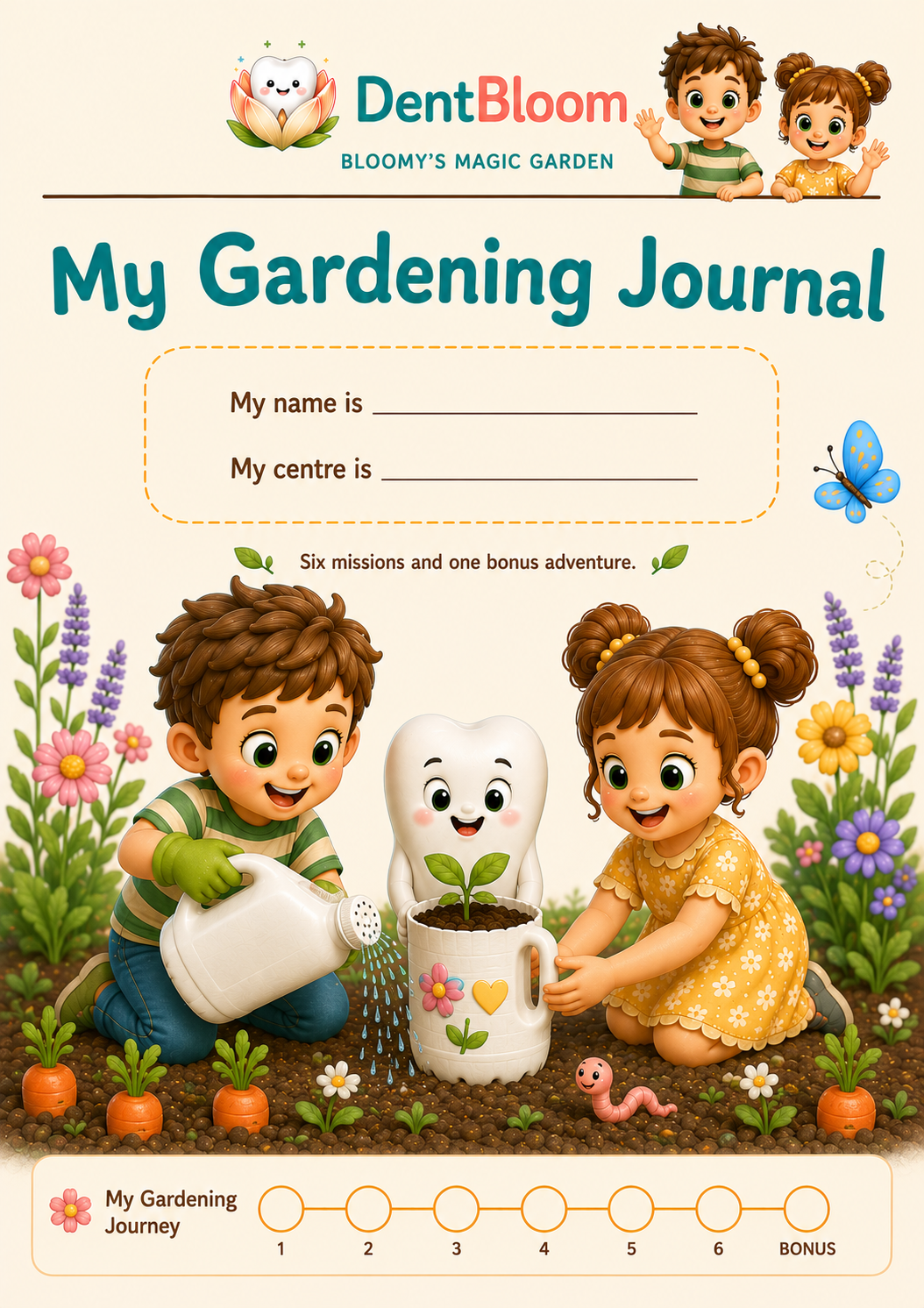
Children take the planter pots and watering cans they created in Recycling and give them a new purpose.

They plant.

They water.

They observe.

They wait.

But this is much more than planting something and watching it grow.

At the centre of the project is the Great Growth Experiment.

Children work across four growing teams:


☀️ SUNSHINE

💧 SPLASH

🌤️ SHADE

🌱 STEADY

Over time, children care for the seedlings, observe what happens and compare what they notice.

They can begin asking:

Which plant grew differently?

What happened with more water?

What happened with less light?

What differences can we notice between the groups?

The purpose is not to decide which team “won”.

Instead, children begin discovering that different growing conditions can create different things to notice.

The project can continue across 10–12 weeks, giving children time to experience real change over time.

And when the carrots are finally ready to harvest, the learning moves naturally into Cooking & Compost.


What is inside

  • Gardening Journal
  • Educator Guide
  • Quick Start Guide
  • Materials Checklist
  • Project Planner
  • Observation & Reflection resources
  • Great Growth Experiment
  • Sunshine, Splash, Shade and Steady team resources
  • Growth chart
  • Plant labels
  • Classroom posters
  • Activity cards
  • Visual schedule
  • Nature Collage bonus experience
  • Certificates and celebration resources
  • Cathy Carrot’s Growing Song and movement resources
  • Garden Music using the instruments created during Recycling
  • PLAY / STOP visual cue cards
  • Discovery Lab connections
  • Dedicated curriculum connection guides 


🥕 3. COOKING & COMPOST PROJECT

I can prepare food — and discover what can happen next.

The carrots children cared for in Gardening can now move from the garden to food preparation.

Children have not simply been handed an ingredient.

They may have watched it grow.

They watered it.

They observed it.

They waited.

They harvested it.

Now they can explore and prepare food with it.

Cooking begins before children touch the ingredients.

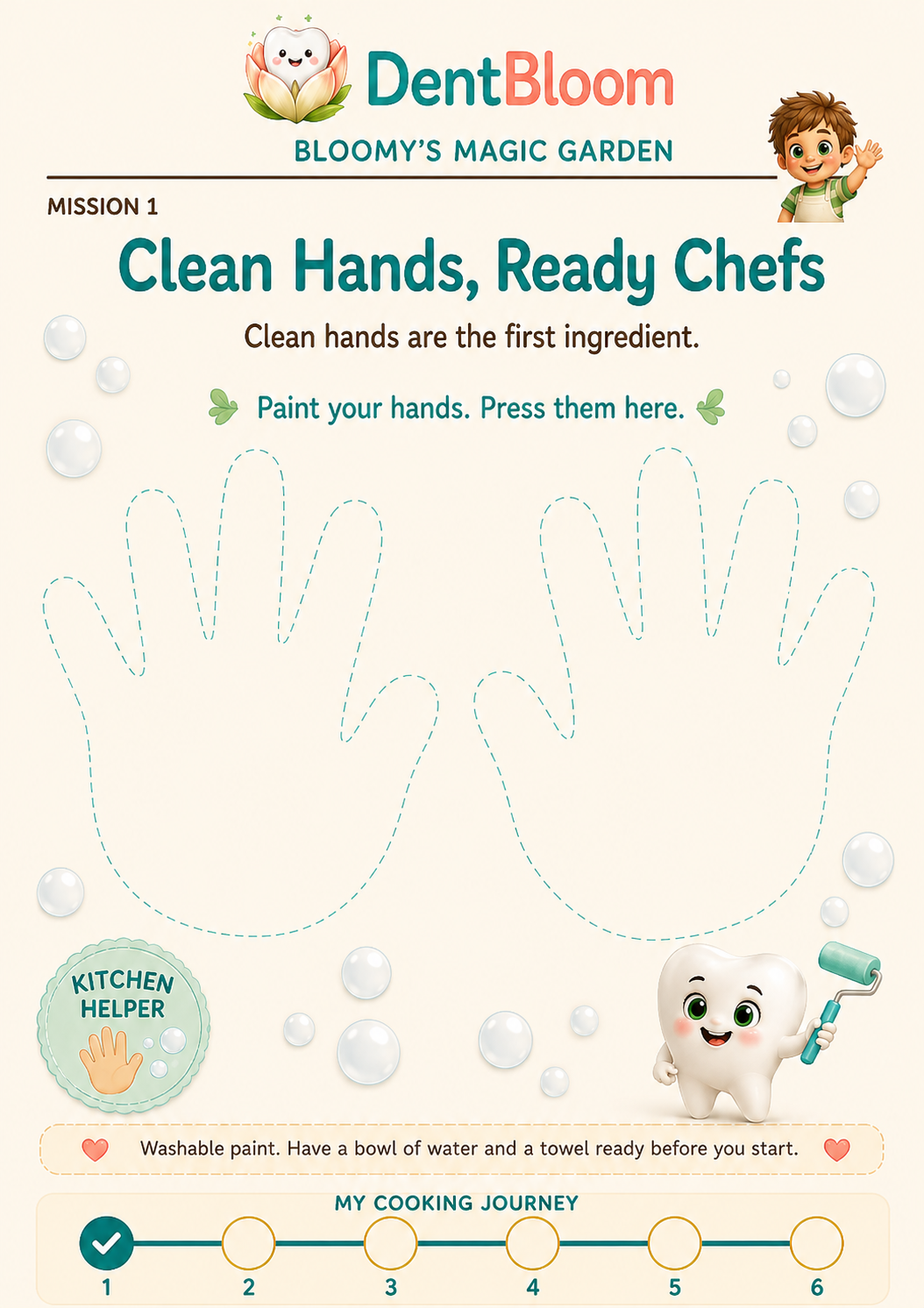
Children discover that washing their hands is an important part of getting ready to prepare food together.

They can:

  • wash their hands before cooking
  • explore ingredients
  • look, smell, touch and investigate
  • spoon and mix
  • spread using suitable child-safe tools
  • arrange ingredients
  • count
  • make choices
  • follow simple sequences
  • work together
  • build confidence and independence
  • help clean up afterwards

The project supports hygiene routines, sensory exploration, teamwork and practical life learning.


Tasting is always optional.

Children can participate meaningfully without being required to eat the food.

And when cooking finishes, suitable food scraps can begin another part of the learning journey.


🪱 The Compost & Garden Connection

Children meet Wiggles the Worm and begin discovering:

  • what compost is
  • what can go into compost
  • what happens to suitable food scraps over time
  • how natural materials can change
  • how compost can help soil
  • how soil can support future plant growth

Children can investigate questions such as:

What changes first?

What happens to suitable food scraps over time?

What belongs in compost?

How can compost help the garden?

The learning cycle becomes visible:


GARDEN → FOOD → SCRAPS → COMPOST → SOIL → GARDEN

Children begin to understand that suitable natural materials can change over time and become part of another useful cycle.

Long-term decomposing materials remain educator-managed.


Sustainability becomes something children can see and experience.

Most importantly:


Composting is part of Cooking & Compost — not a seventh DentBloom project.

What is inside

  • Cooking Journal
  • Educator Guide
  • Quick Start Guide
  • Materials Checklist
  • Project Planner
  • Illustrated recipes
  • Safety and allergen guidance
  • Handwashing and food-hygiene resources
  • Family resources
  • Sensory food experiences
  • Observation & Reflection resources
  • Song and movement resources
  • Activity and movement cards
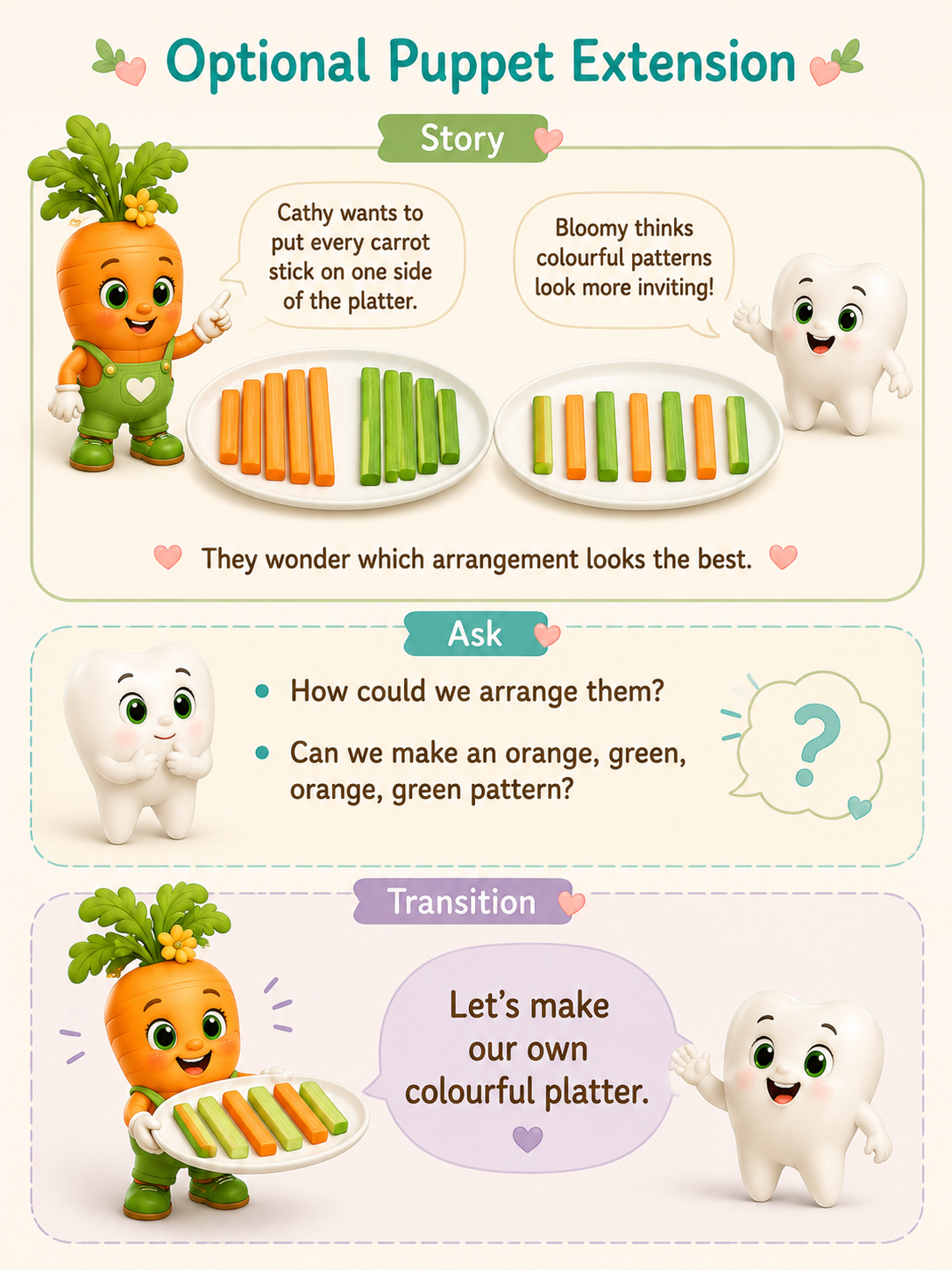
  • Puppets and character extensions
  • Certificates and celebration resources
  • Discovery Lab connections
  • Compost & Garden Connection
  • Compost Sorting
  • From Scraps to Soil
  • The Food Circle
  • Wiggles the Worm
  • The Garden Gives Back
  • Thank You Garden
  • Dedicated curriculum connection guides

Cooking finishes by asking one more question: “What happens next?”

And that question can lead children back to the garden.

🪱 Composting

I can discover what happens to our food scraps.

Food scraps from Cooking become the starting point for another learning experience.

Children meet Wiggles and begin discovering:

  • what compost is
  • what can go into compost
  • what happens to food scraps over time
  • how materials change
  • how compost can help soil and support the garden

Children can investigate questions such as:

What changes first?

What happens to food scraps over time?

What belongs in compost?

How can compost help the garden?

The learning cycle becomes visible:


FOOD → SCRAPS → COMPOST → ADD TO SOIL → GARDEN → FOOD

Children begin to understand that natural materials can change over time and become part of something useful again.

The project introduces decomposition in a simple, age-appropriate way while keeping decomposing materials educator-managed.


Sustainability becomes something children can see and experience.


💚 4. HEALTHY BODY PROJECT

I can understand and care for my body.

After exploring where food comes from and helping prepare it, children turn their curiosity towards themselves.

The question changes from:


“Where does our food come from?”

to:


“Why does my body need it?”

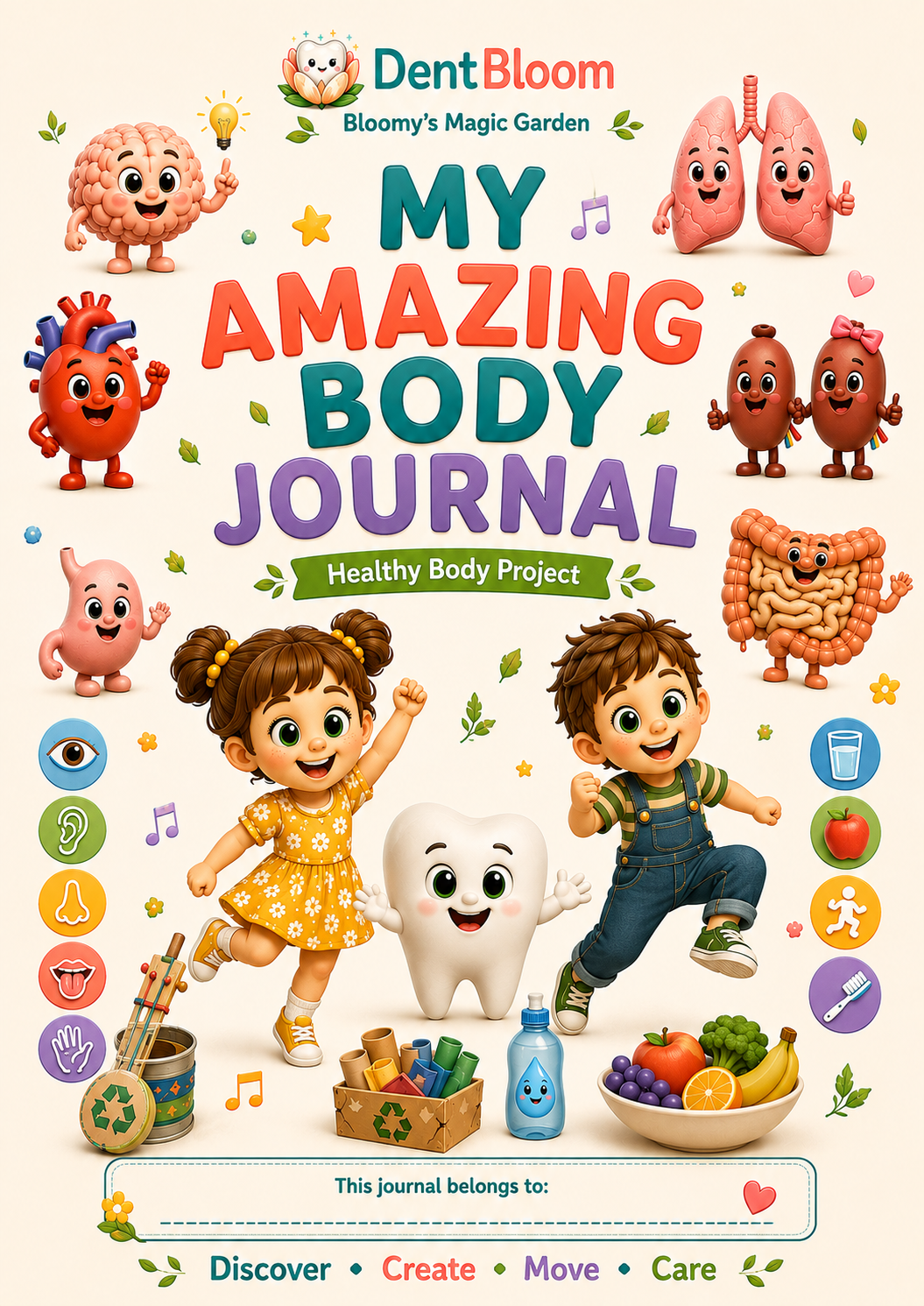
Through the My Amazing Body Journal, children explore six connected missions:

  • Body Explorer
  • Sense Detective
  • Organ Explorer
  • Body Fuel Helper
  • Mighty Mover
  • Healthy Body Hero

Children discover:

  • their own body
  • the five senses
  • where different organs are located
  • what those organs help the body do
  • how food and water help support the body
  • what they notice when they move
  • why rest matters
  • simple everyday ways they can help care for themselves

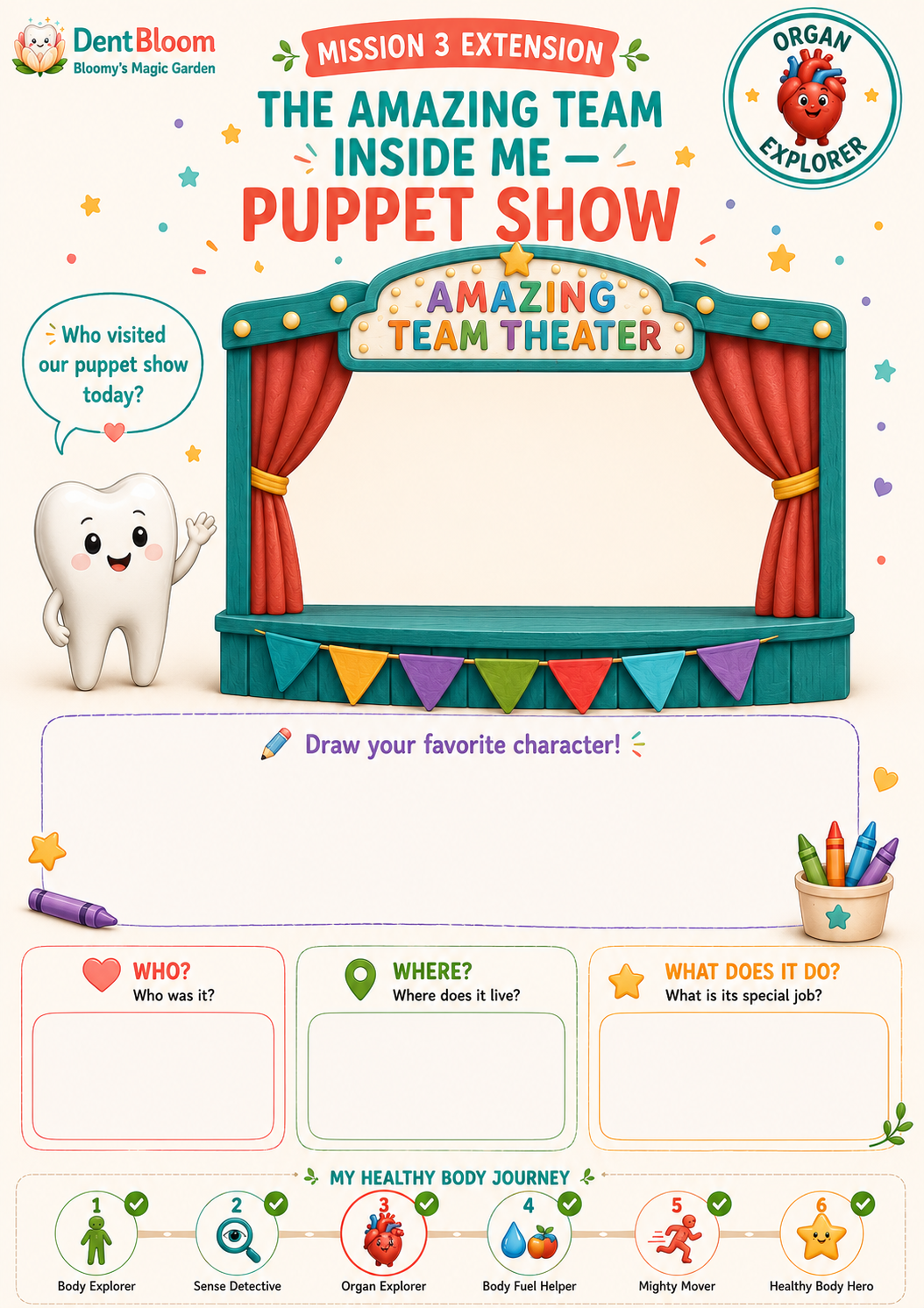
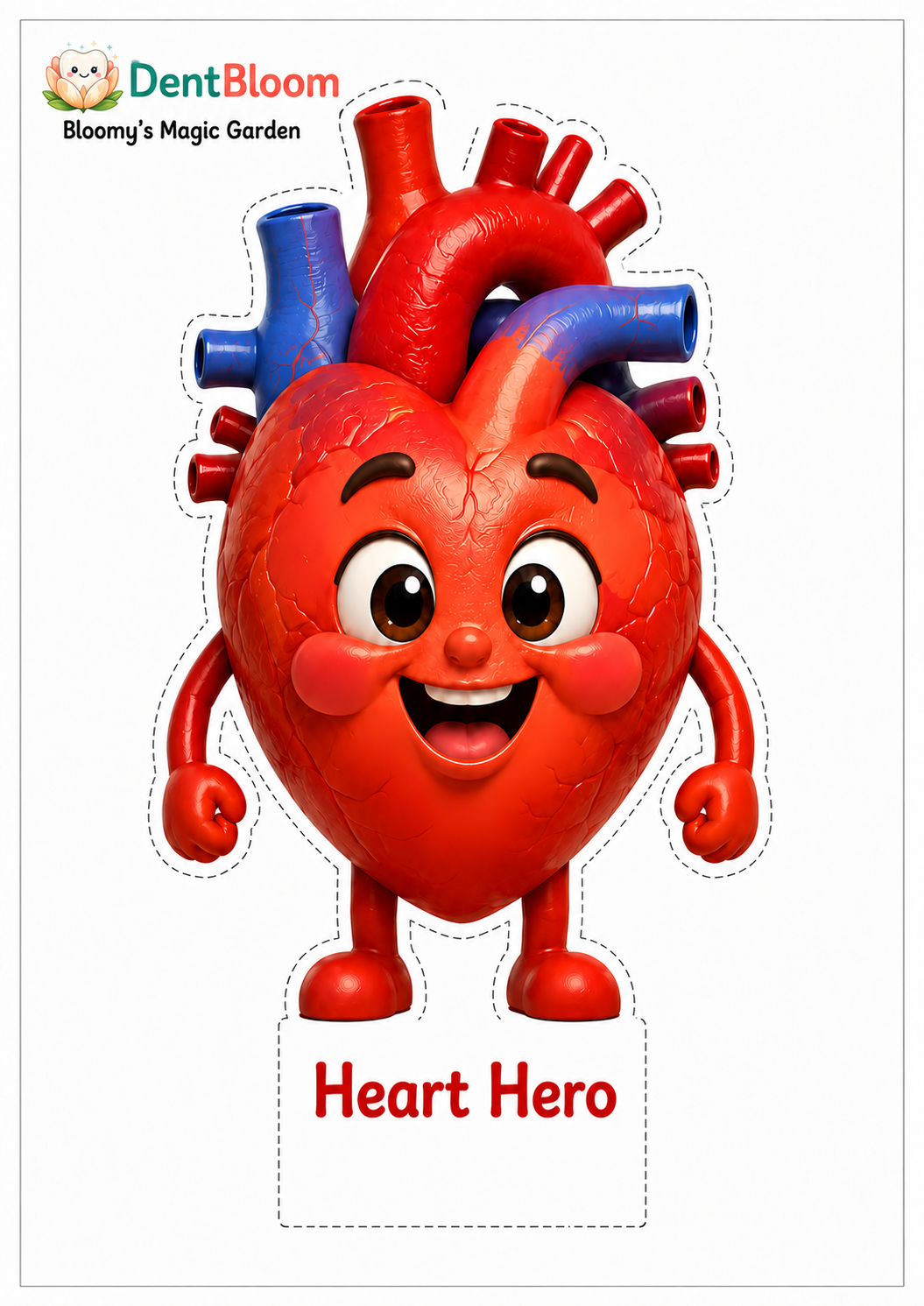
Friendly organ characters and puppets help turn big concepts into playful conversations.

Children can explore questions such as:

Where is my heart?

What do my lungs help my body do?

Why does my body need water?

What happens to my body when I move?

The focus is not on memorising anatomy or making “perfect” choices.


It is about helping children become curious about their own bodies and begin understanding ways they can care for themselves.

Three extension experiences can deepen the learning without adding extra missions:


📍 Where Do They Live?

🎨 Build an Organ

❤️ Heartbeat Art

And at the end, one important connection naturally appears:


My mouth is part of my amazing body too.

That leads directly into Healthy Smile.

🦷 5. HEALTHY SMILE PROJECT

I can care for my smile.

The Healthy Smile Project continues the healthy-body journey by helping children explore their mouth, teeth and everyday smile-care habits.

Created by a Registered Dentist in Australia, the project transforms professional oral-health knowledge into playful, positive and developmentally appropriate early-learning experiences.

Children move through six connected missions:


🦷 Open & Explore My Mouth — Smile Explorer

🔎 Meet My Teeth — Tooth Detective

🪥 Brush My Smile — Brush Buddy

💧 Food & Water for My Smile — Smile Fuel Helper

🦷 Meet the Dentist — Dentist Explorer

🌟 I Can Care for My Smile — Healthy Smile Hero

Children explore:

  • their own mouth and smile
  • their teeth
  • toothbrushing
  • food and water
  • smile-care routines
  • what a dental visit may involve

They can participate through:


LOOK • POINT • CHOOSE • TALK • TOUCH • BUILD • MOVE • DRAW • PLAY • INVESTIGATE • DISCOVER

Friendly dental learning helps unfamiliar ideas become more comfortable and understandable.


The classroom does not become a dental clinic.

Instead, oral-health learning becomes something children can:


see • explore • practise • talk about • play with • remember

The project also includes Healthy Smile Band experiences, where musical instruments created during Recycling can return once again.


A resource children made in one project can become meaningful again in another.


🔎 6. DISCOVERY LAB

I can think, look and discover.

Discovery Lab turns children’s natural curiosity into simple, hands-on investigation.

It is a complete DentBloom project in its own right, with its own educator guidance, investigation resources and familiar inquiry routine:


THINK • LOOK • DISCOVER

Children are encouraged to wonder what might happen, try an investigation, look closely at what changes and communicate what they noticed.

There is no pressure to find the “right” answer.

Children can participate by:


POINTING • CHOOSING • TALKING • DRAWING • MOVING • COMPARING • PREDICTING • OBSERVING

One Question Can Lead to Many Discoveries.

What makes Discovery Lab different is that it also connects across the whole Bloomy’s Magic Garden learning journey.

Questions that begin in another project can continue through Discovery Lab:

♻️ Recycling can lead to investigations about materials, water, absorbency and reuse.

🌱 Gardening can lead to discoveries about plants, water, weather and change.

🥕 Cooking & Compost can lead to investigations about food, colour, decomposition and change over time.

💚 Healthy Body can lead to discoveries about breathing, heartbeat, movement and how the body feels.

🦷 Healthy Smile can lead to investigations about hygiene, transfer and tooth models.

Children might explore questions such as:

Can water walk?

Why did this apple change?

Which ice will melt first?

What happens to cardboard in water?

How does water move through a plant?

Can my breath move something?

What happens to my heartbeat when I move?


Discovery Lab helps educators take the curiosity already happening in the room and extend it into meaningful early science and inquiry.

It does not replace the other DentBloom projects.


It helps children look deeper into the questions those projects create.

What is inside

  • Discovery Lab Educator Guide
  • Hands-on early science investigations
  • THINK • LOOK • DISCOVER inquiry routine
  • Prediction and observation opportunities
  • Child-friendly investigation pages
  • Drawing, choosing and visual-response activities
  • Educator discussion and extension prompts
  • Recycling and materials investigations
  • Plant, water and weather investigations
  • Cooking & Compost investigations
  • Healthy Body investigations
  • Healthy Smile investigations
  • Safety guidance for early childhood settings
  • Dedicated curriculum connection guides

Little experiments. Big discoveries.


📚 Curriculum Connections Across All Six Projects

All six complete DentBloom learning projects include dedicated curriculum connection guides for four major early-years frameworks and reference systems:


🇦🇺 Australia — EYLF V2.0 & NQS

🏴 England — EYFS

🇺🇸 United States — Head Start ELOF

🇳🇿 New Zealand — Te Whāriki

The guides connect project experiences with relevant curriculum language to support:


PLANNING • OBSERVATION • REFLECTION • DOCUMENTATION

They help educators recognise curriculum learning already emerging through the experiences instead of finishing a project and then starting from a blank page when it comes to documentation.

The curriculum guides are designed as educator support and should be used alongside professional judgement, service policies, local curriculum decisions and applicable regulatory requirements.

DentBloom is an independent educational resource and is not endorsed by the relevant curriculum or regulatory bodies.


One Connected Learning Journey

The projects remain complete experiences in their own right.

But together, they create something bigger:


♻️ RECYCLING

🌱 GARDENING

🥕 COOKING & COMPOST

💚 HEALTHY BODY

🦷 HEALTHY SMILE

And running across the whole journey:


🔎 DISCOVERY LAB

THINK • LOOK • DISCOVER

A bottle can become a planter.

A planter can grow a carrot.

A carrot can become part of a food experience.

Suitable scraps can become compost.

Compost can reconnect children with the soil and garden.

Food can lead to questions about the body.

The body can lead to questions about the mouth and smile.

And any one of those moments can become the beginning of an investigation.


One project can lead to another. One question can lead to many discoveries.

Strong roots today, healthy habits tomorrow.