
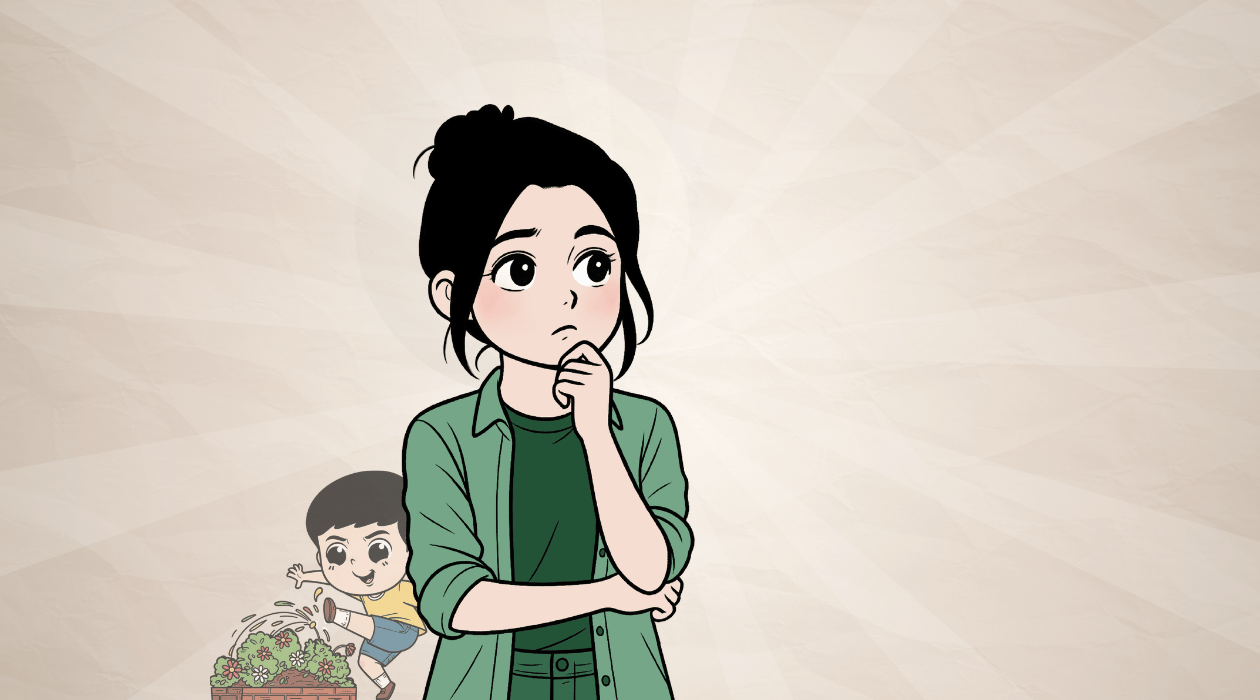
If disciplining your Toddler makes you uncomfortable because it feels harsh, controlling, or mean — you’re not alone.
Over the years, I worked with many parents who leaned hard into a “hands-off” approach because discipline didn’t sit well with them.
They tried to rely only on positive reinforcement, distraction, or redirection. They hoped that if they avoided enforcing rules or holding firm boundaries, they could avoid anger — theirs and their child’s.
That approach seemed to come from some common beliefs:
- My Toddler shouldn’t have to feel unhappy.
- Feeling unhappy will harm my child.
- I don't want to get mad at my child.
So they avoided acting on situations that might create either.
But here’s where things get tricky when you take that approach.
Because of how toddlers learn — and how their brains take in and organize their experiences during this phase — trying to eliminate “negative” feelings can actually backfire.
In fact, discomfort is one of the primary ways toddlers learn how the world works.
When you take a passive approach to discipline, as a way to shield your child from unpleasant consequences — and avoid your own discomfort in the process — you don’t remove the hard parts of parenting.
You delay them.
Because when toddlers don't experience clear boundaries, their behaviors don’t disappear; they escalate.
That’s when your passive parenting becomes reactive.
That’s when you act without a plan because you’ve been pushed past your limit, and when life starts to feel chaotic, confusing, and overwhelming for both of you.
And this isn’t because you’re a bad person.
It’s because modern parenting culture sends messages like:
- Keep your child happy at all costs.
- Never show anger.
- Protect your child's feelings above everything.
And while protecting your child from harm is absolutely your job, for toddlers, not all negative experiences are harmful.
Shielding a toddler from every unpleasant moment actually robs them of critical information.
So when your child makes a poor choice — something unsafe, unkind, or clearly outside the boundary — you hesitate.
You don’t want to:
- Scare them
- Repeat your own childhood
- Lose control of your emotions
- Damage the relationship
So you wait.
You hope it passes.
And without realizing it, you slide into what I call the passive–reactive parenting cycle—a pattern that feels gentle at first, but often produces the exact opposite of what you were hoping for.
This piece is all about this modern-day parenting conundrum and how, by better understanding why it happens and how it’s unhelpful, you’ll be able to parent through this toddler learning curve with more confidence and skill — planting those first seeds of critical thinking in your toddler’s developing mind.
Because the passive–reactive parenting cycle isn't just unhelpful for your child but can also quietly erode your peace and confidence as a parent.
So let's shed some light on this confusing cycle so you can learn to spot it before it takes over.
What Is the Passive–Reactive Parenting Cycle?
This passive–reactive cycle isn’t about “bad parenting.”
It’s about fear, wiring, and missing information.
It's about trying to avoid giving the unpleasant feedback your toddler actually needs to make sense of the world, so you don't have to get "mad," and they don't have to feel "sad," but by doing that, you escalate your child's Behavior, and you get mad anyway.
And believe it or not, there is a "formula" for this cycle, and if you can start to recognize it, you can learn to parent with intention and calm to keep it from playing out.
So, to better understand it, let's look at how it can play out in real life (this example is based on an actual situation I witnessed with one of my daycare families).
How the Passive/Reactive Parenting Cycle Can Play Out in Real Life:
1. Your toddler tests a limit or boundary 🧩
Because this is how they learn at this age.
Example: Your son is swinging a hockey stick over his head, dangerously close to his baby sister.
He’s not being malicious — he’s asking questions with his body:
- “Is this allowed?”
- “What happens if I do this?”
2. You avoid intervening or disciplining
You might yell “NO,” but you don’t physically stop the Behavior or take the stick from him, because:
- You don’t want to seem “mean.”
- It doesn’t fit your parenting philosophy.
- You hope your words will be enough.
- You’re tired, overwhelmed, or don’t want to deal with the confrontation.
- It simply doesn’t occur to you.
👉And here’s the problem: your response doesn’t match the situation.
From your toddler’s perspective, the message is confusing.
You’re saying “NO” — but physically, you’re still allowing the behavior to continue.
3. The Behavior repeats 🔄
Toddlers don’t learn from words alone — they learn through experience, and what he’s experiencing is that nobody has taken the stick away from him.
So he keeps swinging the stick:
- Why wouldn’t he?
- He’s still being allowed to do it.
From his point of view, nothing meaningful has happened to make him stop.
4. Mixed messages create confusion ⚡
- In your mind: “I told him no. Why won’t he listen?”
- In your toddler’s: “No must also mean yes — because I’m still being allowed to do this. Nobody is stopping me.”
And here’s something important:👉Yelling isn't a consequence. It’s a reaction. It has no meaning; your toddler might see that you’re mad, but not why.
Without a clear deterrent or follow-through, your words lose meaning even when you’re yelling them.
5. The Behavior escalates 📢
When boundaries are unclear, toddlers often escalate behavior as their brains search for a predictable pattern:
- So he swings harder.
- Closer.
- Longer.
He’s still trying to figure out if this is really okay and how far he can take it before something happens, and so far, aside from just shouted words, nothing has happened.
- He needs clarification, so he keeps going.
- And eventually, he hits his baby sister in the head with the hockey stick.
6. You hit your breaking point ⛓️💥😡
Now the situation is serious — and impossible to ignore.
The baby is hurt, so you have to step in and physically stop your toddler from swinging the stick by grabbing it away so he can’t hurt her again.
💥💥But now you’re the one out of control.
- You grab the stick away.
- You’re screaming in his face.
- You slap him on the back — maybe harder than you meant to.
- Then you grab him and drag him into the house.
You're not a bad person, you're just so mad!
Ironically, this is the moment your toddler gets the clear, physical feedback he’s been searching for all along — because, for the first time, something actually happens.
But because your response comes from anger instead of intention, the lesson doesn’t land the way you think it does.
- It doesn’t teach what not to do.
- It teaches how far to go.
From your point of view, you’re thinking:
- 👉“Okay. Now I’m fixing this. He’s in trouble. That’ll teach him.”
But from your toddler’s developing brain, the message is very different:
- 👉“Oh — this is how far I have to push before I get a real response.”
7. You lose the ability to be “nice” 😱
Now you’re angry — and you’re acting from that place.
When you’re this dysregulated, there’s no room for a teachable moment.
Your nervous system has flipped into fight-or-flight, 🧠shutting down the prefrontal cortex — the part of your brain responsible for reflection, impulse control, and thoughtful decision-making. You’ve literally lost access to the skills you need to stay calm, think clearly, and teach effectively.🤯
Now, you can only react to your own emotional overload instead of responding to the situation.
That’s why this moment doesn’t accomplish anything positive — it just releases YOUR built-up tension.
In this real-life example, the father (who had watched the situation unfold without intervening) finally snaps:
- He grabs the hockey stick
- Breaks it over his knee
- Screams at his son to get inside
🔆Here’s why this matters:
- This isn’t discipline.
- This is emotional overload.
In the end, the motivation to act wasn’t to create a teachable moment — it was to lash out and “teach the kid a lesson.”
And that difference in motivation matters.
💫 Bad Bonus 👎
If your child consistently gets more attention for acting out than for calm behavior, their brain starts to link misbehavior with feeling noticed and important. If this gets reinforced enough over time, acting out can become their subconscious’s go-to way of feeling seen.
8. Your Child loses their “Anchor of Safety” 😕
Your child was born into a world they didn’t understand and couldn’t control. As a baby, you kept them safe, held them close, and built a bond based on trust.
Their sense of safety depended entirely on you — the anchor of their world, and they still depend on you for that in toddlerhood.
When your reactions are inconsistent and volatile, it can shake their sense of safety.
When their anchor is unpredictable, things don’t feel as safe anymore.
👀From your toddler’s perspective:
- You allowed the Behavior.
- You didn’t stop it.
- You didn’t answer the question — Is this okay? — clearly from the start.
- Then you completely lost it, lashing out over something I was just trying to figure out.
So, what the He🏒🏒???
- The world doesn’t make sense anymore.
- Words don’t match actions?
- The person I thought was safest can turn on me?
- Asking questions, the only way I know how (through my actions), makes you angry?
In that moment, your child’s feeling of safety and stability disappears — and all they can do is react.
9. Your toddler’s Behavior starts to mirror their inner confusion, chaos, and lack of safety
Now your toddler is living in an unsafe world of mixed messages.
👉 From their perspective:
- The rules are unclear
- The signals don’t match
- Safety feels unpredictable
- Attention feels risky
- And the world suddenly feels unstable
👉 Because for them, the world is now:
- A place with shifting rules
- Where “no” doesn’t always mean no
- Where safety depends on guessing your mood
- Where curiosity can suddenly make you mad
- Where being noticed can lead to danger
- Where there’s no clear way to do the “right” thing
And the worst part?
👉👉👉They can’t tell you how this is affecting them because they don’t consciously understand what’s happening.
All they can do is react to how this makes them feel, which is:
- Anxious
- Dysregulated
- Overwhelmed
- Angry and frustrated
And because your toddler can't verbalize what’s wrong and doesn’t yet have the self-control to manage big emotions, it’s easy to mistake the reaction for the actual problem — especially if you’re already feeling worn down.
So “he’s having trouble regulating himself” can become “he has a problem,” and there is a big difference between those two statements.
👉One implies that there’s room for improvement, and the other says there isn’t.
10. You start to wonder if there’s something “wrong” with your child🤔
At this point, you might start to think:
- “My child is bad.”
- “Something is wrong with him.”
- “He doesn’t know how to listen.”
After all, if things aren’t getting better after you’ve gotten mad so many times, maybe he’s just…
The Hidden Cost: How This Cycle Makes Parenting Harder
Here’s the part no one warns you about: Passive–reactive parenting makes toddler behaviors escalate and push you to your breaking point over and over, which can wear you down.
Over time, it leads to:
- more boundary testing
- bigger reactions
- increased tantrums
- less listening
- more resentment on both sides
Parents end up feeling:
- out of control
- constantly on edge
- ashamed of their reactions
- disconnected from their child
It’s no surprise, then, that the toddler years can feel mentally and emotionally overwhelming for many mothers.
Research shows that between 23–36% of mothers with children under five experience significant depression or anxiety, and about 14–15% are still struggling with depression four years postpartum. Nearly half report chronic fatigue (49.9%) and frequent headaches (47.2%) during these early years.
So if this sounds like you, you're definitely not alone.
I believe the toddler years are the toughest and most confusing years for most parents. If you're not ready for them or don’t have the right information, your choices can end up making things even harder.
And while many factors contribute to this — including sleep deprivation, financial stress, lack of support, and hormonal changes — I believe the passive–reactive parenting cycle can significantly add to that burden.
And over time, that strain builds up and can eventually suck the joy out of your parenting experience.
Not because you're failing — but because one of your most important feedback systems is broken.
The “A-Ha” Moment Many Parents Miss
Your Toddler is learning self-control at this time of life.
They’re learning how to read social cues, and that starts with you.
They're constantly tracking:
- Your tone
- Your mood
- Your reactions
- Your follow-through
To learn how to operate in the world and society.
They don't know anything beyond the world they live in with you, so when you expect them to understand what to do without giving them accurate feedback, it places a burden on a developing brain that isn’t ready to carry.
So, to help you understand what is and isn't helpful, let's look at the idea of discipline — the topic that usually leads parents down the path of passive-reactive parenting.
What Discipline Actually Is (And Isn’t)
Let’s clear this up completely.
Discipline Is NOT:
- yelling
- hitting
- shaming
- punishing in anger
- random consequences
- emotional unloading
Those are harmful. Full stop.
Discipline IS:
- a clear, predictable consequence
- connected directly to the behavior
- given immediately so that the child can connect the behavior directly to the consequence
- emotionally uncomfortable, not traumatic
- delivered calmly
- repeated consistently
- done with intention and care
- stopped once the lesson is learned
Discipline isn’t cruelty — it’s clarity.
And clarity is comforting to toddlers, even when they're not enjoying the ride.
Why Discipline Works With Toddler Brain Development
Toddlers learn through cause and effect, not reasoning.
They learn through doing and experiencing because they're still not quite clear on things like what words mean or what's expected.
Their brain doesn't know about things like boundaries, staying calm, and how their actions affect others because it's still installing:
- Impulse control
- Emotional regulation
- Cause-and-effect awareness
And that's where your actions as a parent come in.
Every calm, clear consequence you give is like a software update that tells the brain: “That action doesn’t work. Try something else.”
Without those updates, the system glitches.💻💿
Without clarity, your toddler's brain will instinctively keep searching for the answers it craves.
Toddler brains need clear patterns to internalize and store in the subconscious for later in life, and they instinctively know this is the brain's time for doing that.
So when you parent passively and reactively, your toddler's confused brain will keep pushing behaviors toward conclusions, constantly scanning to see whether they align with the bigger picture:
- When the consequence makes sense, the brain experiences closure.
- When it doesn’t align with the behavior, confusion builds.
- And confusion in a developing brain creates insecurity.
Imagine starting a job where you got a training manual that didn't make sense, the people who trained you told you the wrong things, and then you were expected not only to do the job but also to understand it and do it well.
How would that make you feel?
That's your toddler, every day.
So let's see if I can help you learn to shift out of the Passive — Reactive Parenting Cycle.
There's a very easy method I developed over my 10 years of working with toddlers that allowed me to nip unwanted behaviors in the bud and teach important lessons that stuck, without ever getting angry or losing control.
It worked for me, and it can work for you.
But first, take a nice, deep breath.🪷🧘♀️
If you’re seeing yourself in this, don't be embarrassed or upset, be proud of yourself — this is awareness.
Be proud that you have been able to take this all in and process it.
Take a break if you need to, then come back and read the rest, because the next part is important, to help you move past the cycle and reclaim your parenting power.
And the best thing is — this is doable. It's not hard, and anyone can follow these steps.
How to Shift Out of the Passive–Reactive Cycle⚙️
This isn’t about becoming stricter.
It’s about becoming quicker, calmer, clearer, and more intentional.
And here is an easy method to help you do that.
1. Get in there—straight away.
Don’t wait for escalation.
Early consequences are what prevent escalation.
And not just because you're stopping the action physically straight away (although that's one of the first and best side-effects).
Early intervention also allows your toddler's brain to clearly connect the consequence to the exact action it's addressing, so it can begin to categorize specific actions as acceptable or unacceptable.
If you wait too long, that information blurs, and it's harder for your child's brain to connect the dots, so they will need to repeat the behavior until they can figure out which exact part of it got them in trouble.
Also, you can't just redirect and then go back later and "talk about it"; that won't work if they can't remember a consequence to connect to the action. They probably won't remember the event. But if you give them an unpleasant consequence, you will eventually be able to use the experience as a deterrent just by referencing it.
For example: "Do you remember when you pushed your friend down, and you got a time out and missed out on playtime? Did you want that to happen again? If you want to keep your playtime, then be gentle with your friend."
Early intervention is your first, best response and can solve a multitude of toddler problems before they even happen.
2. Match the Response to the Behavior — Be Persistent, Be Consistent
Words alone don’t teach toddlers.
Action, consistency, and clarity do.
If your child is climbing on the counter, don't just yell at them to get down and then walk away exasperated when they don't listen.
If you do that, they'll learn that your yelling means nothing and that they just have to listen to you yell at them to do what they want.
Remember: Yelling isn't a deterrent or a consequence. It will initially get their attention, but that's all. If you constantly yell without giving real consequences, your child will pick up on that.
And if you sometimes yell, sometimes ignore a behavior, and sometimes give a consequence, they'll pick up on that too, and they'll need to repeat a behavior until they see a pattern.
A logical, unpleasant consequence applied consistently is how toddlers learn what isn’t allowed.
For example, if your toddler climbs up on the counter, and you take them physically and put them in a time-out. They learn that climbing on the counter is not allowed — because you've physically shown them by stopping the behavior and connecting a consequence.
If they run away from time out, and you pick them up and calmly (without hurting them or giving them any extra emotion or attention) and put them back in time out, they learn that the consequence is not optional.
If they keep getting up, keep putting them back, and add another layer that addresses the running away by telling them that they won't get their favorite toy or treat that day, and then follow through no matter what.
If they go up on the counter again, repeat the exact same steps (without getting mad, so they understand that they're not getting any of the desired result — remember any extra attention or emotion they get from you at this age is a win, even if it's negative) until they get the idea that every time they do that, the same consequence will happen.
Once they realize that (and yes, it may take a number of times, because toddlers need to experience things more than once for them to register), the behavior will disappear.
One thing you have to accept is that toddler learning is a process, and these experiences are information. Things take more than once to sink in, so the more consistent you are, the easier it is for them to process the information they're taking in.
Pro Tip: You must outlast a behavior or pushback to eliminate it.
Persistence is both a toddler's superpower and their kryptonite, so if you can outlast a behavior with a consistent (not emotionally driven) consequence when they are fighting against it, you will win the battle of the wills eventually, and once they learn to take your words seriously, they will listen the first time when you need them to stop something.
And this leads to the third part of this method, which takes you back to the beginning:
3. Regulate Yourself First
You don’t need to be emotionless — just grounded enough to act with purpose.
Calm discipline creates teachable moments—and models regulation.
Sometimes, toddlers will try to get your goat just to see if they can.
If they can push your buttons, it gives them several signals:
- They are in control.
- You see them.
- They are the center of your attention.
- They are safe (yes, even if you're yelling at them; at this age, it shows them that you are totally focused on them).
So showing them that you can focus on them more calmly also shows them that they don't need to escalate their behavior to get your attention.
It also shows them that they should take you seriously, even when you're not mad.
Not only that, when you stay calm while you discipline, it’s not just about looking like you're a good parent; it can actually make you one by keeping your rational brain online.
When you regulate your breathing and slow your response, your prefrontal cortex (the part responsible for reasoning, impulse control, and thoughtful decision-making) stays engaged instead of being hijacked by your amygdala, the brain’s threat detector.
And here's some even better news! The more you practice staying calm, the easier it gets!
I know this because I was able to be around 5 toddlers every day, knee deep in toddler behavior, and keep myself regulated.
Over the years, I taught myself to respond without letting my heart rate spike, so I could give clear, consistent consequences without ever actually getting angry.
And modelling that behavior helps you co-regulate with your child, which helps their nervous system too!
That means that, as you get better at choosing logical consequences with intention rather than reacting from stress, over time, modeling that regulation actually helps wire your child’s developing brain for better self-control, too.
This can help them learn to regulate themselves after a meltdown, which might happen if they're in a time-out and unhappy with that result.
So being able to stay regulated is a huge bonus if you can master it because disciplining your toddler properly is a gift that gives to both of you.
Discipline is a Gift — to Both of You
When done well, discipline:
- protects your child
- protects your relationship
- protects your nervous system
- reduces long-term stress
- builds trust
- creates safety
And the amazing thing is that parents who discipline consistently, early, persistently, and calmly find themselves needing to discipline less over time.
This is not a coincidence.
These steps allow you to give clear feedback that's easily digested and internalized by the toddler brain.
And the toddler brain is super efficient, so once a lesson is learned and cemented, it quickly moves on to the next one.
The Big Picture
Your Toddler isn't trying to make your life harder on purpose.
They’re trying to understand:
- Where the boundaries are
- What words mean
- What’s safe
- What’s allowed
- Who they can trust
Your responses become the answers to these questions that get quietly written in their subconscious mind.
And the more those answers make sense, the calmer life becomes — for both of you.
Final Thoughts
Avoiding discipline doesn’t make you gentler.
It doesn’t make your toddler happier.
It just makes everything louder.
And eventually, it makes you angrier than you ever wanted to be.
But discipline done quickly, clearly, and calmly isn’t harm — it’s guidance.
It’s how you become the steady reference point your toddler’s brain is looking for.
When you step out of the passive–reactive cycle, you don’t just change your child’s behavior:
- You change the atmosphere of your home.
- You stop fighting fires and start leading.
- You reclaim your peace.
- You remain your child's anchor.
And in doing that, you become the steady, intentional anchor your child can always count on — now and for life.
You’ve got this, Toddler Mama. 💛
And I've got you.
If this cycle feels familiar, the next step isn’t perfection — it’s support.
To get a simple, 3-Step Method to help you stop the passive/recycle in your parenting (complete with free downloadable cheatsheet!) CLICK HERE to read this 5-Minute parenting tip:
How to Stop Passive/Reactive Parenting
If your toddler's meltdowns have you feeling helpless, 📖read these blog posts next:
- Why Does My Toddler Have So Many Tantrums? And What Can I Do About It?
- Do All Toddlers Freak Out When They Have To Wait? Or Is My Kid Just "Bad"?
- Why Do My Toddler's Tantrums Get Worse When I Try To Discipline? The Science Behind Those Big Reactions and How to Parent So They Stop
🎁And to get some help working through common toddler issues, start here with these FREE resources:
- The Grounded Toddler: Meltdown Management Manual. Your quick-reference guide for spotting and handling tantrum escalation caused by behavior extinction with confidence.
- The Grounded Toddler: 6-Step Patience Plan. An easy-to-follow system that helps toddler moms teach patience through calm, consistent experiences (without yelling, begging, or giving in).
- The Grounded Toddler: 7-Day Routine Reset Plan. A simple, step-by-step guide to help you introduce consistent routines into your toddler’s day
Seeking support isn’t a weakness.
It’s a strategy rooted in strength.
Find more free, helpful Toddler Mom resources on my website.