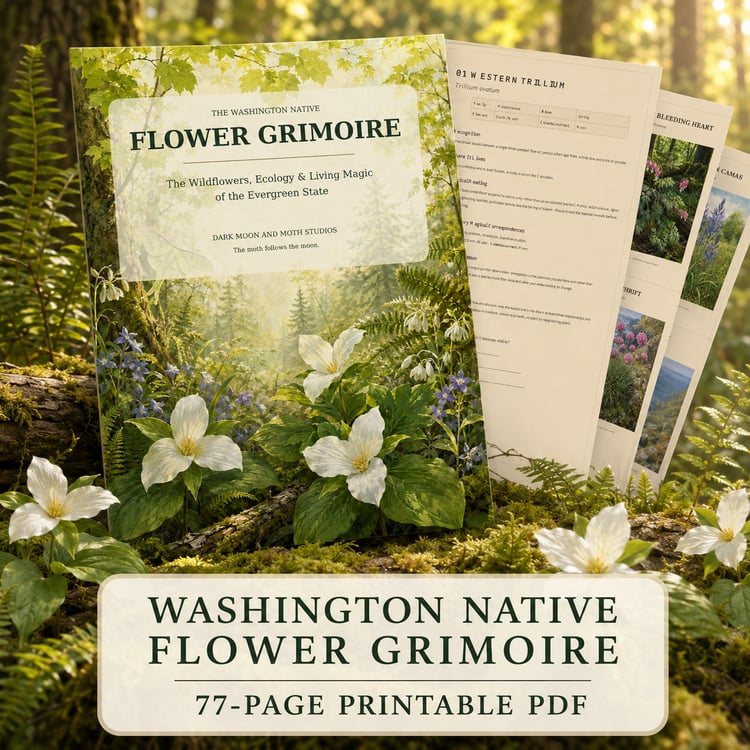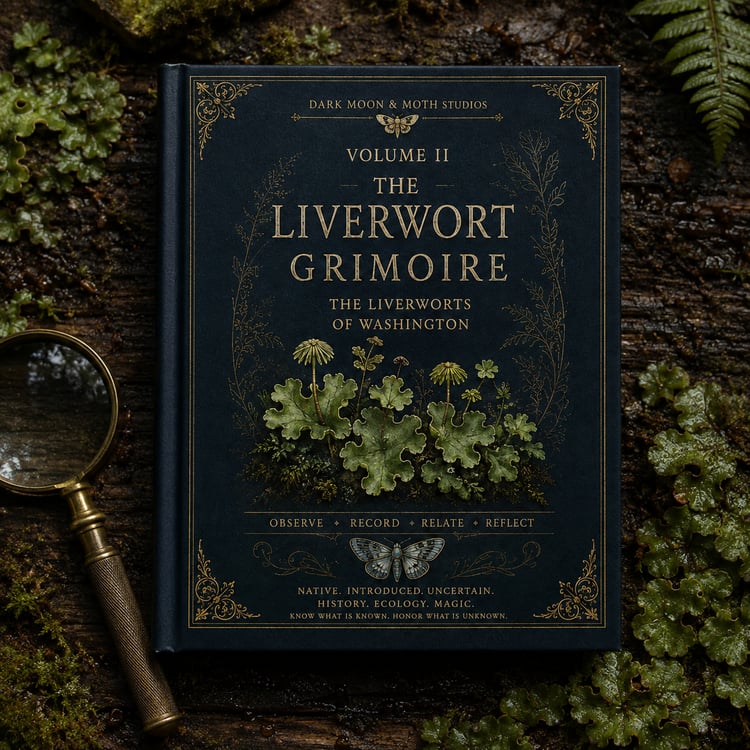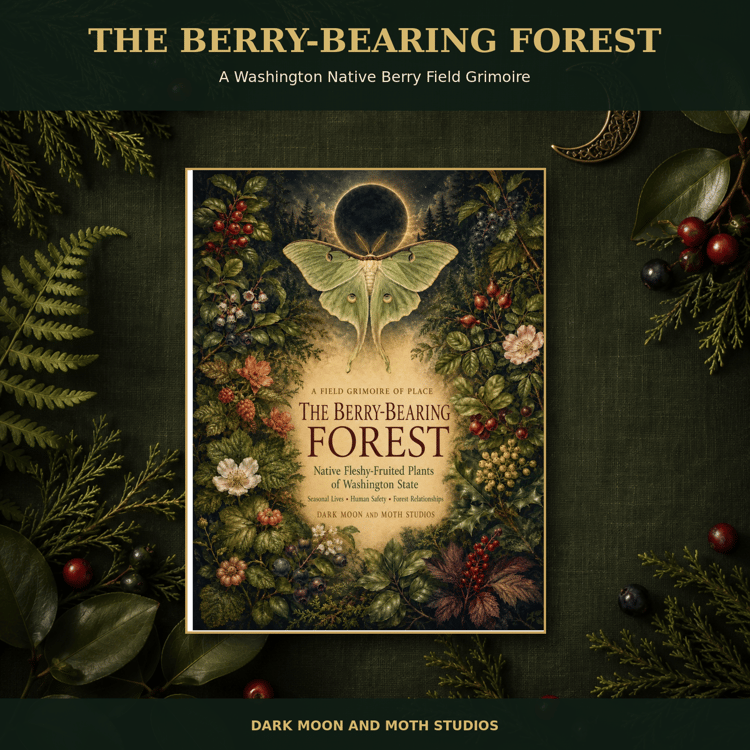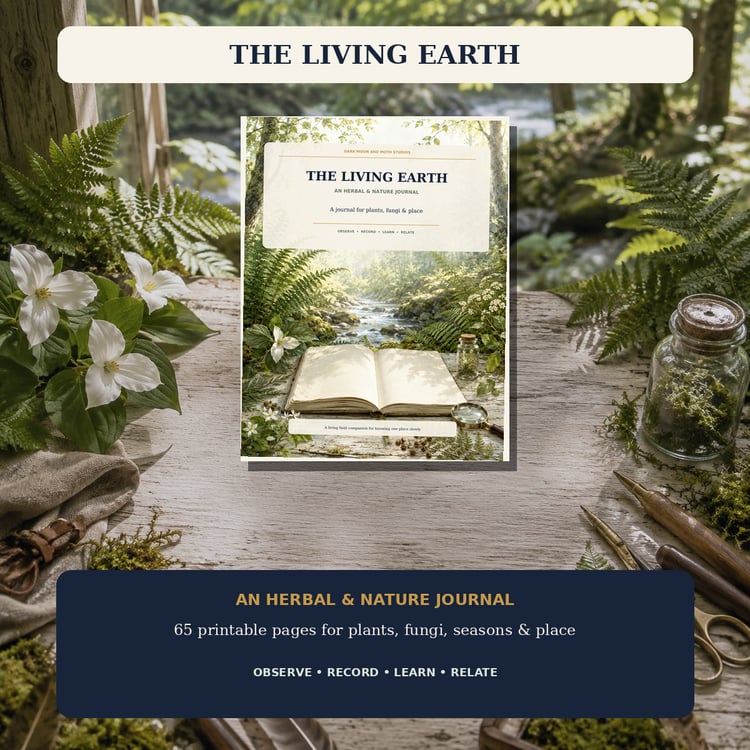

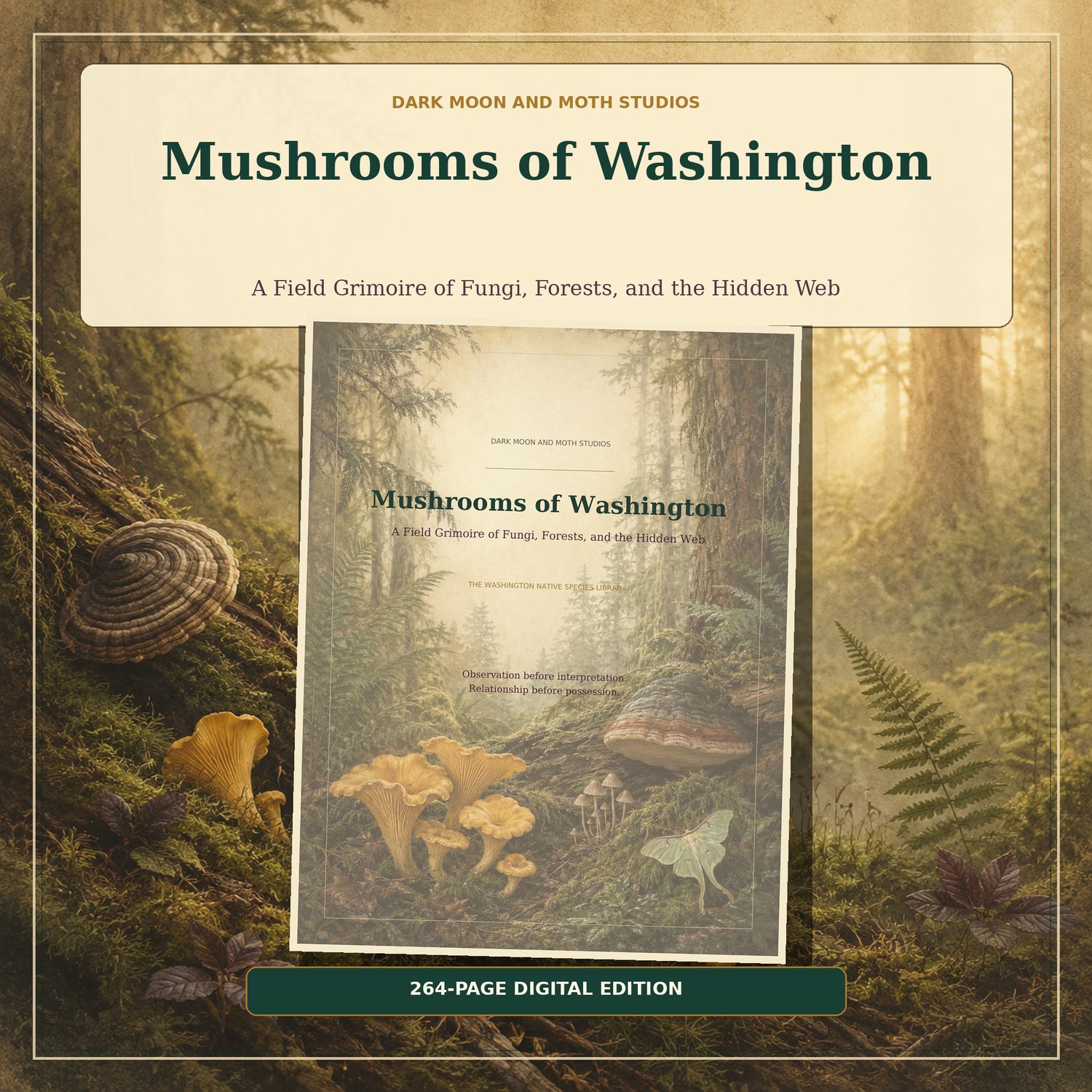





Mushrooms of Washington — A Field Grimoire of Fungi, Forests, and the Hidden Web (PDF Ebook)
MUSHROOMS OF WASHINGTON
A Field Grimoire of Fungi, Forests, and the Hidden Web
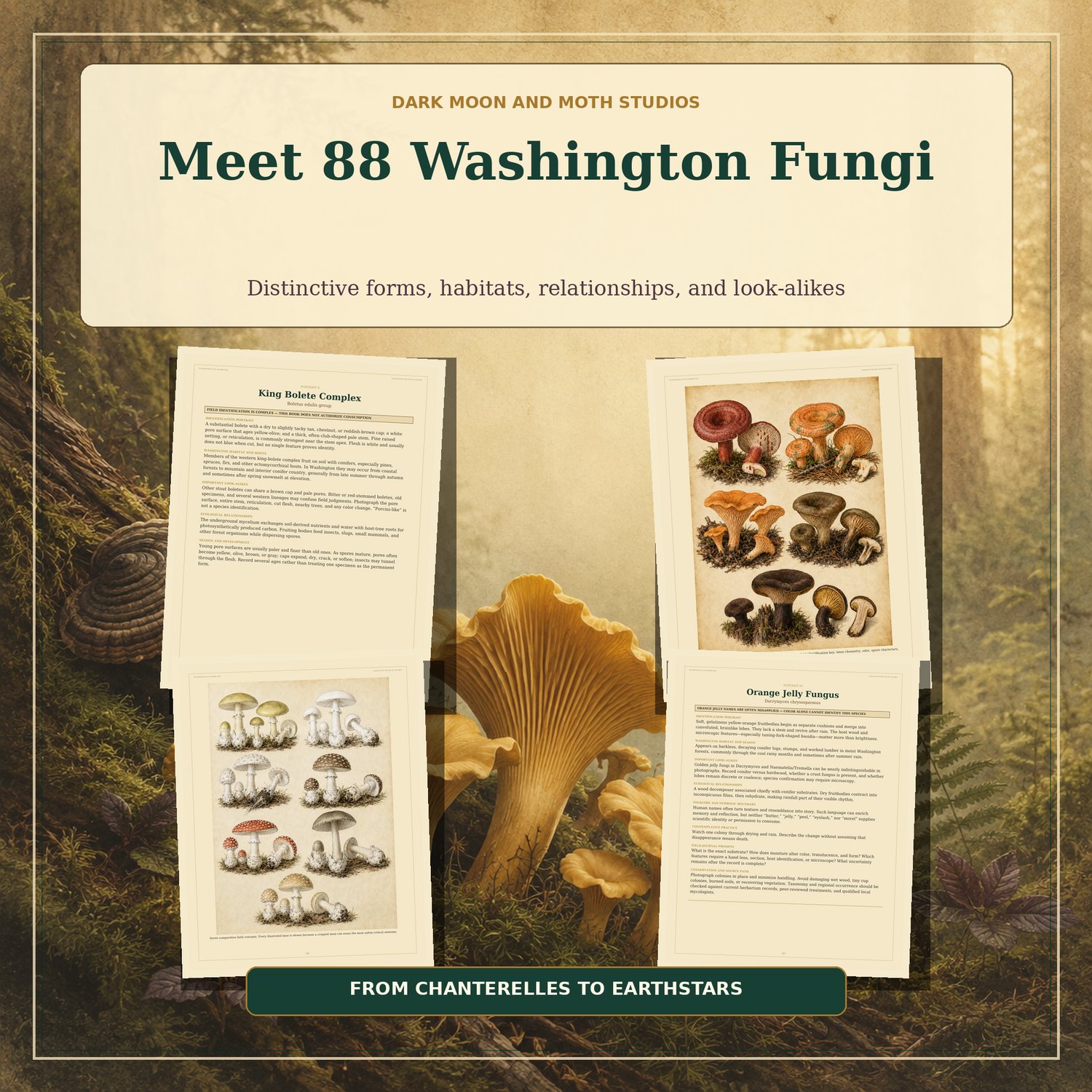
Enter Washington’s fungal world through 88 carefully chosen portraits of mushrooms, conks, corals, clubs, jellies, puffballs, earthstars, and other extraordinary forms.
Mushrooms of Washington is a luminous 264-page printable field grimoire devoted to fungi as living participants in the forests, mountains, shorelines, grasslands, burned ground, parks, and neighborhoods of Washington State.
Rather than reducing mushrooms to edibility or symbolism, this book begins with attention. It teaches readers to observe complete structures, substrates, host trees, growth patterns, seasonal changes, ecological roles, and the limits of visual identification.
Each mushroom portrait brings together visible anatomy, Washington habitat and season, ecological relationships, important look-alikes, cultural history, carefully separated symbolic reflection, contemplative practice, field-journal prompts, and conservation responsibility.
WHAT YOU WILL FIND INSIDE
• Nine foundational chapters introducing fungal biology, mycelium, decomposition, partnership, responsible observation, ethical photography, and Washington habitats
• Nine practical identification chapters covering caps, undersides, stems, veils, spore prints, staining, substrates, host trees, look-alikes, and provisional identification
• 88 complete fungal portraits representing western and eastern Washington
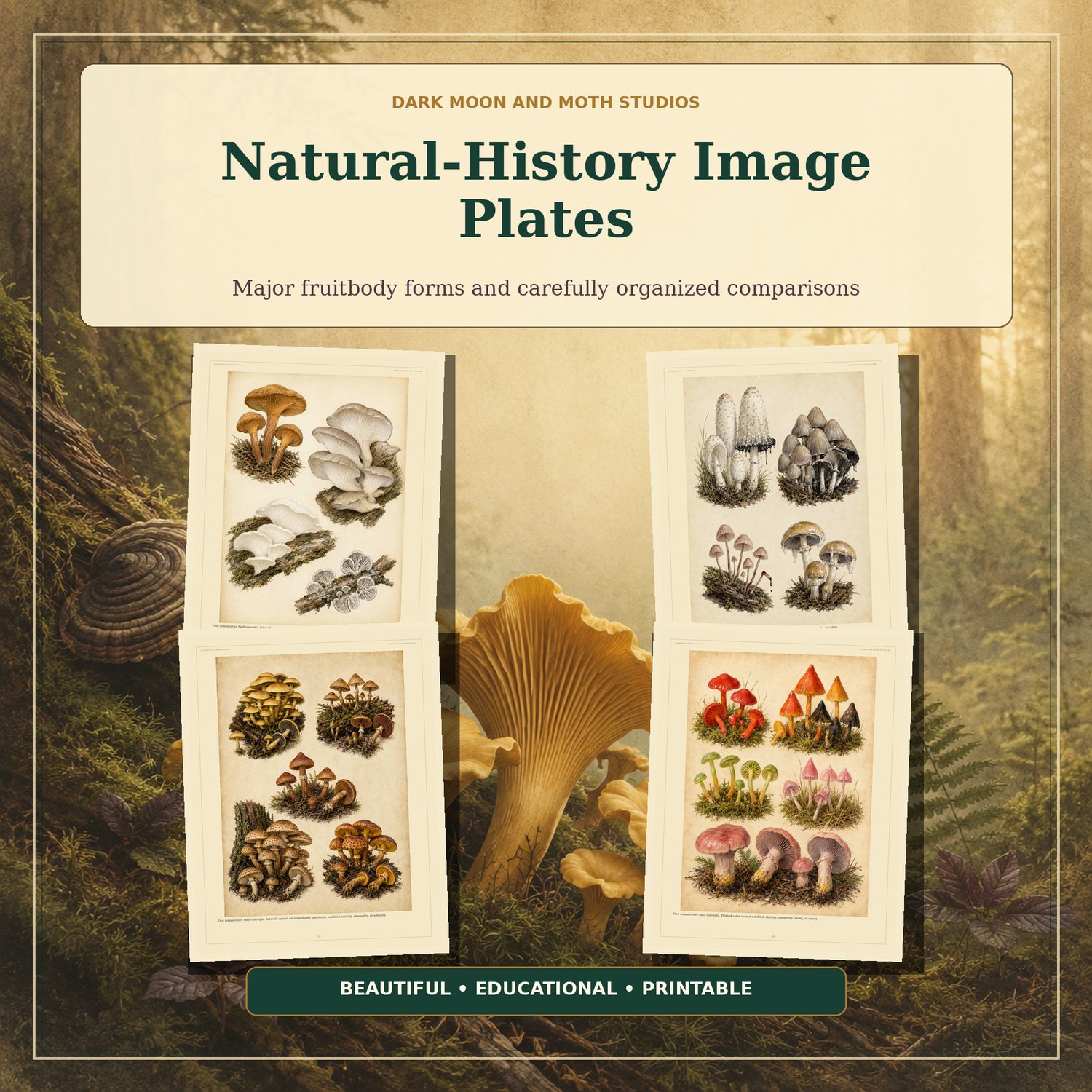
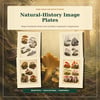
• Ten natural-history image plates illustrating major fruitbody forms and carefully organized comparisons
• Clear explanations of fungal relationships with trees, mosses, wildlife, fire, old-growth forests, cities, and changing climates
• Folklore and cultural history presented separately from scientific identification
• Symbolic correspondences grounded in observed form and ecology
• Contemplative practices and field-journal prompts
• Conservation guidance and responsible observation practices
• A complete observer’s field journal with encounter records, habitat sketches, spore-print pages, host-tree observations, seasonal studies, unknown mushroom records, and an annual fungal calendar
• A glossary, common-name index, scientific-name index, bibliography, and source path
THE 88 FUNGAL PORTRAITS INCLUDE
Chanterelles, boletes, waxcaps, amanitas, russulas, milkcaps, oyster mushrooms, coral fungi, club fungi, tooth fungi, conks, polypores, puffballs, earthstars, bird’s nests, stinkhorns, jelly fungi, cup fungi, morels, and many other remarkable forms.
The collection includes iconic Washington mushrooms, ecologically important species, distinctive forms, difficult look-alikes, introduced fungi, forest decomposers, mycorrhizal partners, plant pathogens, and potentially deadly mushrooms readers should recognize.
MADE FOR
• Pacific Northwest nature lovers and forest wanderers
• Beginning mushroom observers seeking a responsible foundation
• Nature journalers and ecological artists
• Homeschooling families and nature-study educators
• Readers interested in mycology and forest ecology
• People drawn to cottagecore, forest magic, and antique natural history
• Collectors of the Washington Native Species Library
OBSERVATION BEFORE INTERPRETATION
Mushrooms have long been associated with mystery, transformation, danger, renewal, enchantment, and the unseen world. These cultural and symbolic relationships can enrich contemplation, but they never replace the fungus’s own ecological life.
Before asking what a mushroom symbolizes, this grimoire invites you to ask:
What is it doing?
What is it growing from?
Which trees and organisms surround it?
How does it change with age?
What relationships make its life possible?
Meaning becomes more responsible when it arises from attention.
IMPORTANT SAFETY NOTICE
This is an ecological observation and nature-study guide, not a foraging or edibility manual.
Never consume a wild mushroom based on photographs, illustrations, written descriptions, folklore, symbolic associations, identification apps, or an identification made through this book.
Many mushrooms cannot be identified safely through visible appearance alone. Potential poisoning requires immediate guidance from poison-control or medical authorities.
DIGITAL PRODUCT DETAILS
• One downloadable PDF
• 264 designed pages
• US Letter page size
• Printable at home or through a professional printing service
• Instant digital delivery
• No physical book will be mailed
• Print the complete volume or selected field-journal pages for personal use
Colors may vary slightly according to screen, printer, ink, and paper settings.
This purchase is licensed for personal use only unless separate written permission or a commercial license is provided.
ABOUT THE WASHINGTON NATIVE SPECIES LIBRARY
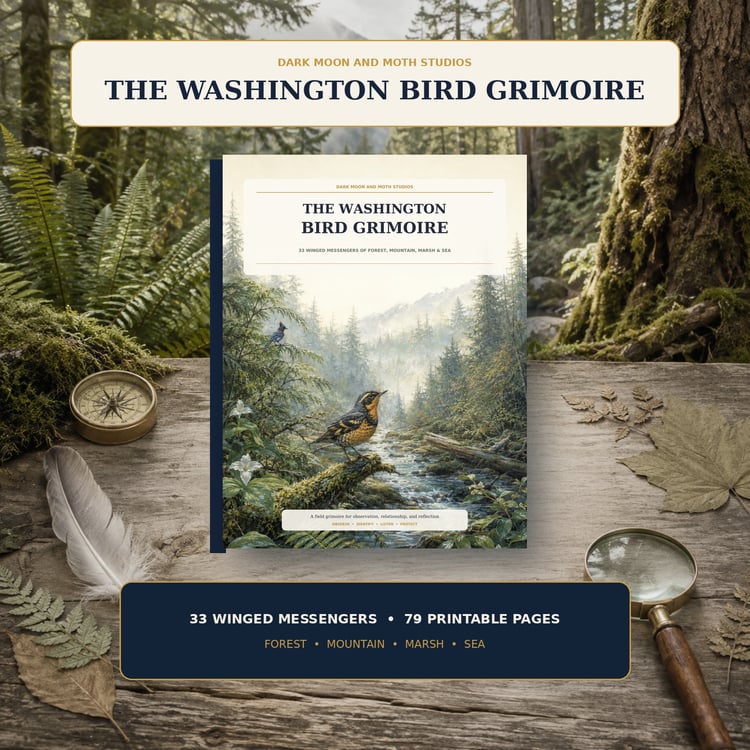
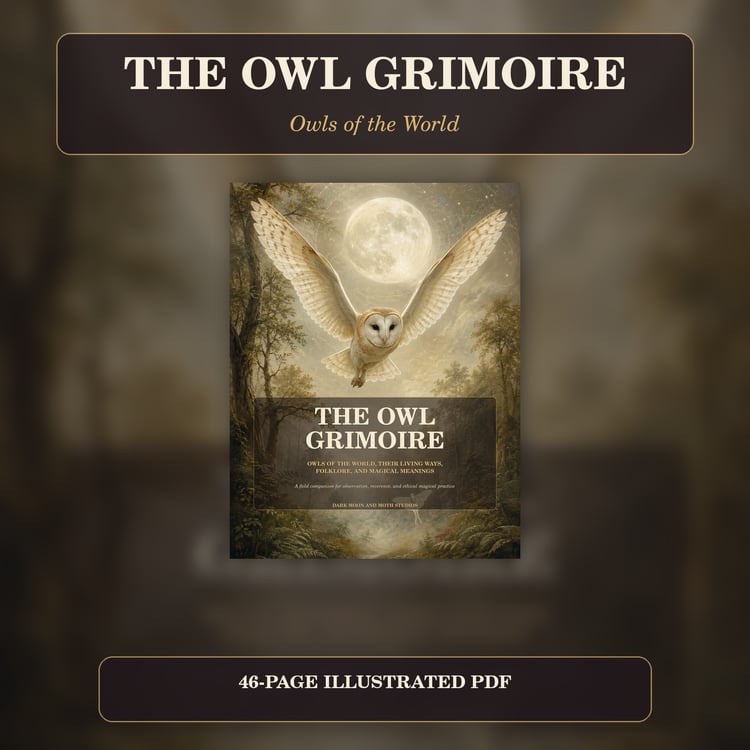
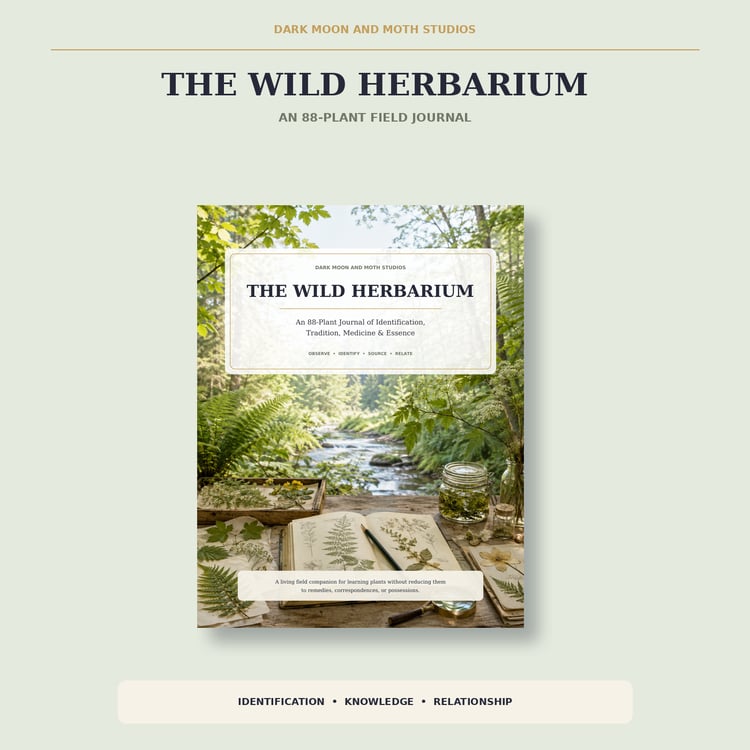
The Washington Native Species Library was created to help readers develop a more attentive relationship with the living world around them.
Each volume combines natural history, responsible observation, ecological relationships, cultural context, reflective practice, and beautifully designed field-journal pages.
We are building a practice library for learning how to inhabit a living world.
The moth follows the moon.
Published by Dark Moon and Moth Studios.