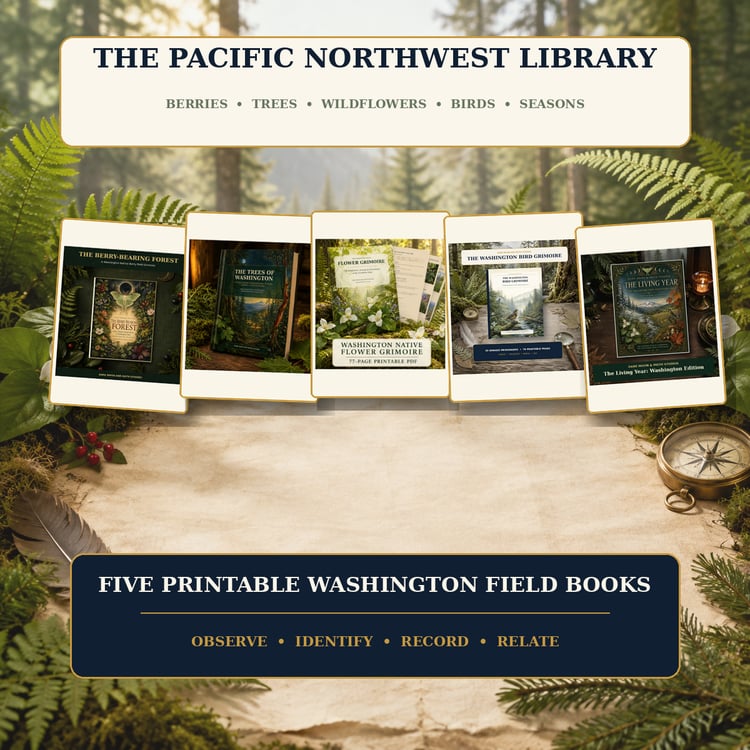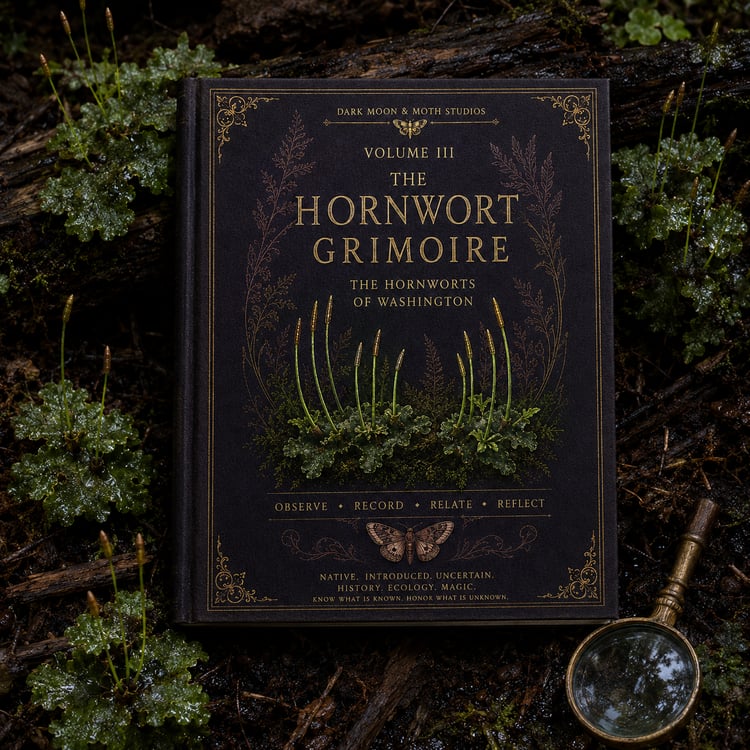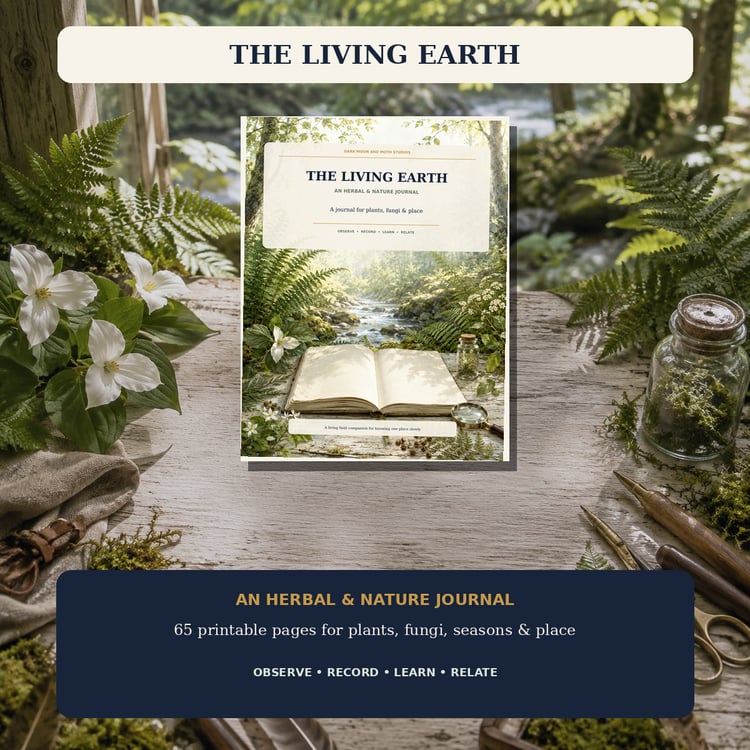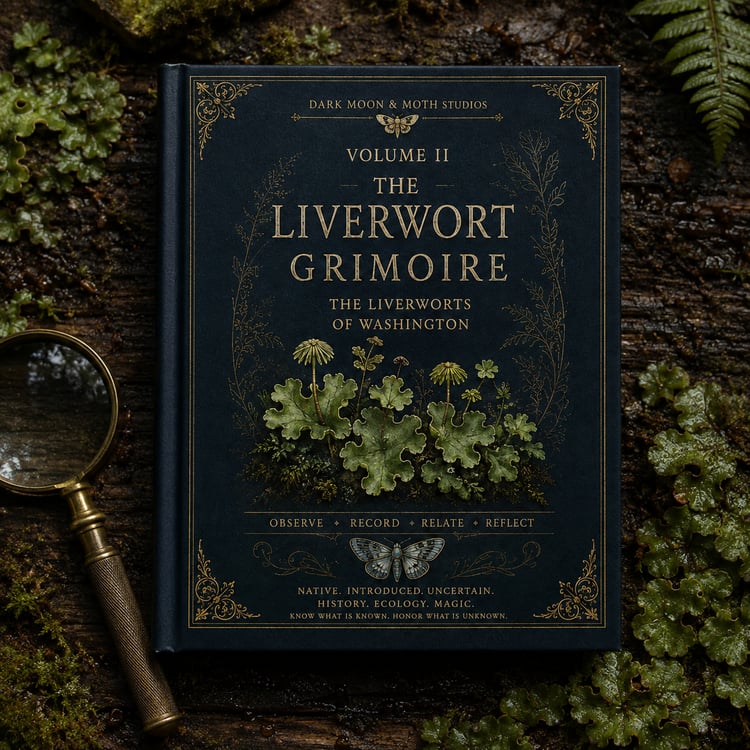


The Berry-Bearing Forest | Washington Native Berry Field Grimoire
The fruit is only one chapter in the life of a plant.
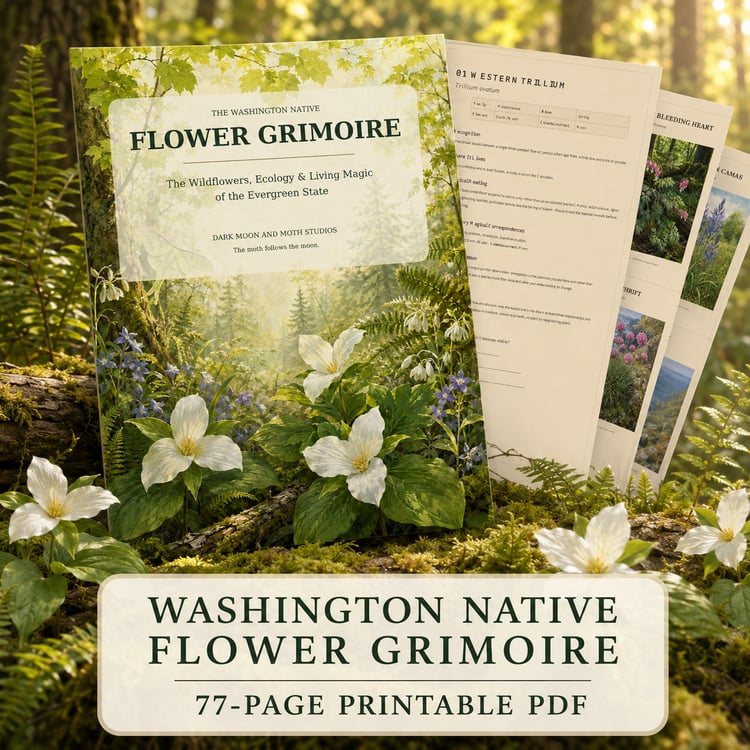
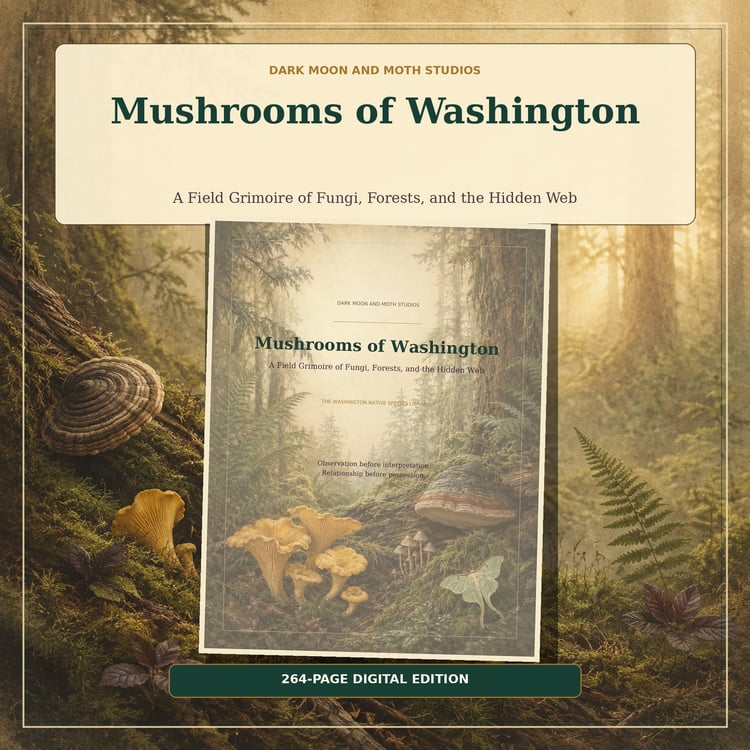
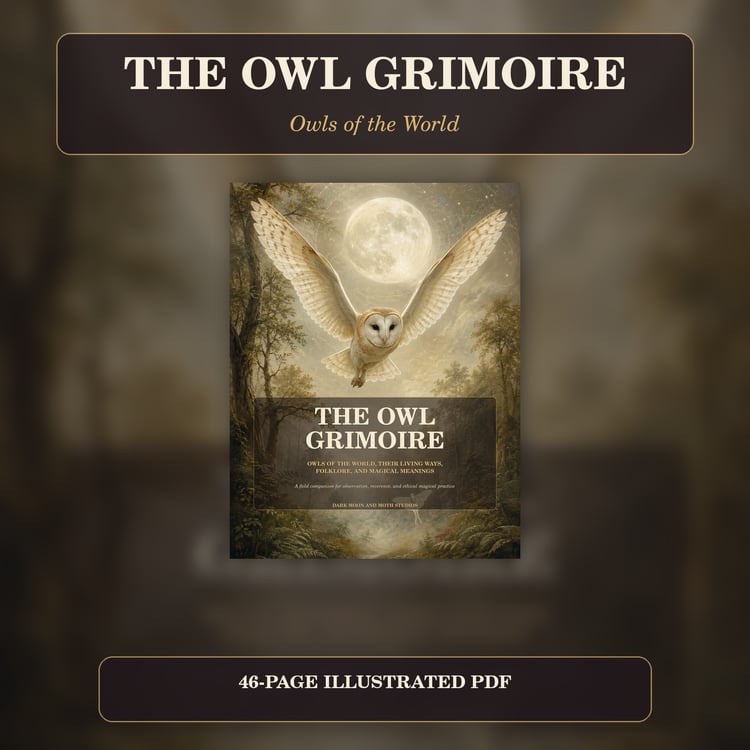
The Berry-Bearing Forest is a 97-page field grimoire devoted to Washington State’s native berry-bearing plants—from beloved huckleberries, salmonberries, salal, thimbleberries, and Oregon grapes to the beautiful but dangerous fruits of baneberry, snowberry, red elderberry, and Pacific yew.
Rather than teaching berries as isolated objects to collect, this book invites you to meet the entire plant throughout the year.
Follow each species through spring emergence and flowering, summer growth and fruit formation, autumn ripening and dispersal, and winter dormancy or persistence. Learn where it grows, how its fruit develops, whether it is considered edible, requires special preparation, is not recommended, or must never be eaten—and discover some of the birds, bears, mammals, pollinators, and forest communities that appreciate it.
This is a guide to attention before interpretation, relationship before harvest, and belonging without possession.
INSIDE THE BOOK
• 67 Washington-native berry-bearing plants
• 97 beautifully designed printable pages
• Common and scientific names
• Plant form and Washington habitat
• Fruit appearance and approximate ripening season
• Spring, summer, autumn, and winter plant profiles
• Clear edibility and toxicity classifications
• Preparation cautions for conditional wild foods
• Prominent warnings for poisonous and potentially deadly plants
• Representative birds and mammals that use each plant
• Pollinator, seed-dispersal, and forest-food-web relationships
• Ethical and lawful gathering guidance
• Seasonal berry calendar
• Quick human-safety index
• Wildlife relationship guide
• Three full field-observation worksheets
• A seasonal observation area on every plant page
• Botanical glossary and continuing-study sources
PLANTS FEATURED INCLUDE
Red, evergreen, Alaska, black, Cascade, dwarf, and oval-leaf huckleberries; bog blueberry; small cranberry; salmonberry; thimbleberry; trailing blackberry; blackcap raspberry; native strawberries; salal; Oregon grapes; serviceberry; native currants and gooseberries; blue and red elderberries; rose hips; chokecherry; hawthorns; bunchberry; mountain ash; snowberries; honeysuckles; false Solomon’s-seals; red baneberry; devil’s club; junipers; Pacific yew—and many more.
A BOOK FOR LEARNING THE WHOLE PLANT
A berry cannot be safely identified by color alone.
Each species account encourages you to observe its leaves, stems, bark, thorns, flowers, growth habit, habitat, fruit arrangement, and seasonal changes. The repeated observation spaces allow you to return to the same plant or patch and record what has changed, who has visited, and what remains after the fruiting season.
WHO APPRECIATES THE BERRIES?
Humans are only one participant in the berry-bearing forest.
These fruits feed thrushes, waxwings, grouse, bears, coyotes, rodents, and many other animals. Their flowers support pollinators. Their branches provide shelter and nesting cover. Their fallen fruits feed insects, fungi, and soil communities.
The book encourages modest, lawful gathering from abundant populations while leaving ample food for wildlife and protecting fragile roots, mosses, wetlands, and alpine habitats.
ABOUT THE DESIGN
This edition belongs to the Dark Moon and Moth Studios Washington Living World Library.
Its illustrated cover features a luna moth beneath a dark moon, surrounded by Washington berry plants. The interior combines warm antique parchment, forest green, muted gold, and berry-colored accents with spacious, highly readable layouts.
Every plant account includes room for your own seasonal observations, allowing the book to become a record of the living places you return to.
IMPORTANT SAFETY NOTICE
This book is an educational field companion. It is not a substitute for hands-on identification training, medical advice, or a current technical field key.
Never consume a wild fruit based only on resemblance to an illustration, photograph, description, or identification app. Identify the whole plant using multiple characteristics and confirm it through at least two reputable regional sources.
Wildlife consumption is never proof of human safety.
If uncertainty remains, do not taste.
DIGITAL PRODUCT
You will receive one downloadable, print-ready PDF.
• 97 pages
• US Letter size: 8.5 × 11 inches
• Designed for home printing, professional printing, or digital reading
• No physical product will be shipped
© 2026 Dark Moon and Moth Studios
For personal use only.