Draught Beer Keg Yield, Line Cleaning & Pour Cost Log: Keg Yield, Cost per Measure and Line Cleaning Schedule for Bars
Full description
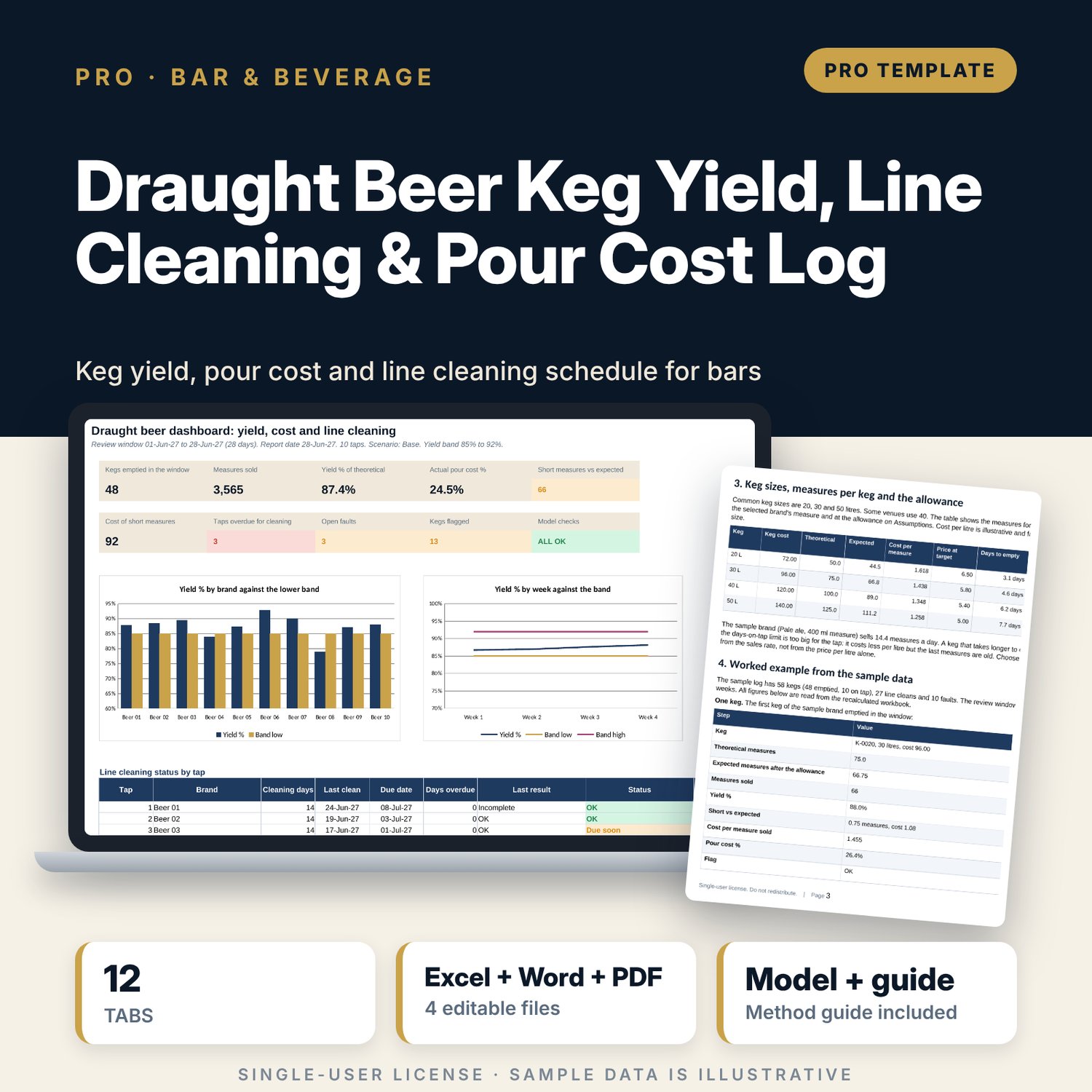
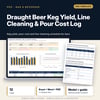
For bar managers, beverage managers and cost controllers who run draught beer and want to know what each keg really delivers. The main workbook takes one row per keg. It works out theoretical and expected measures, yield, short measures and their cost, cost per measure and pour cost, compares keg sizes and prices, and flags kegs that are tapped warm, at the wrong pressure or without rest. It keeps the line-cleaning schedule by tap with due dates and overdue flags, checks each clean for strength, contact time and rinse, and logs faults with causes and supplier claims. The companion workbook is a keg change log with an empty keg and deposit balance. The Word guide sets out the method, a worked example, the cleaning routine, the keg change standard and the weekly review.
What is inside
- Draught_Beer_Keg_Yield_Log.xlsx: 12 tabs, 2,130 formulas, 2 native charts, 38 drop-down and input rules, 10 integrity checks
- Brands: 10 sample taps plus 4 spare rows with keg size, cost, measure, price, pressure range and cleaning interval
- Keg Log: 58 sample kegs plus 14 spare rows, 24 columns including yield, short measures, cost of short, pour cost and flags
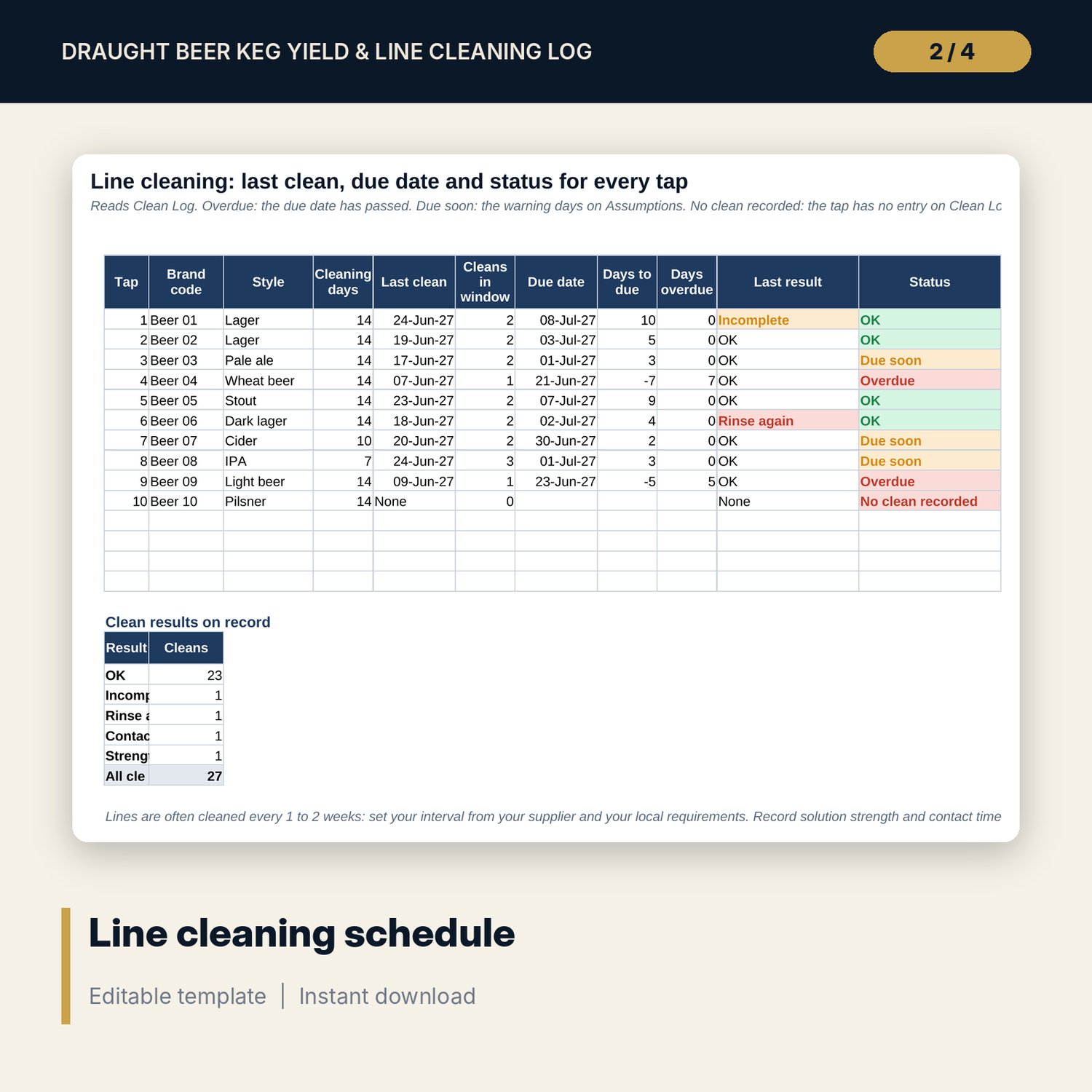
- Clean Log: 27 sample cleans plus 13 spare rows; Fault Log: 10 sample faults plus 10 spare rows with symptom and cause summaries
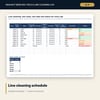
- Line Cleaning by tap, Yield Review by brand, by week and by keg size, Costing with a keg size comparison and 2 sensitivity grids
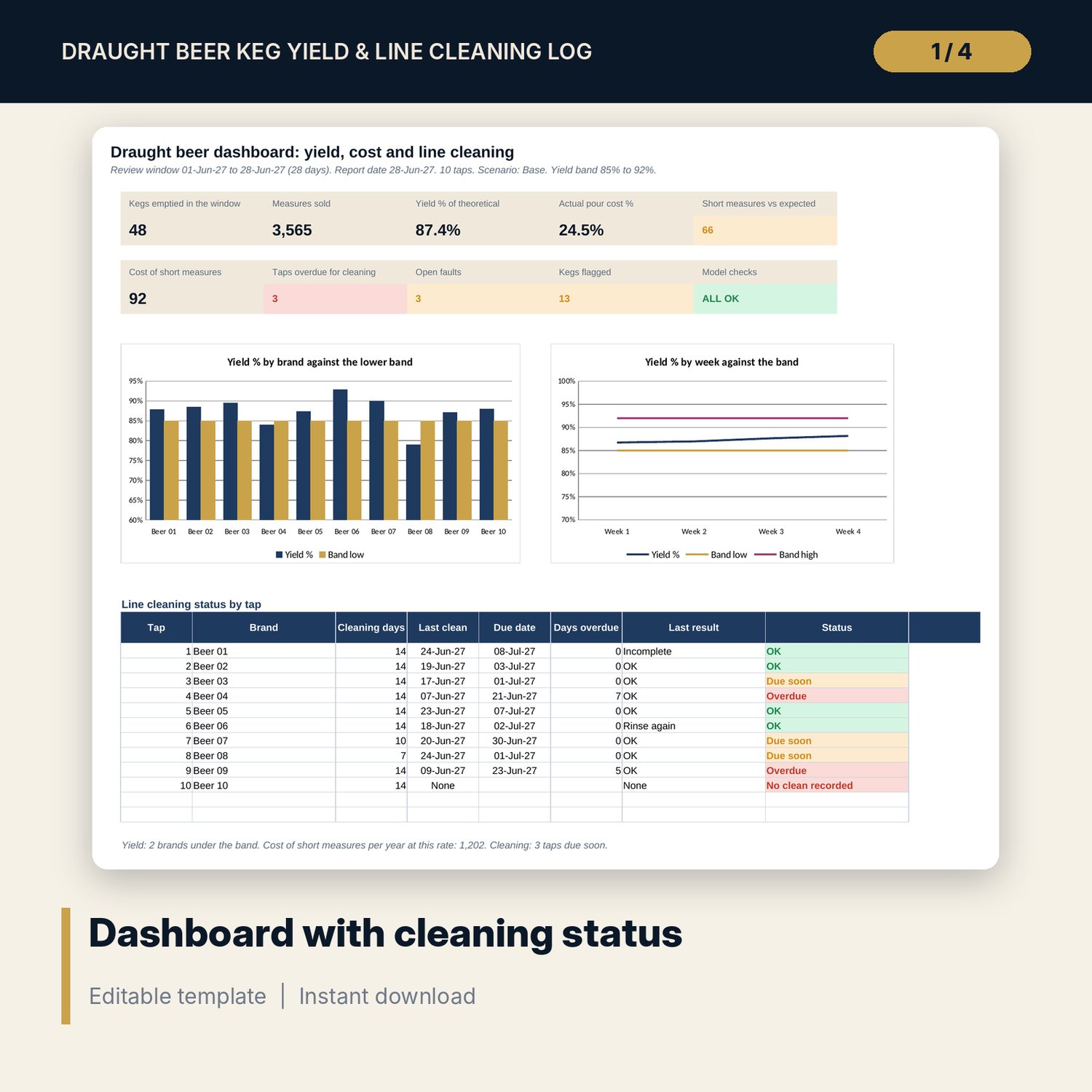
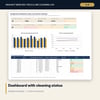
- Dashboard with 10 tiles, 2 charts and a cleaning status table; Method with 18 rows
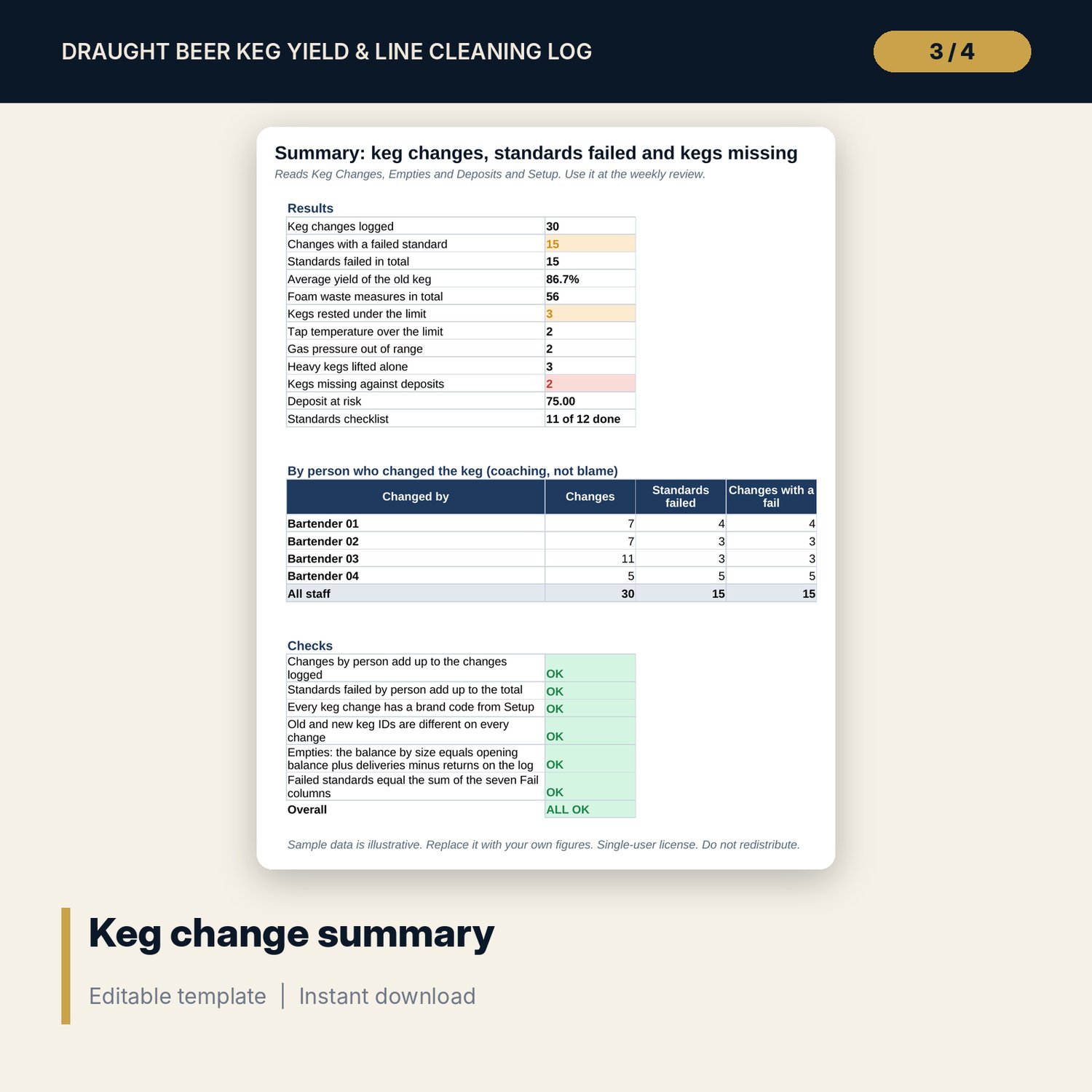
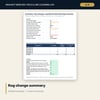
- Keg_Change_Log.xlsx: 4 tabs, 569 formulas, 30 sample keg changes with 7 standards each, an empty keg and deposit balance, 12-item checklist, 6 checks
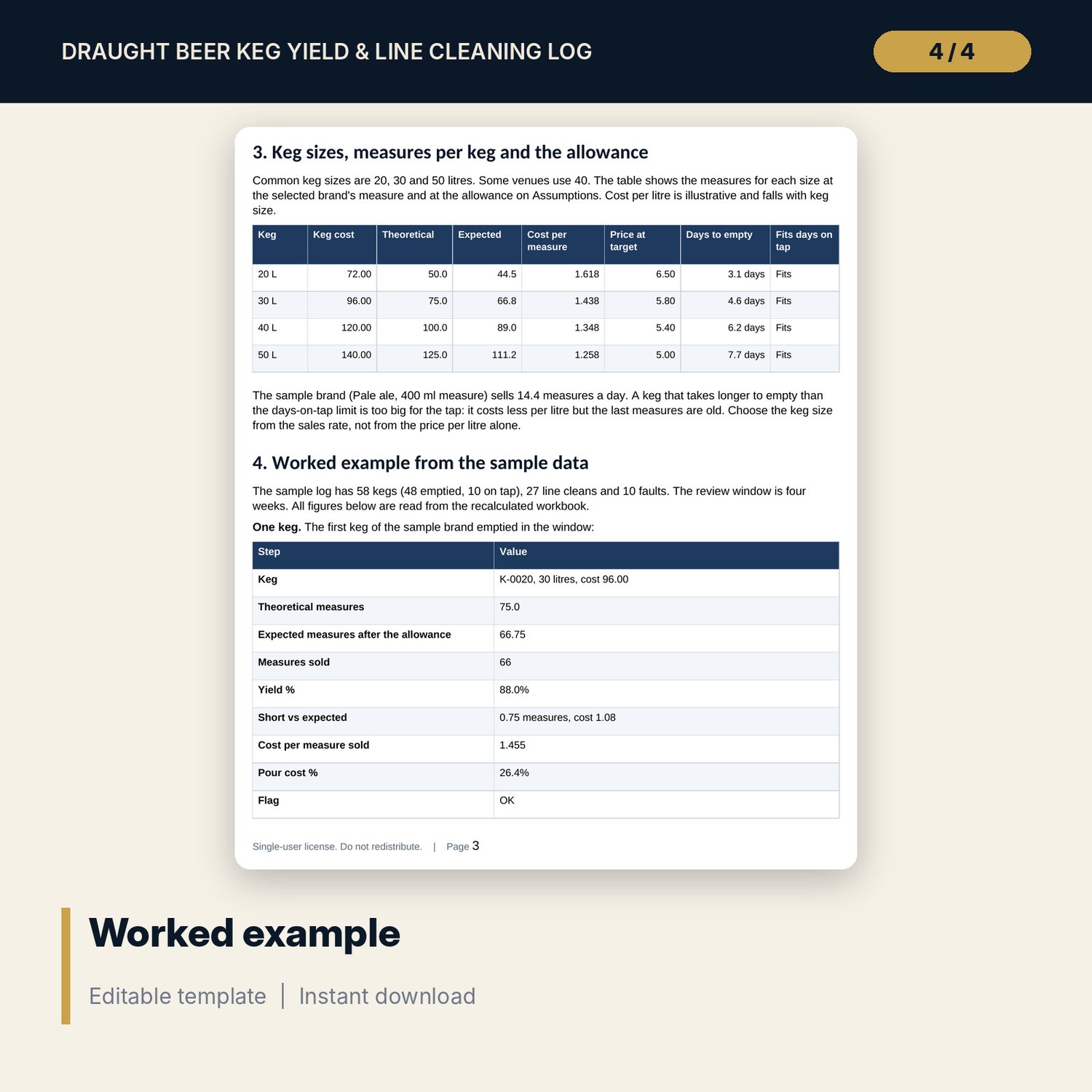
- Draught_Beer_Keg_Guide.docx and PDF: 10 pages with equations, a worked example read from the workbook, the cleaning routine, a troubleshooting table, a 20-item checklist and a glossary
- README.txt and LICENSE-and-Terms.txt
How it works
- Set the report date, bands, allowance and cleaning interval on Assumptions and list your taps on Brands.
- Enter each keg when it is tapped and emptied, each line clean and each fault.
- Read Yield Review for short measures, Line Cleaning for overdue lines and the Dashboard for the week.
- Use Costing before you change a keg size or a price, and the keg change log at the bar.
Details
- Formats: 2 Excel workbooks (.xlsx), 1 Word guide (.docx) and PDF, English
- Software: Excel 2016 or later, or LibreOffice Calc 7 or later
- No macros, no external links, no data tables, no array formulas
- 4 files plus README and license; instant digital download
Good to know
- Sample data is illustrative. Replace it with your own figures.
- Temperatures, pressures, cleaning intervals, solution strengths and allowances are typical starting values. Verify with your suppliers and your local requirements. Not food safety advice.
- Single-user license. Do not redistribute.
FAQ
Why is the target yield not 100 percent?
Foam, line fill, the first pour and cleaning use part of every keg. The workbook judges yield against an allowance you set, so normal waste is not treated as loss.
Can I set a different cleaning interval for each tap?
Yes. The default is on Assumptions. A brand can carry its own number of days on Brands.
Does it use brand names?
No. Taps are codes and styles, so you can enter your own list.
How many kegs can it hold?
The sample has 58 kegs and 14 spare rows. Add rows by copying the last formula row down on Keg Log; the named ranges stretch with the rows.
Do I need macros?
No. Every result is a standard worksheet formula.