




Computing the Magnetic Field and its Curl from a Dipole Vector Potential
Deliverables ( Update: Jul 3,2027 )
─── Core Concepts ───
🔹 Vector Potential
🔹 Magnetic Field
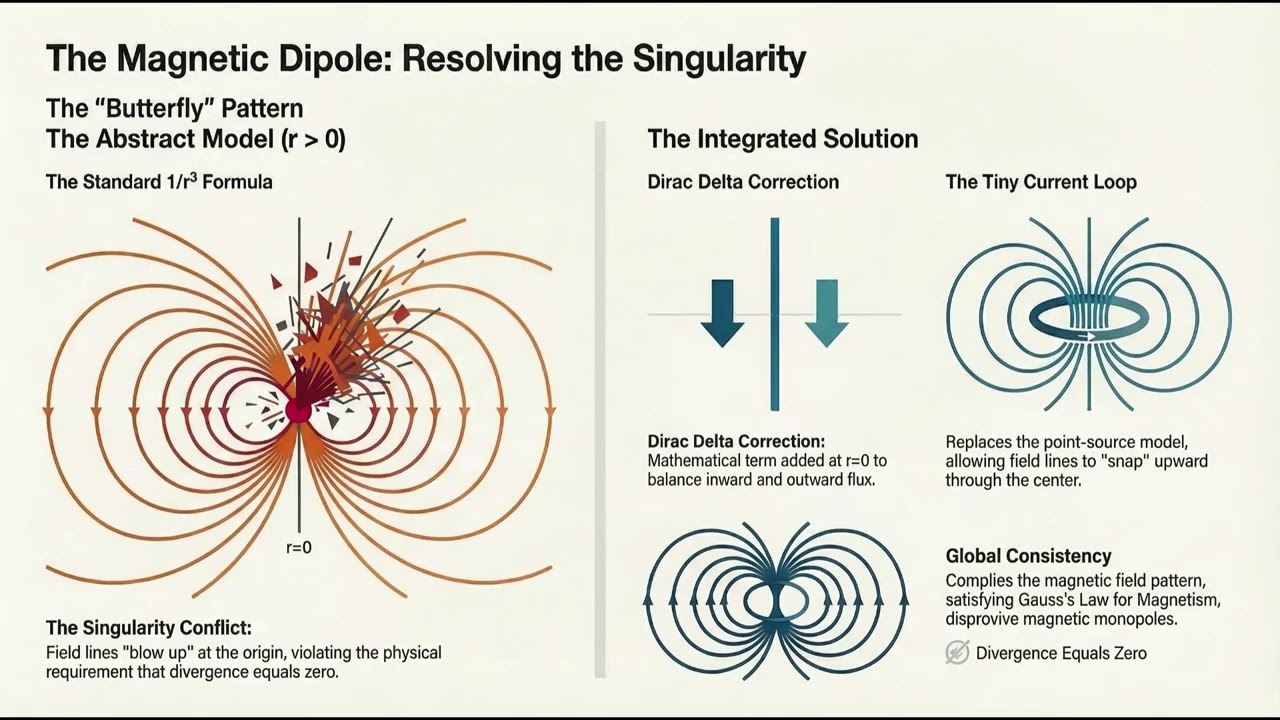
🔹 The Singularity
🔹 Global Consistency Analysis
─── Development & Analysis ───
🔹 Architectural Diagrams
🔹 Primary Demos
🔹 Field Geometry & Topology
🔹 Comparative & Analytical Tools
🔹 Advanced Physics & Quantum Bridges
🔹 Validation Scripts
─── Snippets Archive ───
📦 Snippets.rar └── 28 Snippets.py
📦 Snippets.rar └── 5 Scripts
─── Plottings Archive ───
📦 Plottings.rar └── 28 Plottings.png
📦 Plottings.rar └── 3 Plottings.gif
📦 Plottings.rar └── 2 Animated Results.mp4
Summary
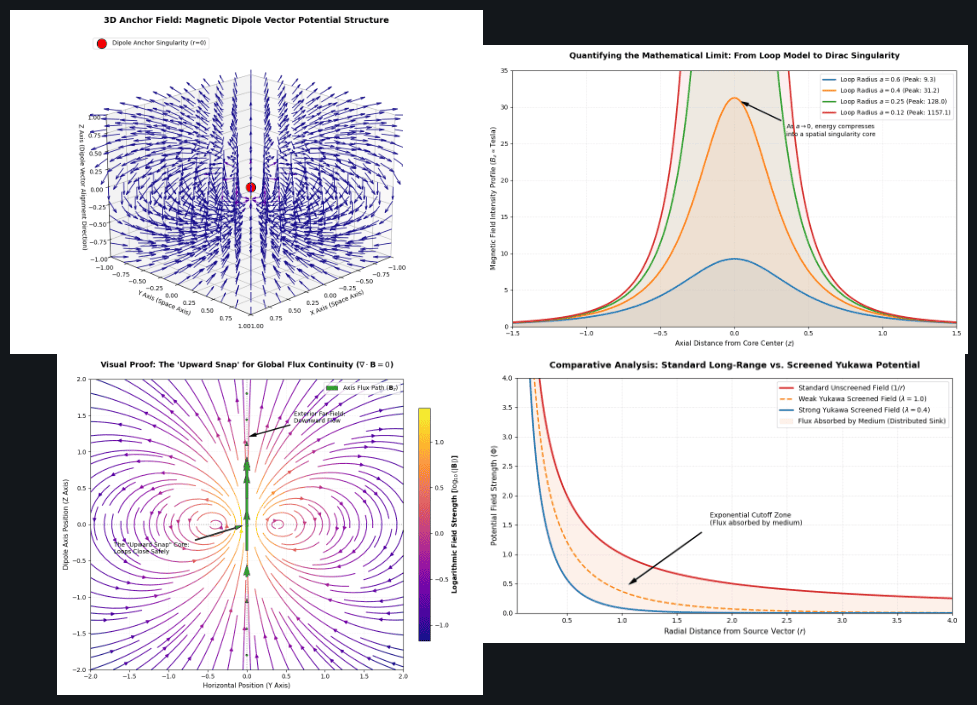
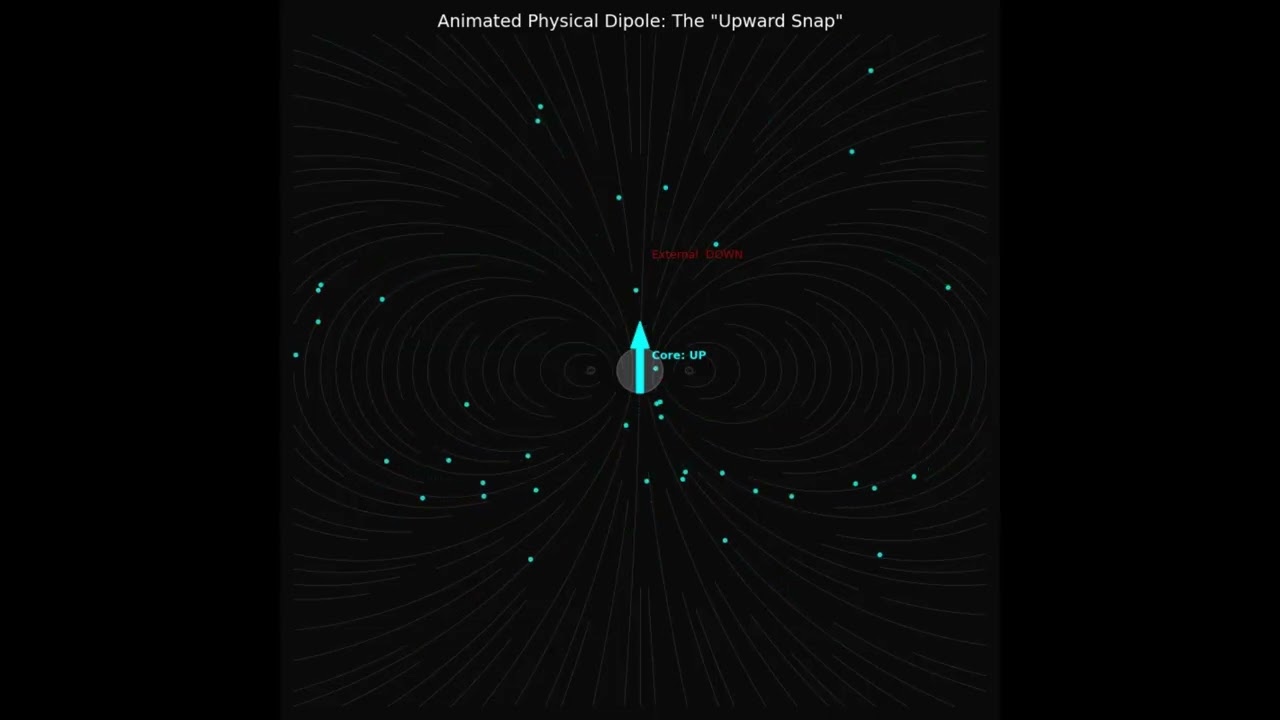
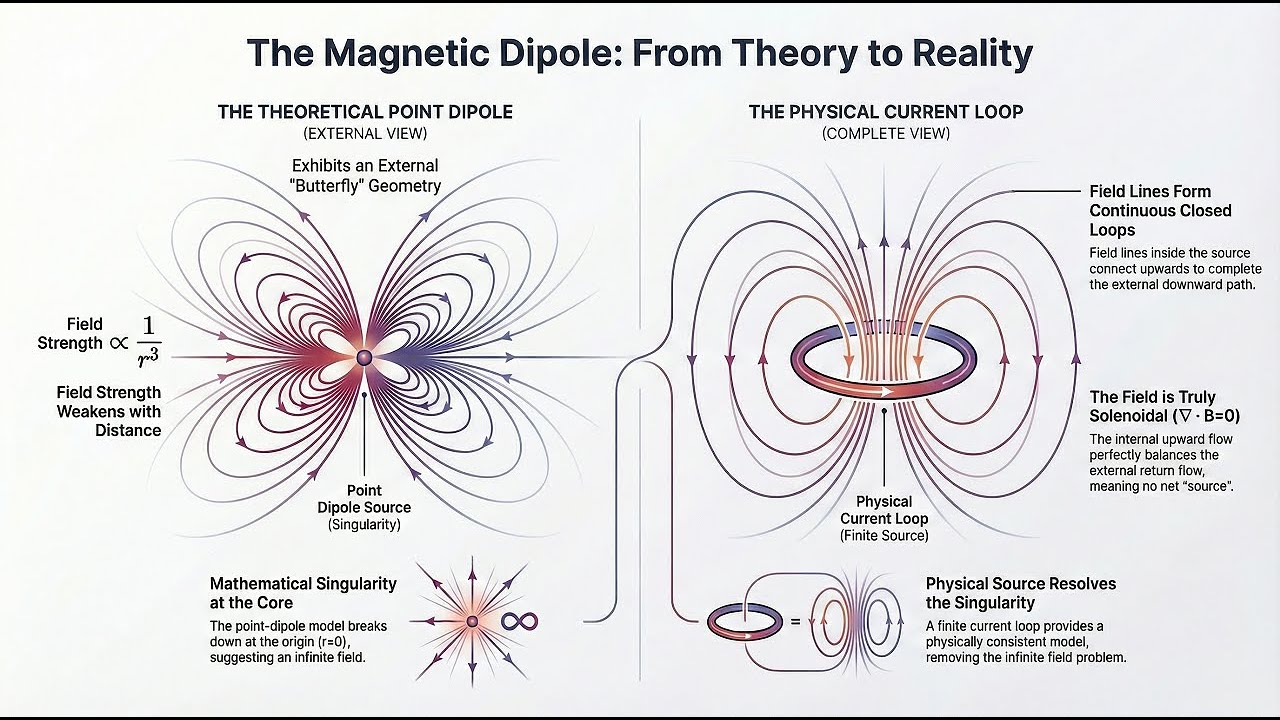
The documents provide a theoretical and practical overview of magnetic dipole fields, primarily focusing on how to model them effectively. Derivation.md establishes the mathematical derivation of the magnetic field from a vector potential, confirming the field's behavior in regions without current densities. Analytics.md shifts to practical application, offering a suite of visualization tools and models that move beyond simple theoretical abstractions. Specifically, it compares a mathematical point-dipole model, which experiences a singularity at the center, with a physical-loop model that provides a continuous, realistic representation of the field's behavior, including how field lines circulate through the center of the source. To support these concepts, Analytics.md includes various code-based demonstrations that illustrate these field structures, along with structural diagrams that map the transition from theoretical models to physical reality.
Presentation
Computing the Magnetic Field and its Curl from a Dipole Vector Potential
Gut feeling
The Geometry of the Infinite Magnetic Needle
The Magnetic Singularity and the Cosmic Pulse
Composition
The Magnetic Heart of the Atom
Singularity and Symmetry in Magnetic Dipole Vector Fields
Unified Field Architectures and Singularity Resolution
Magnetic Dipoles and the Dirac Delta Correction
The Solenoidal Foundation of Magnetic Dipoles and Hyperfine Splitting