
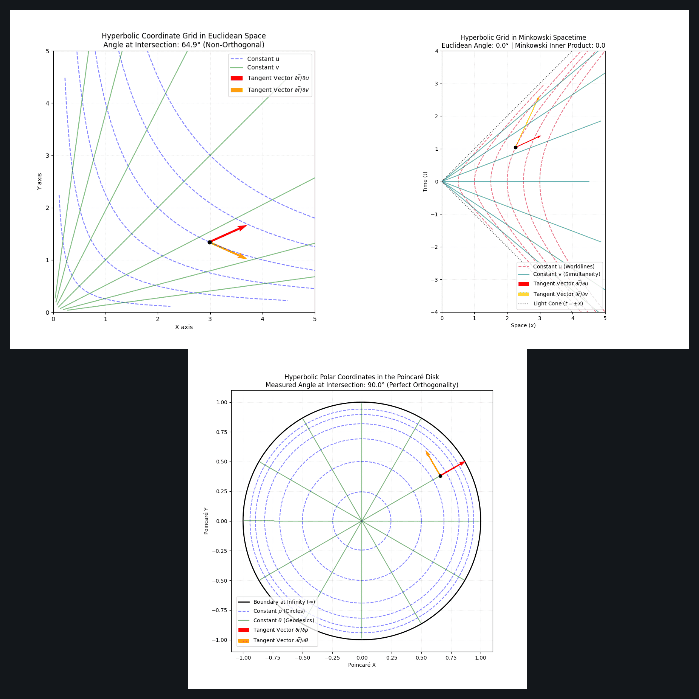
The analysis examines the orthogonality of hyperbolic coordinate systems across three distinct geometric frameworks, illustrating how the same transformations can be perceived as either skewed or perpendicular depending on the underlying metric. In s...
Read More
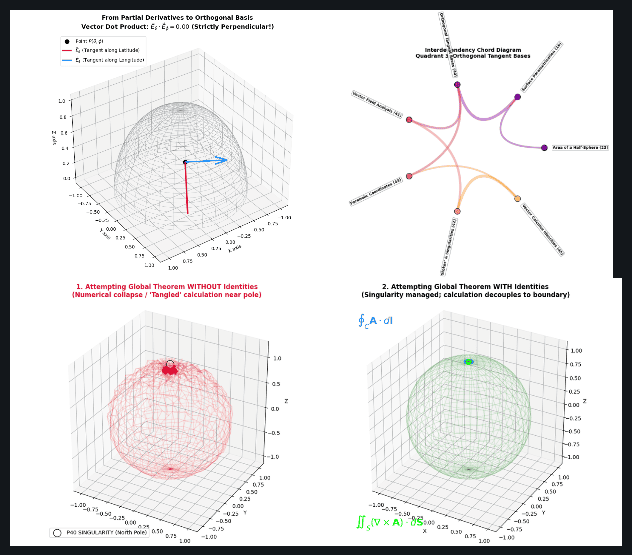
The analysis explains how Surface Parametrization serves as the foundation for generating Orthogonal Tangent Bases, which are critical for ensuring zero cross-talk and mathematical decoupling in three-dimensional systems. By mathematically verifying ...
Read More
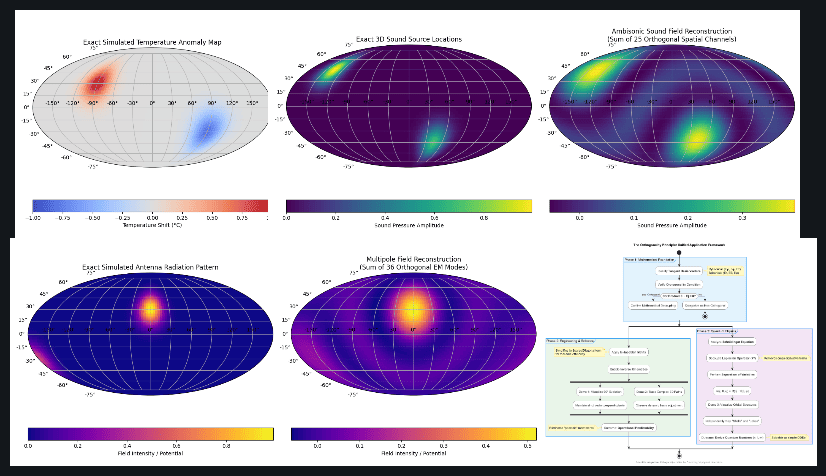
The analysis explores the critical role of orthogonal spherical basis functions in achieving computational efficiency and precision across several advanced scientific and engineering fields, including geophysics, acoustics, and electromagnetics. By a...
Read More
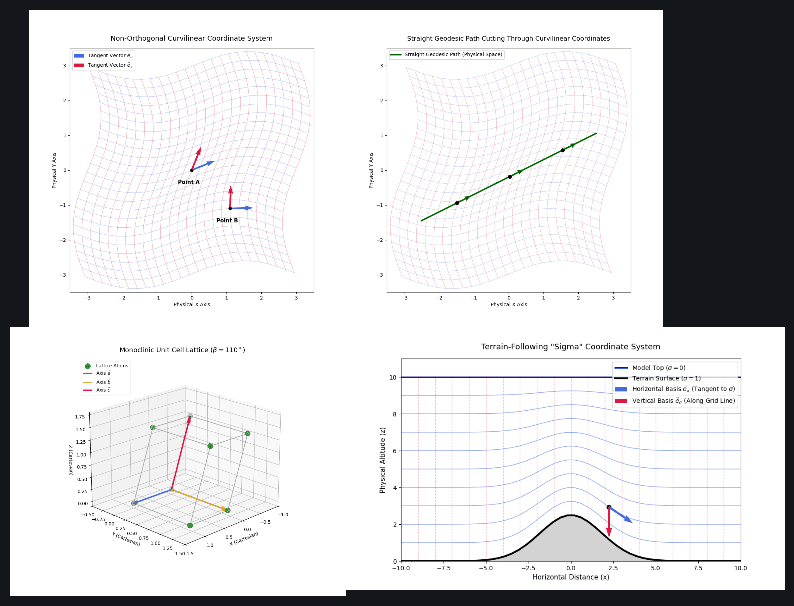
The analysis examines the mathematical architecture and practical utility of non-orthogonal and curvilinear coordinate systems, which trade the simplicity of perpendicular axes for the ability to model complex, warped environments. Unlike static orth...
Read More
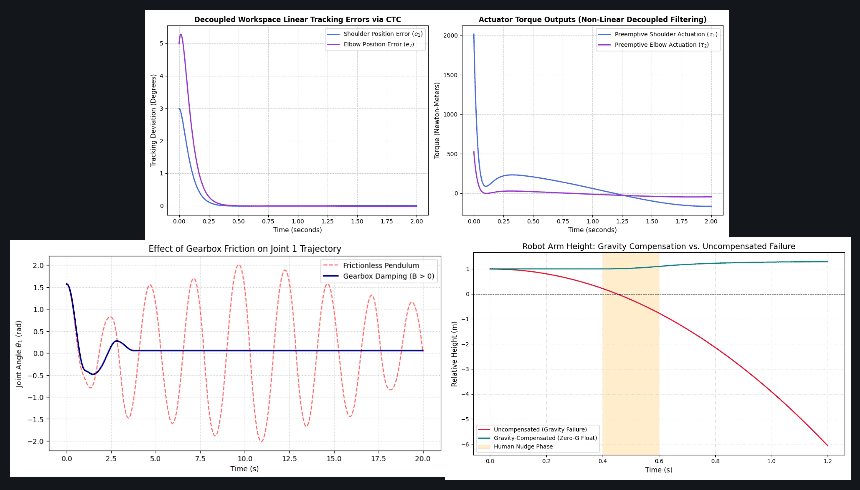
The analysis focuses on the application of orthogonal basis dynamics to streamline complex calculations and ensure **operational predictability** in robotics and quantum physics. In the field of robotics, the material emphasizes Computed Torque Contr...
Read More
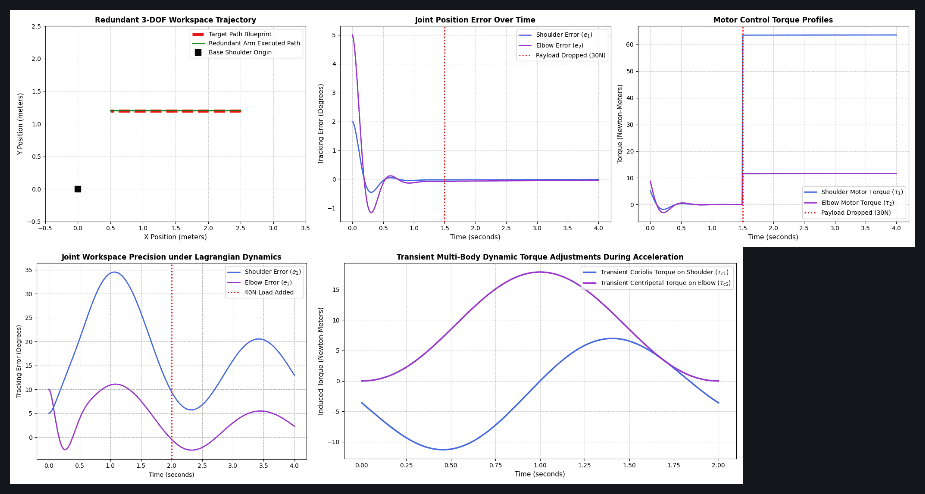
The analysis details the sophisticated mathematical architectures required for the operational predictability and control of robotic systems, emphasizing the transition from kinematic velocity mapping to full Lagrangian dynamic control. By utilizing ...
Read More
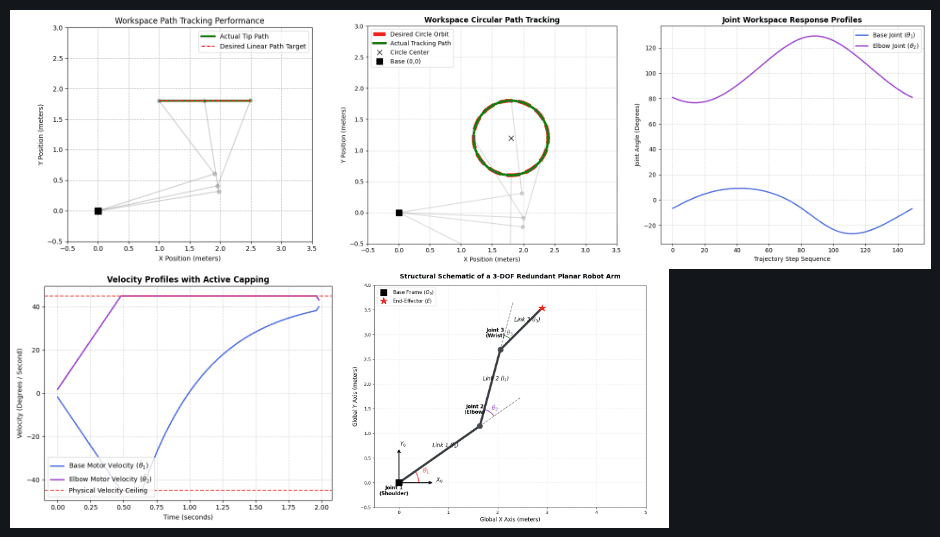
Differential Inverse Kinematics allows robotic systems to translate complex Cartesian trajectories into the non-linear joint movements required for precise path navigation. By utilizing a Jacobian-based control loop algorithm, the system iteratively ...
Read More
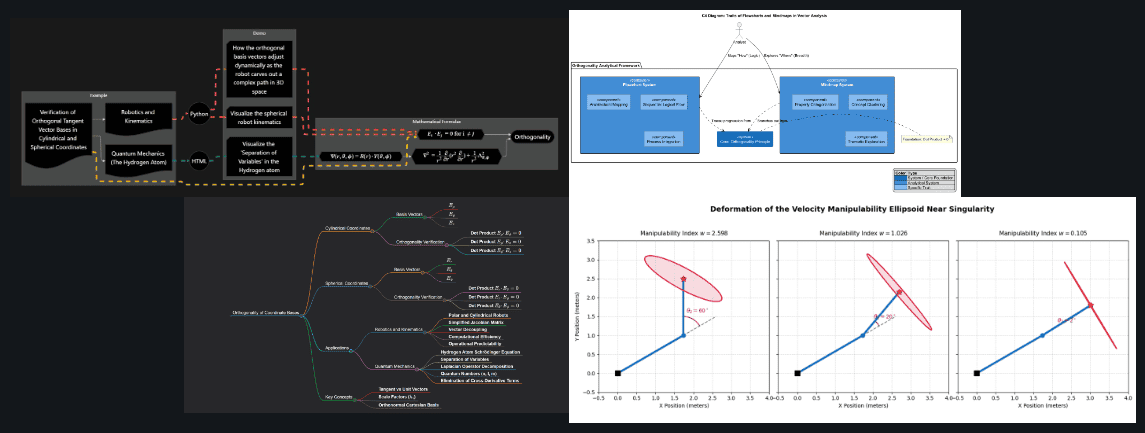
The flowchart and mindmap serve as a dual-layered framework emphasizing the rigorous derivation and expansive application of orthogonal systems across science and engineering. The flowchart focuses on the logic of "how," providing a sequential mappin...
Read More
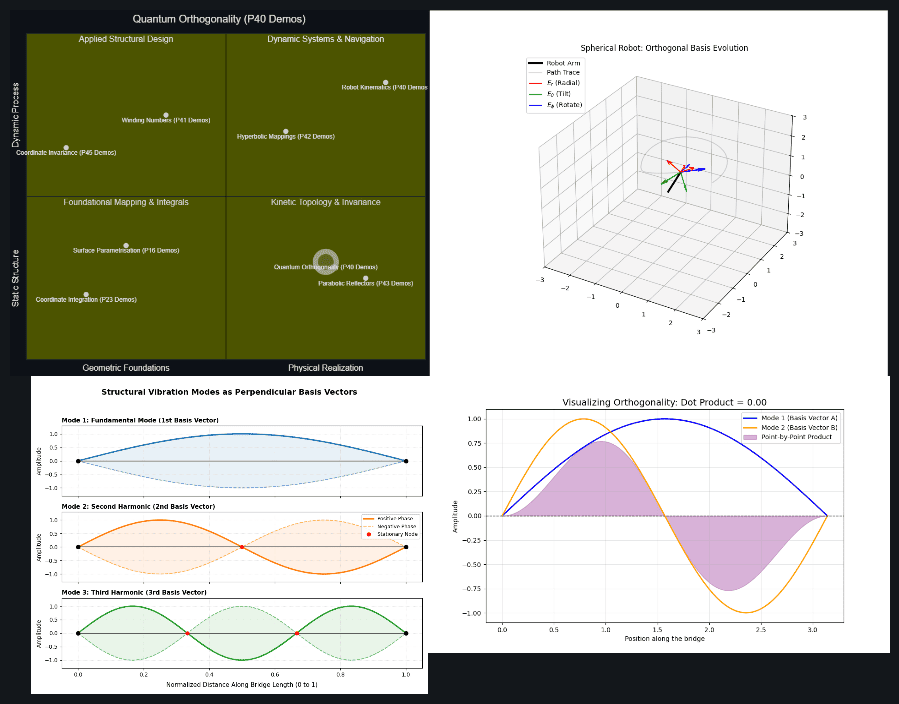
The P40 Demos, centered on Quantum Orthogonality, bridge the gap between engineering predictability and physical discovery by applying the zero-dot-product rule to both spherical arm kinematic control and orbital wavefunction factorization. In roboti...
Read More
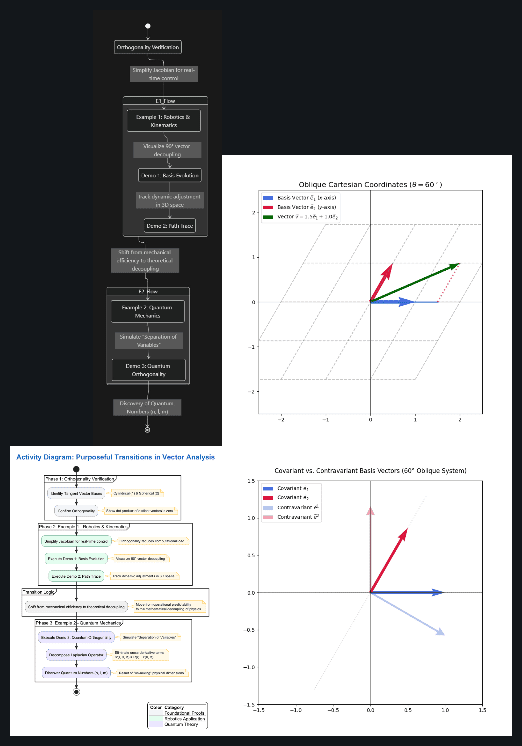
The state diagram illustrates a logical progression from the mathematical verification of orthogonal bases to their vital applications in robotics and quantum mechanics, highlighting how perpendicular vector relationships simplify complex calculation...
Read More
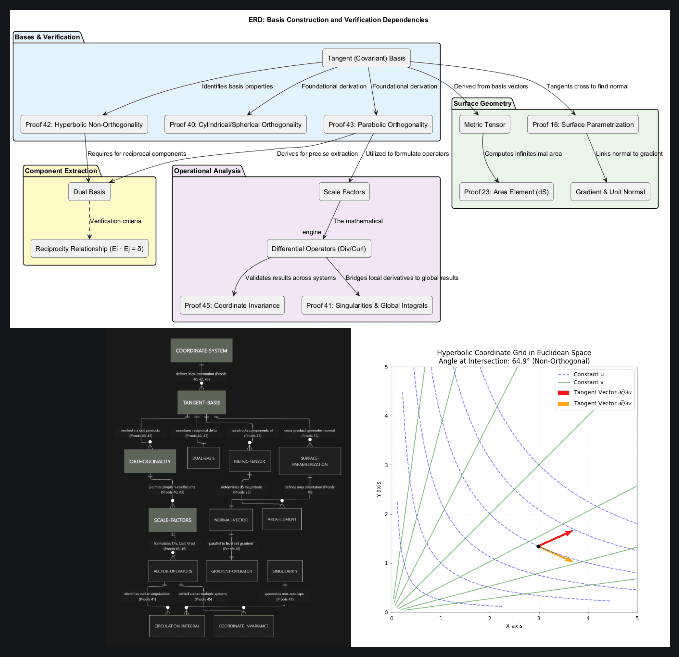
The Entity Relationship Diagram (ERD) for basis construction and verification serves as a comprehensive map linking foundational vector calculus proofs to advanced geometric and operational results. This framework categorizes coordinate systems based...
Read More
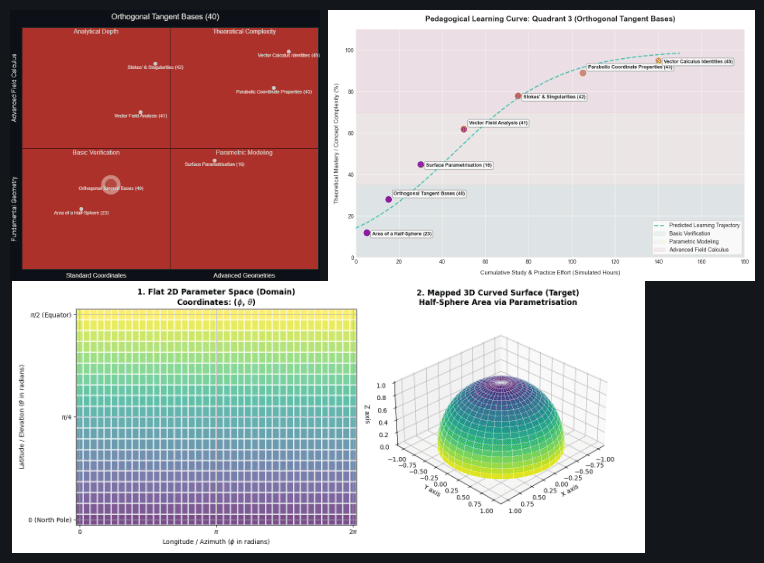
Quadrant 3 functions as the essential "Basic Verification" layer, providing the foundational building blocks necessary for all non-Cartesian coordinate analysis. This phase focuses on fundamental calculations, such as verifying Orthogonal Tangent Vec...
Read More
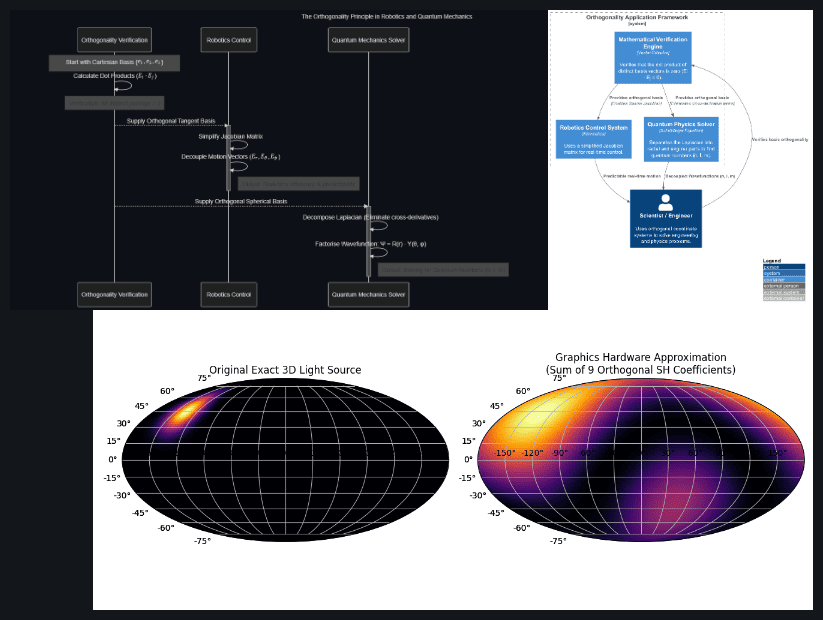
The orthogonality principle serves as a foundational mathematical framework that begins by confirming the dot product of any two distinct basis vectors is zero, effectively establishing the "un-mixing" of physical dimensions. In the field of robotics...
Read More
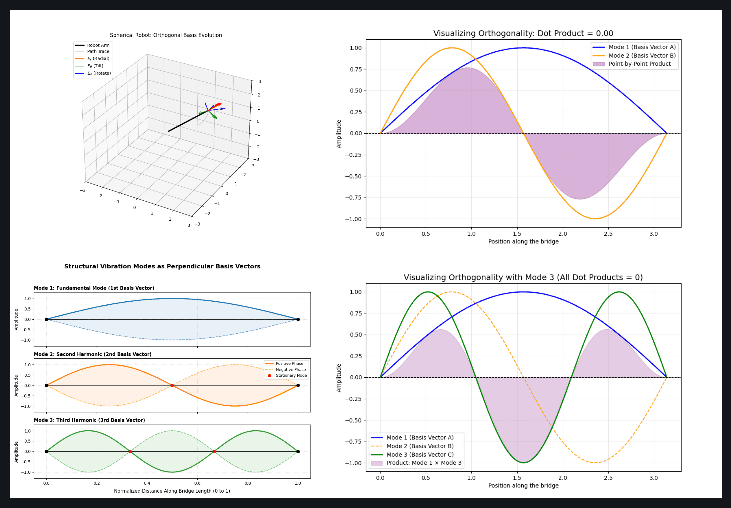
The documents detail the foundational verification and diverse applications of orthogonal tangent basis vectors, focusing on how the mathematical proof that the dot product of distinct vectors equals zero serves as a "gatekeeper" for advanced enginee...
Read More
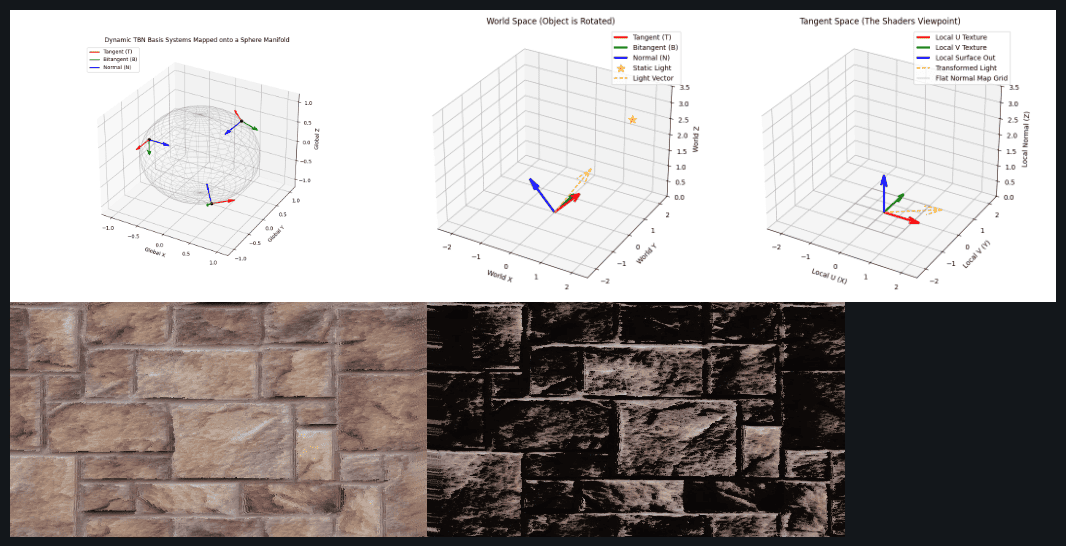
A tangent basis system consists of a set of linearly independent vectors used to establish a localized coordinate frame at specific points on curved surfaces or manifolds, where a single, fixed global grid is insufficient for navigation. In 3D comput...
Read More