Hotel Capex Project Appraisal Toolkit: rank hotel capex projects on NPV, IRR, payback and PI
Full description
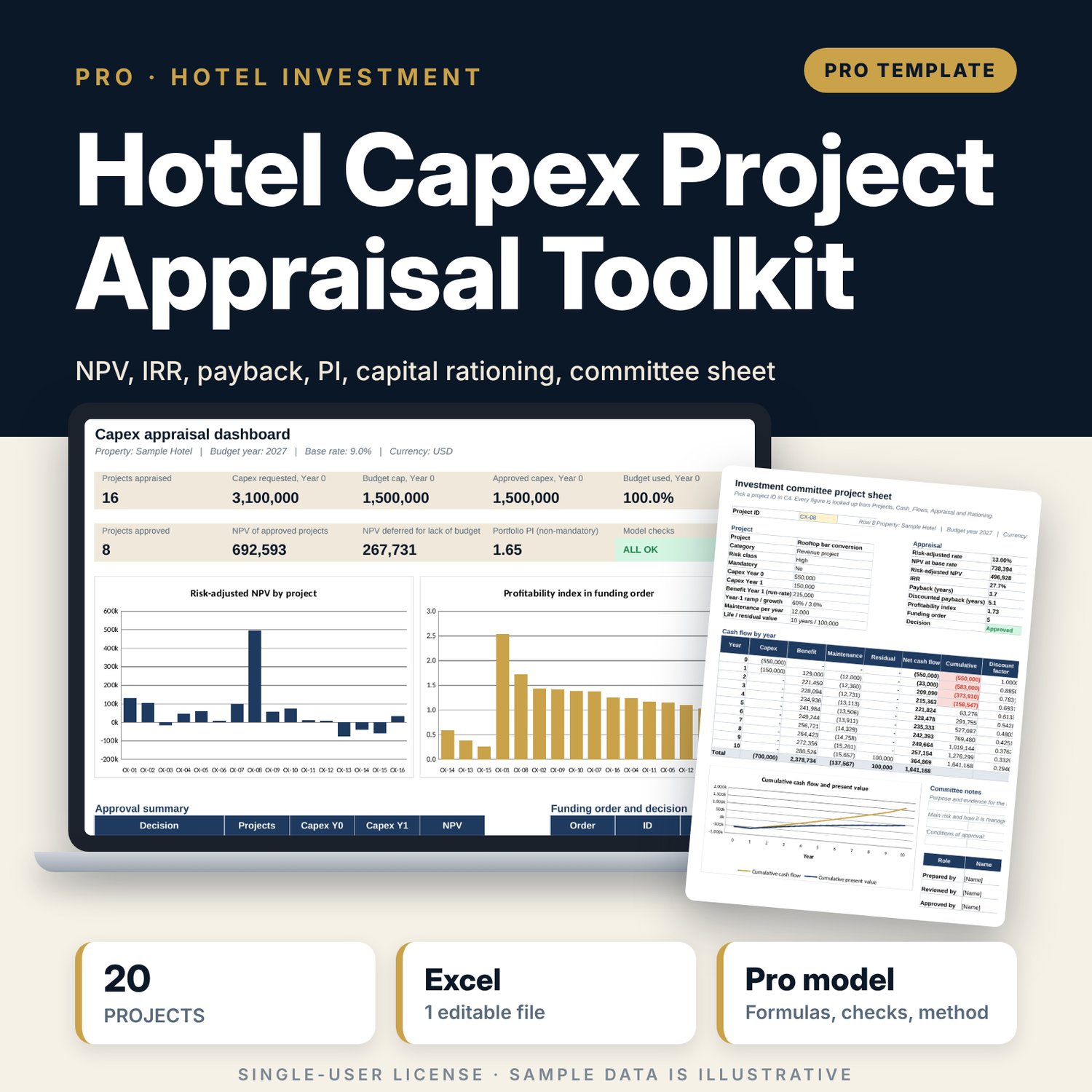
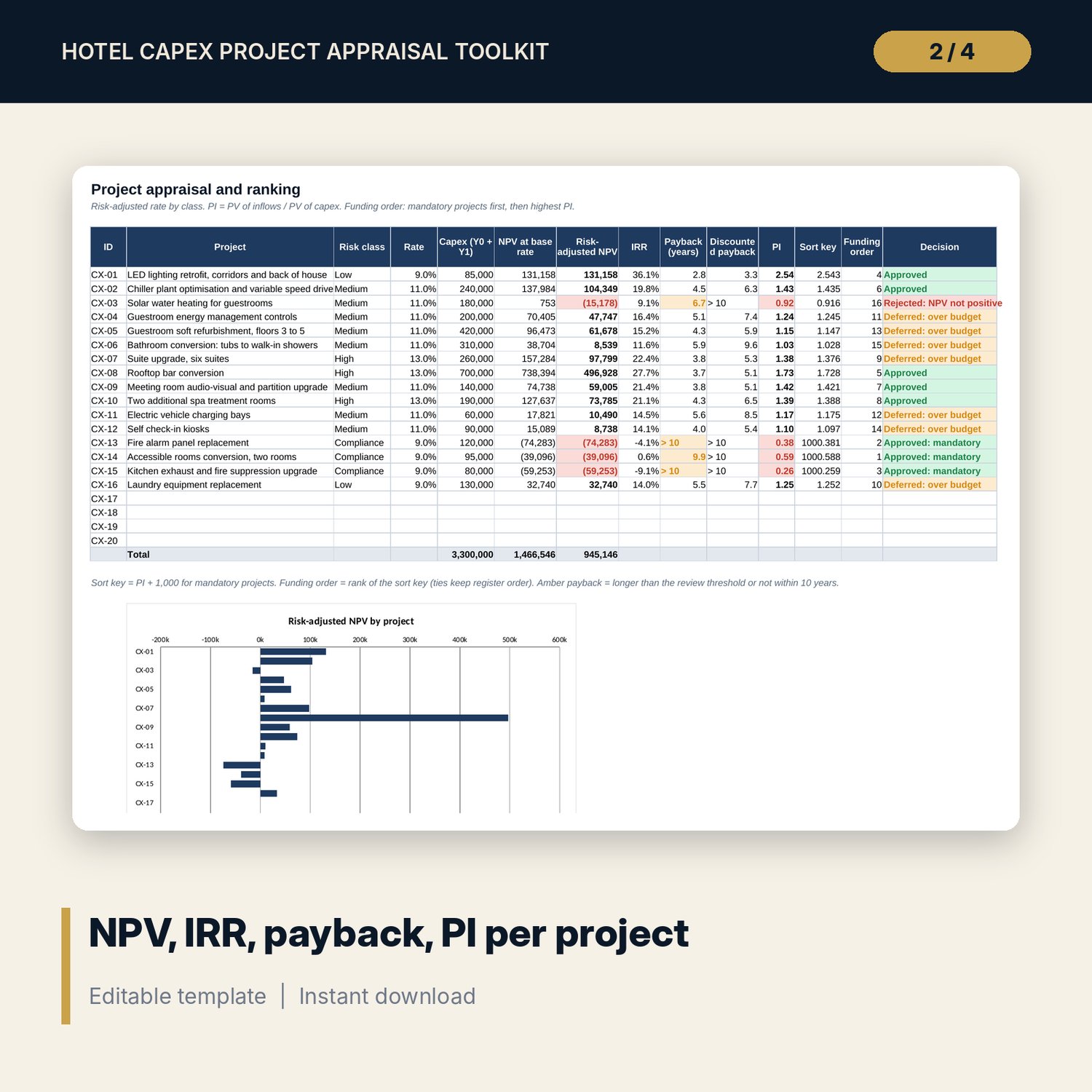
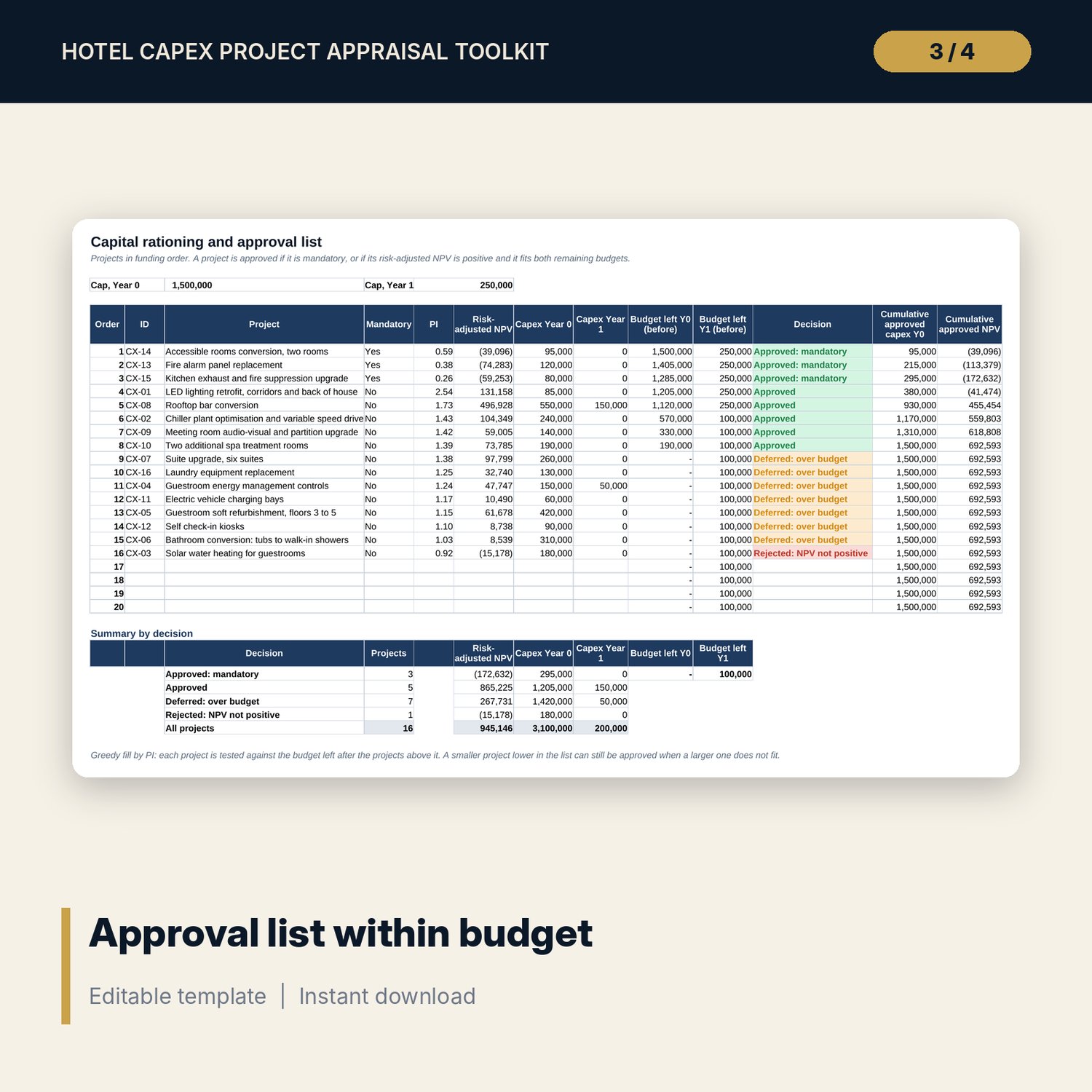
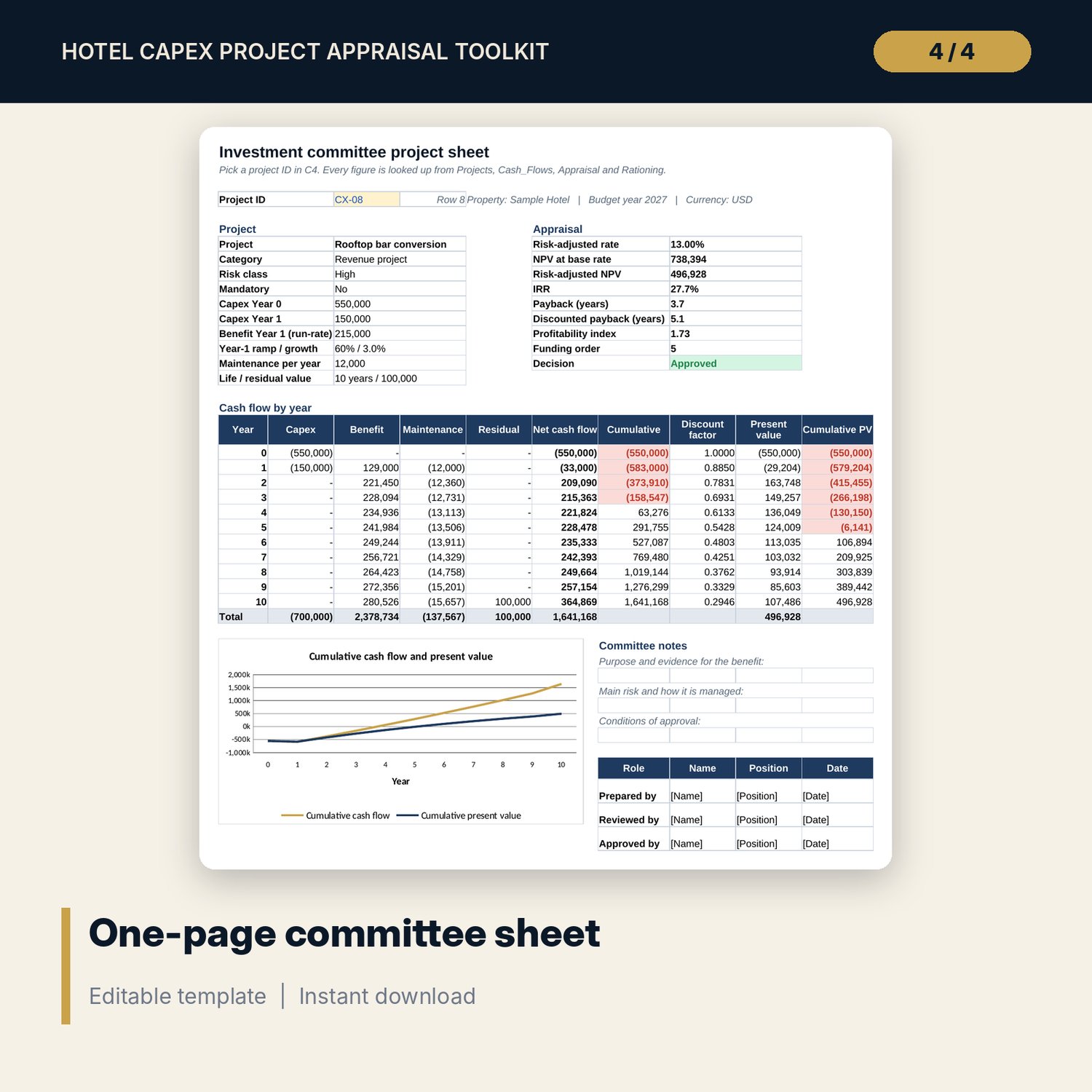
For general managers, financial controllers, asset managers and chief engineers who must turn a long list of capital requests into a funded plan. Each project gets a 10-year cash flow from its Year-0 and Year-1 capex, Year-1 savings or incremental profit with a ramp and growth rate, maintenance cost, useful life and residual value. The workbook builds every cash flow in visible blocks, then calculates NPV at the base rate, risk-adjusted NPV at a discount rate set by risk class (low, medium, high, compliance), IRR, simple and discounted payback and the profitability index. Capital rationing puts mandatory compliance projects first, ranks the rest by PI and approves each one only if its risk-adjusted NPV is positive and it fits the Year-0 and Year-1 budget left. You get an approval list, an NPV chart by project, a sensitivity grid for the approved portfolio and a one-page project sheet with sign-off lines for the investment committee.
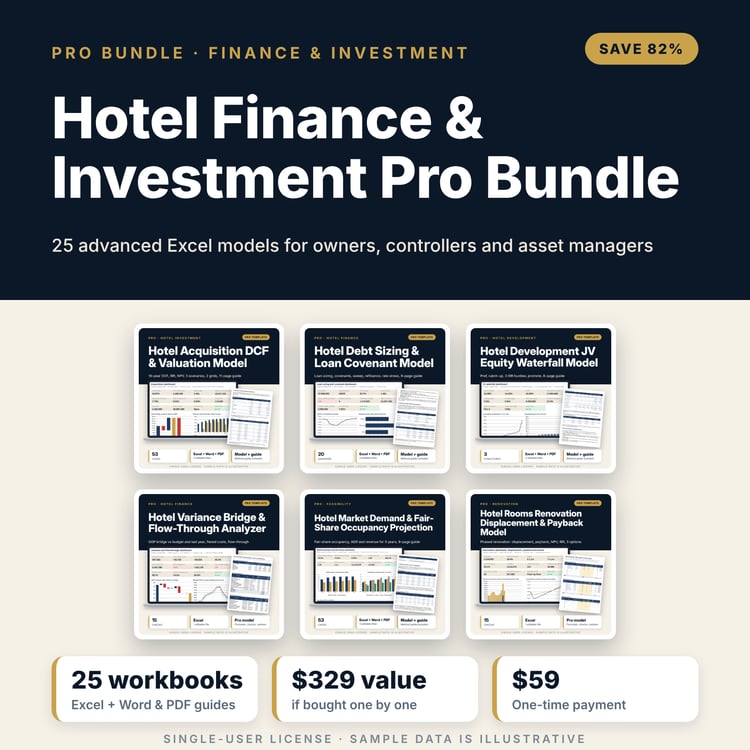
Save with a bundle: this workbook is also in the Hotel Finance & Investment Pro Bundle, 25 workbooks for $59 instead of $329. All 100 Pro workbooks are in the Pro Library for $119, and all 241 templates and workbooks are in the Ultimate Hospitality Library for $149.
What is inside
- Hotel_Capex_Project_Appraisal_Toolkit.xlsx: 12 tabs, 4,459 formulas, 4 native charts, 14 integrity checks and a Method tab with 14 calculation notes.
- Projects register with 20 slots and 16 illustrative projects: energy retrofits, room upgrades, revenue projects, technology, replacement and 3 mandatory compliance items.
- Cash_Flows: 10 calculation blocks (capex, benefit, maintenance, residual, net, cumulative, payback crossing, discounted, cumulative discounted, discounted crossing) and a summary per project.
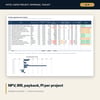
- Appraisal: rate, NPV at base and risk-adjusted rates, IRR, payback, discounted payback, PI, funding order and decision for every project.
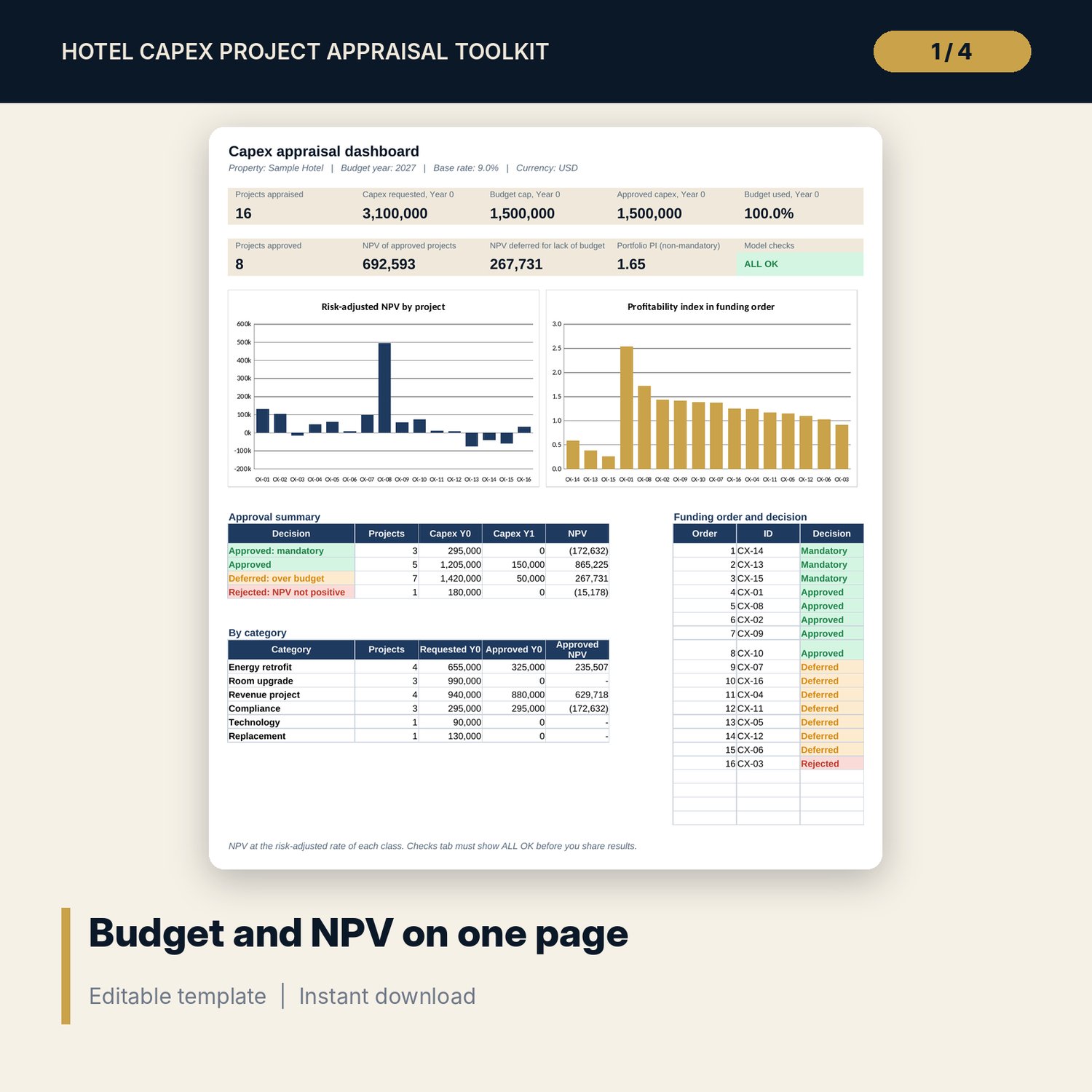
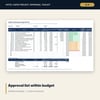
- Rationing: approval list in funding order with budget left for Year 0 and Year 1, cumulative capex and NPV, and a summary by decision.
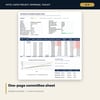
- Project_Sheet: one printable page per project with metrics, the cash flow by year, a cumulative cash flow chart, committee notes and sign-off lines.
- Sensitivity: approved-portfolio NPV and the number of projects that stay NPV-positive by benefit achievement and discount-rate shift (5 x 5 each, 100 engine rows).
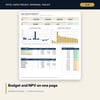
- Dashboard: 9 KPI tiles, a check tile, NPV by project, PI in funding order, approval and category tables on one page.
- README.txt and LICENSE-and-Terms.txt.
How it works
- Enter the Year-0 and Year-1 budget caps, the base discount rate and the risk premium of each class.
- List your projects with capex, benefit, ramp, growth, maintenance, life, residual value, risk class and mandatory flag.
- Read NPV, IRR, paybacks and PI on Appraisal, and the approval list on Rationing.
- Print the project sheet for each project going to the investment committee.
- Test the approved portfolio on Sensitivity and confirm the Checks tab shows ALL OK.
Details
- Format: one XLSX workbook, English.
- Software: Excel 2016 or later, or LibreOffice Calc. No macros, no data tables, no add-ins.
- Annual cash flows over 10 years, any currency.
- Delivery: instant download.
Good to know
- Sample data is illustrative. Replace it with your own projects and estimates.
- Not financial or engineering advice. Verify savings with your supplier or an energy audit, and compliance needs with your local fire code and authorities.
- Benefits are savings or incremental operating profit, not revenue.
- Single-user license.
FAQ
How does the capital rationing work?
Mandatory projects are funded first. The rest are taken in order of profitability index; each is approved if its risk-adjusted NPV is positive and its capex fits the Year-0 and Year-1 budget still available, otherwise it is deferred.
Why a different discount rate for each risk class?
A measured energy saving is safer than profit from a new outlet. A higher rate for riskier projects lowers their NPV and PI, so safer projects compete fairly.
How are compliance projects handled?
Mark them mandatory. They are approved before anything else and use the compliance class rate. Their NPV is usually negative, which shows the true cost of meeting the requirement.
Can I change the number of years or projects?
The register holds 20 projects over a 10-year horizon. Projects with a shorter life simply stop producing benefits after that life.
How do I know the formulas are right?
The Checks tab runs 14 tests, including NPV calculated two ways, PI consistent with NPV, discounted payback never shorter than payback, and the budget never exceeded.