
ANTs: Automatic Negative Thoughts
ANTs: Automatic Negative Thoughts
Catching the thoughts that sneak in uninvited.
ANTs are quick, automatic thoughts that feel true in the moment but are usually exaggerated, one-sided or missing information. Like real ants, one is easy to ignore, but a whole bunch can ruin your picnic. This one-page CBT worksheet teaches you to spot them and talk back.
What’s inside
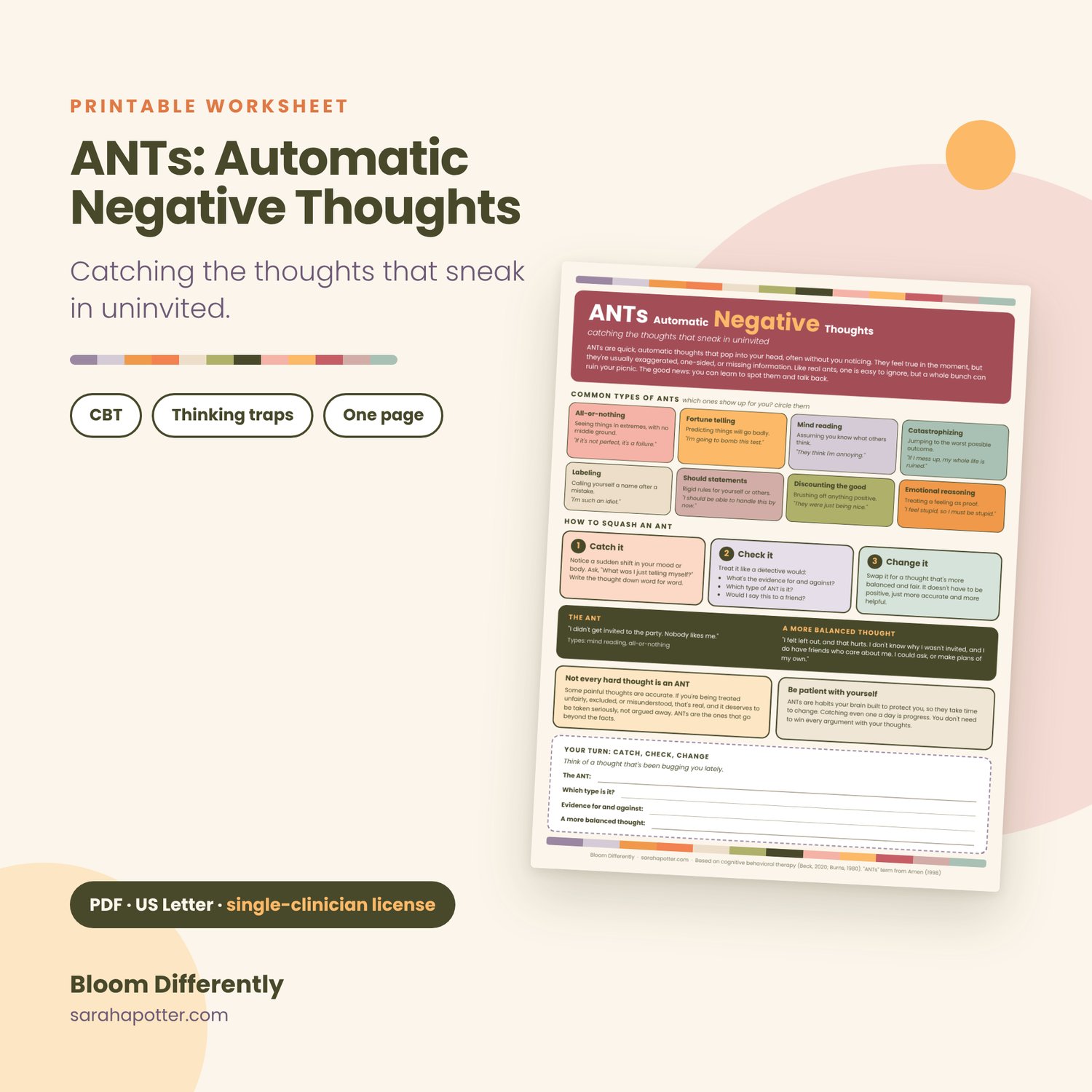
- Eight common types of ANTs, each with a plain-language definition and a real example: all-or-nothing, fortune telling, mind reading, catastrophizing, labeling, should statements, discounting the good, and emotional reasoning.
- How to squash an ANT in three steps:
- Catch it: notice the shift and write the thought down.
- Check it: weigh the evidence like a detective, and ask “Would I say this to a friend?”
- Change it: swap it for a thought that’s more accurate, not just more positive.
- A worked example: turning “Nobody likes me” into a balanced, compassionate thought.
- “Not every hard thought is an ANT”: an important reminder that some painful thoughts are accurate, and unfair treatment deserves to be taken seriously, not argued away.
- “Be patient with yourself”: ANTs are habits your brain built to protect you, and catching even one a day is progress.
- A “Catch, Check, Change” practice section for working through a real thought.
Who it’s for
Teens and adults starting cognitive work, especially anyone dealing with anxiety, low self-esteem, perfectionism or harsh self-talk. It’s useful for therapists, school counselors and group facilitators.
Ways to use it
- Introduce cognitive distortions in an early session.
- Have clients circle the ANTs that show up for them most.
- Send it home as a “catch one a day” practice between sessions.
- Use it in groups to normalize how common these thoughts are.
Why it’s different
It doesn’t ask anyone to think positive. The goal is accurate and fair, and it protects clients from having real injustice or exclusion dismissed as a thinking error.
What you get
A one-page printable PDF, US Letter, available as an instant download. It’s based on cognitive behavioral therapy (Beck, 2020; Burns, 1980), and the “ANTs” term comes from Amen (1998). Single-clinician license included.
Pairs well with: Thoughts vs. Feelings, Building Confidence, Boundaries 101