
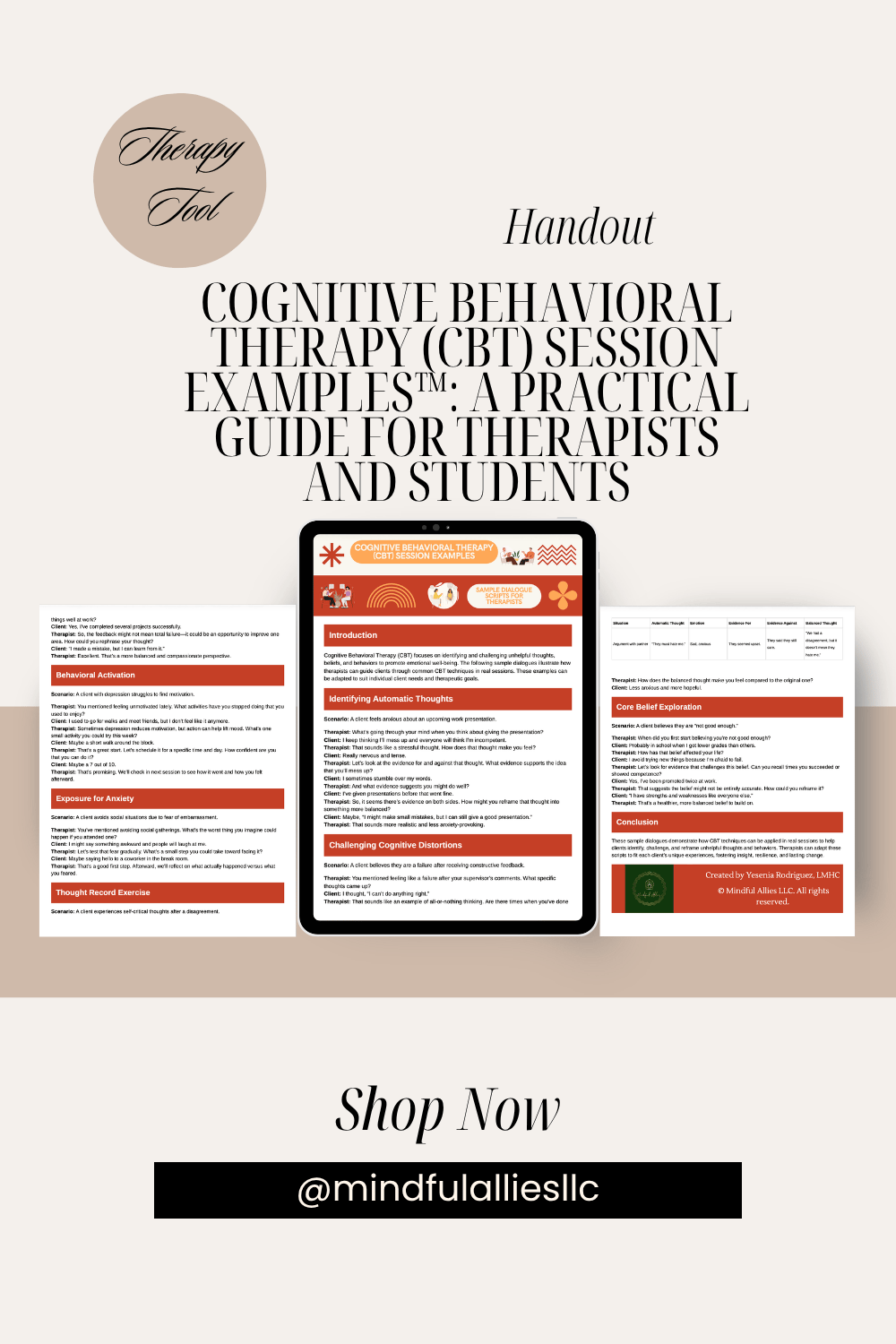
Cognitive Behavioral Therapy (CBT) Session Examples™: A Practical Guide for Therapists and Students
A structured and practical guide designed to help therapists, counseling students, and helping professionals better understand how Cognitive Behavioral Therapy (CBT) techniques can be applied in real therapeutic conversations.
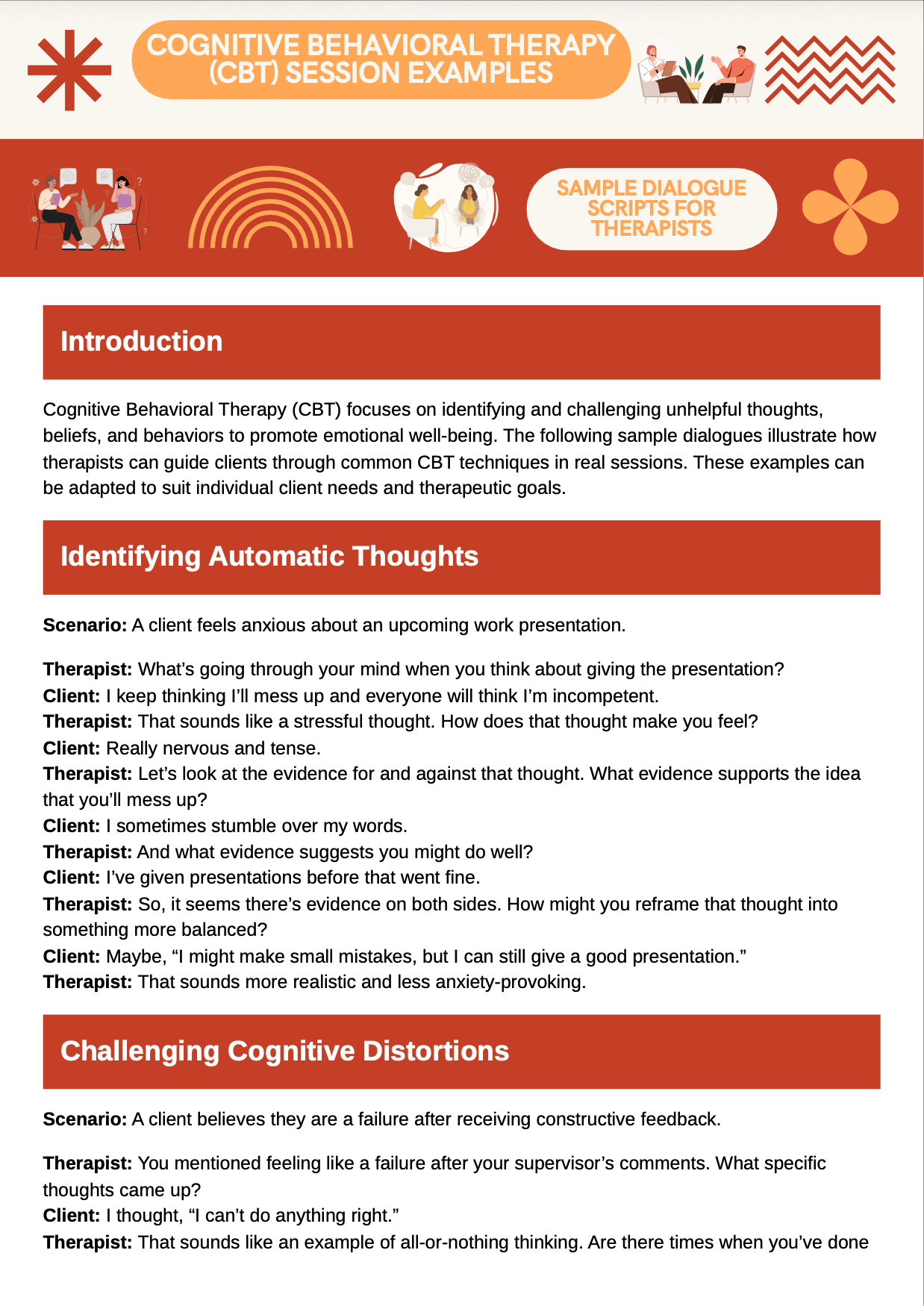
Created by a Licensed Mental Health Counselor (LMHC), Cognitive Behavioral Therapy (CBT) Session Examples offers realistic sample dialogues that demonstrate how therapists can guide clients through common CBT interventions in session. For many therapists-in-training, graduate students, and even experienced clinicians exploring CBT, understanding what CBT sounds like in practice can feel overwhelming or unclear.
This guide bridges the gap between theory and application by offering practical examples of therapist-client interactions, helping readers better understand the flow of CBT interventions, therapeutic questioning, and collaborative exploration. Through realistic scenarios and clinically informed examples, readers can strengthen their understanding of how CBT techniques are used to support insight, emotional regulation, and behavior change.
Designed for use in graduate training, clinical supervision, private study, or therapeutic skill-building, this resource provides accessible examples that can increase confidence and understanding when learning CBT interventions.
What’s Included
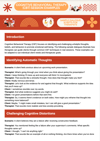
✔ Identifying Automatic Thoughts
Sample therapeutic dialogue demonstrating how therapists can help clients recognize automatic thoughts and understand the connection between thoughts, emotions, and behaviors.
✔ Challenging Cognitive Distortions
Practical examples showing how therapists guide clients in examining and reframing unhelpful thinking patterns through collaborative questioning.
✔ Behavioral Activation
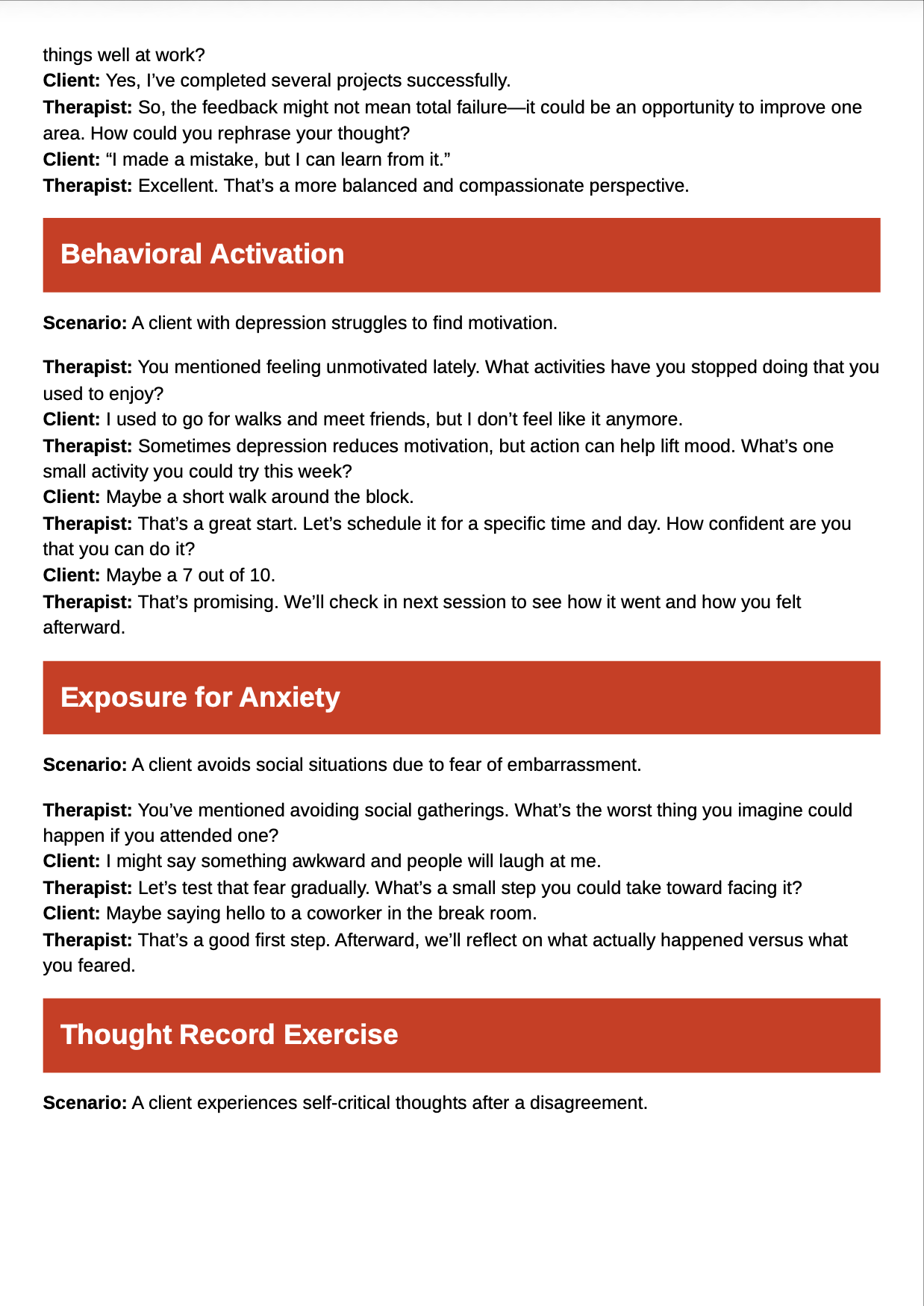
Realistic session examples illustrating how therapists can support clients in increasing meaningful activities to improve mood, motivation, and functioning.
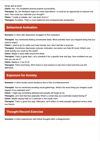
✔ Exposure for Anxiety
Clinical dialogue examples demonstrating how gradual exposure techniques may be discussed and implemented to help reduce avoidance and anxiety responses.
✔ Thought Record Exercise
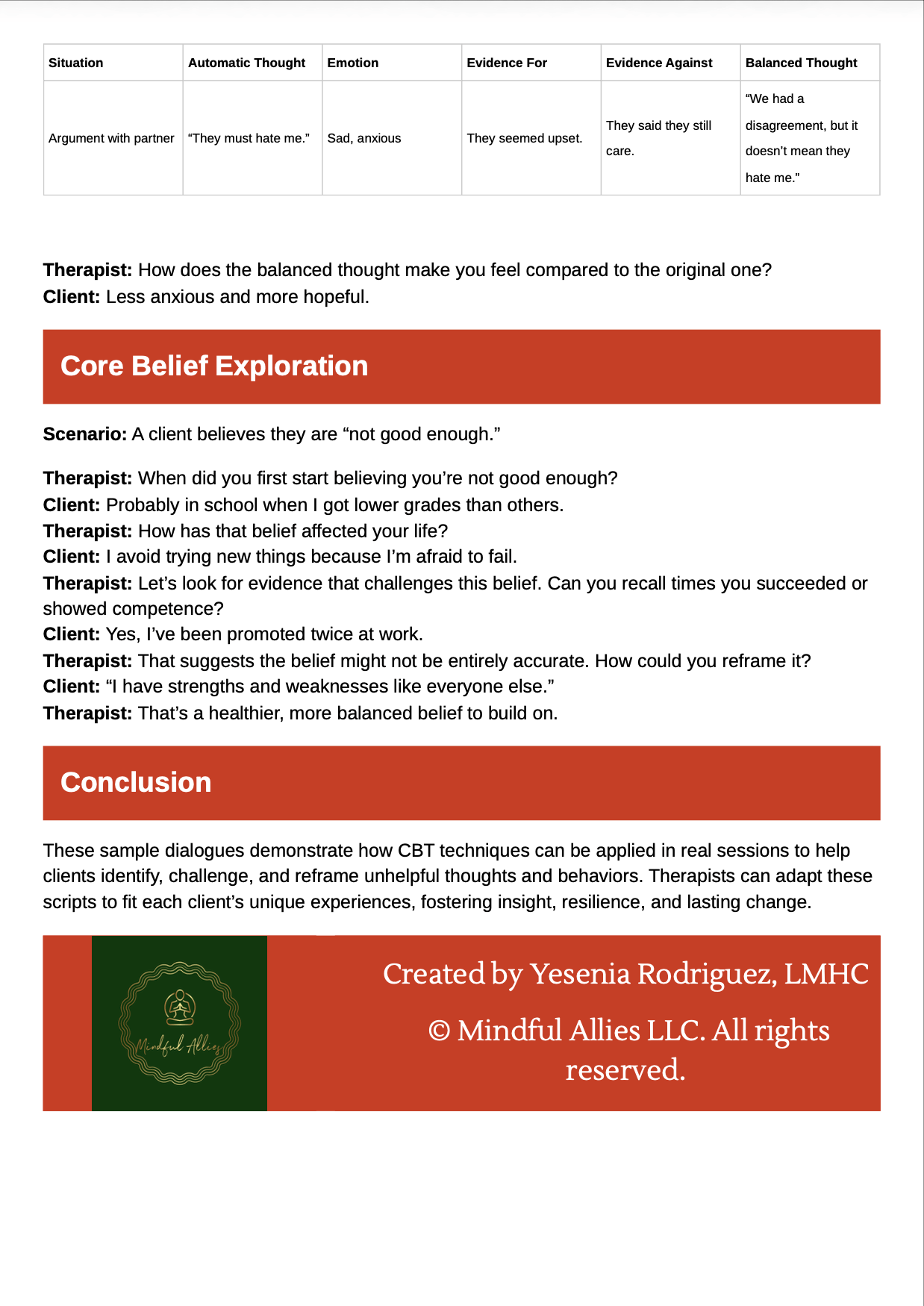
Step-by-step therapeutic examples showing how thought records can be used to identify triggers, evaluate thoughts, and generate balanced perspectives.
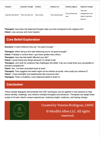
✔ Core Belief Exploration
Examples of therapist-client conversations that explore deeper beliefs about self, others, and the world that may influence emotional distress and behavioral patterns.
Why Therapists and Students Download This Guide
✔ Created by an LMHC with clinical experience using CBT interventions
✔ Helps bridge the gap between CBT theory and real-world application
✔ Provides realistic therapist-client dialogue examples
✔ Supports counseling students, new therapists, and skill development
✔ Ideal for graduate training, supervision, psychoeducation, or clinical practice
✔ Available in English and Spanish (sold separately)
✔ Digital format: easy to print or access electronically anytime
Ideal For Individuals Who:
- Are learning or practicing Cognitive Behavioral Therapy (CBT)
- Want practical examples of what CBT interventions sound like in session
- Are counseling students, interns, or early-career therapists
- Want to strengthen confidence using CBT techniques with clients
- Value structured learning tools and realistic clinical examples
If you’re looking for a practical and supportive resource to better understand how CBT techniques unfold in real therapeutic conversations, this guide was created to strengthen clinical understanding, confidence, and therapeutic skill development.
Licensing & Usage
This digital product is licensed for personal and individual use only. Your download grants a single-user, non-transferable license to use the material for personal learning, educational support, or professional development.
This product may not be shared, copied, reproduced, resold, redistributed, uploaded, or distributed in any form—digital or physical—without prior written permission from the author.
All content is protected under copyright law. Unauthorized use or distribution is strictly prohibited.
Thank you for respecting the time, care, and professional expertise that went into creating this resource.