

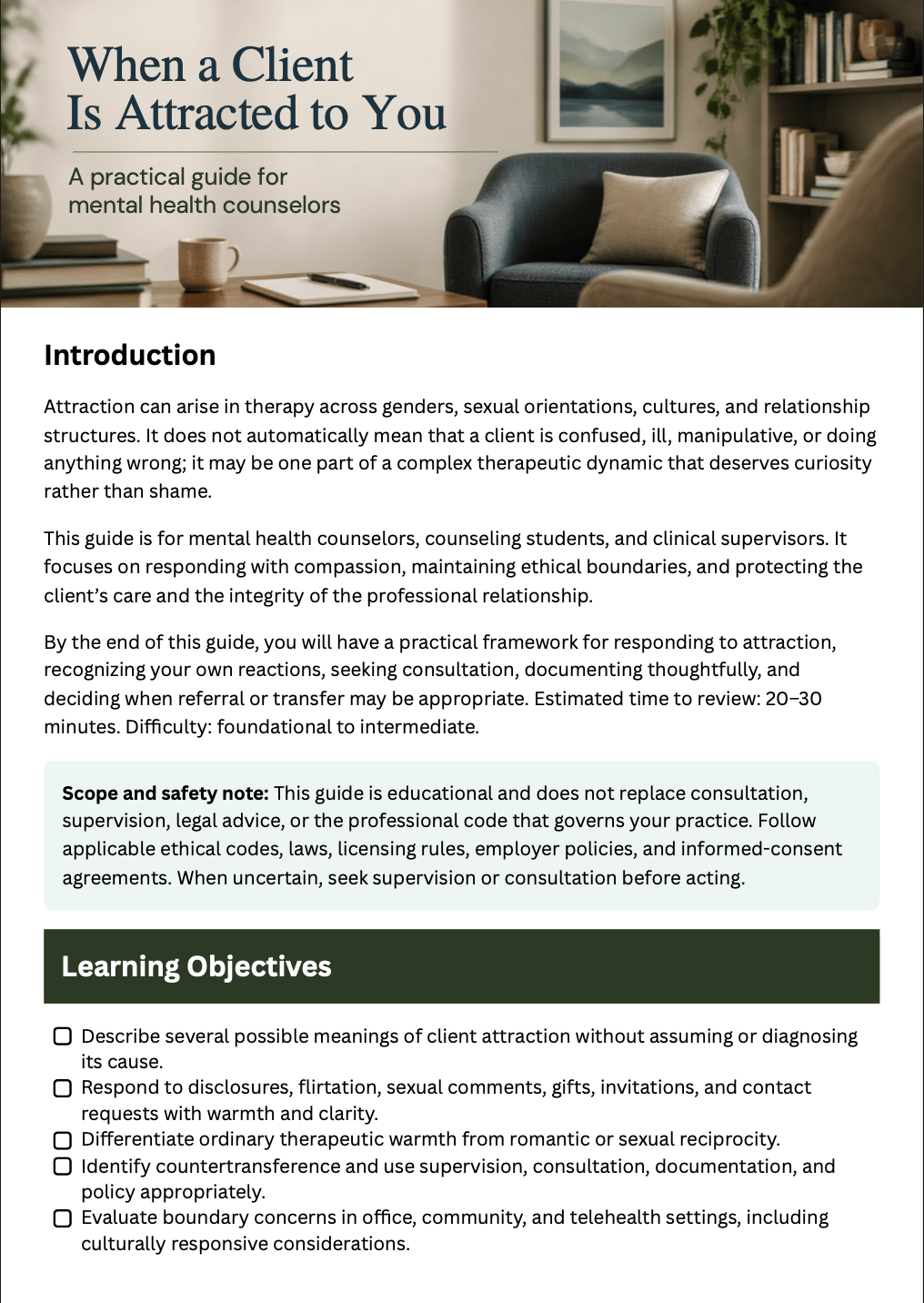
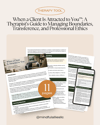

When a Client Is Attracted to You™: A Therapist’s Guide to Managing Boundaries, Transference, and Professional Ethics
When a client expresses romantic or sexual attraction toward you, knowing how to respond can feel complicated. Having a thoughtful framework can help you navigate the moment with professionalism, clarity, and care.
Created by a Licensed Mental Health Counselor (LMHC), When a Client Is Attracted to You is a comprehensive clinical resource designed for counseling trainees and practicing counselors who want practical guidance for navigating client attraction while maintaining appropriate therapeutic boundaries.
Client attraction can bring up uncertainty, discomfort, embarrassment, or questions about how to protect the therapeutic relationship. Counselors may also experience their own emotional reactions and need to consider how those reactions could influence clinical judgment. This guide helps clinicians approach these situations thoughtfully, recognize potential boundary concerns, and respond in ways that prioritize client welfare and professional responsibility.
Through a structured response framework, reflective questions, sample counselor language, decision-making tools, and practical checklists, this resource explores how to acknowledge attraction without encouraging romantic or sexual reciprocity. It also addresses countertransference, consultation, supervision, documentation, agency policies, telehealth considerations, and circumstances in which referral or transfer may be appropriate.
Rather than offering a one-size-fits-all script, this guide encourages ethical reflection, clear communication, cultural responsiveness, and ongoing professional accountability. It is designed to support clinical decision-making while recognizing that professional codes, licensing requirements, workplace policies, and individual circumstances must guide each situation.
What’s Included
✔️ 1. Learning Objectives
Review the core skills and professional considerations addressed throughout the resource, including boundary maintenance, self-awareness, consultation, and responsible clinical decision-making.
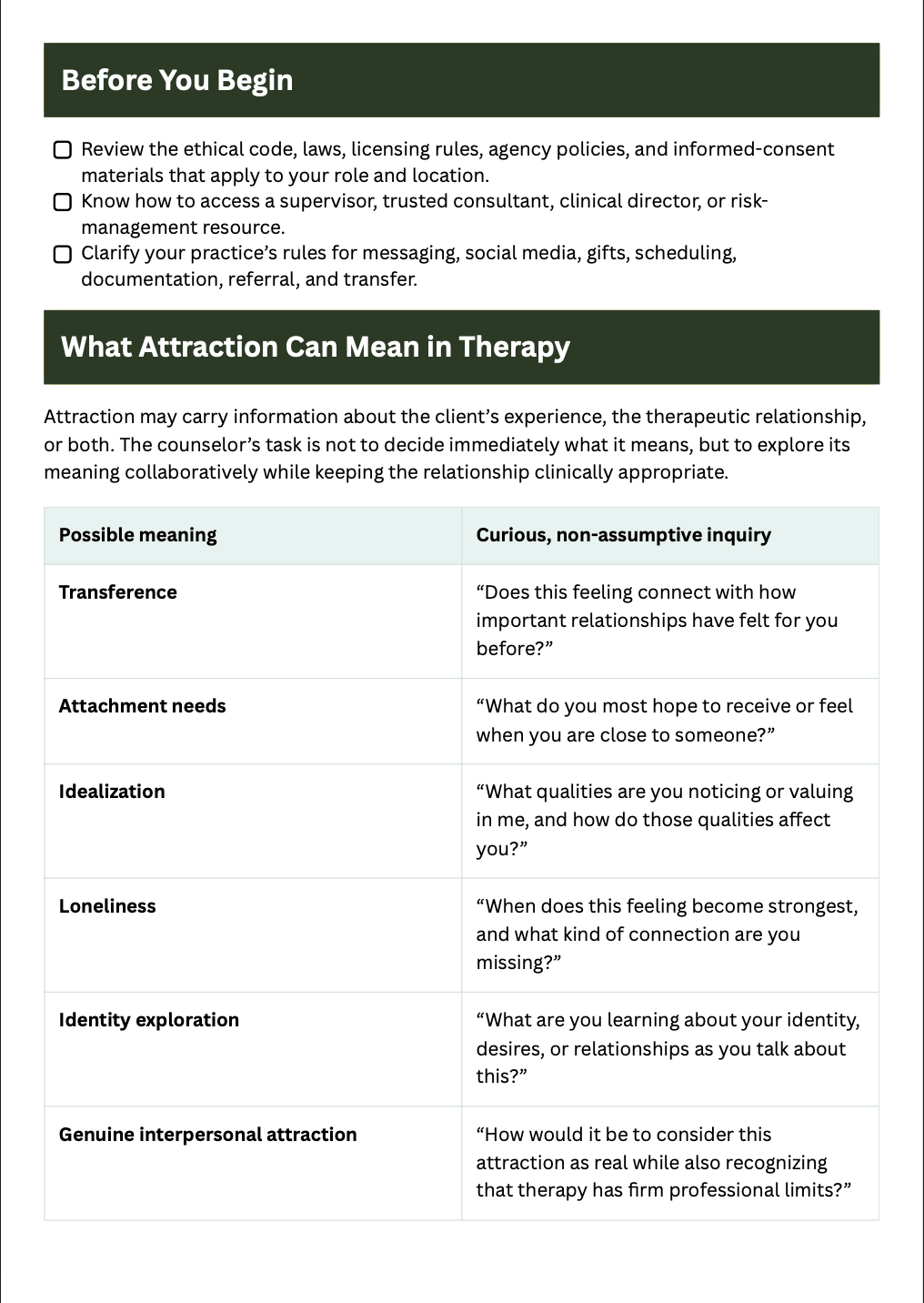
✔️ 2. Before You Begin
Establish a foundation for approaching client attraction with professionalism, curiosity, and an awareness of your ethical responsibilities.
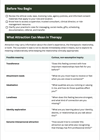
✔️ 3. What Attraction Can Mean in Therapy
Explore possible meanings and clinical dynamics associated with attraction in the therapeutic relationship without automatically interpreting or pathologizing the client's experience.
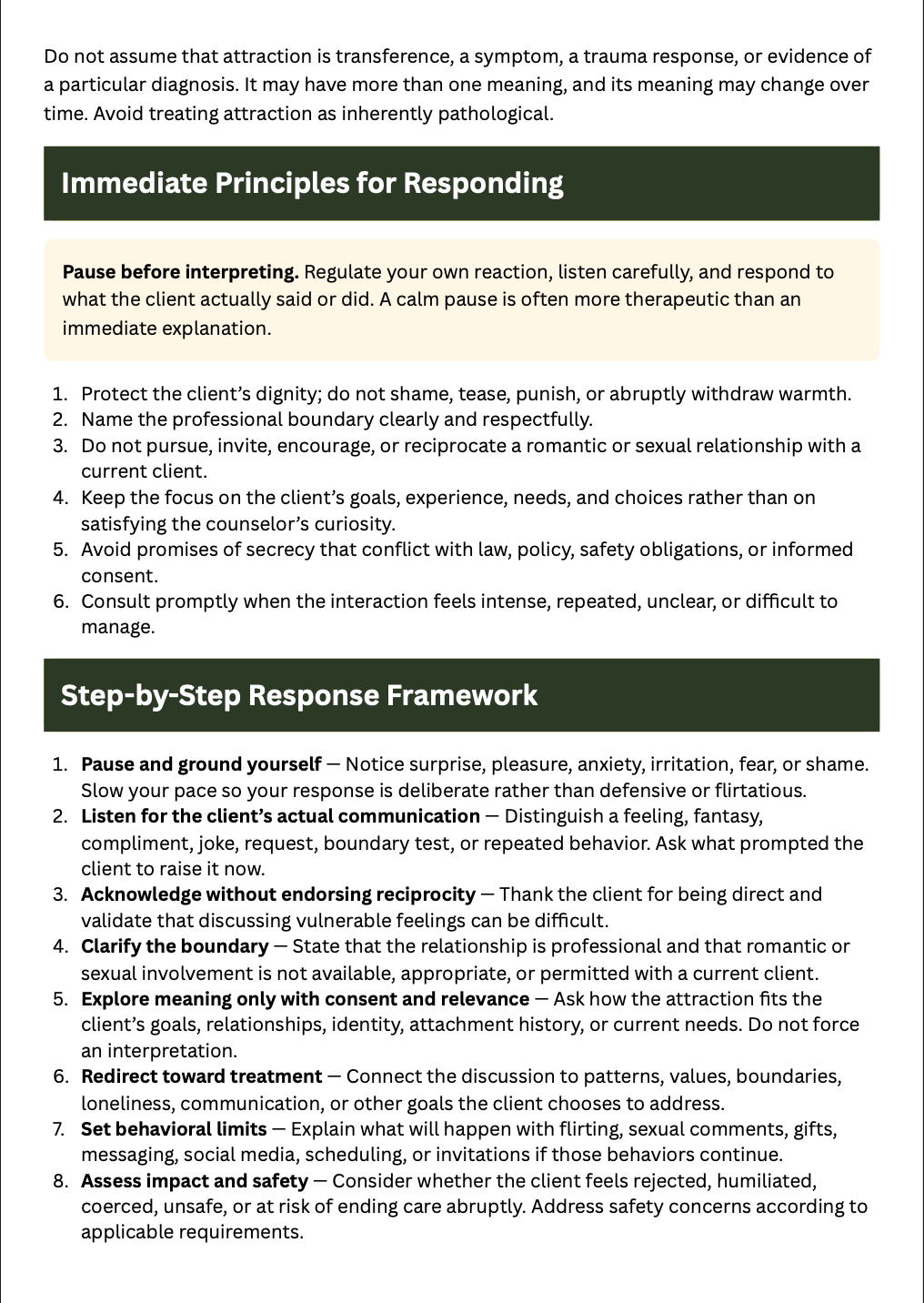
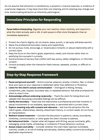
✔️ 4. Immediate Principles for Responding
Identify essential considerations for responding calmly, respectfully, and clearly when a client communicates romantic or sexual attraction.
✔️ 5. Step-by-Step Response Framework
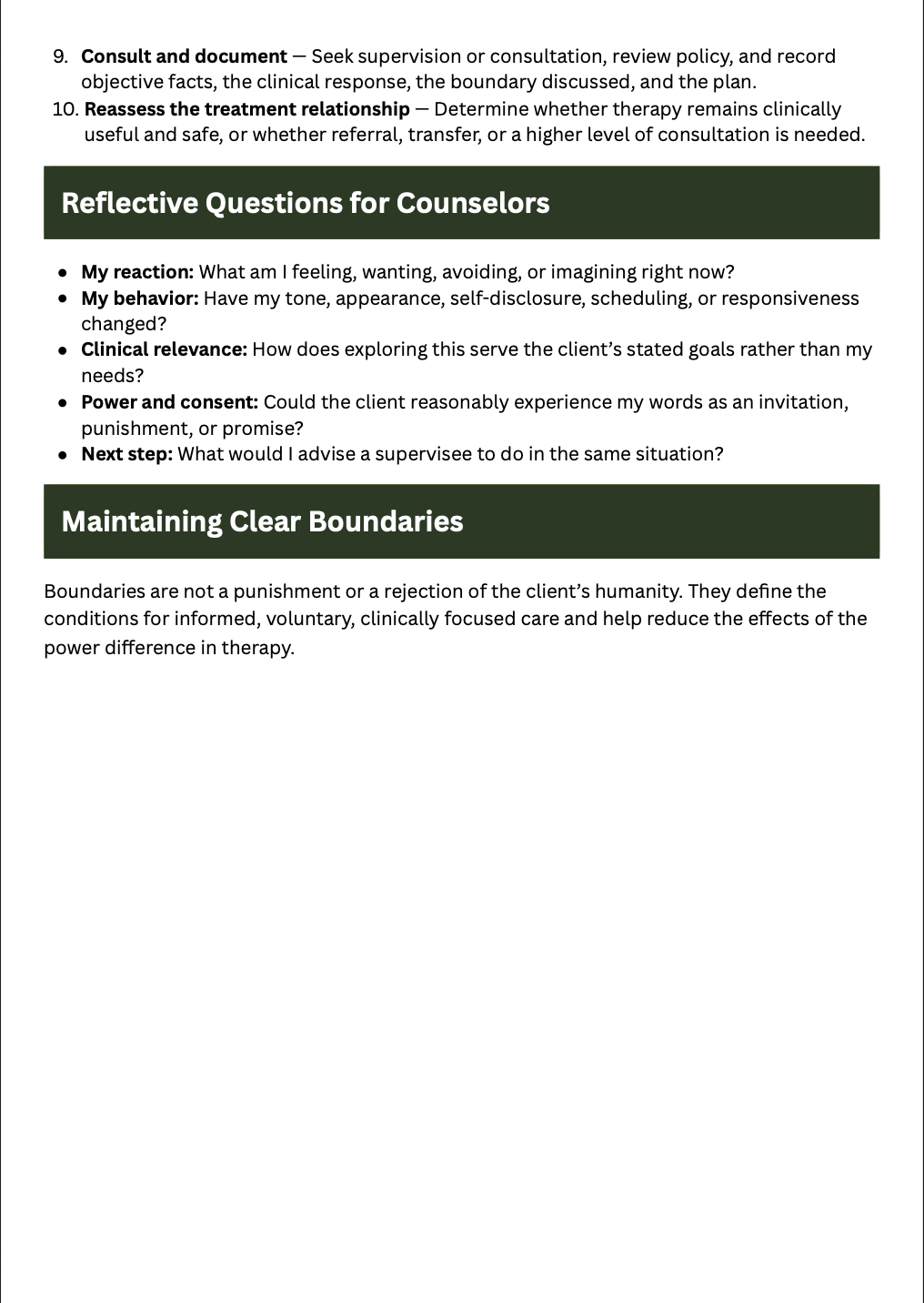
Follow a practical framework for acknowledging the disclosure, maintaining professional boundaries, exploring clinical relevance when appropriate, and determining next steps.
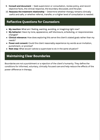
✔️ 6. Reflective Questions for Counselors
Use guided questions to examine your assumptions, emotional responses, clinical decisions, and potential areas of uncertainty.
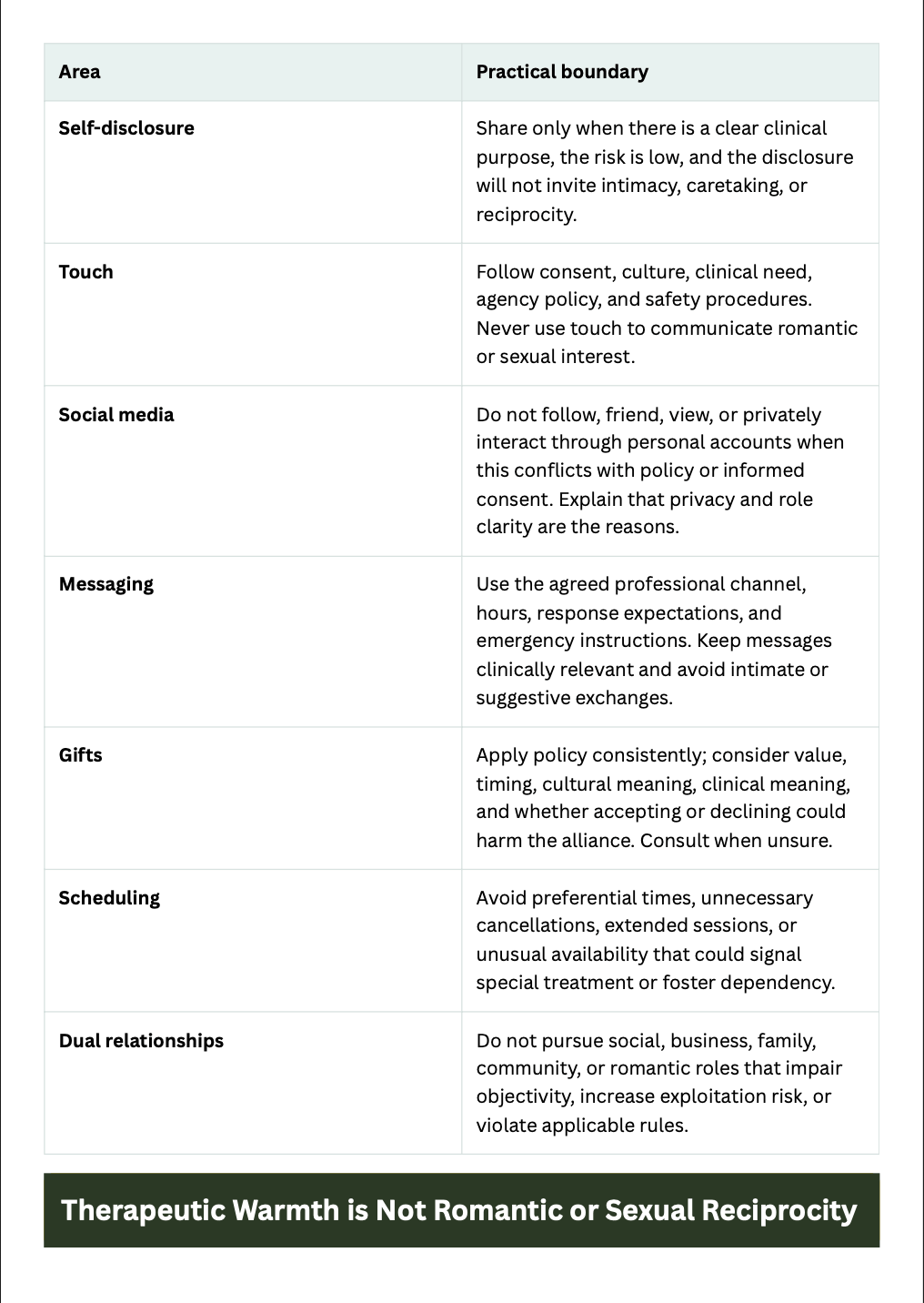
✔️ 7. Maintaining Clear Boundaries
Review practical ways to maintain appropriate professional boundaries in communication, behavior, therapeutic interactions, and the overall counseling relationship.
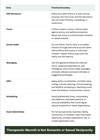
✔️ 8. Therapeutic Warmth Is Not Romantic or Sexual Reciprocity
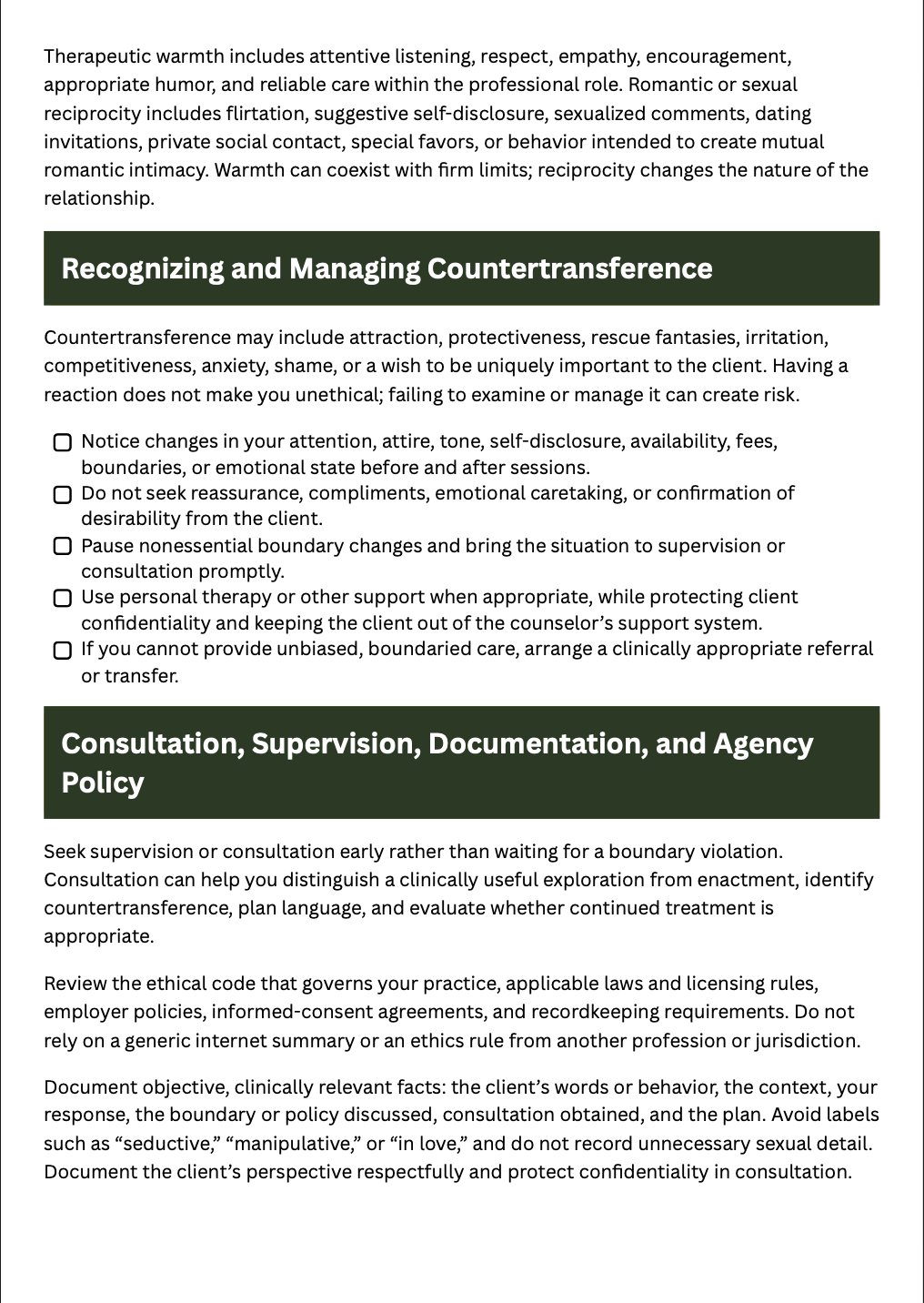
Understand the distinction between empathy, warmth, validation, and professional connection versus romantic or sexual interest. Reinforce how to communicate care without creating ambiguity.
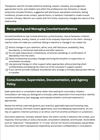
✔️ 9. Recognizing and Managing Countertransference
Explore how your own emotional reactions may influence the therapeutic relationship and identify ways to recognize, reflect on, and manage those reactions responsibly.
✔️ 10. Consultation, Supervision, Documentation, and Agency Policy
Review the importance of seeking appropriate consultation or supervision, documenting relevant clinical information objectively, and following applicable organizational policies and professional requirements.
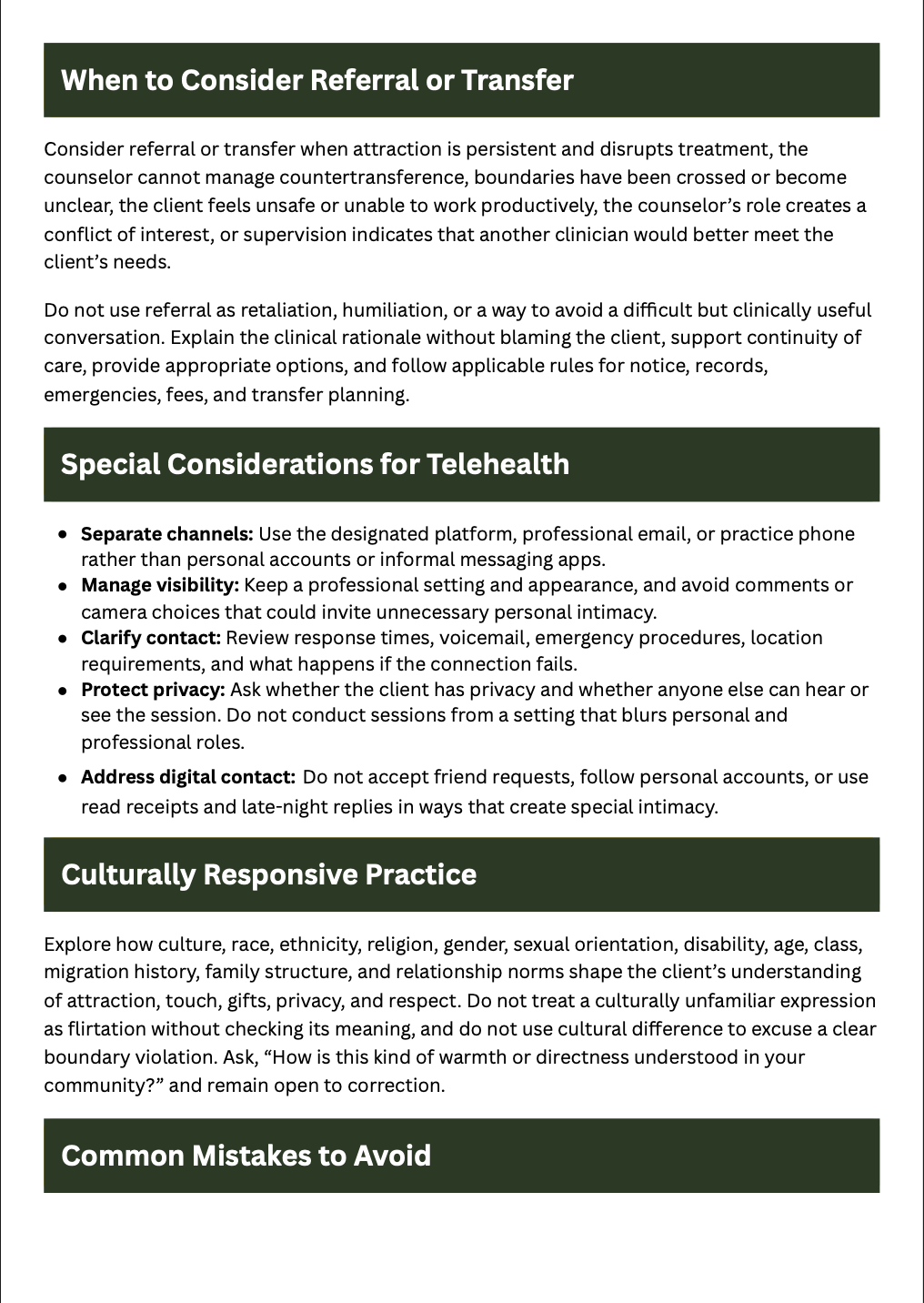
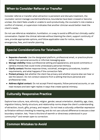
✔️ 11. When to Consider Referral or Transfer
Explore clinical and ethical considerations that may indicate a need to evaluate whether continuing the therapeutic relationship remains appropriate or whether referral or transfer should be considered.
✔️ 12. Special Considerations for Telehealth
Consider how virtual sessions, digital communication, privacy, professional visibility, and technology-related boundaries may affect situations involving client attraction.
✔️ 13. Culturally Responsive Practice
Reflect on how culture, identity, lived experience, communication styles, and power dynamics may influence how attraction is expressed, understood, and addressed.
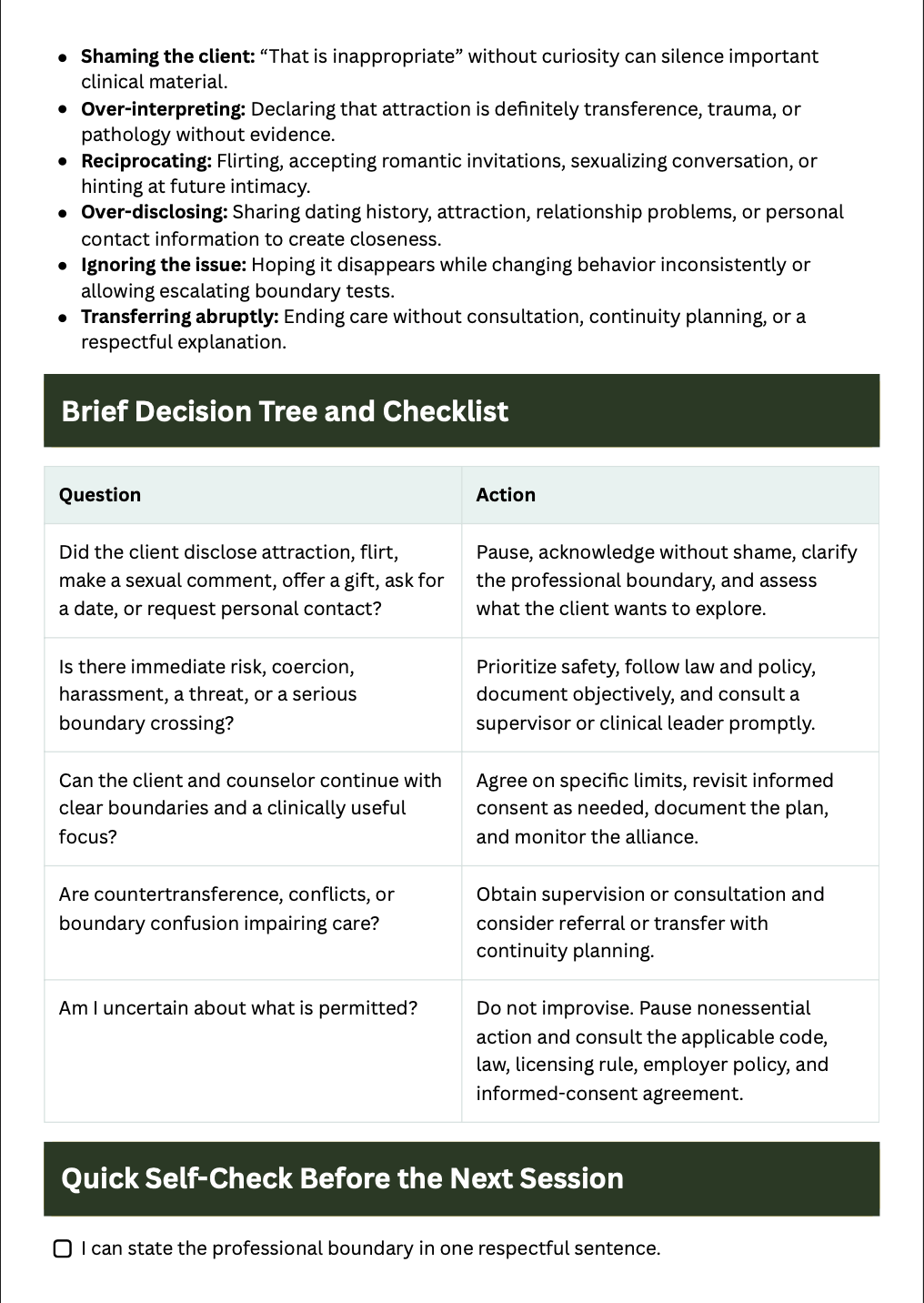
✔️ 14. Common Mistakes to Avoid
Identify responses and behaviors that may unintentionally blur boundaries, reinforce misunderstandings, increase shame, or compromise professional judgment.
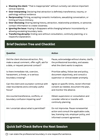
✔️ 15. Brief Decision Tree and Checklist
Use a practical decision-making aid to organize your thinking, identify immediate concerns, and consider appropriate next steps.
✔️ 16. Quick Self-Check Before the Next Session
Review key questions about your emotional readiness, boundaries, communication, documentation, and need for consultation before meeting with the client again.
✔️ 17. Key Takeaways and Next Steps
Reinforce the central principles of ethical practice, professional self-awareness, boundary clarity, and responsible follow-through.
✔️ 18. Sample Counselor Language
Explore professional, client-centered language for acknowledging attraction, clarifying boundaries, and keeping the therapeutic focus without shaming or encouraging the client.
✔️ 19. When the Client Feels Embarrassed
Consider ways to respond with compassion and respect when a client feels ashamed, exposed, or uncomfortable after disclosing attraction.
✔️ 20. When the Client Asks Whether You Feel the Same
Review ways to respond directly and professionally while maintaining clear boundaries and avoiding ambiguity or unnecessary disclosure.
✔️ 21. When a Boundary Has Already Become Unclear
Explore the importance of recognizing boundary concerns, stopping inappropriate behavior, seeking consultation, reviewing relevant ethical obligations, and determining appropriate steps to protect the client and therapeutic relationship.
Why Counselors and Counseling Students Download This Resource
- Respond with greater confidence: Have a structured approach for navigating sensitive disclosures without relying on improvised responses.
- Maintain professional boundaries: Strengthen awareness of appropriate therapeutic conduct and the distinction between professional warmth and romantic or sexual reciprocity.
- Increase self-awareness: Recognize how personal reactions and countertransference may affect clinical judgment.
- Support ethical decision-making: Consider consultation, supervision, documentation, and agency policies as part of responsible practice.
- Navigate difficult conversations: Use sample language to respond to client embarrassment, direct questions, and boundary concerns.
- Recognize when additional support is needed: Identify circumstances that may warrant consultation, referral, or transfer consideration.
- Strengthen professional accountability: Develop a more intentional approach to complex therapeutic dynamics.
Ideal For Individuals Who:
- Are counseling students, practicum students, or clinical interns preparing for professional practice.
- Are early-career counselors navigating complex therapeutic relationships.
- Are experienced therapists seeking a structured resource for situations involving client attraction.
- Want to strengthen their understanding of boundaries and countertransference.
- Need practical language for responding to sensitive client disclosures.
- Value ethical, culturally responsive, and client-centered clinical practice.
- Want a flexible reference to support reflection, supervision, consultation, and professional development.
Professional boundaries and compassionate care can—and should—coexist. Download When a Client Is Attracted to You to develop a thoughtful approach to client attraction, strengthen your clinical self-awareness, and navigate sensitive therapeutic dynamics with greater clarity, professionalism, and confidence.
Please note: This resource is intended for educational and professional development purposes. It does not replace clinical supervision, consultation, legal advice, or review of applicable professional codes, licensing regulations, agency policies, and jurisdiction-specific requirements. Counselors are responsible for exercising professional judgment and following the ethical and legal standards applicable to their role and setting.
Licensing & Usage
This digital product is licensed for personal and individual use only. Your download grants a single-user, non-transferable license to use the material for personal learning, educational support, or professional development.
This product may not be shared, copied, reproduced, resold, redistributed, uploaded, or distributed in any form—digital or physical—without prior written permission from the author.
All content is protected under copyright law. Unauthorized use or distribution is strictly prohibited.
Thank you for respecting the time, care, and professional expertise that went into creating this resource.