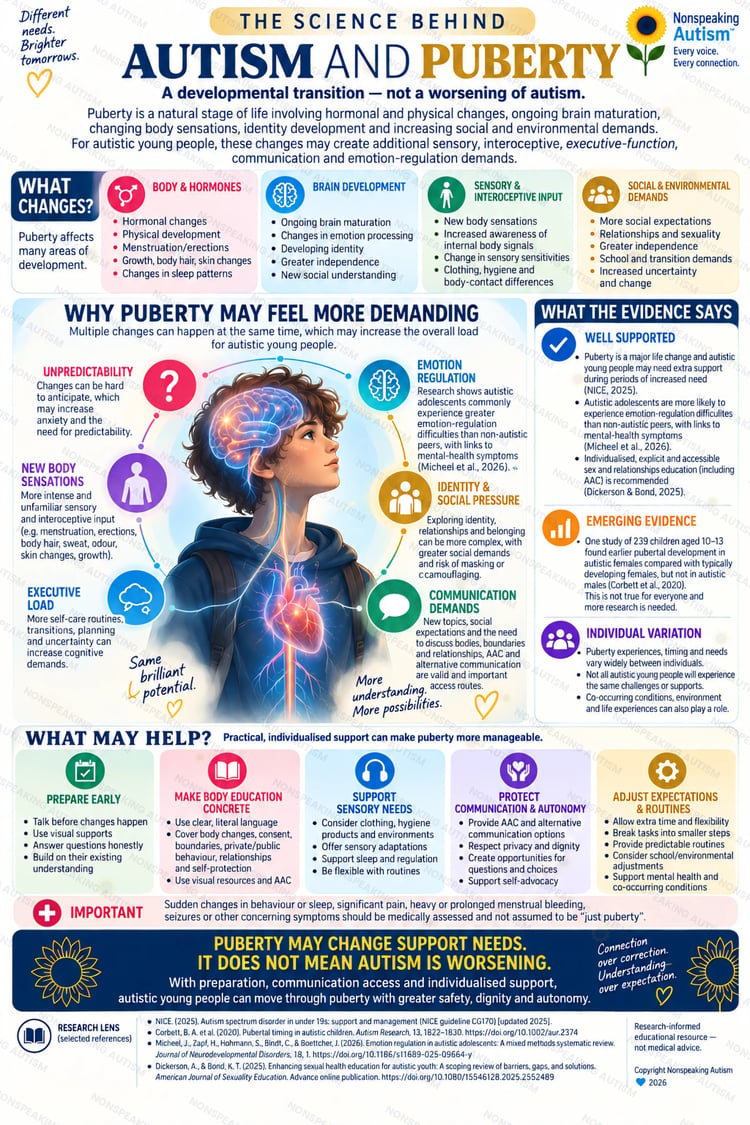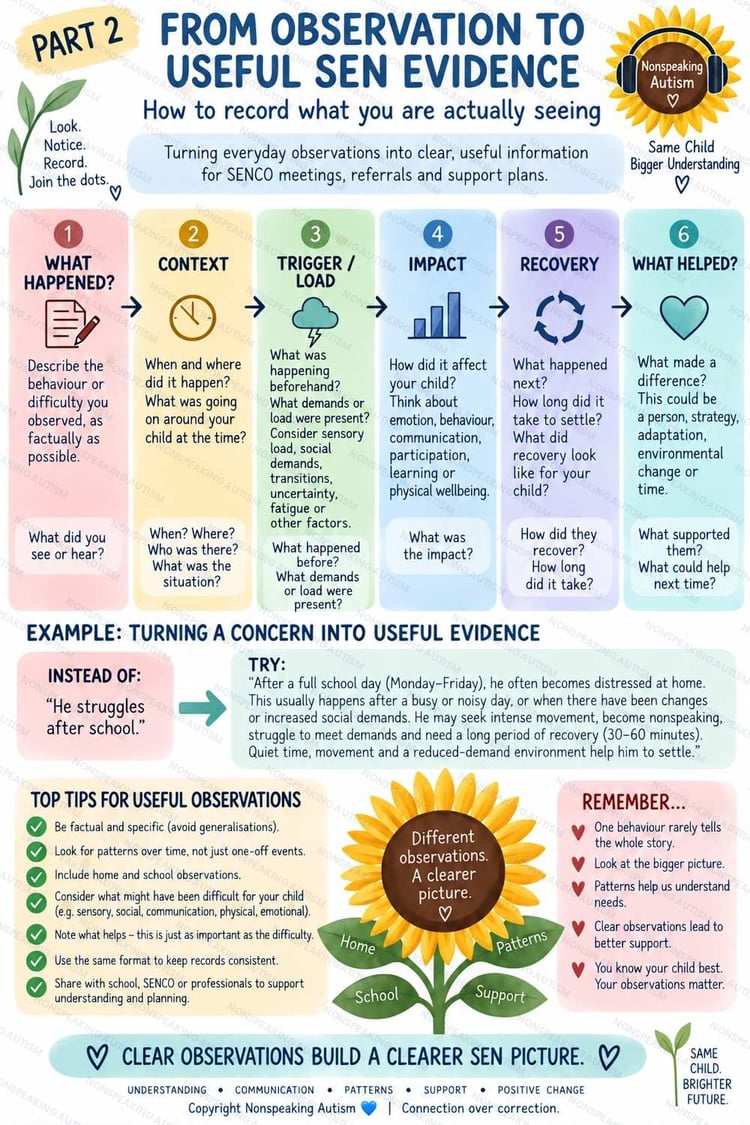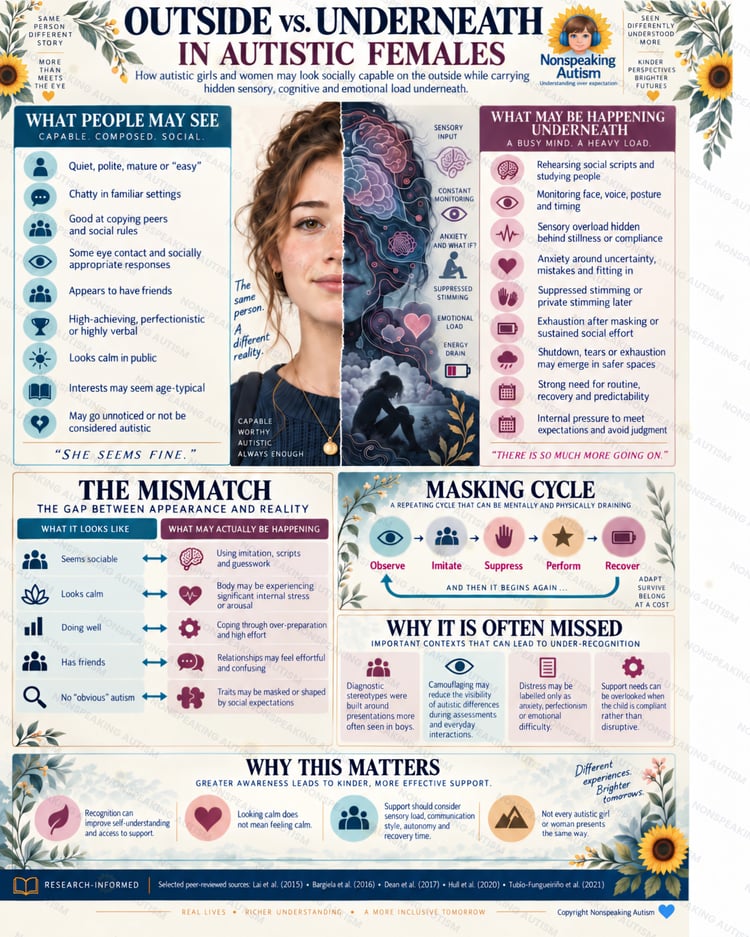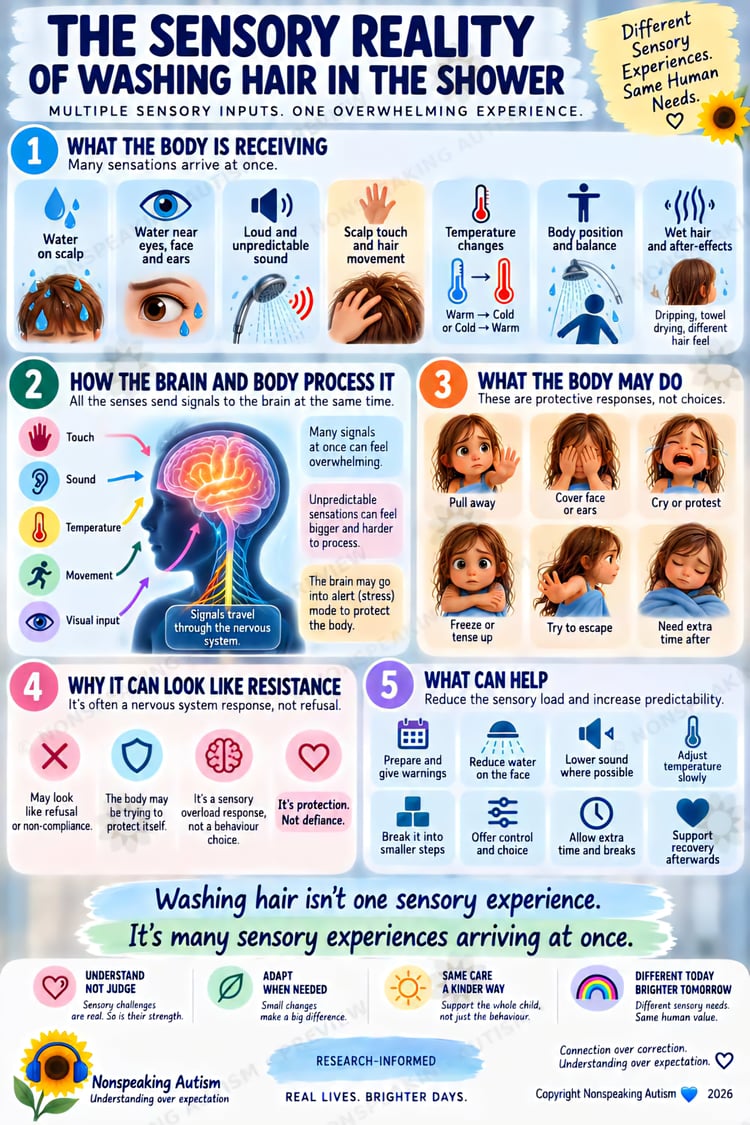

Autistic Stimming and Sensory Regulation 10-Poster Pack_A2
You will receive the printable unwatermarked versions of all 10 posters in this pack
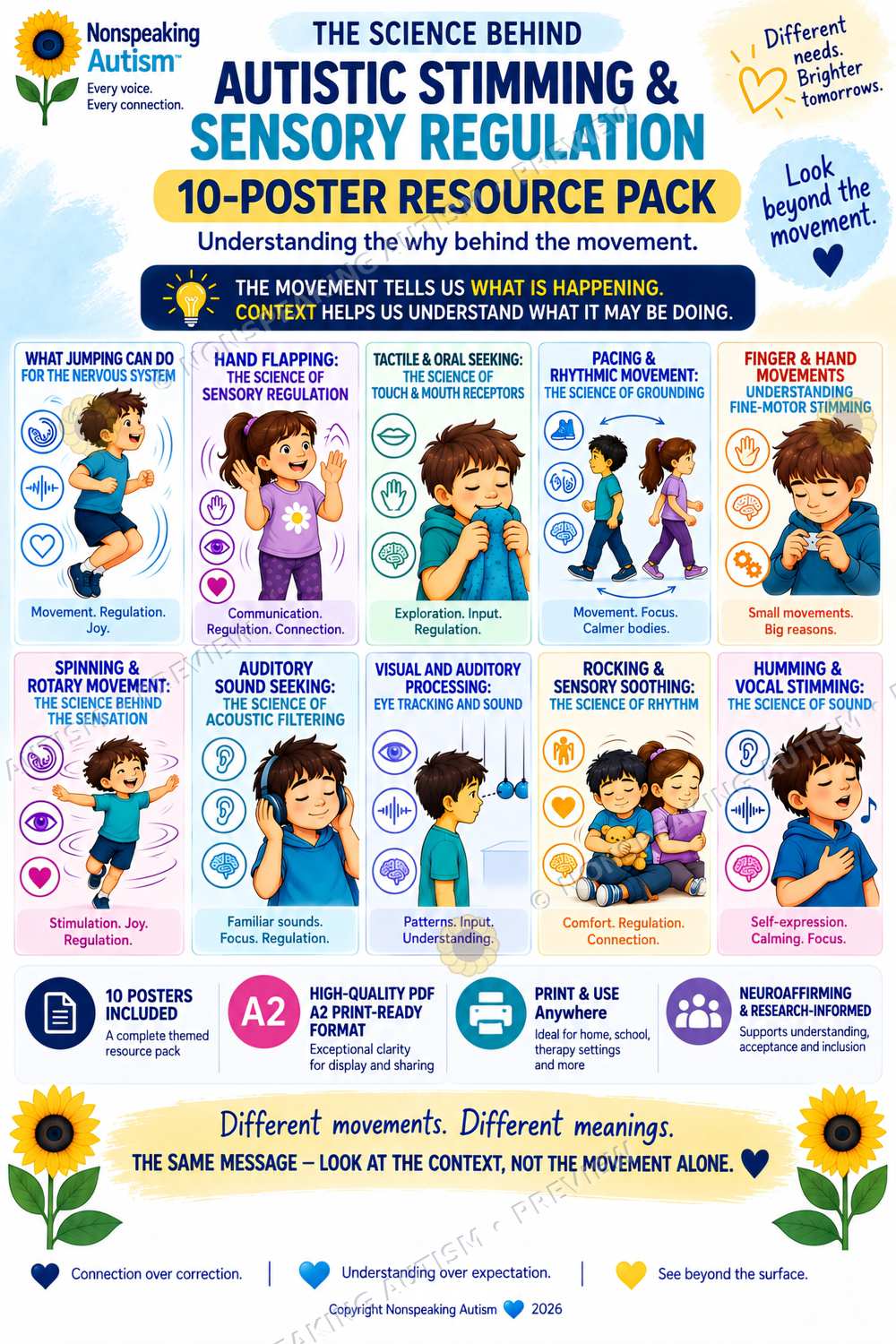
This resource pack explains the "why" behind autistic stimming, showing how different movements serve real sensory and regulatory functions — the movement tells us what is happening, and context helps us understand what it may be doing.
This pack includes 10 themed posters:
- What Jumping Can Do for the Nervous System — movement, regulation, joy
- Hand Flapping: The Science of Sensory Regulation — communication, regulation, connection
- Tactile & Oral Seeking: The Science of Touch & Mouth Receptors — exploration, input, regulation
- Pacing & Rhythmic Movement: The Science of Grounding — movement, focus, calmer bodies
- Finger & Hand Movements: Understanding Fine-Motor Stimming — small movements, big reasons
- Spinning & Rotary Movement: The Science Behind the Sensation — stimulation, joy, regulation
- Auditory Sound Seeking: The Science of Acoustic Filtering — familiar sounds, focus, regulation
- Visual and Auditory Processing: Eye Tracking and Sound — patterns, input, understanding
- Rocking & Sensory Soothing: The Science of Rhythm — comfort, regulation, connection
- Humming & Vocal Stimming: The Science of Sound — self-expression, calming, focus
What you get:
- 10 high-quality PDF posters, print-ready and scalable up to A2 (420 × 594mm) each
- Instant digital download
Perfect for: SEND and clinical training, therapy rooms, staff CPD, parent carer forums, schools, and personal understanding.
For personal, classroom, and professional educational use. Not for resale or redistribution.
© Nonspeaking Autism
Disclaimer:
This resource is intended for educational and informational purposes only. It is designed to support understanding of autism, sensory processing, nervous system regulation, and behaviour from a neurodevelopmental perspective.
The information provided is not medical, psychological, therapeutic, or legal advice and should not be used as a substitute for assessment, diagnosis, or treatment by a qualified healthcare professional.
Every autistic person is unique. Strategies and supports should always be tailored to the individual's needs, strengths, and circumstances.
If a child displays a sudden change in behaviour, severe distress, signs of illness, injury, or behaviours that place themselves or others at risk, seek appropriate medical advice or emergency assistance where necessary.
While every effort has been made to ensure the information is accurate and reflects current understanding, knowledge in autism and neuroscience continues to evolve.
Usage Licence: Purchasers may print and publicly display this poster in educational, clinical, workplace, community or training settings. Redistribution, resale, public upload, sharing with third parties, or editing of the digital PDF files is not permitted.
© Nonspeaking Autism 💙