


How to Sell Notion Templates in 2026 [Everything You Need to Know]
Last updated: May 13, 2026
Since its launch in 2016, Notion has permanently transformed how people organize their personal and professional lives. This all-in-one productivity tool offers immense flexibility, customization options, and remarkable power. If you’re new to Notion templates, check out our separate guide that explains what is a notion template and walks you through how to create one from scratch.
How to Create and Sell Notion Templates
Whether you’re new to Notion or a seasoned pro, creating and selling templates is within your reach. This guide will transform your Notion skills into a stream of passive income. You can create and sell Notion templates to generate a consistent income.

1. Choose a niche and research your audience
Choose a niche that aligns with your personal experiences, hobbies, or passions. Your unique insights and firsthand knowledge can become your greatest asset. By tapping into your expertise, you’ll be able to create templates that truly resonate with users, offering authenticity and relevance that’s hard to replicate.
For example, if you’re a graphic designer, you would have firsthand knowledge of the tools, workflows, and creative challenges your audience faces. This insight allows you to design templates that are not only functional but also tailored to their specific needs, giving you a significant edge in creating products that genuinely resonate.
Use tools like Google Keyword Planner to explore how many people are searching for your specific type of Notion templates. This helps validate your niche and provides valuable insights into market demand. Check out our demonstration of how to sell Notion templates in this video.
2. Build and test your template
Creating a Notion template involves more than dragging and dropping blocks. Here’s how to make yours stand out:
- Define and establish a structure: Begin by mapping out the key components of your template, including pages, databases, and their interconnections. Create a clear and simple layout that’s easy for people to use. Make sure everything is organized so users can quickly find what they need. Organize your template so it’s intuitive, with clear sections and logical flows.
- Include guided instructions: Add tooltips or a built-in guide to help users understand and customize the template.
- Create an aesthetic design: After perfecting the functionality, focus on colors, typography, and visuals that enhance the user experience.
- Test your template: Is the template intuitive and easy to navigate? Do all databases, pages, and relationships work as intended? Are the instructions or tooltips clear and helpful? Share your template with a friend or trusted user to get honest feedback. A fresh set of eyes can spot usability issues, confusing layouts, or missing features that you might have overlooked.
3. Publish and share your template
Export and package your Notion template for distribution. Notion makes it easy to share templates by generating a shareable link.
To turn your Notion page into a shareable template, follow these steps:
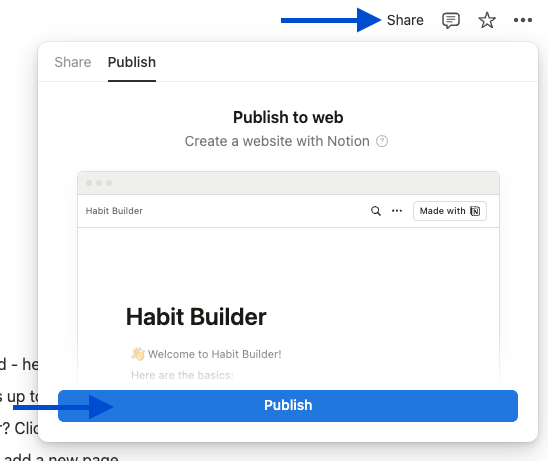
- Open your Notion template page and click the Share button in the top-right corner
- Go to the Publish tab and click the Publish button to make your template available to the public. Make sure the Allow duplicate as template is toggled on
- Copy the template link – you will need this in the subsequent step
When customers click your Notion template link, they’ll see a “Duplicate” button in the top-right corner. This allows them to copy the template into their own Notion account and customize it without affecting your original design.
4. Create a PDF and a professional mockup
Use a free tool like Canva to design a stunning, professional PDF that reflects the value of your Notion template. This document should include:
- A link to your Notion template
- Clear instructions on how to duplicate, use, and customize the template
- Optional: You can also include terms of use to outline whether your template can only be used for personal or commercial purposes
This polished PDF is what you’ll upload to your store and provide to customers after purchase. It’s crucial to make it both helpful and aesthetically appealing, as it represents the quality of your product.
Here is an example of a PDF that you could send to your customers:

Additionally, create a professional mockup in Canva for your product listing thumbnail. A well-designed thumbnail is your first impression, so make it count with an attention-grabbing, high-quality design.
Here are some examples of stunning product thumbnails:

5. Set up an online store
Now it’s time to set up your online store and turn your Notion templates into a revenue-generating machine! Choosing the right eCommerce platform is crucial for your success. Payhip offers all the powerful tools needed to convert your website visitors into loyal customers, with no monthly or upfront fees!
Here’s why Payhip is a game-changer: you only pay a small 5% fee per sale. If you don’t make a sale, you don’t pay a dime. Plus, Payhip automatically delivers your digital products to customers immediately after purchase, so you can focus on growing your business while the platform handles all the logistics. With its drag-and-drop store builder, you can create a professional, visually stunning online store with zero coding experience. And as an added bonus, Payhip offers an online marketplace to expand your reach, at no additional cost.

Let’s walk through the setup process:
- Sign up for a free Payhip account: There’s no credit card required, and getting started is quick and hassle-free.
- Add your payout details: You can choose to connect to either Stripe or Paypal to receive instant payouts as soon as orders roll into your store. If you’re an international user, you can choose from over 100 payment gateways.
- Upload your product listing: Go to the product tab, click “Add New Product,” and select “Digital Product.” Upload the polished PDF you created earlier and fill out the product information. Write a clear, keyword-rich title and description to help your product rank higher in search results. Hit “Add Product,” and your Notion template is officially live and ready for customers to purchase. If you need a little visual, we have a video tutorial here.
- Optimize your product page: Take your product page to the next level using Payhip’s store builder. Add an FAQ section, embed video demos, and include other valuable details to build trust and enhance the customer experience. These updates can be applied to individual products or your entire store.
- Customize your online store: With Payhip’s intuitive store builder, you can customize the look and feel of your store to match your branding. Create a seamless and professional shopping experience without needing any design or coding skills. For more detailed tutorial on how to use Payhip’s store builder, you can find the guide here.
And that’s it, you now have a fully functional, professional online store ready to sell your Notion templates. Start building your digital empire today!
Sell Notion Templates with Payhip
No monthly fees. No tech headaches.
Best-selling Notion template categories 2026
In 2026, some Notion template categories sell better than others. If you plan to sell Notion templates, your best bet is to sell the ones people actually want.
- Creator business systems
- CRM/Client management
- Knowledge management
- Student dashboards
- Freelancer OS
- Finance and budget trackers
- Life planners
- Habit trackers
- Exam Prep Planners
- Team SOP and other project systems
- Job search dashboards
How to Market Notion Templates to Get Sales
You’ve created Notion templates and set up a professional store—but how do you turn all that effort into sales? The secret lies in smart, strategic marketing. In this section, we’ll explore impactful and entirely FREE strategies that can drive traffic, build trust, and turn visitors into loyal customers. Let’s get your Notion templates in front of the right audience!

1. Publish your template on Payhip’s Marketplace
The first and most essential step in reaching potential buyers is to publish your Notion templates on online marketplaces. This strategy is particularly valuable if you don’t yet have a large social media following to drive traffic to your store.
Start by submitting your templates to Payhip’s marketplace. The process is straightforward: simply select the correct category for your product while setting up or editing your Payhip listing. Once categorized, your template is automatically featured in the marketplace, giving it instant exposure to tens of thousands of potential buyers, all without any upfront fees. You can find more information on how to submit your templates to Payhip’s marketplace here.
2. Publish your template on Notion’s Marketplace
Imagine your templates in front of millions of Notion users actively searching for resources like yours. The Notion Marketplace is where it all happens, a bustling hub of creators showcasing their best work. Don’t miss your chance to tap into this goldmine of traffic and elevate your brand. Getting started is simple: head to the Notion Marketplace and sign up as a Notion Creator. Skip the Stripe setup during registration to avoid Notion’s steep 10% fee, $0.40 transaction charge, $20 payout threshold, and biweekly payment delays. Instead, link your templates to Payhip for instant payouts and a lower 5% fee while still leveraging the Marketplace’s vast audience.
Complete your Creator profile and move forward with these steps:
- Add your template link: Paste the URL to your Notion template.
- Provide Details: Create a compelling title, category, and unique URL slug.
- Set your price: Toggle the paid option, enter your price, and link to your Payhip listing under the “Purchase URL” column.
- Write descriptions: Deliver clear, engaging short and long descriptions to attract buyers.
Submit your template for review. Once approved, Notion will feature it in the marketplace, showcasing it to a massive audience.
3. Launch a subscription or membership program
If you’ve launched several Notion templates, you’re sitting on the untapped potential of steady recurring income. Unlock this opportunity by creating a subscription or membership program that offers exclusive access to your entire template library. You can easily launch a subscription or membership program using Payhip’s membership or product bundling tool, with no upfront costs and no technical headaches!
4. Leverage social media
Promote your templates on platforms like Instagram, TikTok, YouTube, and Facebook, whichever platforms you feel most confident using. Short videos, reels, or stories showcasing how your Notion templates solve real problems or simplify workflows are highly effective. Highlight specific use cases, demonstrate key features, and showcase the value it provides. Always include a link to your Payhip store in your bio and within your content to make it easy for viewers to take the next step.
Pinterest pins can drive traffic for months, even years. You can include direct links to your Notion templates in your pins, boosting your chances of turning viewers into paying customers.
Another platform worth tapping into is LinkedIn, especially if your Notion templates cater to professionals, entrepreneurs, or business owners. Share thought-provoking posts or articles showcasing how your templates improve productivity, streamline workflows, or solve specific pain points in the workplace.
5. Offer a free template as a lead magnet to build an email list

Email marketing is one of the most effective tools for promoting new templates, running sales, and fostering long-term customer relationships. By offering a free template as a lead magnet, you can grow your email list and establish a loyal audience ready to engage with your paid offerings.
Design a simplified or mini version of one of your popular templates, ensuring it still delivers tangible value to your audience. Upload this free resource to your Payhip store and set the price to $0 or “Pay What You Want”. This strategy allows you to collect email addresses from people who download the template, creating a direct line of communication with potential customers.
Once you’ve built your email list, leverage it to promote your paid templates, share updates about new releases, and offer exclusive discounts or promotions.
6. Write a blog
Increase visibility for your Notion templates by starting a blog focused on productivity tips, Notion hacks, or related topics. Each blog post offers an opportunity to link back to your templates, showcasing how they provide solutions to your audience’s needs.
Launching a blog is seamless with Payhip’s free blog feature. Simply navigate to the Store tab, then select the Blog Posts tab. By consistently publishing valuable content, you can drive organic traffic, build trust, and convert readers into customers.
7. Launch an affiliate program
Turn your customers and fans into brand ambassadors by launching an affiliate program. This strategy incentivizes others to promote your templates for a small commission, expanding your reach without additional effort on your part. Payhip makes it easy to create an affiliate program for free. Go to the Marketing tab, set up your program, and let your affiliates spread the word. This approach not only increases sales but also builds a loyal network of promoters.
8. Cross-sell and upsell
Maximize your sales by bundling templates or offering add-ons that complement your products. For example, pair a budget tracker with a project management template to enhance functionality. Use Payhip’s product bundling feature to create attractive offers that increase the average order value. By strategically cross-selling and upselling, you not only boost revenue but also provide greater value to your customers.
9. Get testimonials and display reviews
Build trust and credibility by showcasing testimonials and customer reviews from people who’ve benefited from your templates. Positive feedback highlights the value of your products and reassures potential buyers. Encourage your customers to leave reviews, and display them prominently on your Payhip store. Testimonials serve as social proof, making it easier for new customers to decide to purchase.
Why You Should Start Selling Notion Templates Today
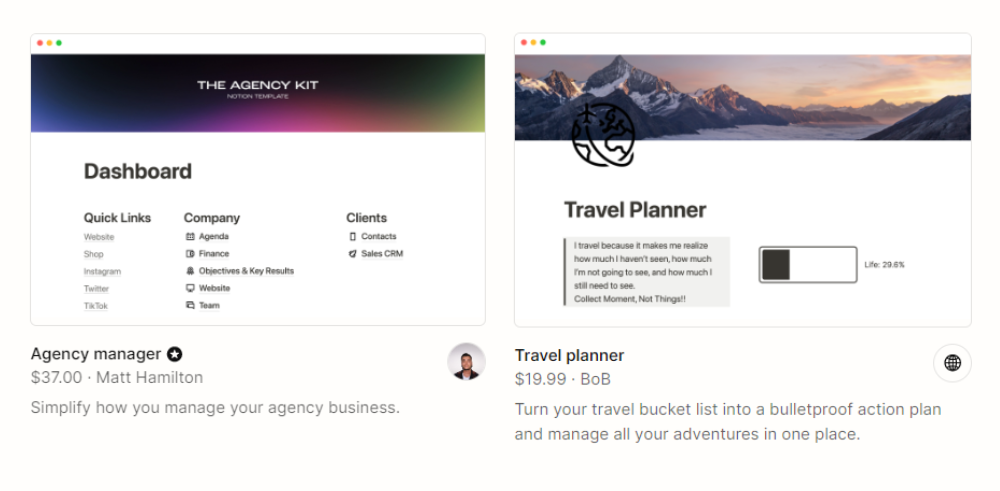
Selling Notion templates presents a unique and lucrative opportunity for aspiring entrepreneurs. Here’s why you should start today:
- Minimal investment: All you need is your creativity and time, no expensive tools or upfront costs.
- Unlimited scalability: Unlike physical products, digital templates can be sold repeatedly with minimal effort.
- Growing market: Notion’s user base includes professionals, students, entrepreneurs, content creators, educators, and even project managers, all actively seeking templates to boost productivity and streamline workflows. This diverse audience provides a massive opportunity to create and sell templates tailored to their specific needs.
In fact, there is already a market for Notion templates, as you’ll be able to find independent online stores selling Notion templates and making upwards of $1000 on a monthly basis. This is a great passive income idea you can set up from the comfort of your own home. Capitalize on this booming trend and turn your skills into a sustainable source of income!
Tips for Creating Templates That People Will Pay For

- Focus on solving a specific problem: Good templates are effective tools that solve a clear problem for a defined audience. Don’t try to create a template that does everything for everyone; it’s overwhelming and harder to market. Instead, focus on a well-defined audience and their pain points. Consider how your template can become a game-changer for users by saving them valuable time, cutting unnecessary costs, or simplifying complex tasks.
- Increase the value of your template with a bundle: You can also enhance its value by bundling it with additional resources, such as an online course or video training that demonstrates how to maximize its use. This added value not only increases your product’s appeal but also justifies a premium price, ensuring customers gain the full benefit of your offering.
- Be aware of your target customers’ purchasing power: Know exactly who your target audience is and what they can afford. Focus on the value your template brings to them, not the hours you spent creating it. When you align your pricing with what your customers need and value, you’re more likely to see success.
- Plan for scalability: Design your templates with scalability in mind. Make sure they work smoothly for teams and can handle growing content needs without breaking. Scalable templates save time, reduce hassle, and grow with your audience or business.
Bonus: The team at Notion also notes that a few things will increase the value of your templates. These are: Formulas, automations, integrations and embeds, charts and forms, buttons, AI blocks, scalability, and educational elements
Over 200,000+ Notion templates sold!
The best feeling is knowing my Notion template helped someone. pic.twitter.com/WMRAkufYk0
— Easlo (@heyeaslo) December 22, 2022
What Types of Notion Templates Should You Sell?
Finding the perfect idea for a Notion template can feel overwhelming, but it doesn’t have to be. We have put together 101 Notion Template Ideas to sell so you can get your creative juices flowing. We’ve also listed some of the best Notion templates for small businesses for some extra ideas.
FAQ
How much money can you make selling Notion templates?
Basic Notion templates generally sell for $10–$15, while advanced ones with complex features can command $100–$1000. Some popular Etsy templates generate $2000–$6000 monthly, and top creators like Easlo have earned over $500,000! Templates that save users time, money, and effort, or all of the above, typically sell at a higher price point due to their value.
Is selling Notion templates worth it?
Yes, selling Notion templates can be highly profitable. With low upfront costs and high demand for productivity tools, you can earn $10–$1,000 per template, depending on complexity. Popular templates generate thousands monthly.
Do people actually buy Notion templates?
Absolutely, people buy Notion templates. With over 30 million active users, there’s a high demand for templates that streamline workflows and save time. People are more likely to spend money on solutions that reduce effort or cost. Successful creators have built lucrative businesses, with some generating thousands in monthly sales and others earning six figures, showcasing the market’s viability.
How can you make a Notion template feel premium?
You can make a Notion template feel premium by including an onboarding page, setup instructions, a mobile-friendly layout, simple naming conventions, premium icons and covers, offering updated versions with time and support, or an FAQ section.
Can you monetize a Notion page?
Yes, you can monetize a Notion page by transforming it into a shareable template and selling it. Platforms like Payhip make it easy to set up an online store and distribute your templates. By creating templates that save users time, money, or effort, you can attract buyers and generate consistent income from your Notion expertise.
How much should I charge for a Notion template?
Price your Notion templates based on the value they offer, not the hours spent creating them. Simple templates typically range from $5–$15, while advanced or niche templates can command $30 or more. Research your target audience’s purchasing power and similar products in your niche to set competitive, value-driven pricing that aligns with customer needs.
What mistakes should I avoid when selling Notion templates?
Mistakes to avoid include copying popular templates without any edits, including bad demo images, writing a weak product description, using AI to write the description for you, not offering a free lead magnet, pricing too low, and creating a complicated template.
Where can I sell Notion templates?
You can sell Notion templates directly on your own website using free platforms like Payhip. You’ll be able to fully customize your website using Payhip’s powerful drag and drop store builder – no technical skills needed! Additionally, you can publish your Notion templates on Payhip’s marketplace to reach new buyers at no additional cost.
How do I start selling Notion templates?
- Sign up for a Payhip account (100% FREE, no monthly fees)
- Prepare your Notion page for sale
- Upload your template to Payhip to start selling
- Promote your Notion templates and drive traffic to your store
Closing: Making Money Selling Notion Templates
Selling Notion templates is a powerful way to turn your creativity and productivity expertise into a profitable business while helping others streamline their lives. Success in this booming market hinges on choosing the right ecommerce platform. Don’t risk your potential, use Payhip to simplify your journey, maximize your earnings, and unlock your full selling potential today. Sign up today.


Payhip
Join over 130,000 creators who have launched their businesses selling digital products, online courses, memberships, coaching, and physical products.
Get started for free today
Comments
4 Comments
This was so helpful! I was just wondering if you can sell Notion templates where art that you don’t own is used in the covers and images etc?
Hi Grace, glad you enjoyed the guide! As for your question, it’s important that any digital product you put on Payhip is copyright-free including the images and covers you use for the templates.
Is there an alternative format to sell my nation template other than PDF?
Would it be possible to provide a URL link via email after purchasing the template instead of a plain webpage with a URL link?
And thank you very much for the guide. Your assistance is greatly appreciated.
Hi Mo, you can sell basically any kind of digital file on Payhip. Whilst we recommend using a PDF with a link to sell a Notion template, you can use other file types that include links (e.g. TXT files). We don’t have a way to provide a link after purchase rather than a file at this point in time. Definitely something we can look into for the future, though!
Leave a Comment