


How to Turn a Hobby Into a Business
The things you do in your spare time often fulfill you. They might be activities that challenge you, help you relax, or make you happy. Naturally, we’d all rather do things that bring us joy than work dead-end jobs that leave us feeling drained. So, is there a way to turn your hobby into a business? Yup, there is! It may take business planning, practice selling online, and a profitable business idea, but you can turn hobbies into businesses if that’s your end goal. In this article, we’re going to share how.
How to Turn a Hobby Into a Business
1. Do some goal-setting for turning your hobby into a business
You will need to set some business goals for your hobby business. You’ll want to set realistic goals when planning your business. Many ambitious people set a $1 million goal before they’ve made their first sale. So, when setting goals, break them into achievable increments. Set milestones you want to achieve in your online business. You also want to create goals that are specific and measurable. Frame your goals through the lens of SMART goals to help you create goals that are specific, measurable, actionable, realistic, and timely. Turning hobbies into businesses does take time, but one of the benefits you have is that you already have some experience doing it. So, you won’t need to devote much time to learning as many new skills. Setting a goal to get your first sale while this is still just a hobby can help build early confidence. That way, when you’re ready to become your own boss and leave the 9-to-5 for good, you’ll have a solid foundation to work on.

2. Do market research for your online business
A solid business always starts with market research. Your market research will include everything from how much people are willing to pay for your product to whether they’d pay for it at all. Maybe there are aspects of your hobby people would be willing to pay for. For example, if your hobby is Brazilian jiu-jitsu, you can offer lessons for a certain fee. However, if you find that people in your local area aren’t willing to pay for lessons, you might create an online course teaching Brazilian jiu-jitsu to reach a global audience rather than a local one. If you can’t make money from your hobby, then you don’t have a business. But market research will show you how to turn it into a business by identifying new angles. You can use Google Trends to see which cities are most popular in your niche and whether the niche is trending upward or downward. Doing this work before you start can save you money and headaches. When you’ve got a solid understanding, you can build a business plan you can show a bank to open a business account.
3. Choose a business model for your startup business
Choosing a business model for your startup business is crucial to your long-term success. There are countless business models to choose from, but you need to select the one that’s most profitable for your hobby (not the one that’ll only bring in high revenue or attract a lot of users).
For example, a freemium model might get you many users, but the financial reward may take longer to break even. Affiliate marketing only gives you a percentage of each sale, so it might not be as sustainable. Charging for a monthly subscription can be profitable, but you might start seeing churn. Manufacturing your own product may require upfront costs, but it gives you a proprietary product. A service business can be highly profitable, but you need to be aware of trading your time for money.
Every business model you choose will have upsides and downsides. You can find a revenue calculator online to see how much you’ll need to make based on your costs to determine the best price to mark up your products or services. To have a full-time business, you’ll need to think about profitability to ensure you’re making money back instead of burning your cash reserves fast and ending up at your 9-to-5 job. So, take some time to do the accounting or bookkeeping when choosing a business model.

4. Test your hobby business idea
You know you enjoy your hobby, but among hobbies, is it a profitable one to pursue as a business venture? Think about how big the market size is for your hobby, how many people it attracts, and what unique product offering you can do to help people succeed. For example, if your hobby is writing, you might offer services such as ghostwriting, blog writing, or sales writing. However, you can also create an online course to help freelance writers book more clients. Alternatively, you can create a membership site for writers to get feedback on their work. Aim to think outside the box about the various ways a person who enjoys writing can turn their passion into profit by looking for unusual yet practical angles that help people in their space. Once you have a proof of concept, you’ll want to run a small sale to see whether people will sign up, then move on to the next step.
5. Create an online store for your hobby business
Payhip is a digital products and services website builder that also allows you to sell physical products, online courses, services, membership websites, ebooks, and more. But unlike a paid ecommerce platform, there’s a Free Forever plan with no monthly subscription fee. Yup, you can build a website on Payhip without paying a monthly fee (you only pay a 5% transaction fee when you make a sale).
Sell Digital Products with Payhip
No monthly fees. No tech headaches.
Having a website is crucial to being searchable, especially as a new business. You can build a blog on it, send people to product pages, and sell your services directly from your own site. No matter what your hobby is, you’ll be able to find features on Payhip that allow you to create any product, from digital downloads to online courses to coaching services- any type of introverted side hustle. You can teach people how to do your hobby, create a membership site to attract those with the same interests, or make physical products that people in your niche will be excited to buy.

6. Make money in multiple ways
There are multiple potential revenue streams for turning a hobby into a business. You can sell physical products, such as handmade jewelry, knitted clothing, artwork, and more. Another revenue stream is selling digital products like downloadable patterns, printables, ebooks, templates, and more. Online courses are another avenue to make money from your hobby by teaching photography, painting, baking, or even an academic subject. Service-based businesses, such as custom illustrations, personalized crafts, video editing, proofreading, and more, are another option for monetizing your hobby. Some hobbyists also offer one-on-one coaching, teaching students how to play instruments, learn a language, or improve their existing craft. Paid memberships are another way to turn your hobby into a business, with a monthly fee that lets you share exclusive tutorials, build a community, and offer additional resources.
7. Manage your business finances
An important activity to run in your business is financial checks. This is when you take the time to assess your business’s profitability. You’ll need to check bank statements regularly to ensure your business is profitable, not just generating high revenue. For example, if you run an online store with high revenue but low profits, you might not be able to sustain the business for more than a few months. With an online store, you’ll have to pay taxes, product costs, marketing costs, and (if you’re not on Payhip) monthly subscription fees. The financial numbers are crucial for understanding how to grow your business. It’s true that it takes money to make money, but there are methods for attracting sales that allow you to grow sustainably. A business you run from home should make enough for you to live comfortably, pay all bills, and reinvest money into the business. It’s not just about doing what you love; it’s also about making money off a hobby you’re obsessed with.

8. Master marketing
To turn your hobby into a business, you’ll need to expand your marketing skills. You can choose a faceless niche if the idea of putting your face online makes you uncomfortable. However, promoting your products or services is an important part of turning your hobby into a business that actually pays the bills. Sending cold outreach emails can feel intimidating at first, but as you improve your pitch, you’ll start hearing more yeses than nos. You can add your products to Pinterest or share your knowledge on LinkedIn to find new clients. If you’re comfortable on camera, you’ll have more options, such as creating content on Instagram, TikTok, and YouTube. Throughout your time building your business, you’ll want an email opt-in form on your website to grow your email list and promote your products for immediate sales.
9. Track your results
The secret to business growth is experimentation in marketing. The trial-and-error method will be a slow start but will lead to earlier wins. As you build your hobby business, look for ideas to tweak. Send 20 different sales pitches and narrow them down until you find one that works. Join Facebook groups to learn from others in your niche and see how they grow their businesses. Build a blog and write in multiple voice tones, styles, and topics within your vertical to see what resonates with people. Offer services no one else on the market has. The more you experiment, the better you’ll get at closing sales. Those who know what works and doesn’t will succeed. It’s not about doing the same thing over and over. It’s about discovering what people genuinely want by putting all the options on the table and seeing which ones they choose most. Your brand success will boil down to how often you experiment and put yourself out there. Offer people as many resources as possible, then narrow it down to the best-selling ones.
10. Develop work-life balance
One downside of turning your hobby into a business is that what you love becomes work. Having balance in life is crucial to happiness. When you take something you do for fun and make it all about turning a profit, selling products or services, and finding new customers, you might find that it sucks the fun out of your hobby – especially when you have to start paying tax on your sales. Ensure you’re still maintaining balance in your life by finding activities that help you relax and recharge. And remember, doing what you love can be profitable, but building a business can be stressful. To prevent business stress, ensure you have a system in place so that money is consistently coming in, you have enough time to take breaks and enjoy life, and you have the freedom to work from home or spend time with family. Having a good balance between work and life will help you enjoy working on your hobby full-time from home.
5 Hobbies You Can Turn Into a Business
1. Knitting
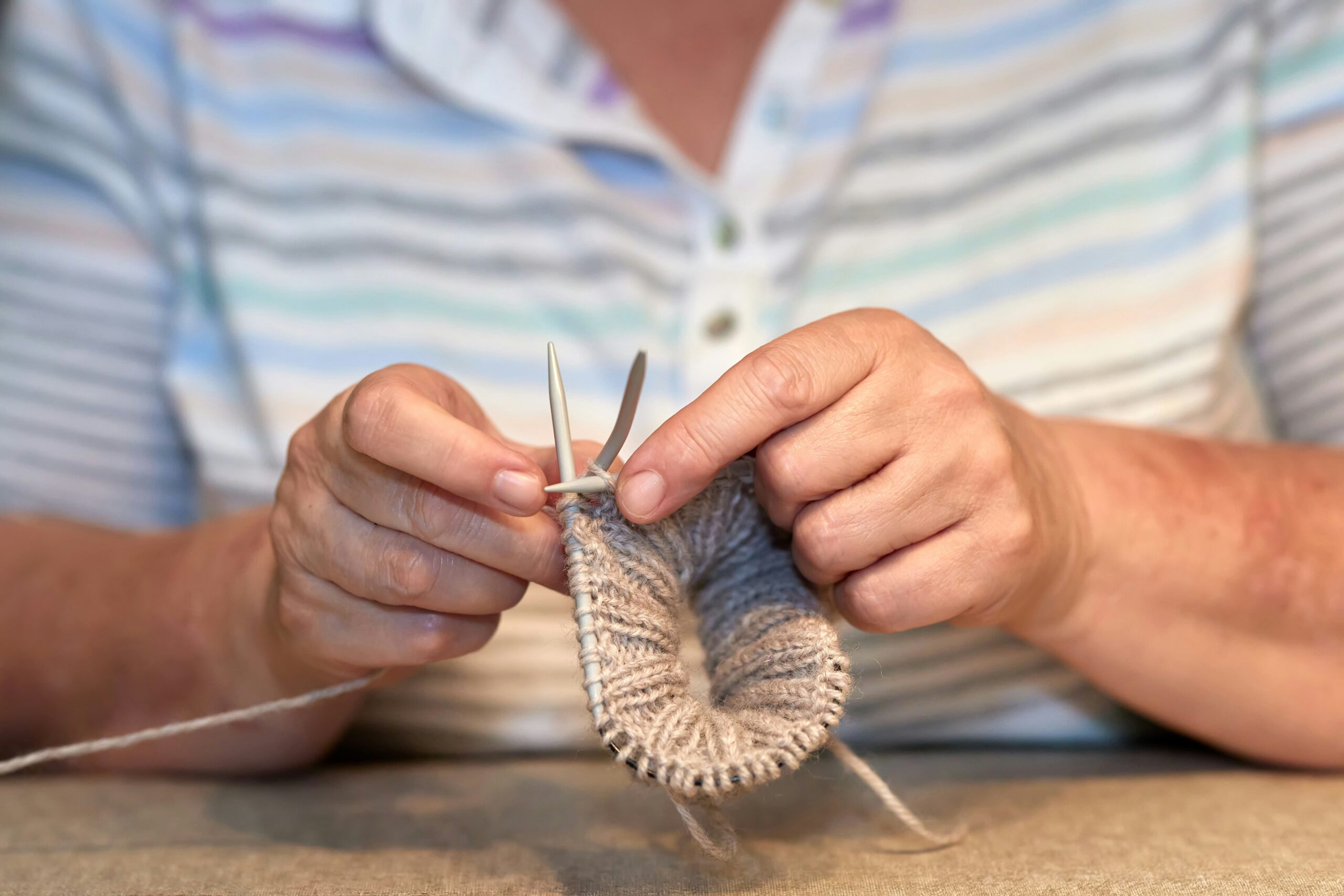
If you’re looking for popular hobbies you can turn into a business, look no further than a knitting hobby. You can sell knitting patterns, finish garments, or offer online classes. If you’re looking for low-effort items to sell, knitting patterns and online classes are much easier to produce profitably than finished garments. However, finished garments may be in high demand, giving you a long list of customers desperate to buy your unique pieces.
2. Photography
A photography hobby can easily be turned into a business. You can sell items such as presets, stock photos, prints, photography services, photography courses, photo-editing services, and more. Photography services will likely be the most lucrative way to earn money, particularly for wedding photography. However, you can also expand your offerings by adding other products to your website, allowing you to earn more money from your hobby.

3. Writing
Writing is one of the best hobbies to turn into a business. You can write non-fiction ebooks, novels, writing templates, offer editing services, freelance write for a brand, build a personal blog, write copy for social media, and so much more. There are so many fun ways to monetize your writing skills, with a mix of products and services being a great way to earn more revenue. The more writing you do, the more sales you’ll get over time. Don’t expect whirlwind success in your first blog post or book; keep writing and serving your niche to scale your business over the long haul.

4. Baking
Bakers can offer a wide range of services and create countless products, turning their hobby into a business. You can write recipe ebooks in so many niches to help you get more sales. You can offer baking classes or courses to help people learn your skill. You can even sell baked goods from your home depending on your local laws.

5. Gaming
Gaming is one of the biggest industries. You can be a streamer monetizing your gameplay with ads or sponsorships. Plus, you can create your own video game based on the knowledge you’ve learned about what makes a good game. Creating and selling game assets, gaming guides, and even tutorials can be another stream of revenue for your hobby.

Conclusion
Now that you know how to turn a hobby into a business, it’s time to start working towards starting the business that’ll get you out of the rat race. You can create an account on Payhip to build your own website from anywhere in the world, from America to Thailand. If you put yourself out there, do sales outreach, and offer a great product or service, you’ll start attracting customers and reap many financial rewards. You can turn your hobby into a home business; it’s time to take the first step toward creating the life you’ve always wanted. Sign up for Payhip today!


Payhip
Join over 130,000 creators who have launched their businesses selling digital products, online courses, memberships, coaching, and physical products.
Get started for free today
Comments
2 Comments
you have a super content to write. I learn a lot from this blog. Iam thankful for it. How much I should invest in a online store to start? I watch so many videos, I am reseller and want to sale my digital t-shirt prints online.
Hi there, so happy to hear that you find this blog helpful! Payhip has a free plan so you don’t necessarily need to invest anything to get started (https://payhip.com/pricing). I would also recommend taking a look at this article: https://help.payhip.com/article/164-how-to-sell-your-first-product-on-payhip
Leave a Comment