

A coloring page can become a tiny world. A smiling strawberry might run a café. A rocket could deliver birthday presents to the moon. A row of animals might be waiting for a bus that your child decides to draw.
The interesting part is not how much of the page gets filled in. It is what the child chooses to do with the starting point.
If coloring has started to feel repetitive at home, you do not necessarily need more complicated pictures or a larger collection of supplies. You may simply need a different invitation: a small challenge, an unexpected theme, or permission to change the picture.
This guide explores creative coloring activities for kids using a simple approach: choose one page, offer one playful idea, and leave room for the child to take it somewhere else. You will find practical setups, specific examples, and ways to choose between ready-made printables and custom coloring pages.
1. Give the Page a Purpose Without Turning It Into Homework
“Color this picture” leaves everything open, which some children enjoy. Others look at the page and do not know where to begin. A small purpose can provide an entry point without dictating the final result.
Try an invitation such as “Choose an animal that needs a home” or “Which three things would you take on a space trip?” The child can color their choices, explain them, or add something missing.
Keep the purpose small enough to remember. If you ask for coloring, counting, handwriting, sorting, and storytelling at once, a playful invitation becomes a sequence of requirements.
Decide what matters today. Perhaps you want an easy shared activity after lunch, or something the child can explore independently nearby. That decision helps you choose the page and decide how much guidance to offer.
A useful rule is to make the invitation optional. If your child prefers to color every cloud purple and ignore the story, the page is still doing its job as a creative starting point.
2. Choose Pictures That Leave Room for Decisions
Look beyond whether a page is cute. Check how it will actually work with the child and the materials you have.
Large, separate shapes leave room for broad marks and quick color changes. Smaller details suit someone who enjoys spending time on tiny sections. A crowded picture might be exciting to one child and uninviting to another.
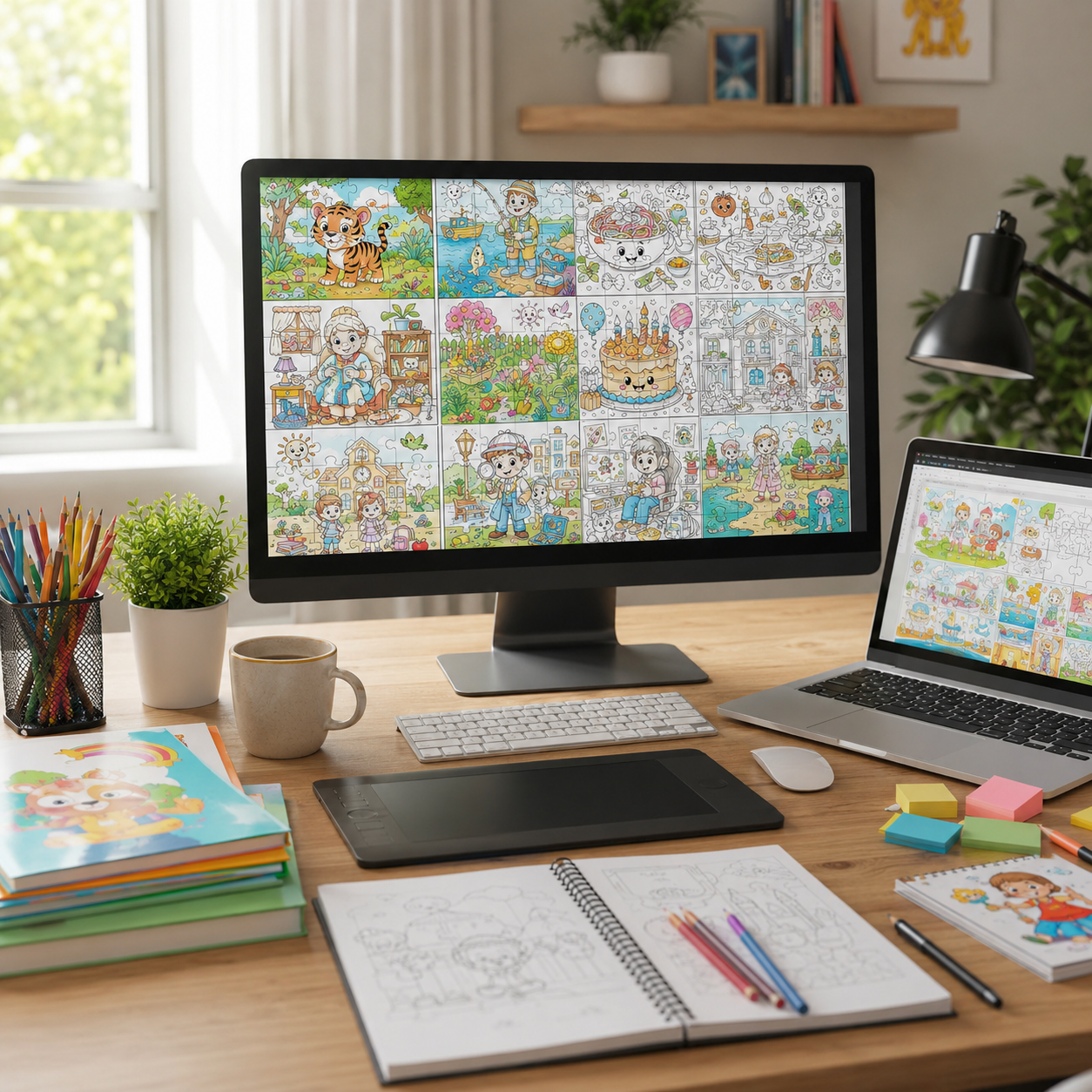
Doodle coloring pages are useful for this approach because they often contain several individual objects. A child can select a few favorites without completing the whole composition. Kawaii coloring pages add a playful visual style through rounded forms, expressive faces, and friendly characters.
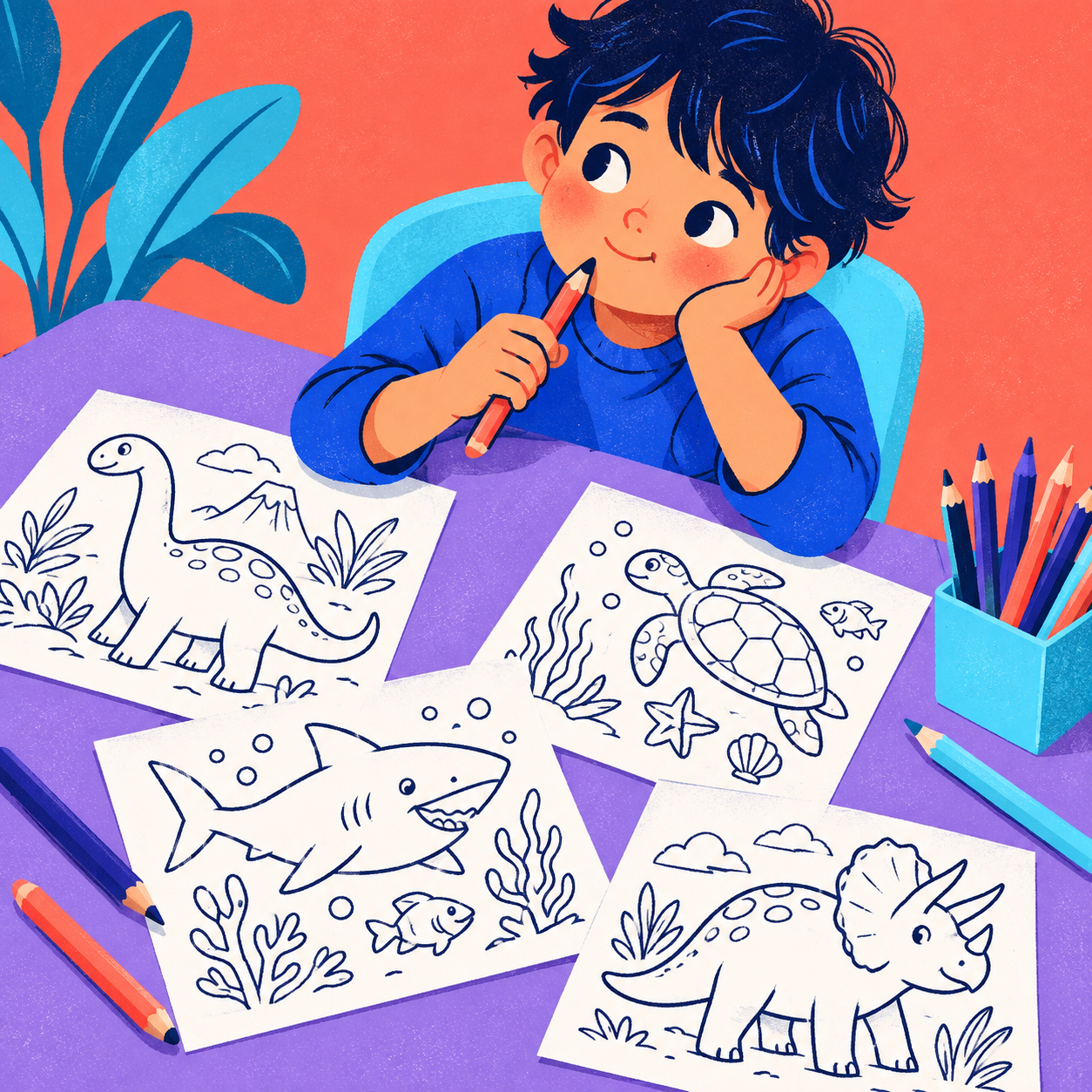
Before printing, ask yourself:
- Can the child recognize the main objects easily?
- Are the spaces practical for the pencils or crayons available?
- Is there somewhere to add an idea, if they want to?
- Can a small part of the page feel like a complete activity?
Offer two suitable pages rather than an entire folder. Choosing between an ocean scene and a toy scene is a manageable first decision.
3. Build a Small Activity Kit You Can Actually Use
An elaborate art station is unnecessary. Start with a shallow tray, a few coloring tools, one selected page, and a spare sheet for testing colors or adding drawings.
Choose materials appropriate for the child’s age and follow their labeling. If markers bleed through your paper, place a protective sheet underneath. Test unfamiliar supplies before putting several printed pages on the table.
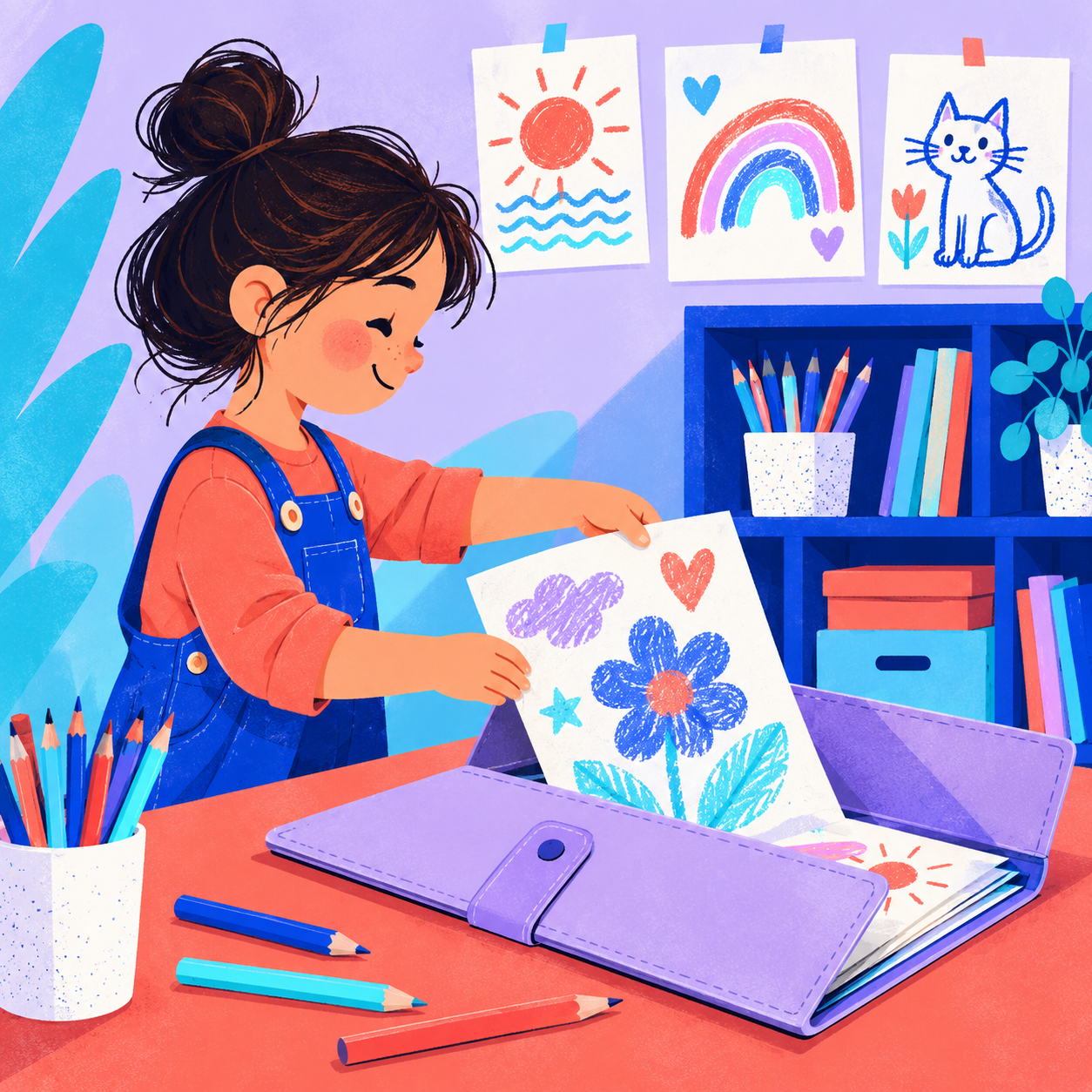
Keep a simple folder nearby for unfinished work. This gives you somewhere to put a page without deciding immediately whether to display it or discard it.
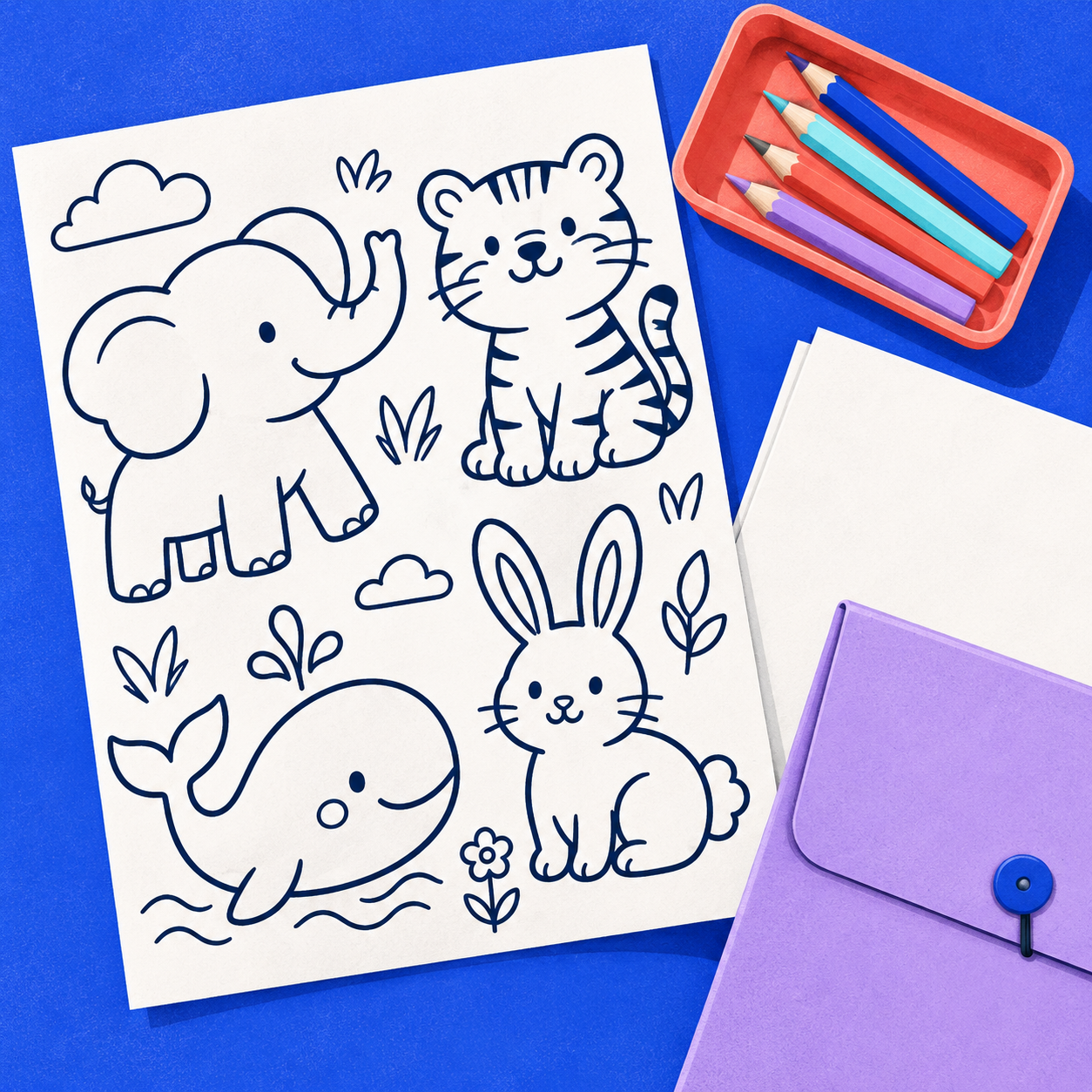
For printing, check the preview, paper size, and margins. A design that looks spacious on a screen may contain fiddly details when printed smaller. Print one sample before preparing a whole stack.
You can also assemble a portable version: a firm writing surface, two pages, and a small pencil pouch. The goal is a setup you can bring out easily and put away just as easily. More equipment does not automatically create a more interesting activity.
4. Try a “Choose, Change, Tell” Session
This flexible three-part structure works as an activity menu, not a sequence the child must finish.
Choose something
Invite the child to select one character, object, or group of shapes. “Which one would you like to start with?” is enough. Let the choice determine the first few minutes.
Change something
Offer one possible twist: use unexpected colors, add a background, draw a missing object, or give a character a pattern. The child may prefer to keep coloring without changing anything else.
Tell something
Ask one open question about the picture: “Where is this happening?” or “What might happen next?” Accept a short answer, a long story, or no story at all.
For example, a child might choose a turtle, color its shell in bright stripes, and decide it is going to a party. Another might color the turtle green and move on. Both responses fit the activity.
Stop while there is still a comfortable stopping point. You do not need to fill every available minute or finish every shape.
5. Keep a Ready-to-Print Collection for Everyday Variety
Once you know which types of pages your child enjoys, a ready-made collection can make it easier to choose a theme without starting from scratch each time.
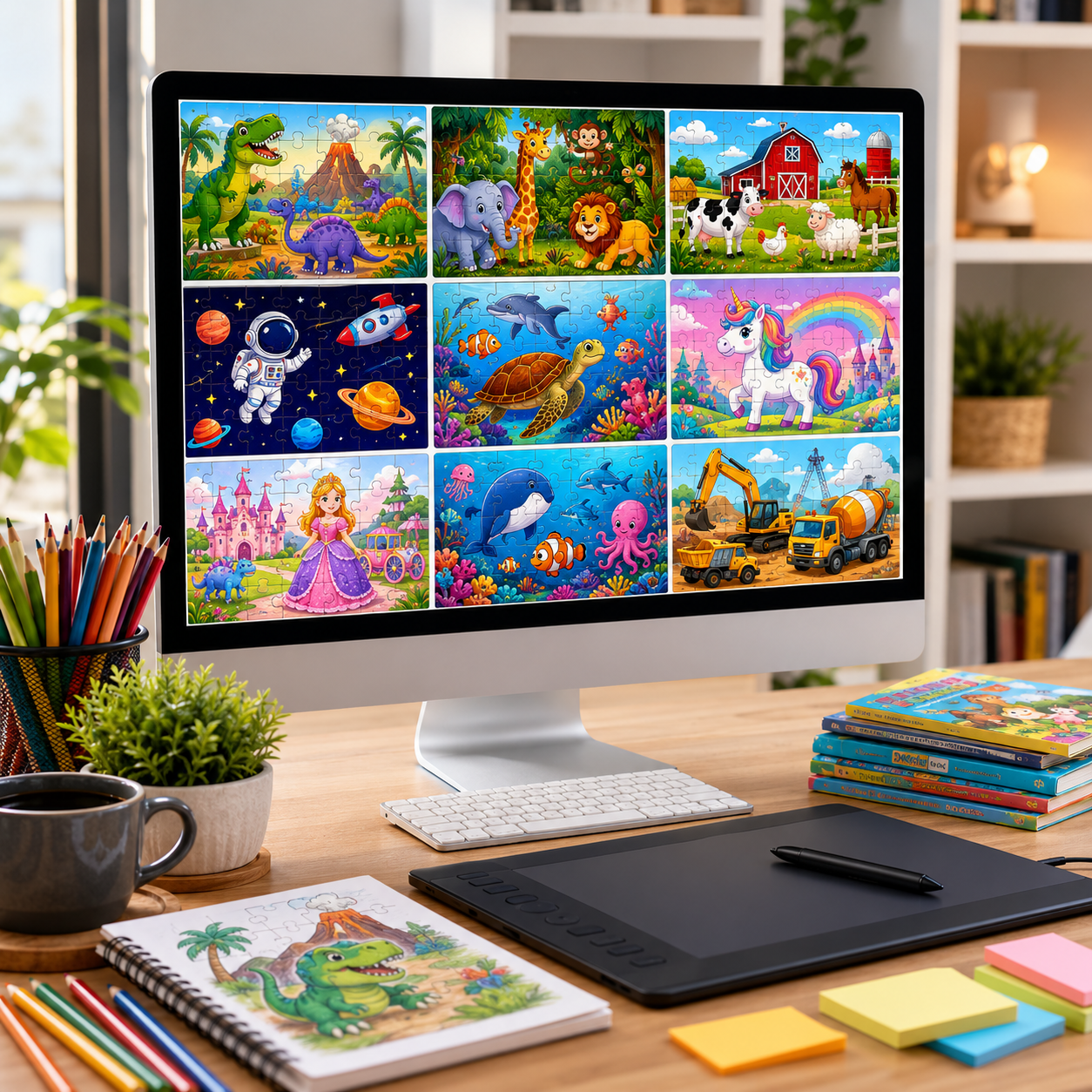
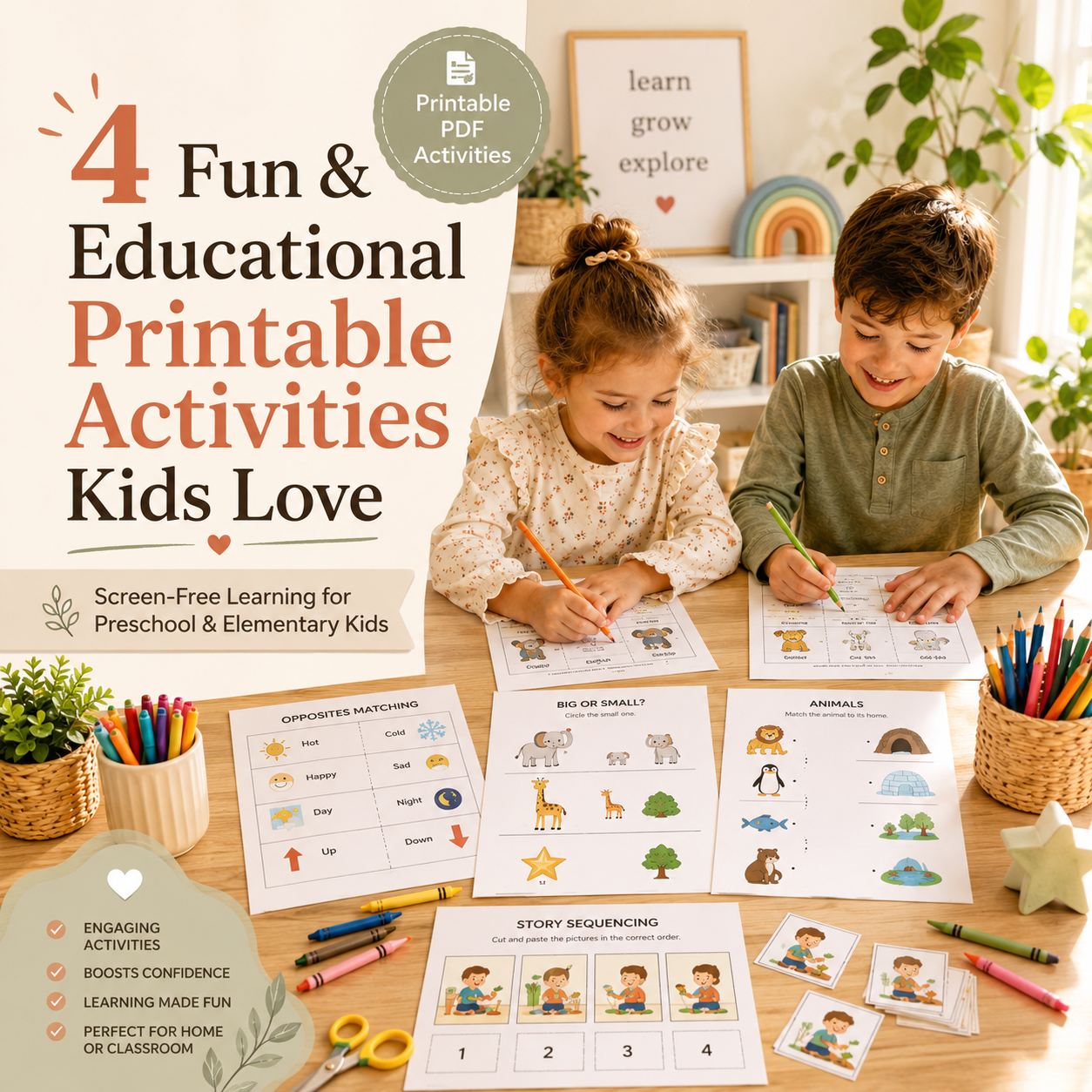
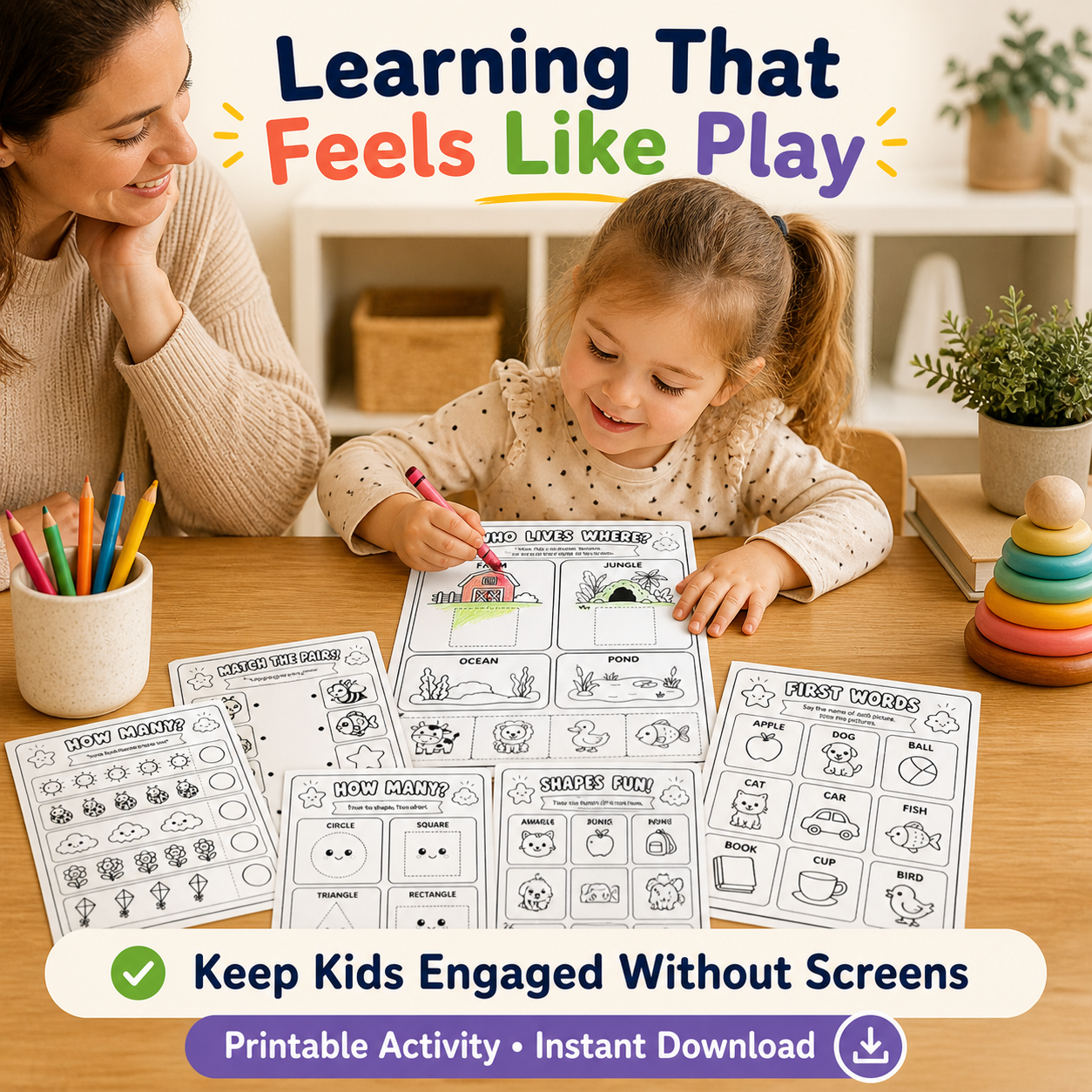
One option is My Fun Doodle World: 50 Cute Coloring Pages for Kids. Its product page lists 50 designs in an A4 PDF, with themes including animals, sweet treats, space, toys, vehicles, and nature. It is a digital download rather than a physical book.
The listing specifies personal use and allows repeated printing for that purpose. Do not assume that permission extends to resale, sharing the PDF, or distributing copies to a class; check the relevant permission before group use. Payhip
For a home activity folder, choose a few pages that suit current interests. You might keep an animal option, a space option, and something completely different. Rotate the selection when the child asks for a change rather than presenting every page at once.
The resource supplies the starting pictures. The way you introduce them creates variety within the activity.
6. Turn a Doodle Page Into a Story Scene
A story activity starts with a relationship between two things. A bear and a cupcake are separate objects until the child decides that the bear is baking for a friend.
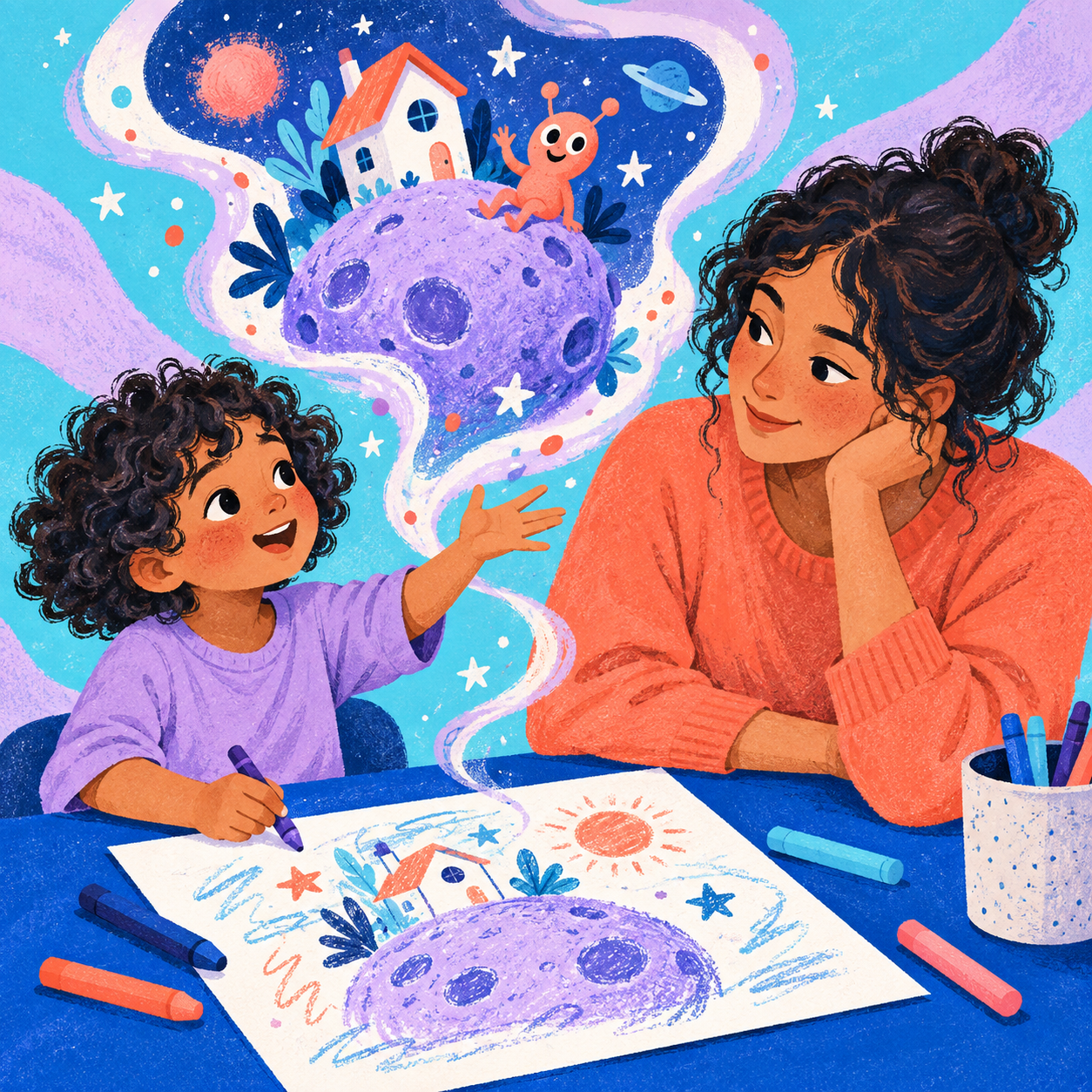
Choose a page with a few recognizable characters or objects. Ask the child to pick a main character and one thing that character wants. Then offer a question that moves the idea forward: “How will they get there?” or “What do they need?”
Leave space for drawing additions. A simple line can become a road, a square can become a door, and a circle can become a new planet. Detailed drawing is not required.
If the child wants their words saved, write one sentence on a separate piece of paper. Ask before adding writing to their artwork.
This works particularly well when a child is already talking about the picture. If they prefer quiet coloring, save the storytelling invitation for another day. The page should not become an interview they have to complete.
7. Make Color Choices Into a Playful Experiment
Instead of asking for realistic colors, introduce a simple visual question. “What would an underwater birthday party look like?” invites a different response from “Make the fish blue.”
One option is a limited palette. Let the child choose three colors and see how many different combinations they can make. Keep additional colors available if the restriction stops being enjoyable.
Another option is to change the mood of a familiar theme. A space page could use bright coral and violet for a celebration, or dark blue and silver for a nighttime journey. These are creative interpretations, not correct answers.
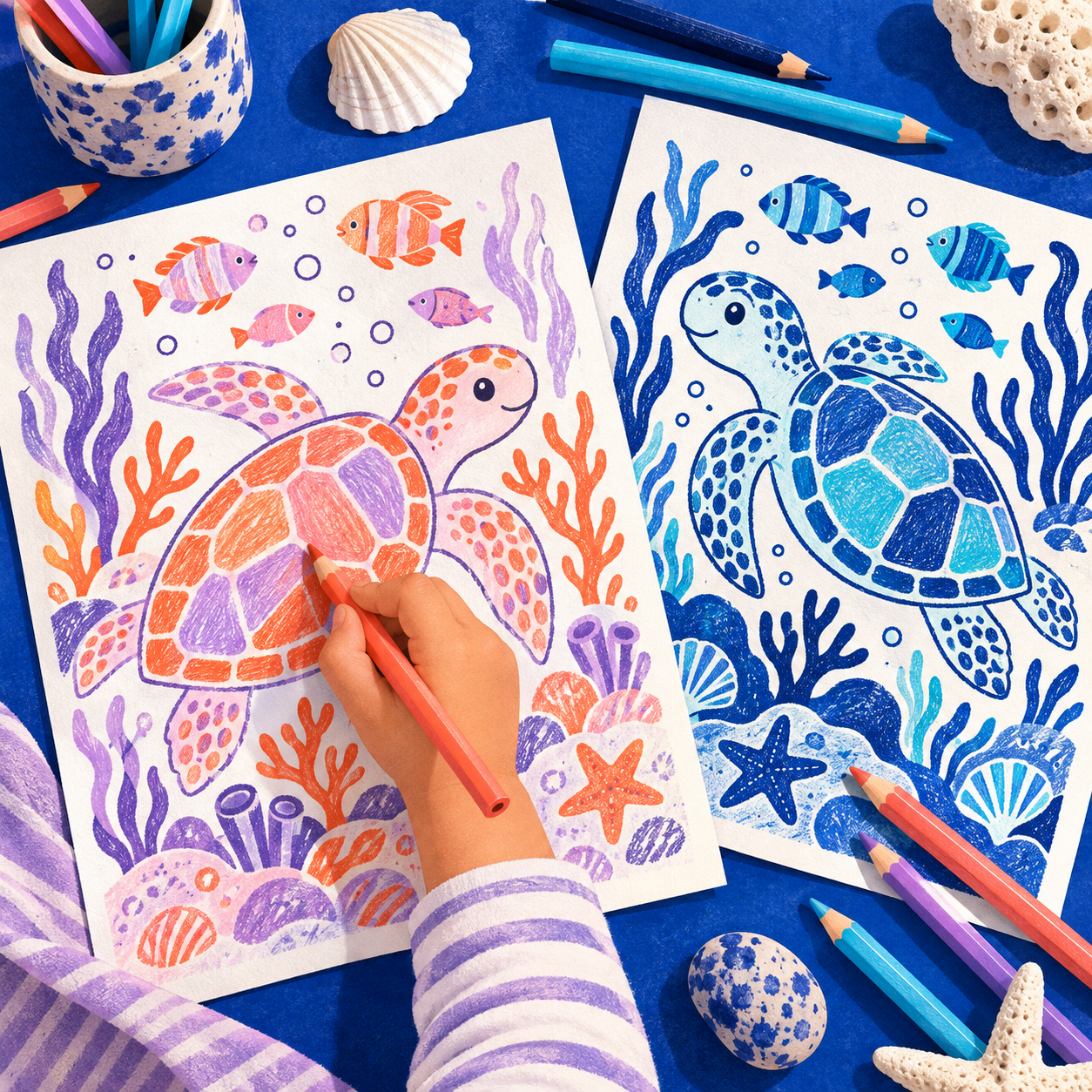
Where the license permits another print, revisit the same design later with a different palette. Put the versions side by side and notice specific changes: the larger areas, repeated colors, or the object that stands out first.
Avoid ranking the versions. Ask which choices the child would like to try again. That keeps the conversation connected to their decisions rather than your preference for one finished picture.
8. Use Three Mini Projects to Get Started
These are example activities, not reports of results from particular children. Use your own drawings or pages you have permission to use.
The animal delivery service
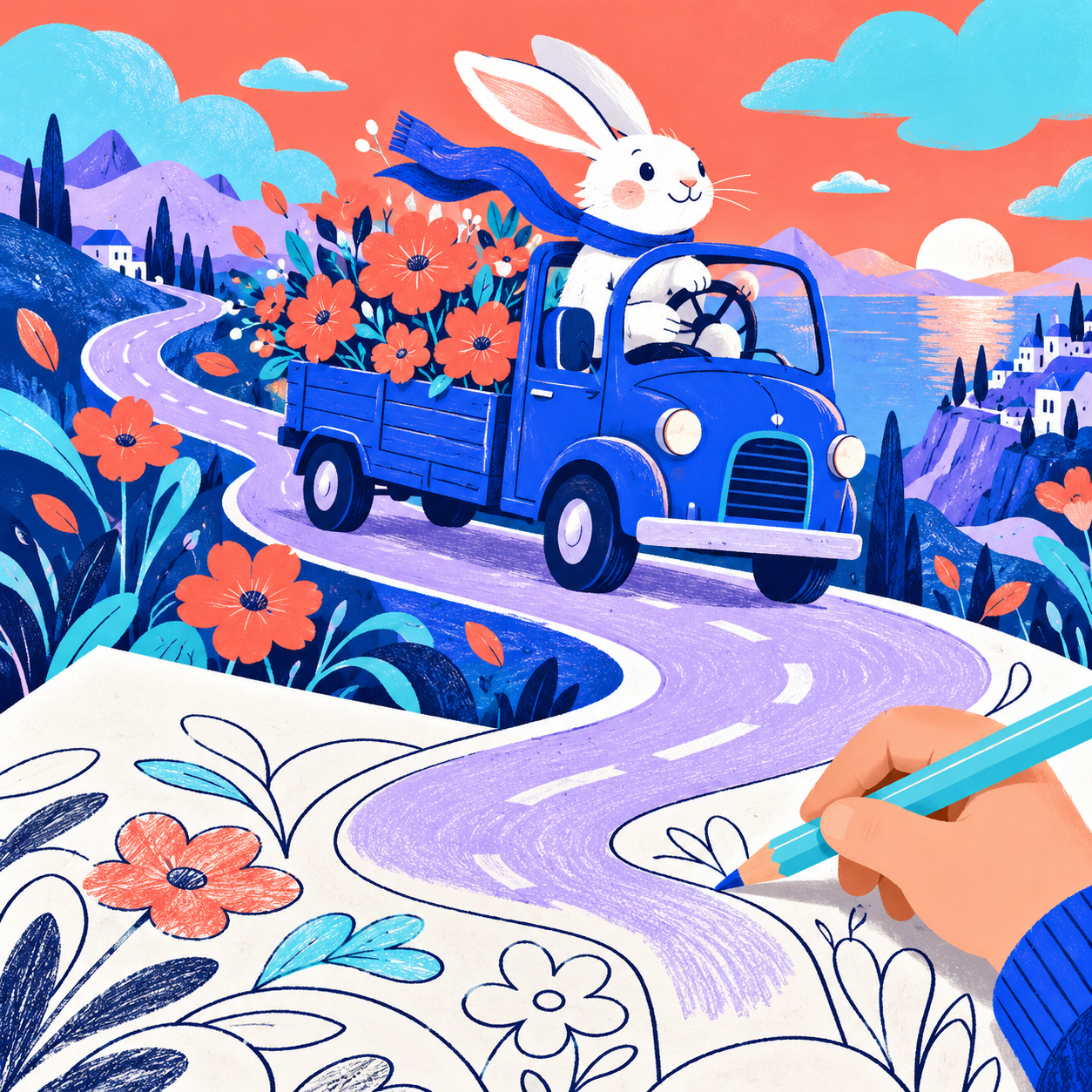
Start with animals and vehicles. Invite the child to choose a driver, a vehicle, and an imaginary delivery. A rabbit might deliver flowers in a truck, while a penguin transports ice cream by boat.
Color the selected elements, then add a route on spare paper. The activity can end there or continue into a story about the journey. There is no need to cut anything out.
The unusual dessert shop
Use a page containing sweet treats. Ask the child to invent one unusual flavor and give it colors. A blue-and-purple cupcake might taste like a pretend moonberry; a striped ice pop could belong to a rainbow shop.
If they enjoy names, write the invented flavor on a separate card. If not, simply talk about the design. You do not need a menu, prices, or a second worksheet.
The pocket-sized planet
Choose a space-themed page. Invite the child to color a planet and decide what lives there. They might draw one tiny creature, a house, or a tree beside it.
Ask what visitors should bring. A single imaginative answer can be enough to complete the project. Save the page if the child wants to return and add more later.
9. Create a Custom Page When the Theme Really Matters
Sometimes a child’s interest is specific: gardening robots, sleepy dinosaurs, or cats visiting the moon. A generic page may be close, but a custom theme can provide a more relevant starting point.
You can draw a simple version yourself or use an image-generation tool. Before generating anything, decide on the subject, approximate number of elements, amount of open space, and details to leave out.
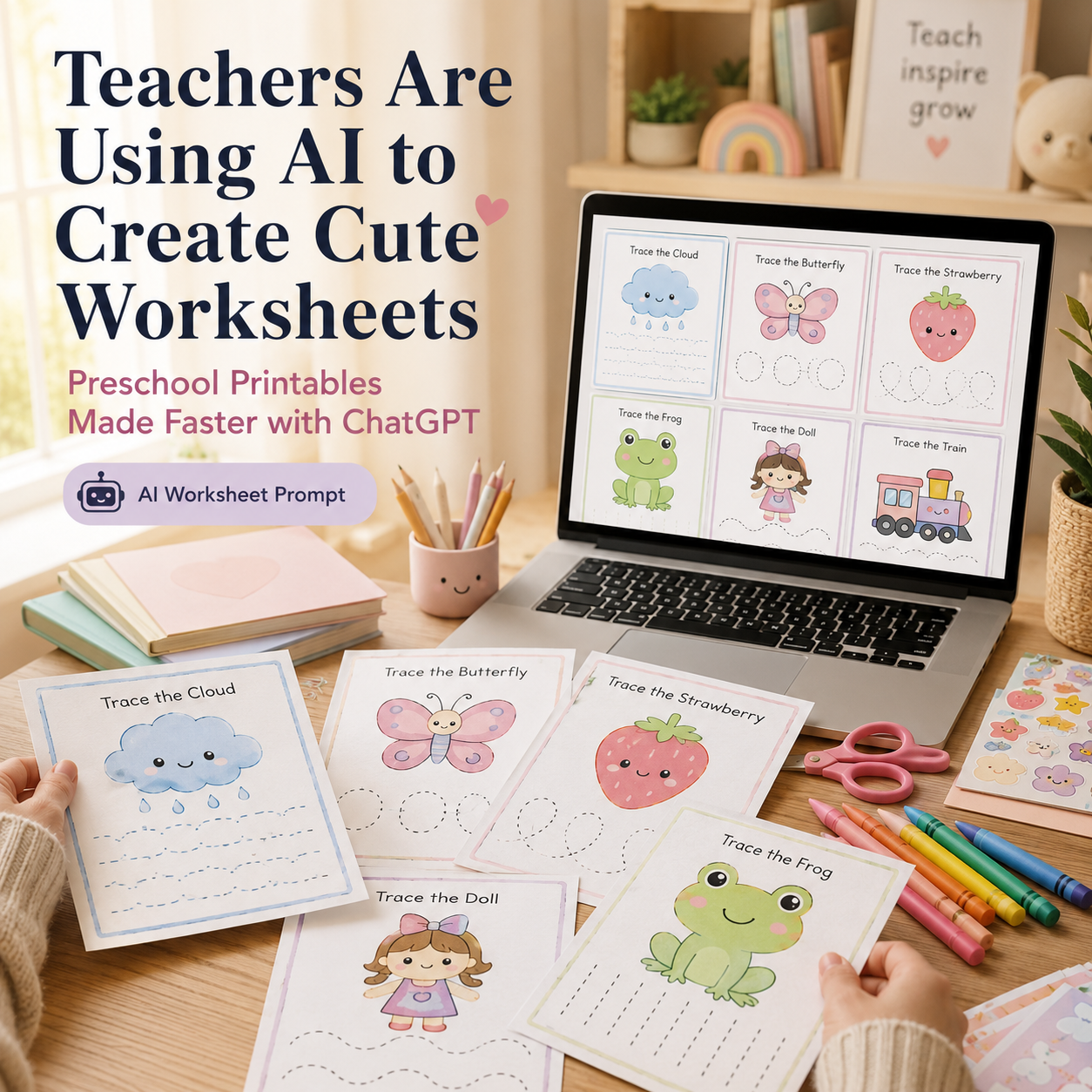
The Kawaii Doodle Coloring Page Makers prompt is an optional resource for this route. Its listing describes theme-based ChatGPT image generation with bold black outlines, spacious closed shapes, white backgrounds, and A4-oriented artwork. This is a prompt for creating images, not a finished pack of coloring sheets. The listing also displays commercial-use availability. PromptBase
You need access to a compatible image-generation tool and should inspect the output before printing. Check for confusing objects, overlapping outlines, cramped spaces, and unwanted marks. A request for A4 artwork does not replace checking the actual file and print preview.
Consult the applicable terms before using outputs in products for sale. For family activities, start with one trial page. Customization is most useful when it solves a specific mismatch, rather than becoming an extra task before every coloring session.
10. Adapt the Activity Without Comparing Children
Two children can explore the same theme with different pages and different expectations. One might enjoy coloring a large rocket; another might prefer a detailed space scene. A shared theme does not require an identical task.
Adjust the amount of choice as well as the picture. One child may want a full pencil box, while another prefers a few options within easy reach.
For a short session, reduce the scope rather than asking everyone to work faster. Color one character or add one background detail. For a longer session, leave time for independent exploration before offering an extension.
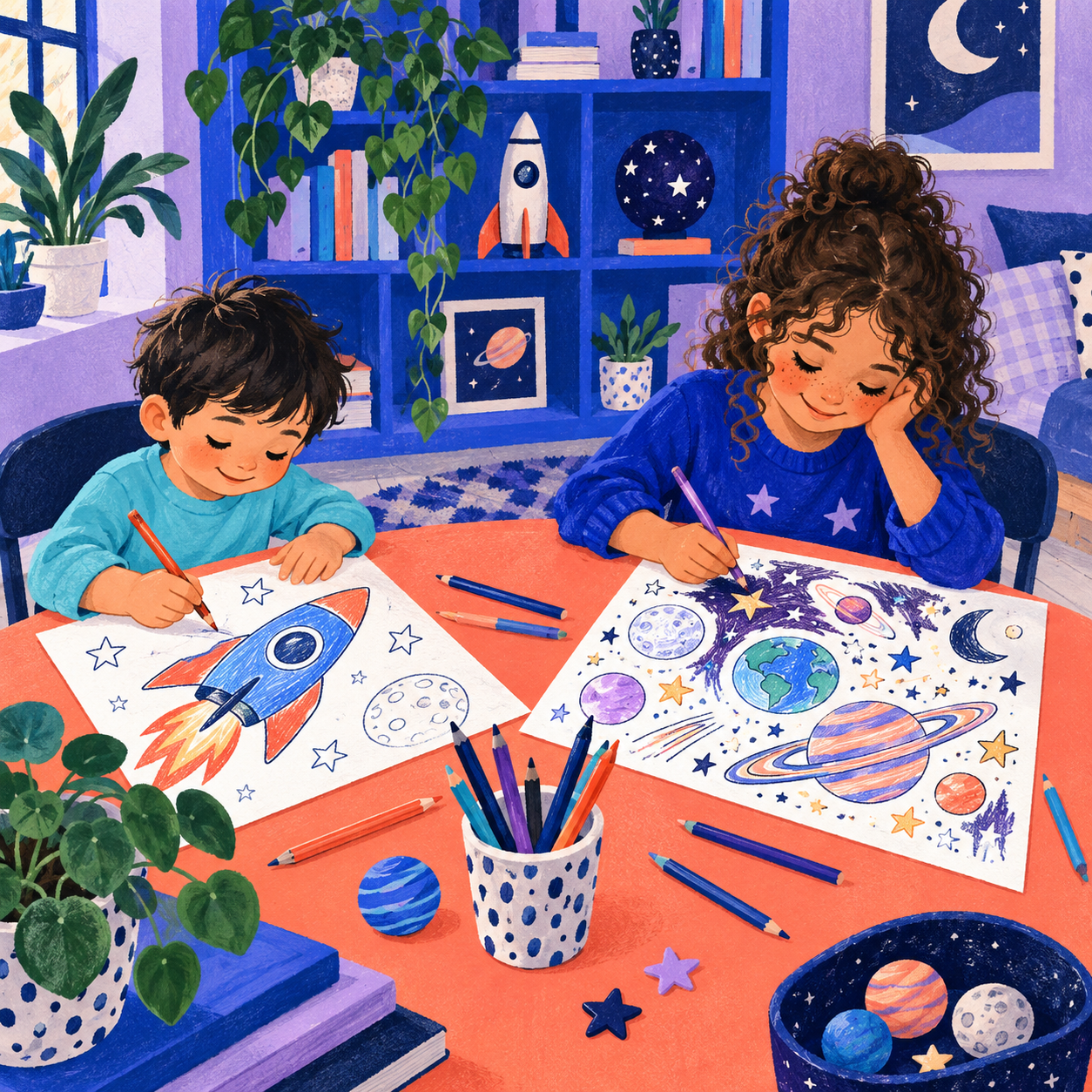
When sharing a page, agree on how to work together. Children might choose separate areas or take turns adding ideas. Ask before changing someone else’s section.
Keep comparisons out of the conversation. Instead of commenting on who finished first, notice a decision: “You gave each animal a different pattern.” This gives the child something concrete to respond to without making the activity a competition.
11. Avoid the Habits That Make Coloring Feel Repetitive
The first common habit is changing the picture while keeping the same instruction every time. Before downloading more pages, change the invitation: choose a character, invent a setting, or experiment with a palette.
Another is requiring every activity to produce display-worthy work. Some pages are experiments. Some are abandoned. Let the child decide which ones they want to keep, with practical limits on storage.
It also helps to resist adding a challenge whenever the child settles into coloring. Quiet, repetitive coloring may be exactly what they want. An extension should respond to interest rather than interrupt it.
Finally, avoid making supplies the main event. New pens can be enjoyable, but a large selection can also mean more time choosing and less time using them. Start small and add something when there is a reason.
If the child declines the activity, accept the answer. A different time or a different kind of play may fit better. Coloring does not need to become a daily obligation.
12. Use a Short Checklist Before You Begin
A quick check can prevent avoidable interruptions:
- Choose a theme the child currently enjoys.
- Match the picture’s details to the available tools.
- Check one printed sample before making more copies.
- Prepare a clear surface and a manageable selection of supplies.
- Offer a small starting point.
- Keep any extra challenge optional.
- Have somewhere to save unfinished work.
- Confirm that your intended use fits the file’s license.
Afterward, record one useful observation if you want to plan another session. “Wanted more animals” is more actionable than “Needs to concentrate.” “Preferred crayons to pencils” suggests a practical change you can make immediately.
Look at whether the setup worked, not just how long the child stayed. Could they choose a starting point? Were the tools easy to use? Did they ask to keep or revisit anything?
Change one part next time. A simpler page, a smaller palette, or a different time of day may be worth trying without redesigning the entire activity.
13. Questions Parents Often Ask
What if my child only colors one small part?
That can be the whole activity. Ask whether they want to save the page or leave it as it is. There is no need to turn unused space into unfinished work they must complete.
Should I demonstrate first?
Demonstrate a tool if help is needed, preferably on spare paper. For creative choices, offer an example only if it helps the child begin. Make clear that their version can look completely different.
Can I use these ideas without a printer?
Yes. Draw a few simple objects yourself, use a coloring book you already own, or arrange printing within the resource’s permitted use. The invitations depend on the picture’s possibilities, not on a particular file format.
How do I choose between a printable pack and a prompt?
Choose a printable pack when you want existing pages to select and print. Choose a prompt when you want to create specific themes and are willing to review generated results. They support different preparation processes.
Should every coloring activity teach something specific?
No. You can offer coloring as enjoyable creative time. If you have a particular learning goal, keep the related invitation small and separate from any expectation that the artwork must look a certain way.
What if the child wants the same page again?
Repetition can simply be a preference. If the license permits another copy, offer it. You can suggest a new palette or story, but you do not have to introduce novelty when the child is happy with something familiar.
14. Start With One Page and One Good Invitation
Choose a page, prepare a few tools, and offer one idea that leaves room for a decision. Perhaps an animal needs a destination. Perhaps a planet needs an unusual color. Perhaps today the child just wants to fill a shape with blue.
Ready-made pages can give you a convenient range of starting points. A custom-page prompt can help when a particular theme is missing. Neither needs to become the center of the experience.
The most useful next step is small: pick a picture your child might enjoy, ask where they would like to begin, and see what they choose to do with it.

Comments ()