Your Cart
Loading
How to Make Reading Time More Fun for Kids Ages 8–12

How to Make Reading Time More Fun for Kids Ages 8–12

Make Reading Time an Adventure

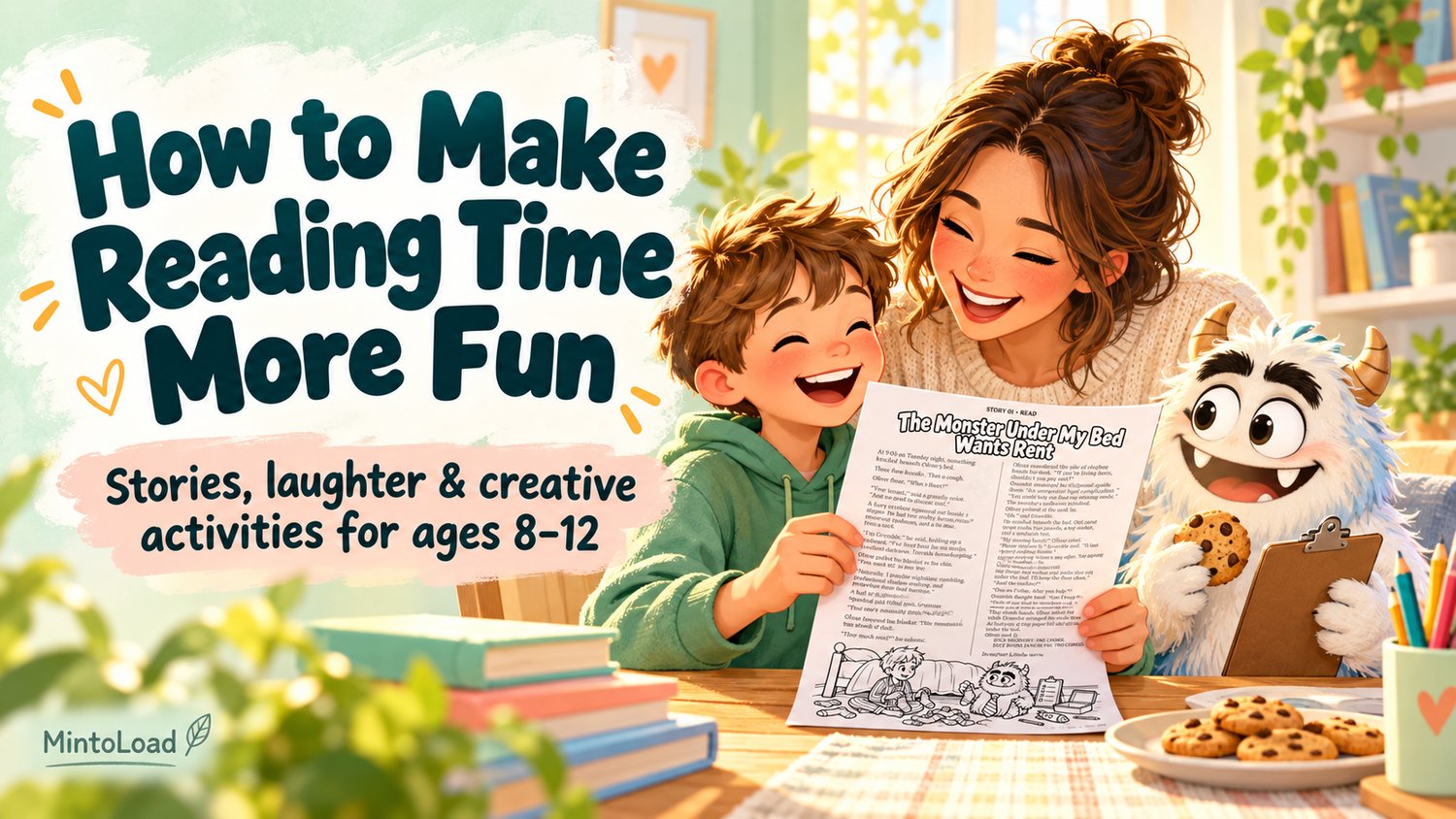
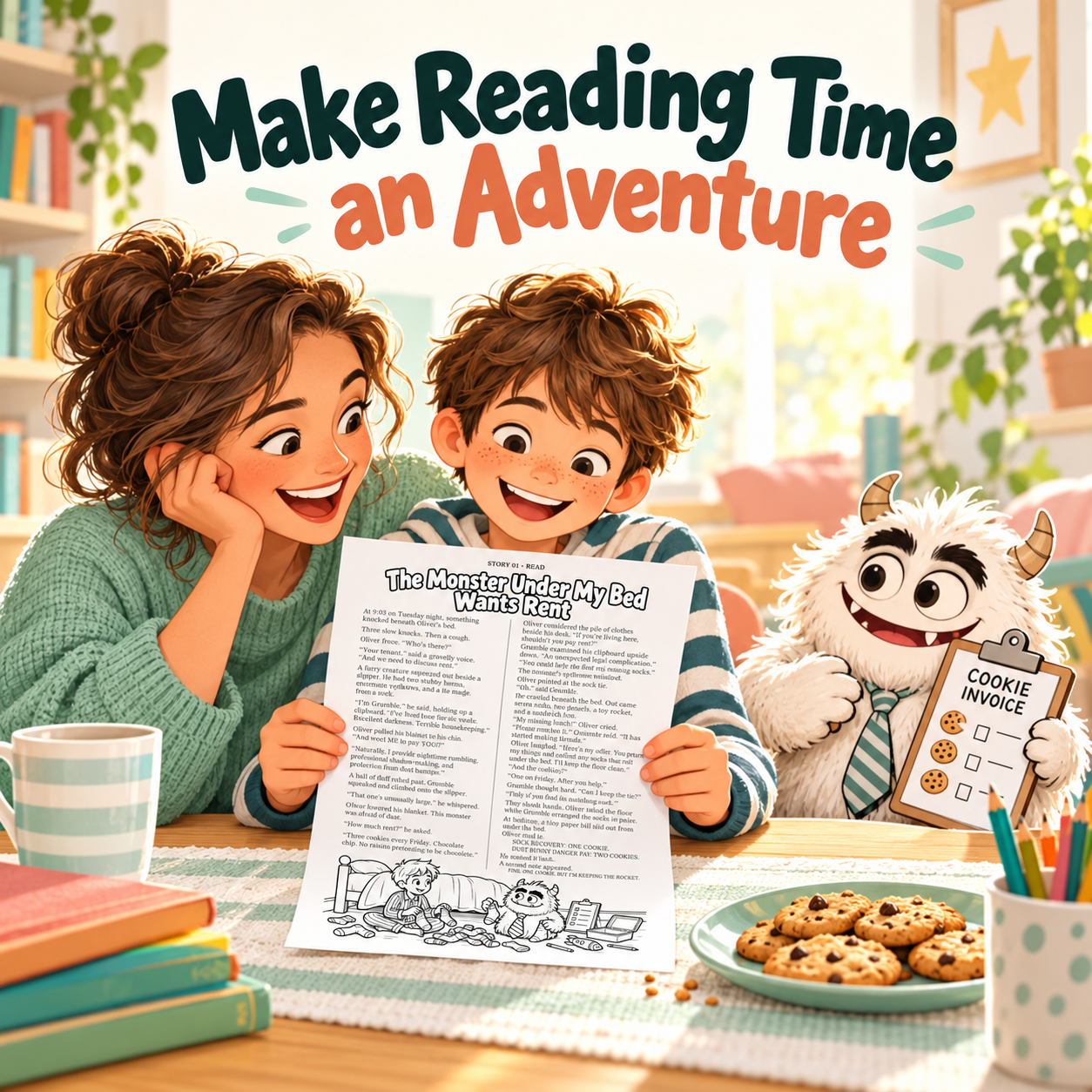
A monster under the bed is a familiar story idea. But what if he isn’t there to frighten anyone?

What if he has a clipboard—and wants rent paid in cookies?

That unexpected detail gives children something to wonder about. Who is this monster? Why does he need cookies? What will the child say next?

For parents, homeschool families, and teachers looking for fresh reading activities, a funny short story can be a useful starting point. It offers something to talk about, a few clues to investigate, and room for children to add their own ideas.

Here are six ways to turn one short story into an enjoyable reading session.


1. Start with a question worth answering

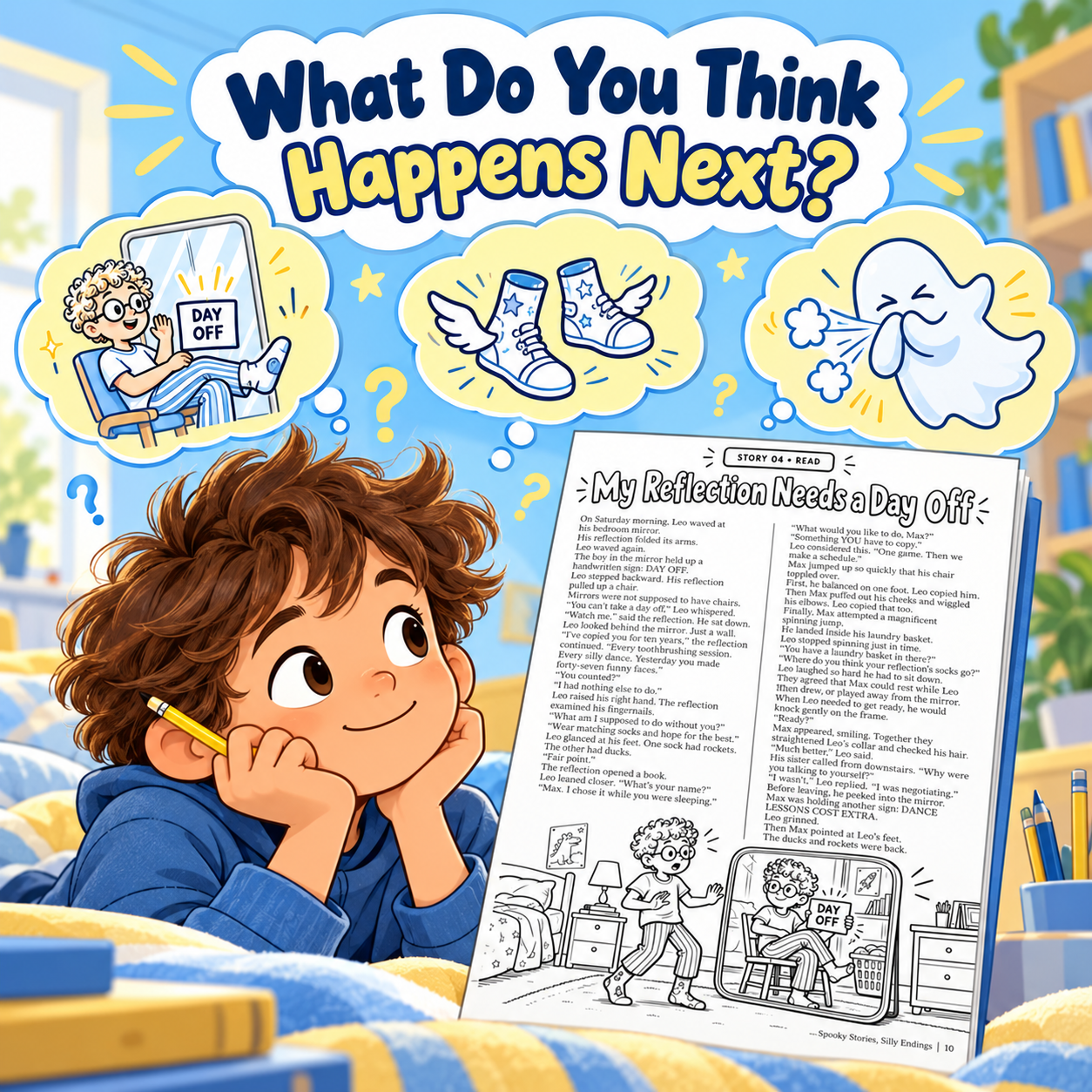
Before reading, look at the title and illustration together. Invite a prediction with a question such as:

  • What would you do if your reflection asked for a day off?
  • How could an invisible child give himself away?
  • What might make a ghost sneeze?

Let children explain their guesses without correcting them. The aim is to give them something to look for as they read.

Afterward, return to the prediction: “Which part did you guess? What surprised you?”
What Do You Think Happens Next?


2. Let the funny moments become part of the reading

An unusual voice, an awkward conversation, or a surprising final line can give children a reason to reread.

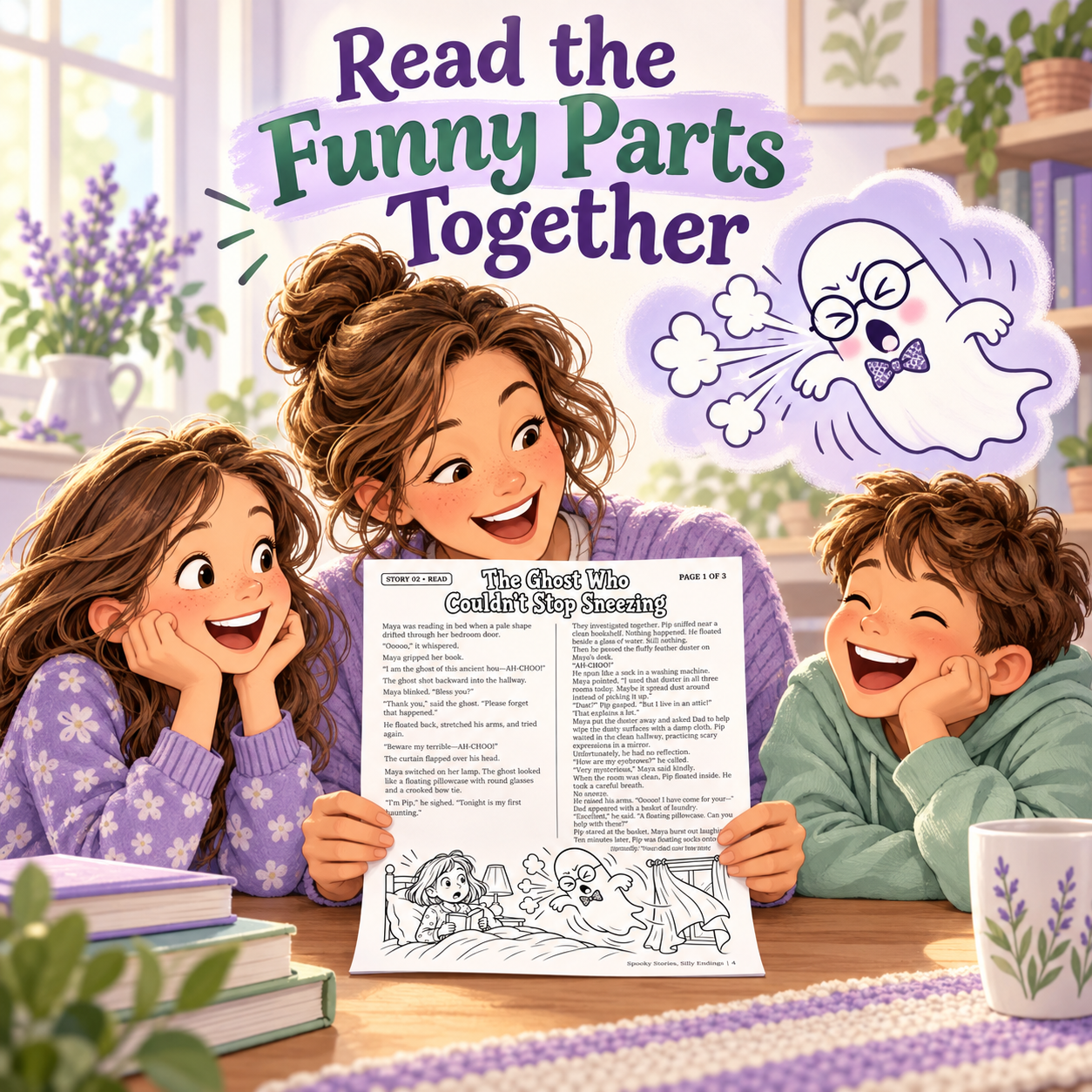
Try taking turns reading the dialogue. One person can be the narrator while another plays the mysterious visitor. A ghost might attempt a dramatic entrance, only to interrupt himself with an enormous sneeze.

Keep participation flexible. A child who prefers listening can follow along, choose a favorite line, or describe how a character might sound.

There is no need to turn the session into a performance. Sometimes sharing a laugh over one sentence is enough.
Read the Funny Parts Together


3. Ask fewer questions—and explore the answers

You don’t need to stop after every paragraph. Let the story unfold, then choose a few questions that invite children to think:

  • What did the character want?
  • Which detail helped you understand the problem?
  • What changed between the beginning and the ending?
  • Why was the ending funny?

When a child offers an idea, follow it with: “What in the story makes you think that?”

This creates an opportunity to return to the text and find a specific detail. If the answer is uncertain, look together. Keep the conversation curious and give children time to explain.


4. Retell the story in three moments

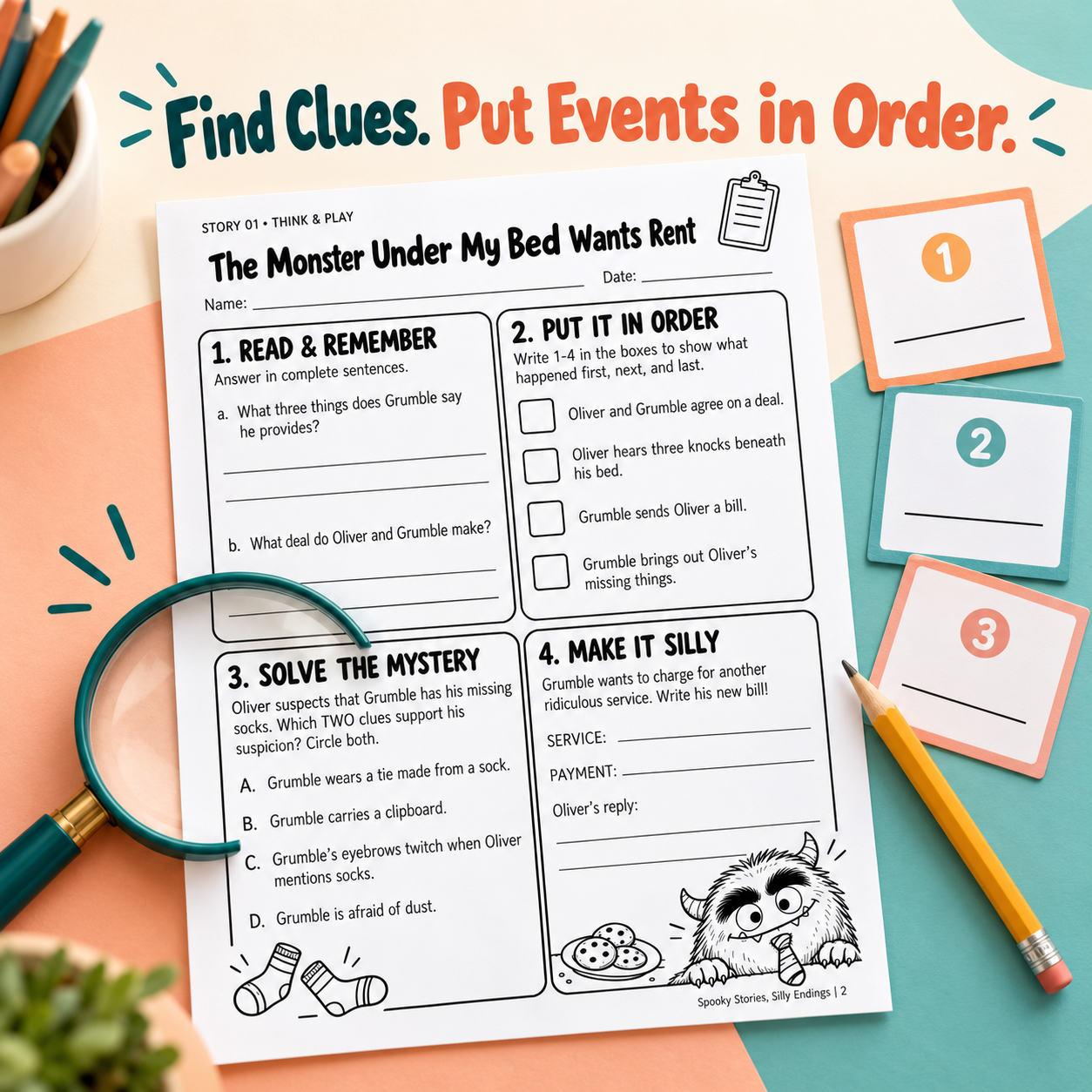
After reading, ask children to choose three important events: the beginning, the middle, and the ending.

They can describe them aloud, sketch three small pictures, or write one sentence for each.

For a playful variation, mix up the events deliberately:

“First, the mystery was solved. Then someone heard a strange noise. Finally, they went to investigate.”

Can the child put them back in order and explain why?

This gives sequencing a clear purpose: making the story make sense.
Find Clues. Put Events in Order.


5. Use coloring as a conversation starter

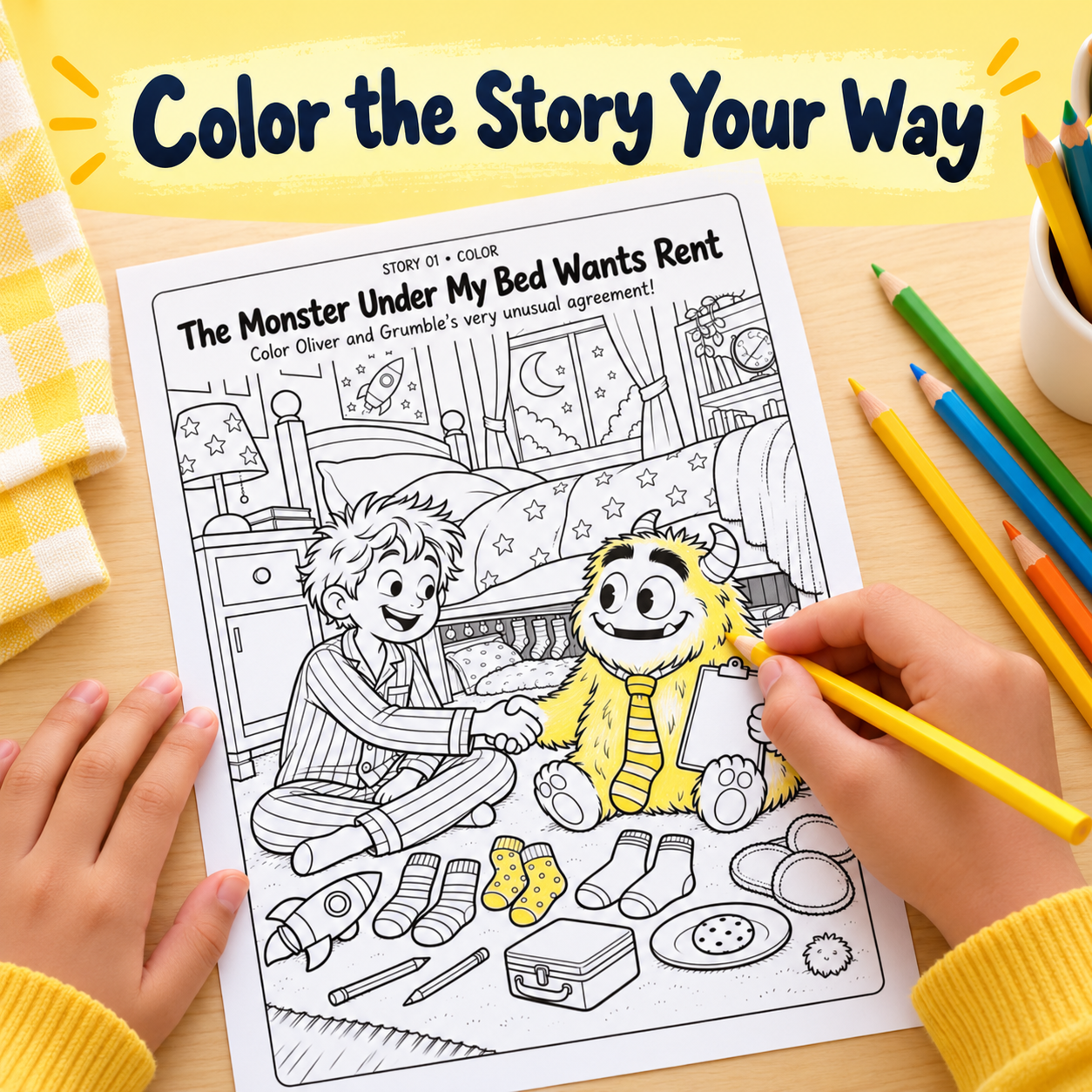
A matching coloring page can provide a quiet activity after reading. It can also open another way into the story.

While children color, you might ask:

“What do you think happened just before this scene?”

“Which detail would you add to show how the character feels?”

“What would you draw if there were one more page?”

Keep these invitations optional. Children can enjoy coloring without answering more questions, and their picture does not need to match someone else’s version.
Color the Story Your Way


6. Leave room for one original idea

Finish with a small creative prompt connected to the adventure:

  • Write a reply to the monster’s rent request.
  • Invent a different job for the talking doll.
  • Create a sign for a very unusual visitor.
  • Add one more line of dialogue.

A response can be a sentence, a drawing, or an idea shared aloud. Choose a format that suits the child and the time available.

The most interesting answer may be one you never expected.


Putting the ideas together

For your next reading session, try this simple sequence:

Before reading: Look at the title and make a prediction.

During reading: Follow the adventure and enjoy the dialogue.

After reading: Discuss a few details, retell the main events, and choose a creative activity.


You can spread these steps across more than one session. At home, read together one afternoon and save the coloring for another day. In the classroom, use the story for a small group and offer the follow-up activity later.

Choose a text that suits the child’s English reading level, and offer shared reading when helpful. Age guidance is a starting point; previewing the actual pages will help you decide.


A ready-to-print option for your next reading session

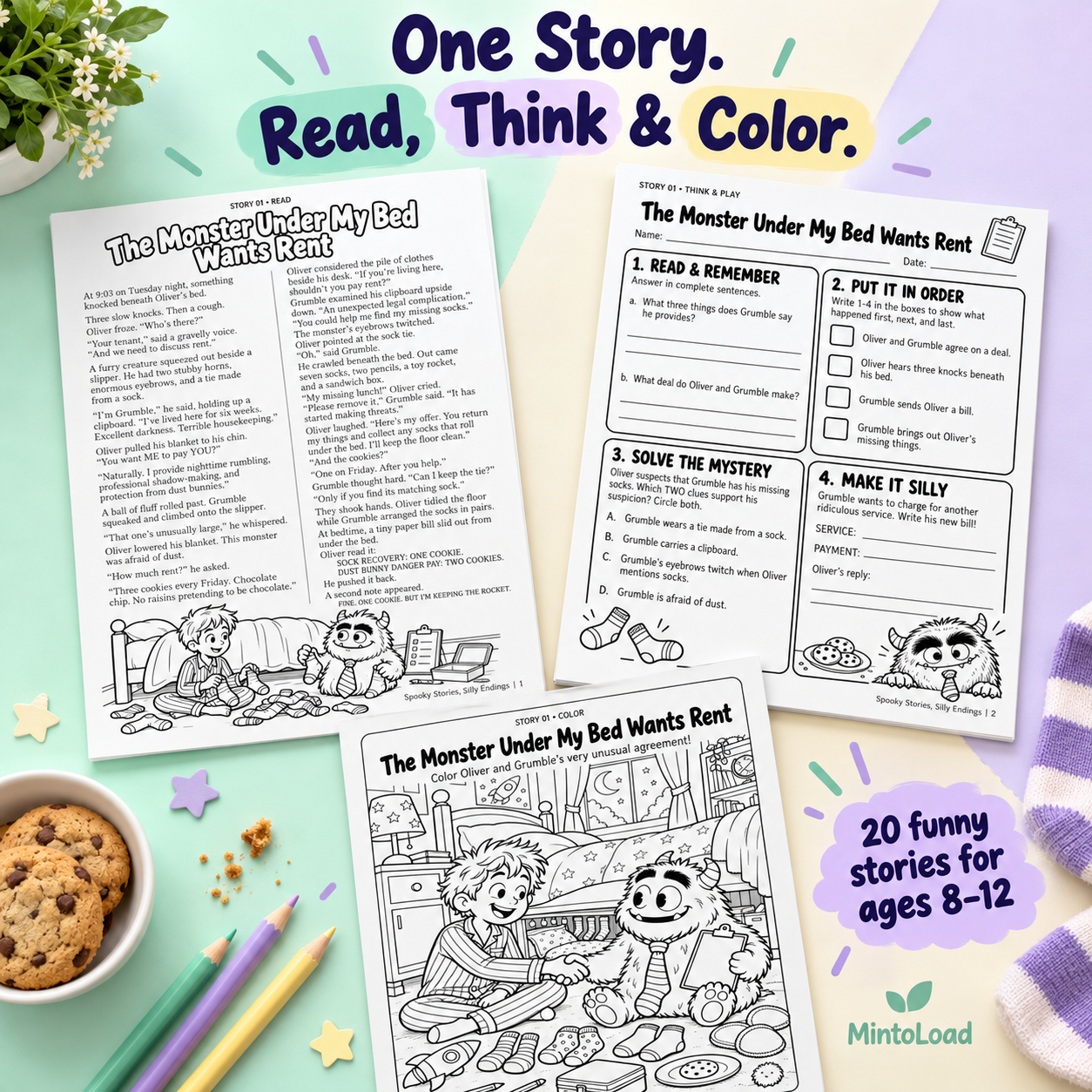
If you would like to try this approach with prepared materials, our Spooky Stories, Silly Endings collection brings reading, activities, and coloring together.

Created for ages 8–12, it includes 20 funny, gently spooky adventures—from a monster demanding rent to a ghost who cannot stop sneezing. Each story has a three-page set: the illustrated story, a page of activities, and a matching coloring page.

The collection contains 60 student pages plus a separate 20-page answer key. Complete books in A4 and A5, and individual story PDFs let you choose an adventure to suit your plans.

You can start with the free complete sample story available on the product page to see whether the reading level and activity style suit your child or students.
One Story. Read, Think & Color.


Explore the stories and try the free sample →

Blog Posts

How to Make Reading Time More Fun for Kids Ages 8–12
A monster under the bed is a familiar story idea. But what if he isn’t there to frighten anyone? What if he has a clipboard—and wants rent paid in cookies? That unexpected detail gives children something to wonder about. Who is this monster? Why doe...
Read More
Beyond the Coloring Page Creative Coloring Activities for Kids That Keep Things Fresh
Beyond the Coloring Page: Creative Coloring Activities for Kids That Keep Things Fresh
A coloring page can become a tiny world. A smiling strawberry might run a café. A rocket could deliver birthday presents to the moon. A row of animals might be waiting for a bus that your child decides to draw. The interesting part is not how much o...
Read More
Breaking the Ice: How to Eliminate Awkward Silence and Build Connection in the Classroom
The beginning of a new school year, a fresh semester, or even a Monday morning meeting can sometimes start with the most dreaded sound in education: absolute silence. Children—especially students ages 8 to 11—can feel hesitant, shy, or unsure of how...
Read More
How to Transform Morning Chaos into a Calm Learning Routine with 8 Weeks of Preschool Morning Work
Starting a brand new school year or jumping back into a homeschooling routine can feel overwhelming. Mornings often turn into a rushed race against the clock, leaving little room for gentle, focused learning. If you are an educator, a dedicated pare...
Read More
3 Fun Ways to Teach Reading Comprehension and Sequencing Skills to Early Readers
When children are learning to read, recognizing words on a page is only half the battle. True reading proficiency involves understanding how a story flows—knowing what happens first, next, and last. Developing this ability is crucial because story s...
Read More
5 Back-to-School Printables That Make the New School Year Easier and More Fun
The back-to-school season is exciting, but it can also feel a little overwhelming—especially for moms and teachers preparing activities, classroom surprises, and new routines. To make things easier, I’ve gathered five ready-to-print resources design...
Read More
Visual Lesson Planners for Teachers: The Fastest Way to Create Professional AI Lesson Plans
Lesson planning is one of the most important responsibilities every teacher faces. A well-structured lesson keeps students engaged, supports learning objectives, and makes classroom management much easier. However, creating high-quality lesson plans...
Read More
Kids Coloring Puzzle Generator: Create Unlimited Printable Coloring Puzzles with AI
Creating fresh educational printables for children can take hours. Whether you're a teacher, homeschool parent, or digital product seller, designing engaging worksheets from scratch isn't always practical. The Kids Coloring Puzzle Generato...
Read More
AI infographic generator creating a professional infographic design on a modern desktop workspace
Professional Infographic Design Creators: Create Stunning AI Infographics in Minutes
Creating a professional infographic used to require hours of planning, designing, and editing. From arranging layouts to choosing icons, colors, and typography, the process could quickly become overwhelming—especially if you aren't a profession...
Read More
AI Kids Puzzle Illustration Generator: Create Printable Puzzle Designs in Minutes
Creating engaging puzzle illustrations for children has never been easier. Whether you're a teacher, homeschool parent, children's book author, Etsy seller, or educational content creator, producing fresh, high-quality activities can be bo...
Read More
Create Fun Road Trip Maps for Kids with AI: The Ultimate Prompt for Educational Printables
If you're a teacher, homeschool parent, children's book author, or digital product creator, you're always looking for new ways to make learning exciting. Geography can sometimes feel overwhelming for young children. Traditional maps a...
Read More
Create Kids Habit Flashcards in Seconds with AI: The Ultimate Tool for Teachers, Parents, and Digital Creators
Creating educational materials for children is exciting, but it can also be one of the most time-consuming parts of running a classroom, homeschooling, or selling printable resources online. Every flashcard requires an engaging illustration, a clear...
Read More
Fun Educational Games Kids Will Actually Want to Play
Getting children excited about learning isn’t always easy. Many kids lose focus quickly, get bored with repetitive worksheets, or immediately ask for a tablet or phone when they need entertainment. That’s why educational games work so well. When lea...
Read More
4 Fun & Educational Printable Activities Kids Actually Enjoy
Finding activities that are both educational and exciting for kids can feel difficult — especially when you want something simple, screen-free, and easy to use at home or in the classroom. That’s why printable activities have become a favorite choic...
Read More
The AI Prompt Every Smart Teacher Should Try
Teaching young children is rewarding… but creating fresh printable worksheets every single week can become exhausting. From tracing activities and matching games to coloring worksheets and preschool exercises, teachers often spend hours designing ma...
Read More
Flashcards vs Worksheets: What Should You Use?
If you're a teacher, parent, or even selling educational products, you’ve probably asked this question: Should I use flashcards or worksheets? Here’s the simple truth: 👉 You don’t have to choose one… you need both. But each one plays a different rol...
Read More
20 Why Simple Worksheets Work Better for Young Kids
If you’ve ever worked with young kids, you already know this: they don’t need more complexity… they need more clarity. That’s exactly why simple worksheets often outperform “fancy” or overloaded activities—especially for kids ages 3–7. Here’s a prac...
Read More
20 Ways to Make Learning Fun Without Screens (Teacher Guide)
Let’s be honest — screens are everywhere. And while they can be helpful sometimes, many teachers (and parents) are starting to notice something important: kids learn better when they’re actively involved, not just watching. If you're looking for sim...
Read More
20 Best Printable Activities for Kids Ages 3–7 (Teacher Picks)
If you’re a teacher (or even a parent), you already know the challenge: How do you keep kids learning without boredom? The answer is simpler than you think: printable activities. They’re easy to use, fun for kids, and incredibly effective at buildin...
Read More
20 No-Prep Activities for Kids (Perfect for Busy Teachers)
If you’re a busy teacher juggling a full schedule, you already know this: you don’t always have time to plan complex activities… and honestly, you don’t need to. Some of the most effective classroom moments come from simple, no-prep ideas that get k...
Read More
How to Teach Kids Faster Using Flashcards (Simple Method)
If you’re a teacher or parent looking for a fast, effective way to help kids learn, flashcards are one of the smartest tools you can use. But here’s the truth: it’s not about using flashcards… it’s about how you use them. In this guide, you’ll learn...
Read More
57+ Flashcards Topics for Kids (Ages 2–6): The Ultimate No-Prep Teaching Solution
If you're a teacher or a parent of a young child, you already know the struggle… Searching for the right learning materials, printing random worksheets, and trying to organize everything before the lesson even starts. It takes time. A lot of it. But...
Read More