
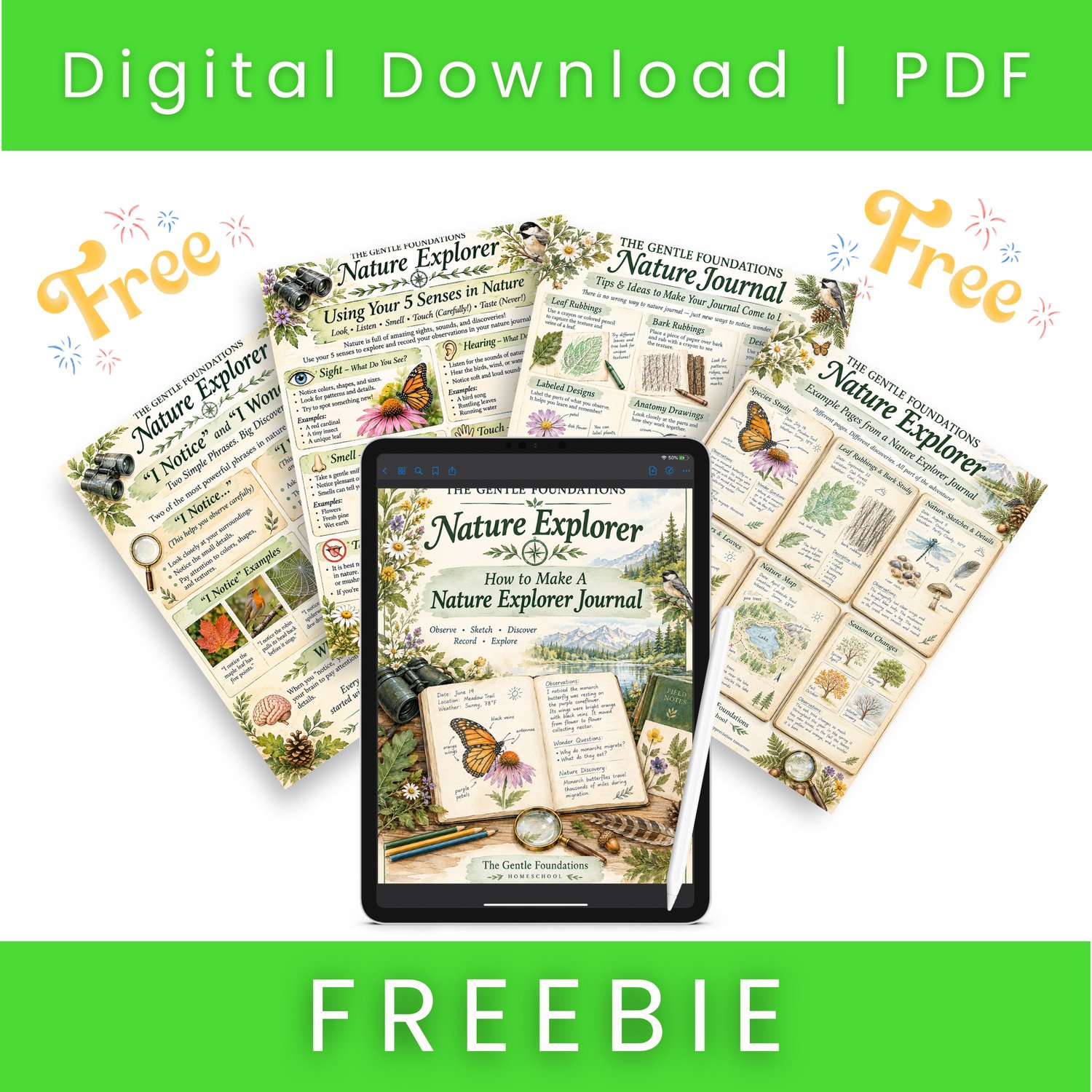
Have you ever watched your child discover a beautiful leaf, an interesting insect, or a tiny flower growing along a walking path? Children are naturally curious about the world around them. Sometimes, all they need is a little encouragement to slow ...
Read More
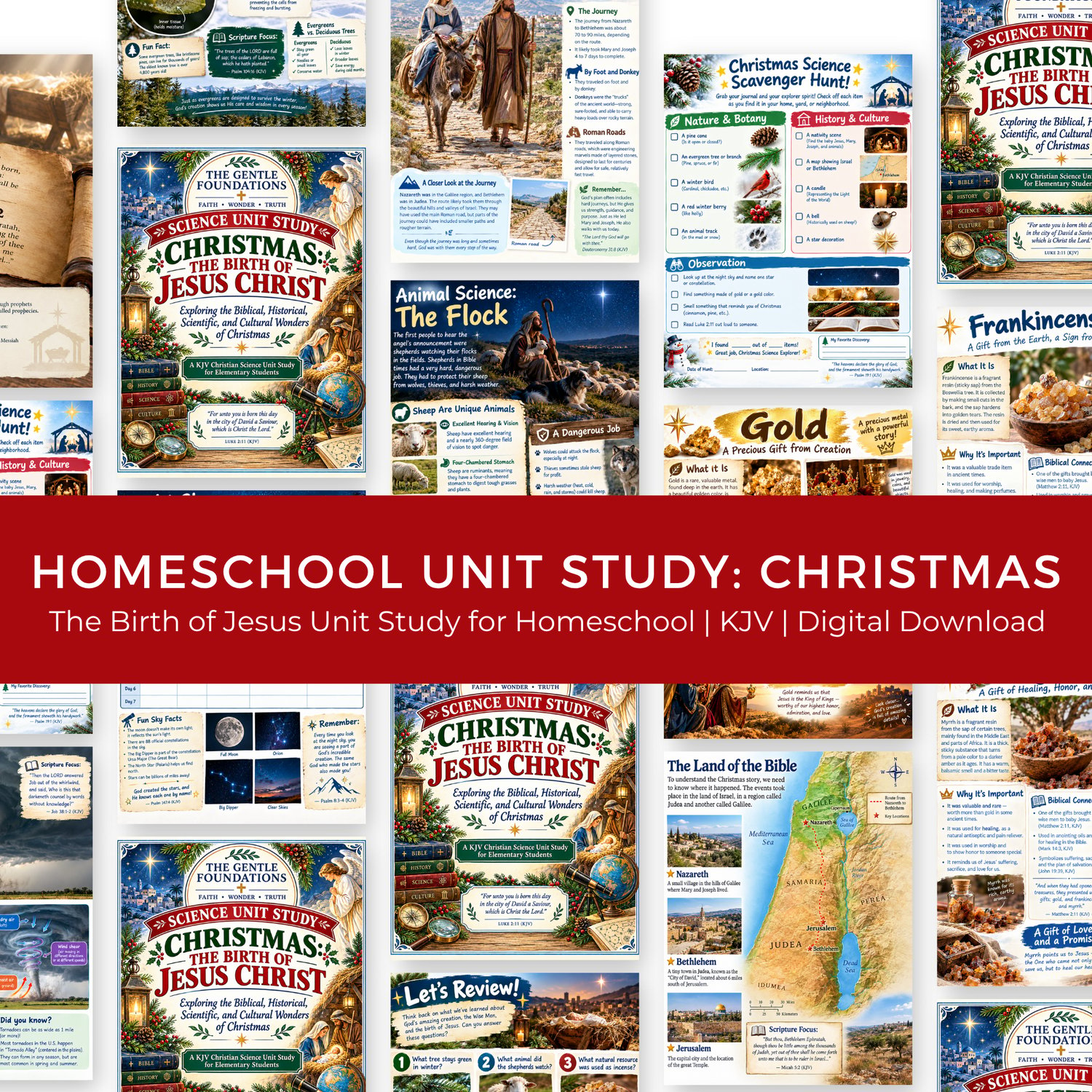
Christmas offers Christian homeschool families a special opportunity to bring Scripture, history, geography, and nature study together while remembering the birth of our Savior. Rather than treating Christmas as simply a holiday to prepare for, fami...
Read More
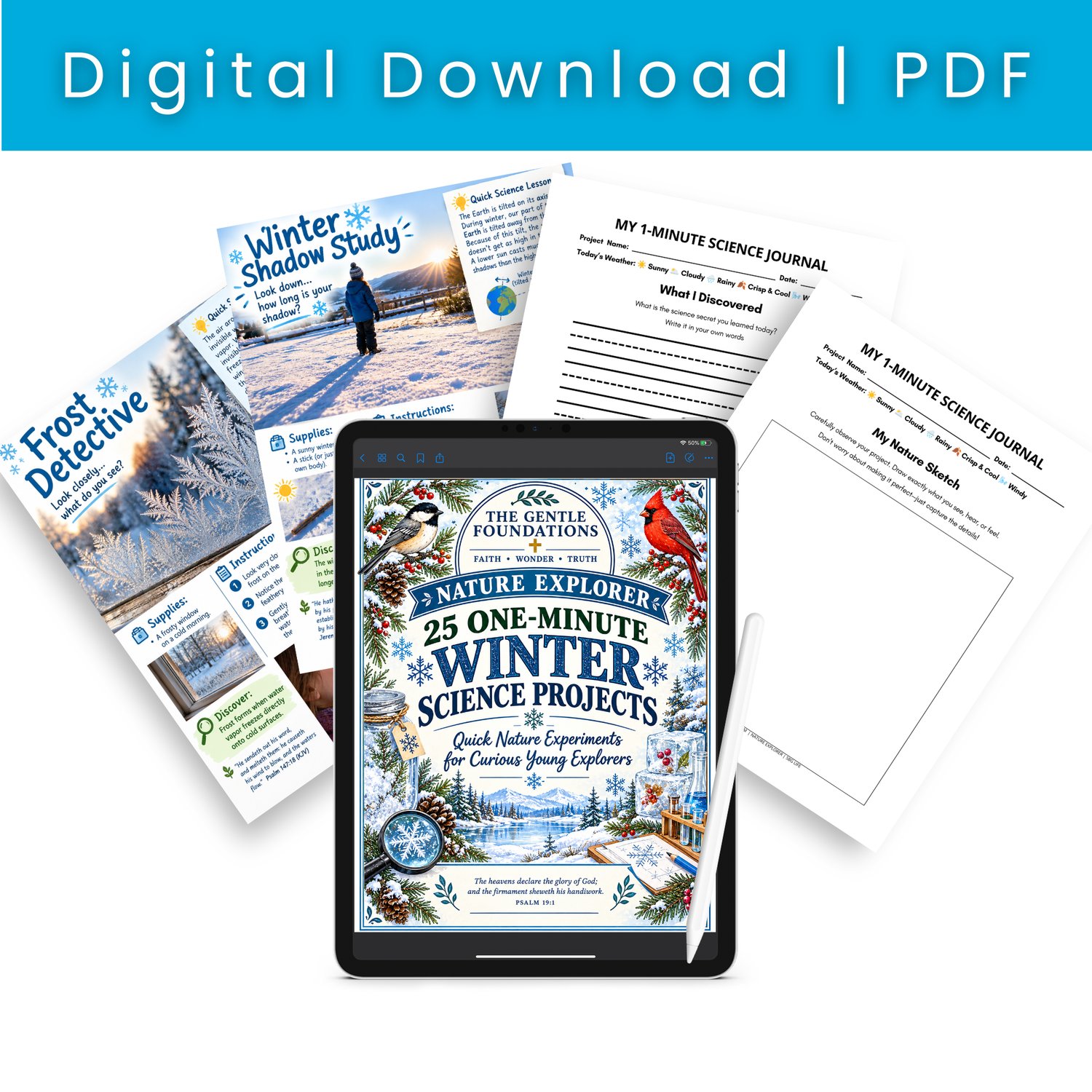
Winter may seem like a quiet season, but step outside and look closely. You may discover frost sparkling on a surface, pinecones opening and closing, birds searching for food, clouds moving across the sky, or ice forming in a puddle. For homeschool ...
Read More
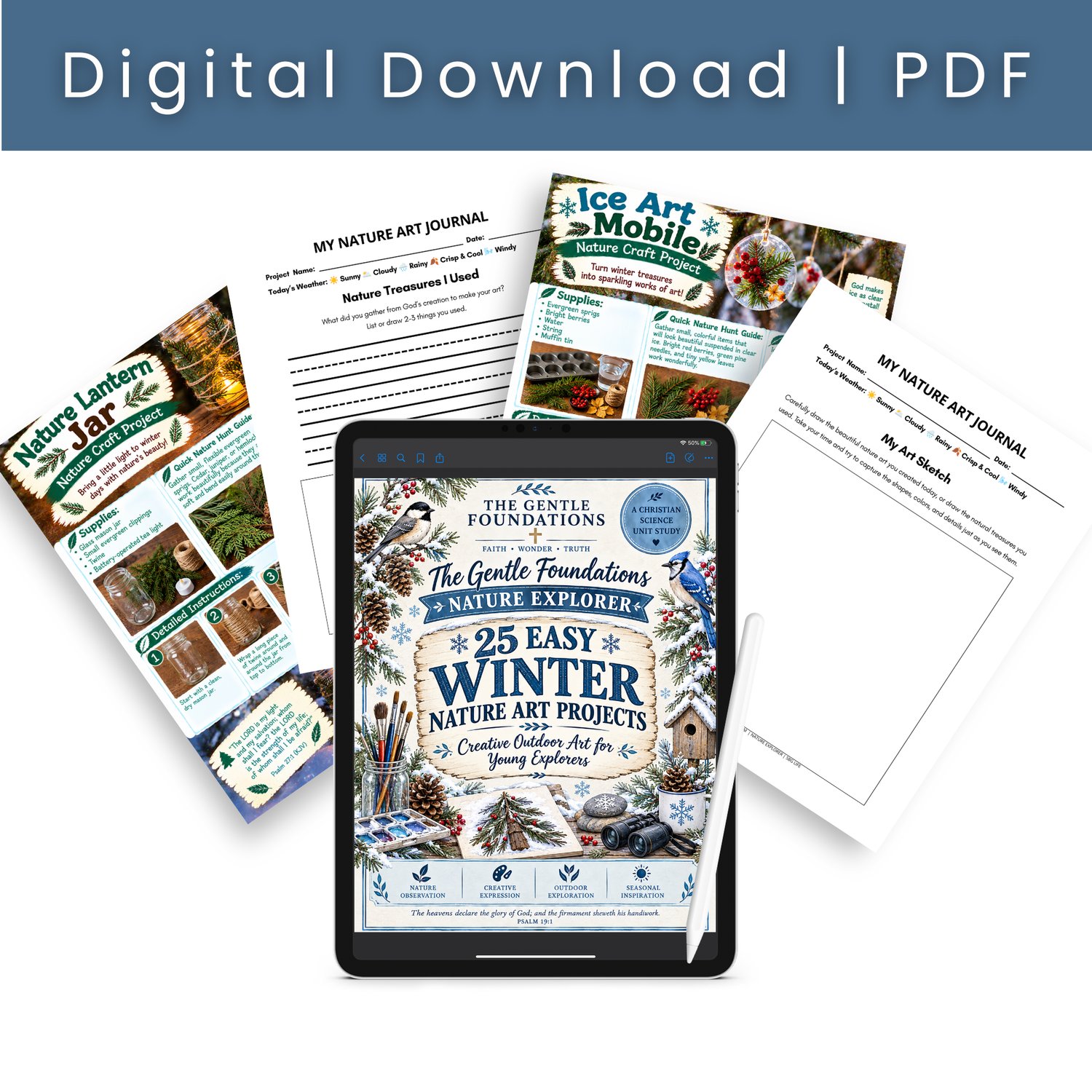
Many people think nature study ends when winter arrives. In reality, winter offers some of the most beautiful opportunities for observation, creativity, and exploration. Bare trees reveal fascinating branch patterns. Evergreen trees stand out agains...
Read More
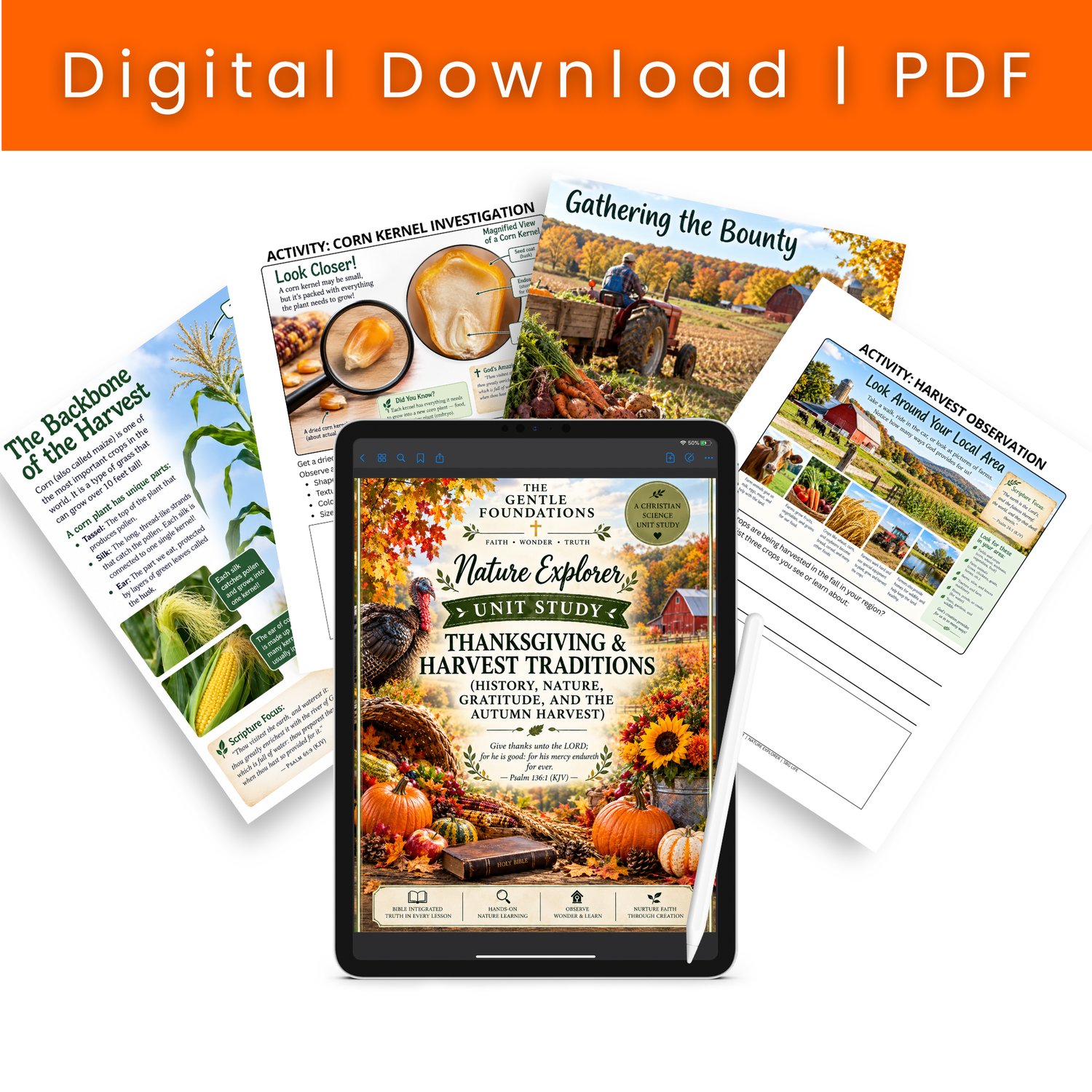
Thanksgiving is more than a day on the calendar. For homeschool families, it can become an opportunity to slow down, explore the season, study the harvest, learn about animals and plants, explore history, and intentionally practice gratitude. Autumn...
Read More
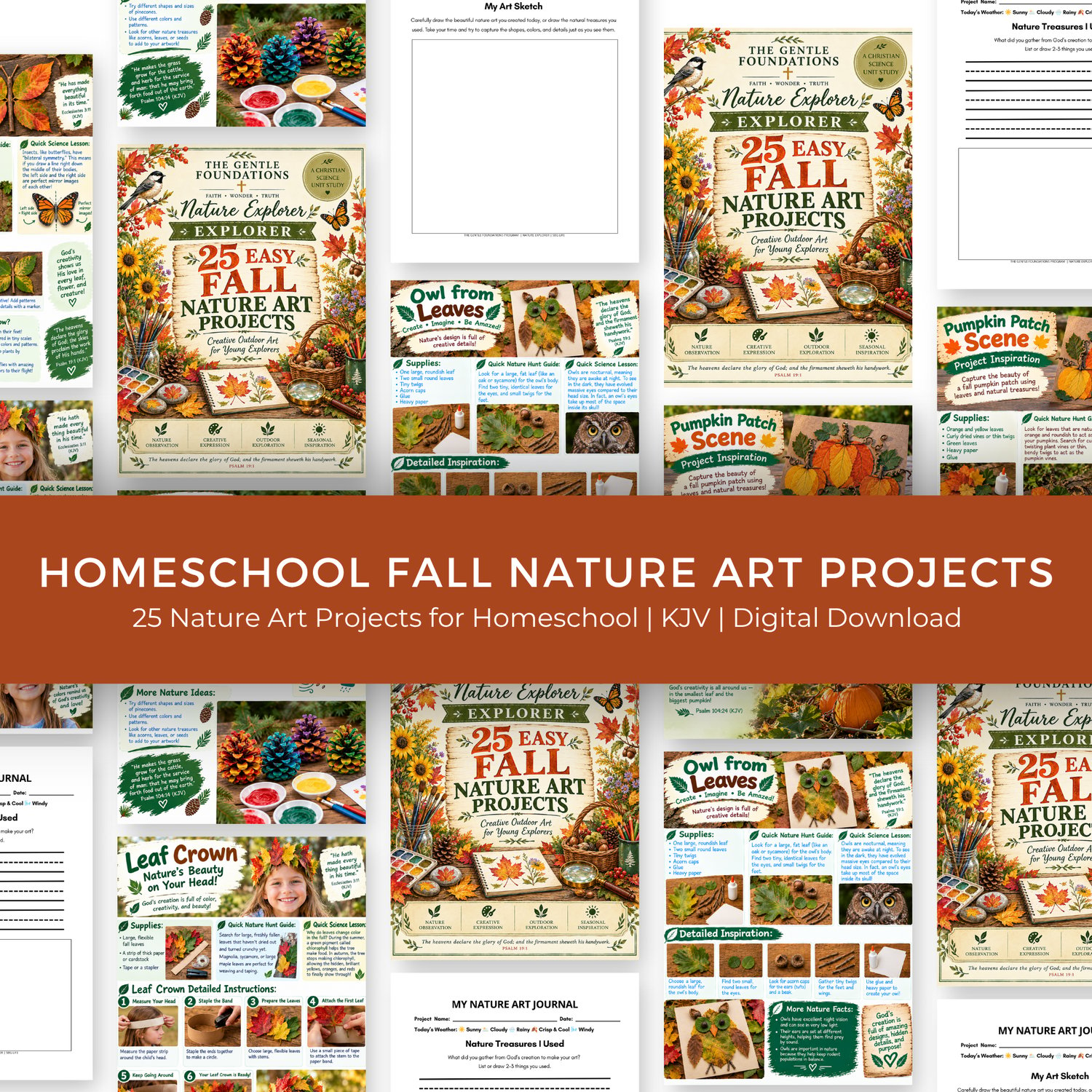
One of the greatest things about fall is that nature provides an endless supply of art materials. Leaves become butterflies. Acorns become flowers. Twigs become picture frames. Pinecones become miniature forests. With a little imagination, almost ev...
Read More
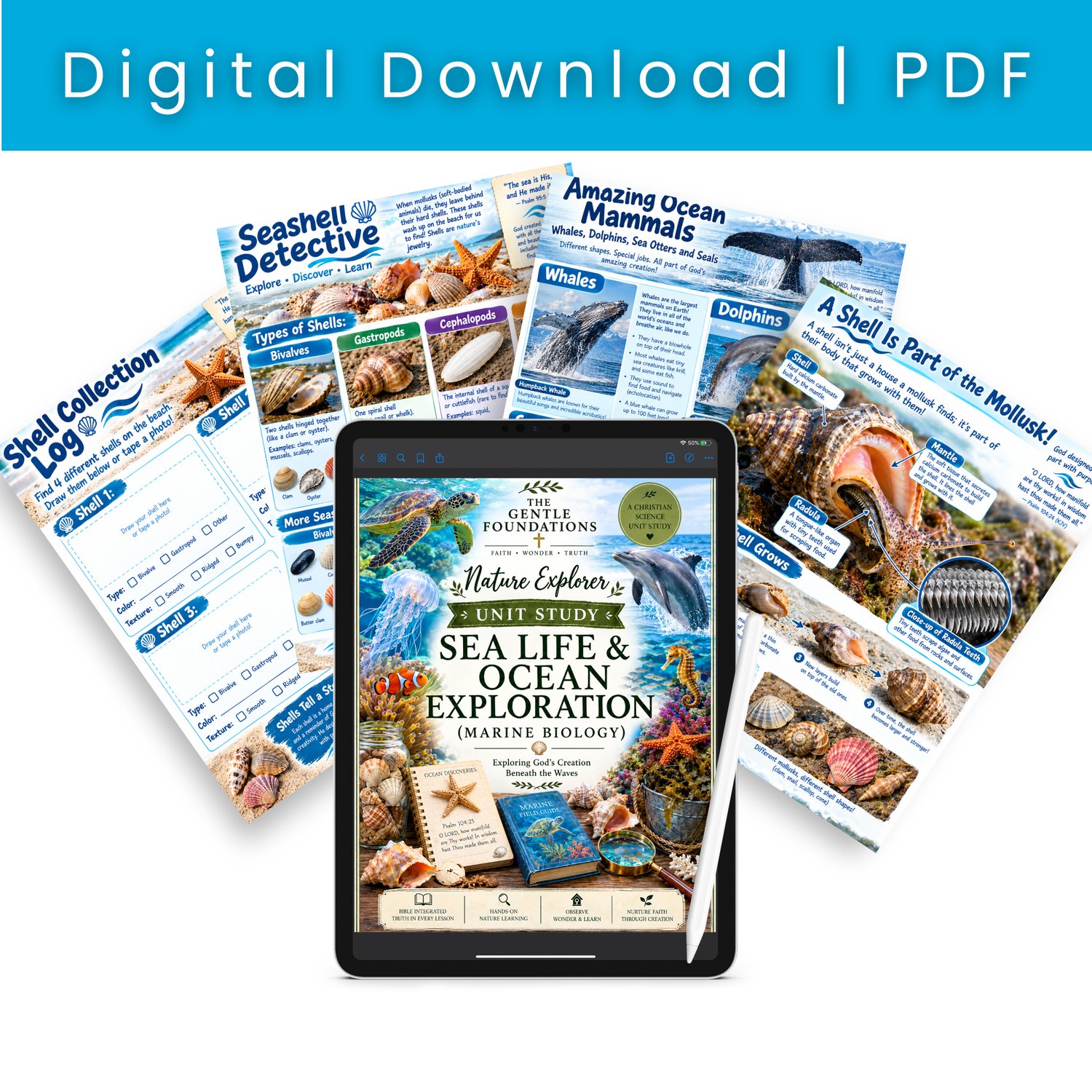
What lives beneath the ocean's surface? How do tides work? Why are coral reefs so important? How does a tiny organism like plankton help support enormous whales? The ocean is filled with questions like these—and that makes it an incredible place for...
Read More
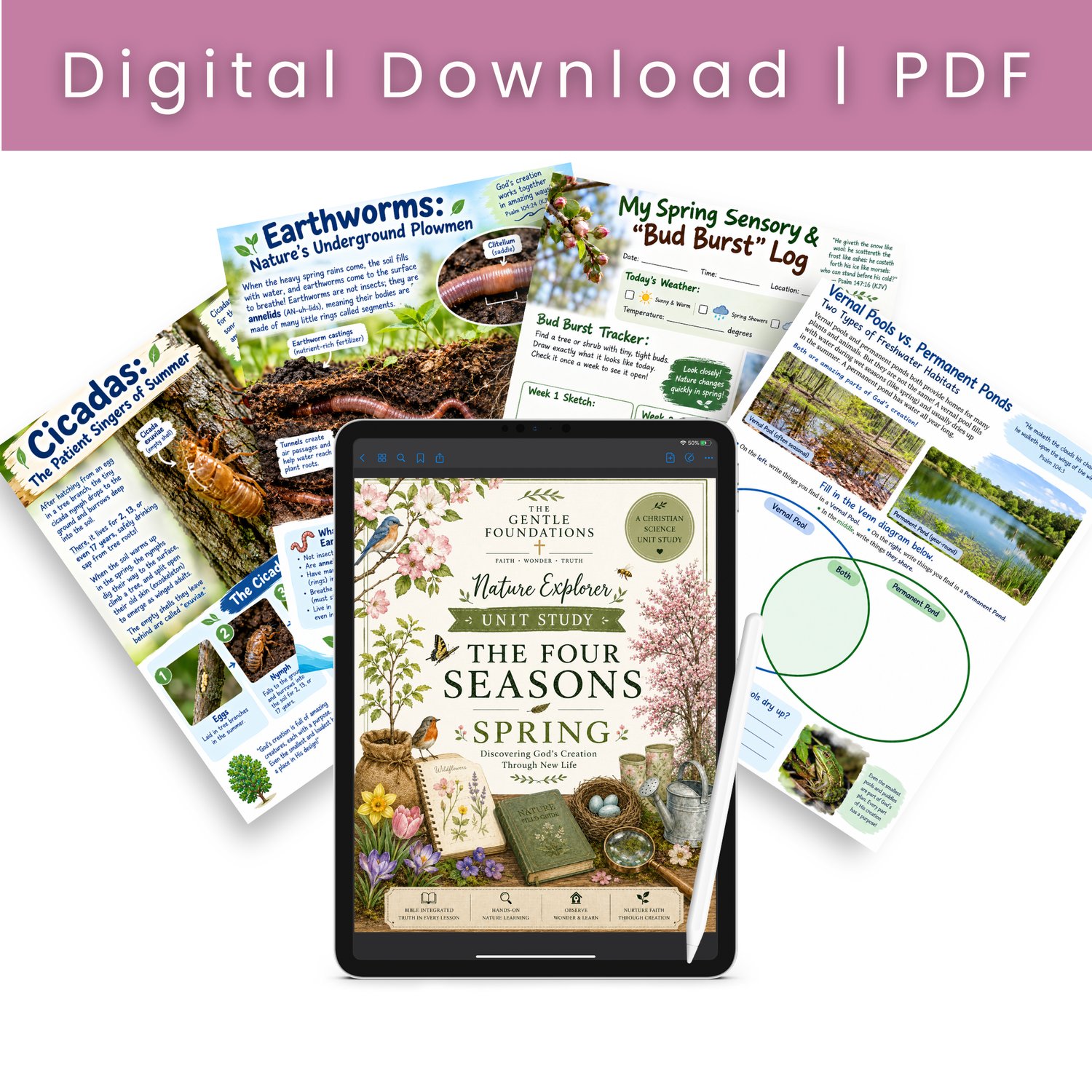
Spring is one of the most exciting seasons for nature study. Almost overnight, the world begins to change. Trees produce buds. Wildflowers emerge from the forest floor. Birds begin building nests. Frogs fill the evening air with songs. Insects appea...
Read More
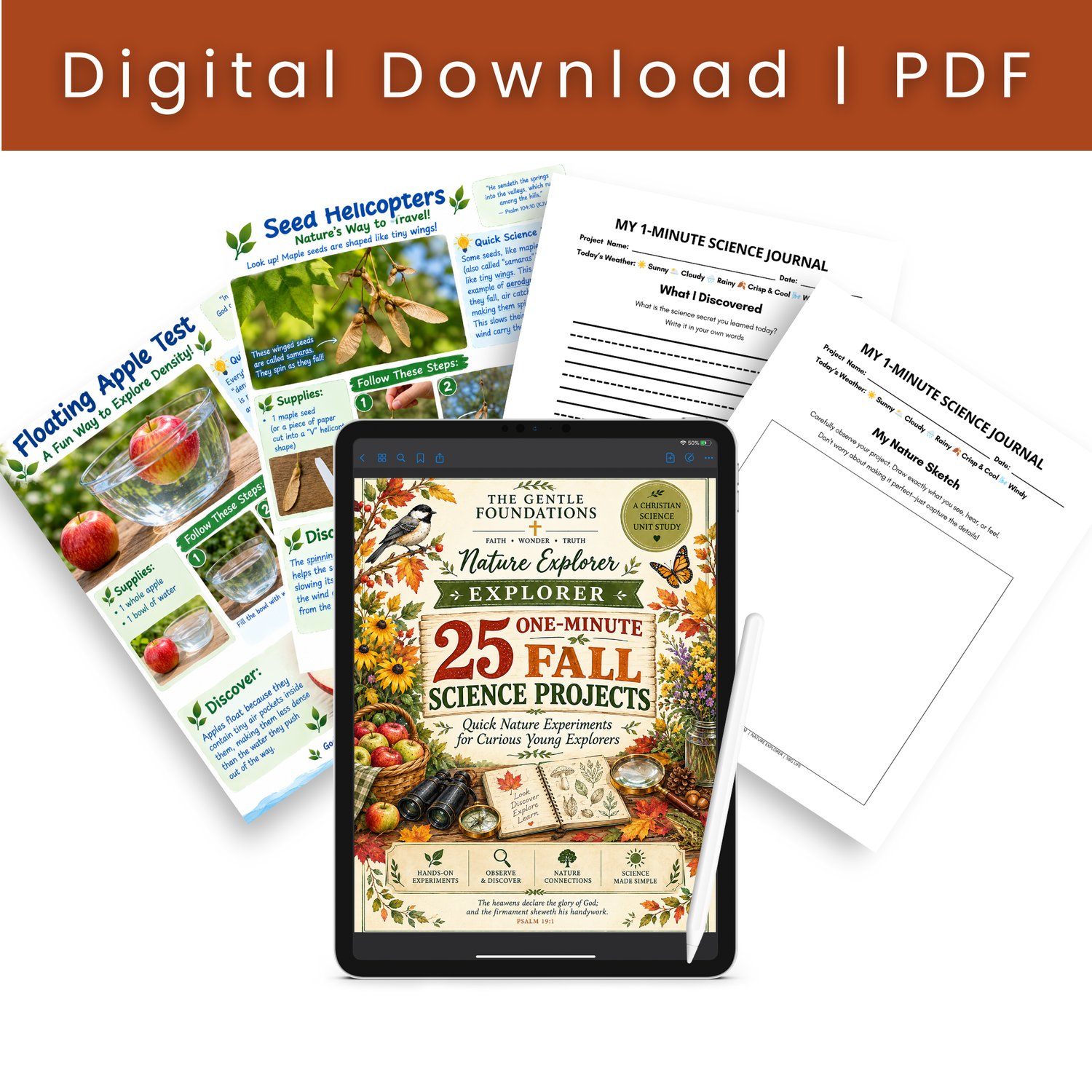
One of the biggest misconceptions about science is that it requires expensive supplies, complicated experiments, or long lessons. The truth is that some of the best science lessons happen during everyday moments outdoors. A falling leaf. A squirrel ...
Read More
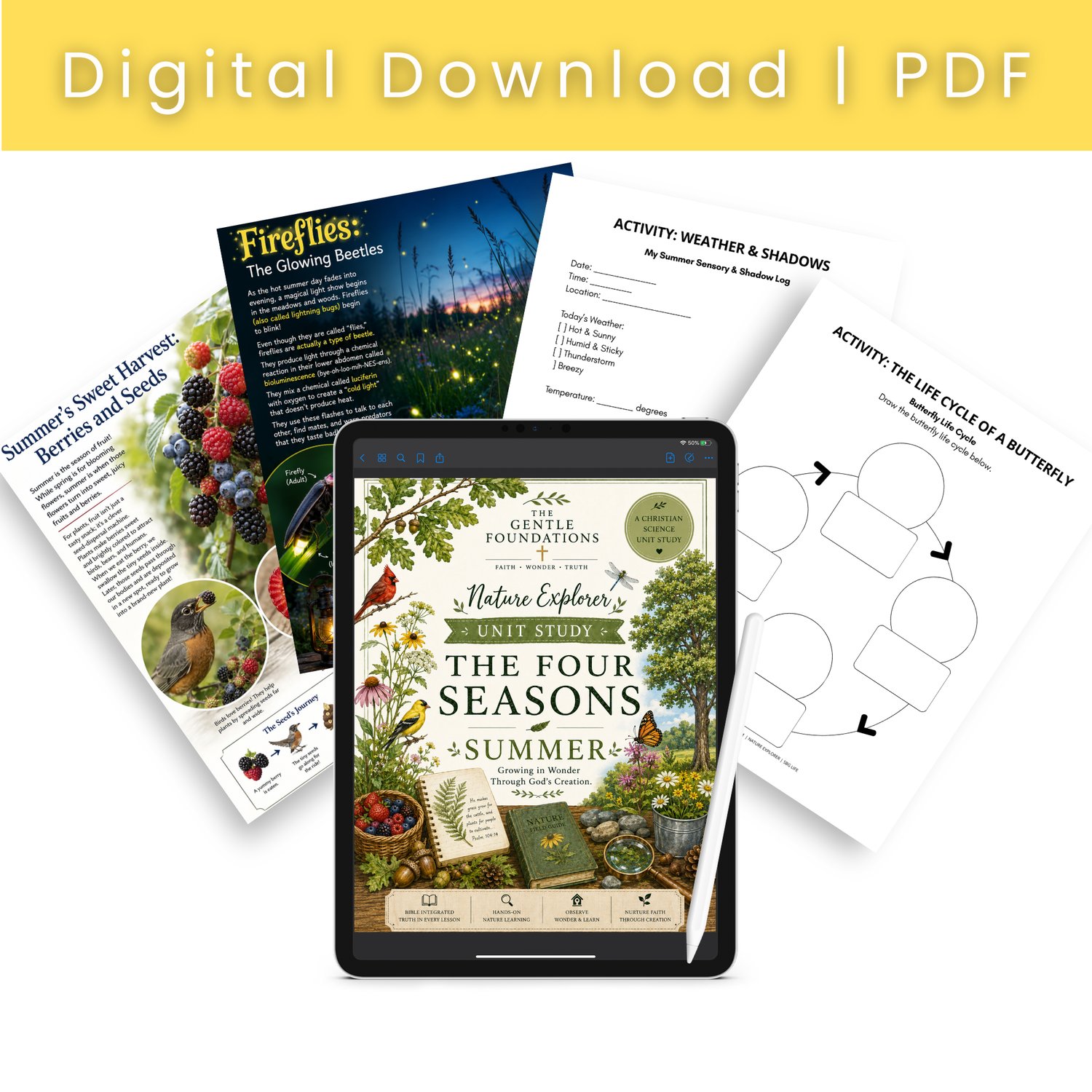
Summer is one of the best times of year for nature study. The days are longer, wildlife is active, flowers are blooming, and children naturally want to spend more time outdoors. What if those summer adventures could also become meaningful science le...
Read More
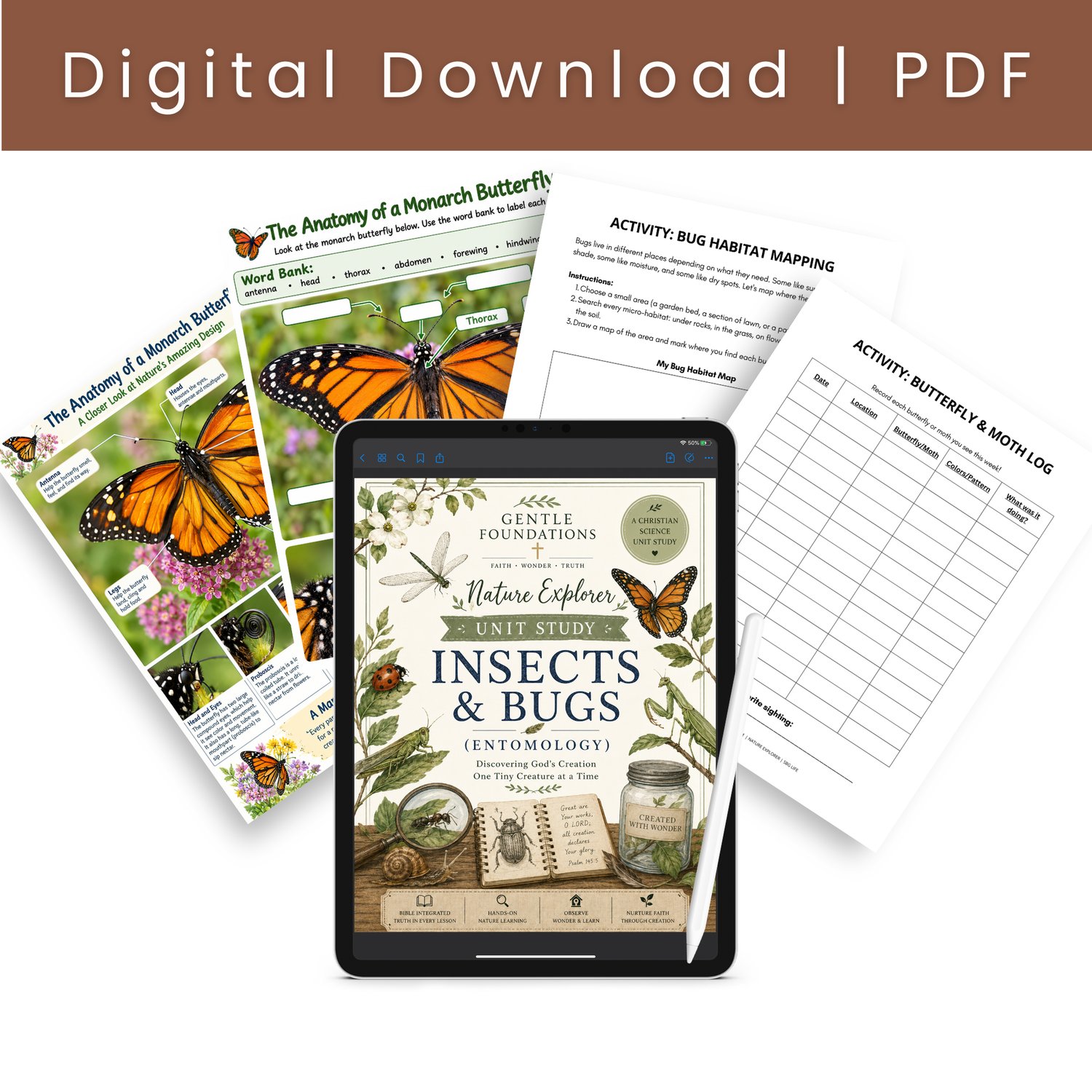
Discovering the Tiny Creatures All Around Us Some of the most fascinating creatures in nature are often the easiest to overlook. A busy ant carrying food. A dragonfly hovering over a pond. A monarch butterfly gliding through a meadow. A spider caref...
Read More
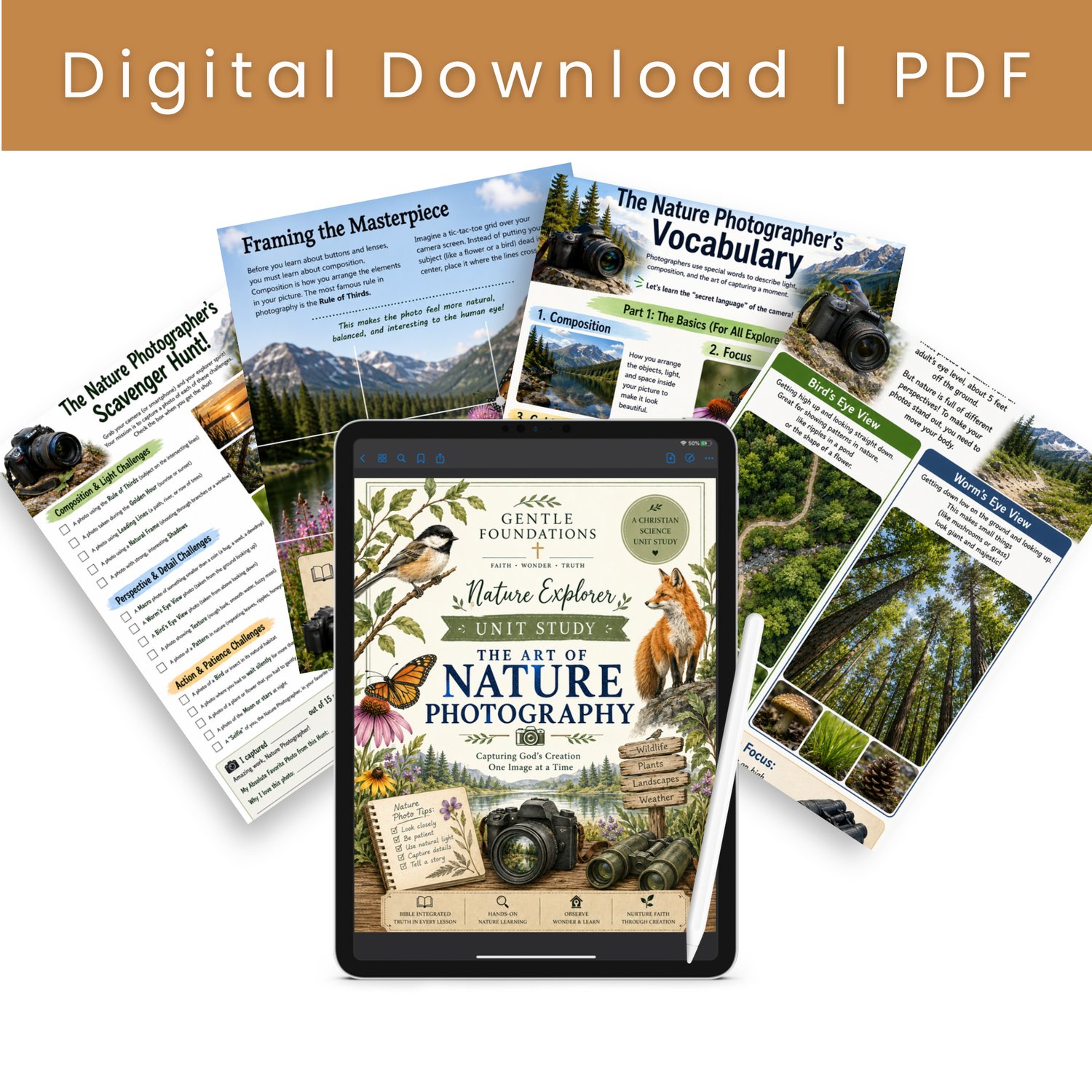
Photography is about much more than taking pictures. It teaches children to slow down, pay attention, and notice details that many people walk right past. A tiny flower. A spider web covered in dew. The patterns on a butterfly's wing. The texture of...
Read More
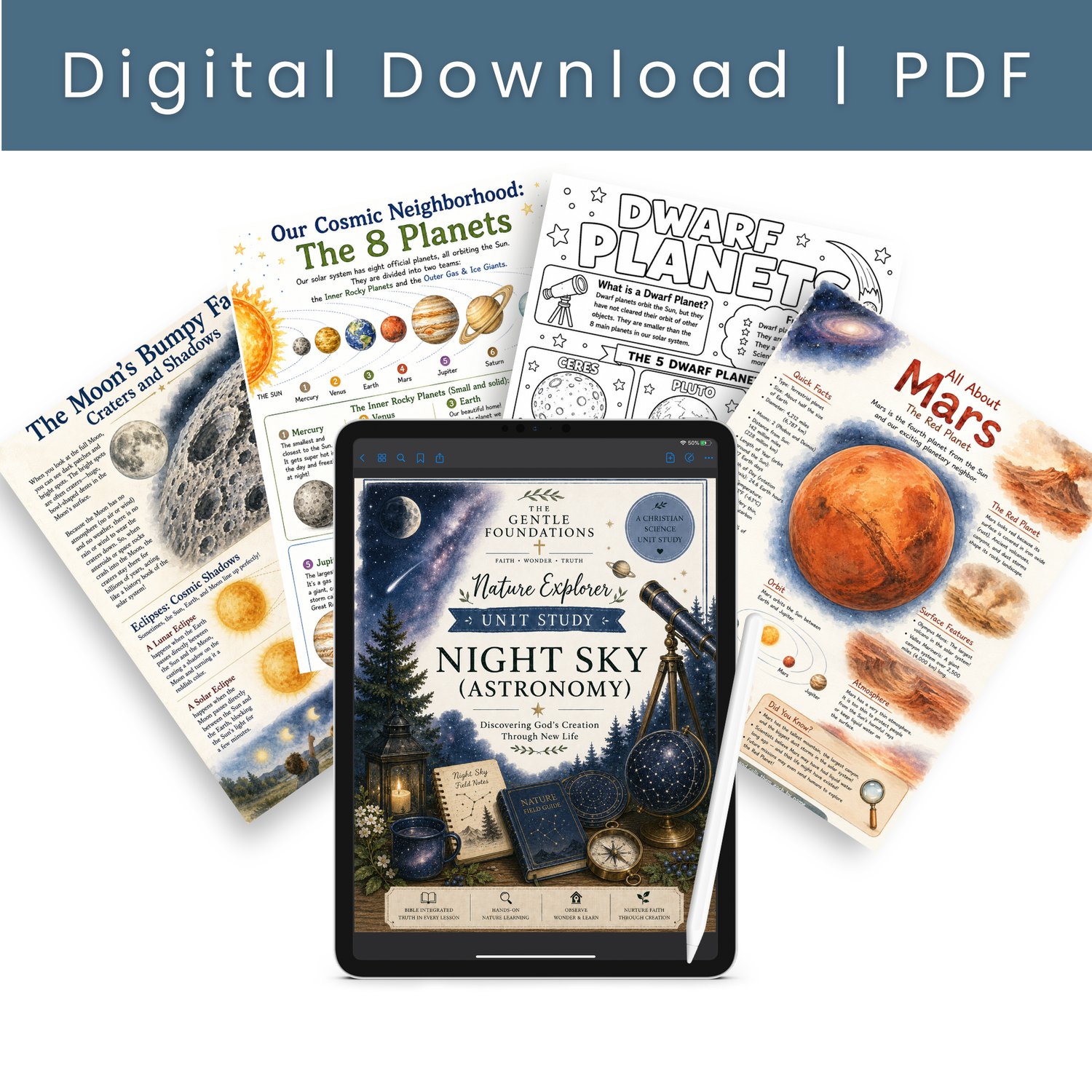
One of the easiest science classrooms to access is right outside your front door. When the Sun sets and the stars begin to appear, children naturally start asking questions. Why does the Moon change shape? What are stars made of? How far away are th...
Read More
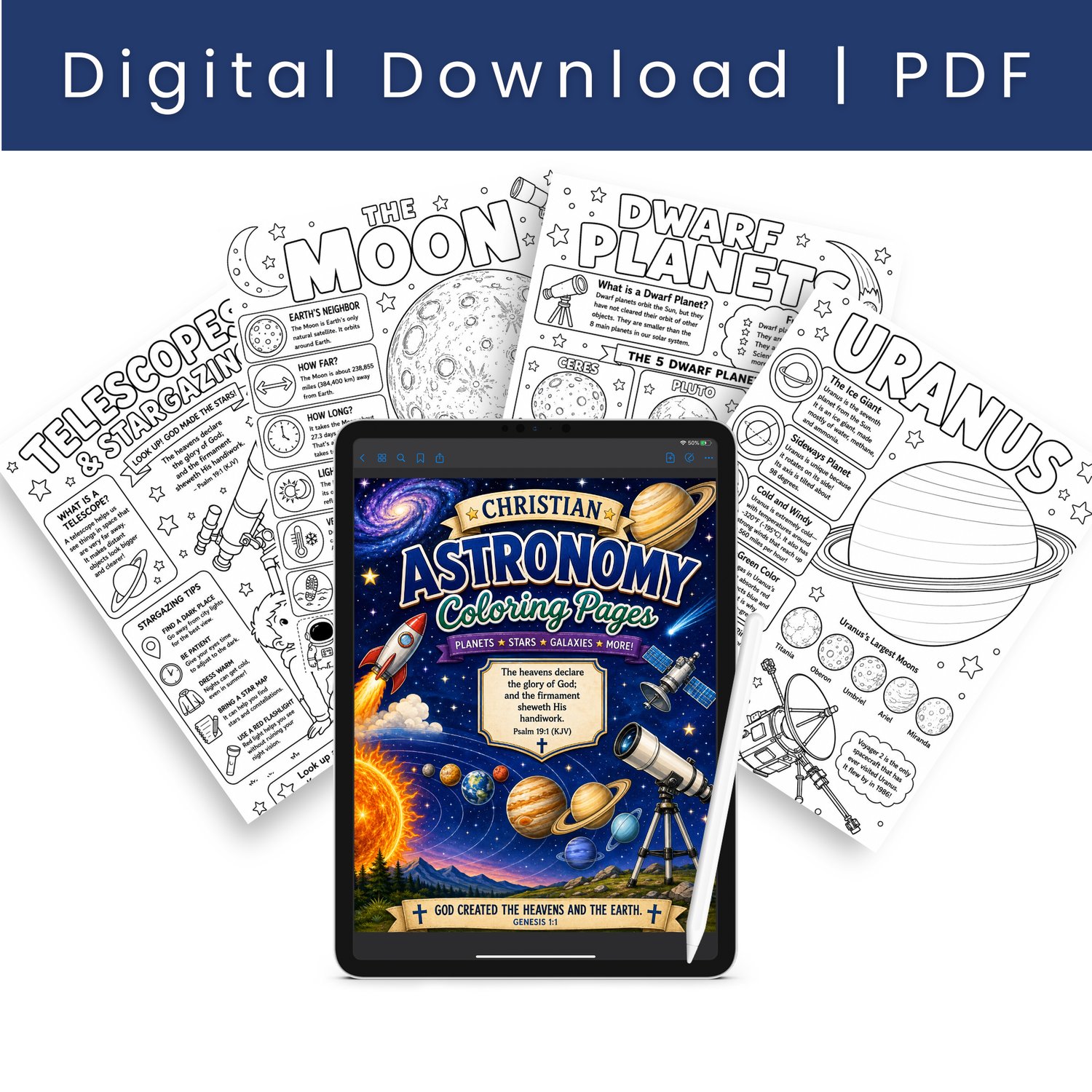
When children look up at the night sky, they naturally begin asking questions. What are stars? Why does the Moon change shape? How many planets are there? What is beyond our solar system? Astronomy is one of the most fascinating sciences for childre...
Read More
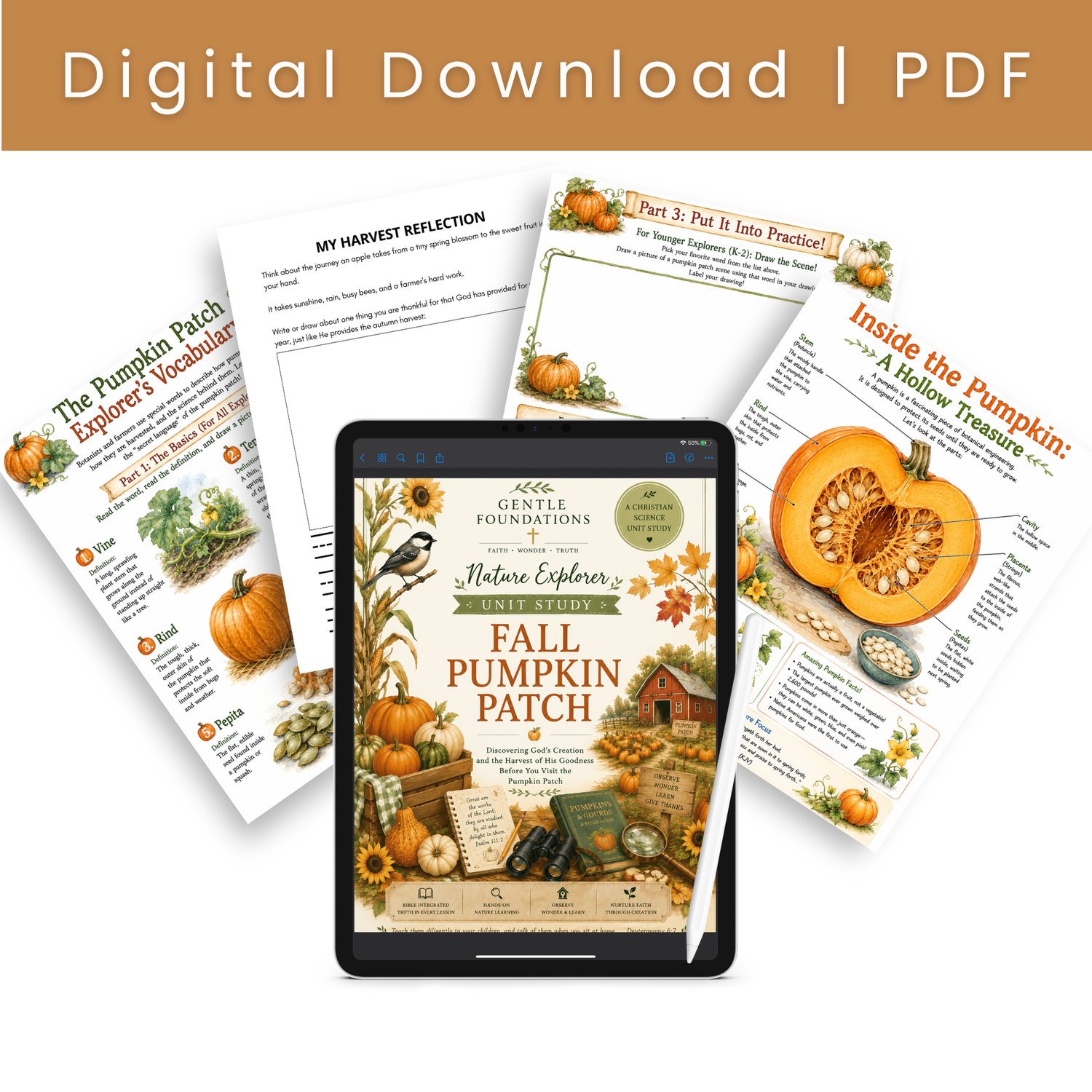
For many homeschool families, a trip to the pumpkin patch is one of the highlights of autumn. Children love exploring rows of pumpkins, riding hay wagons, and choosing the perfect pumpkin to bring home. But did you know a pumpkin patch can also beco...
Read More