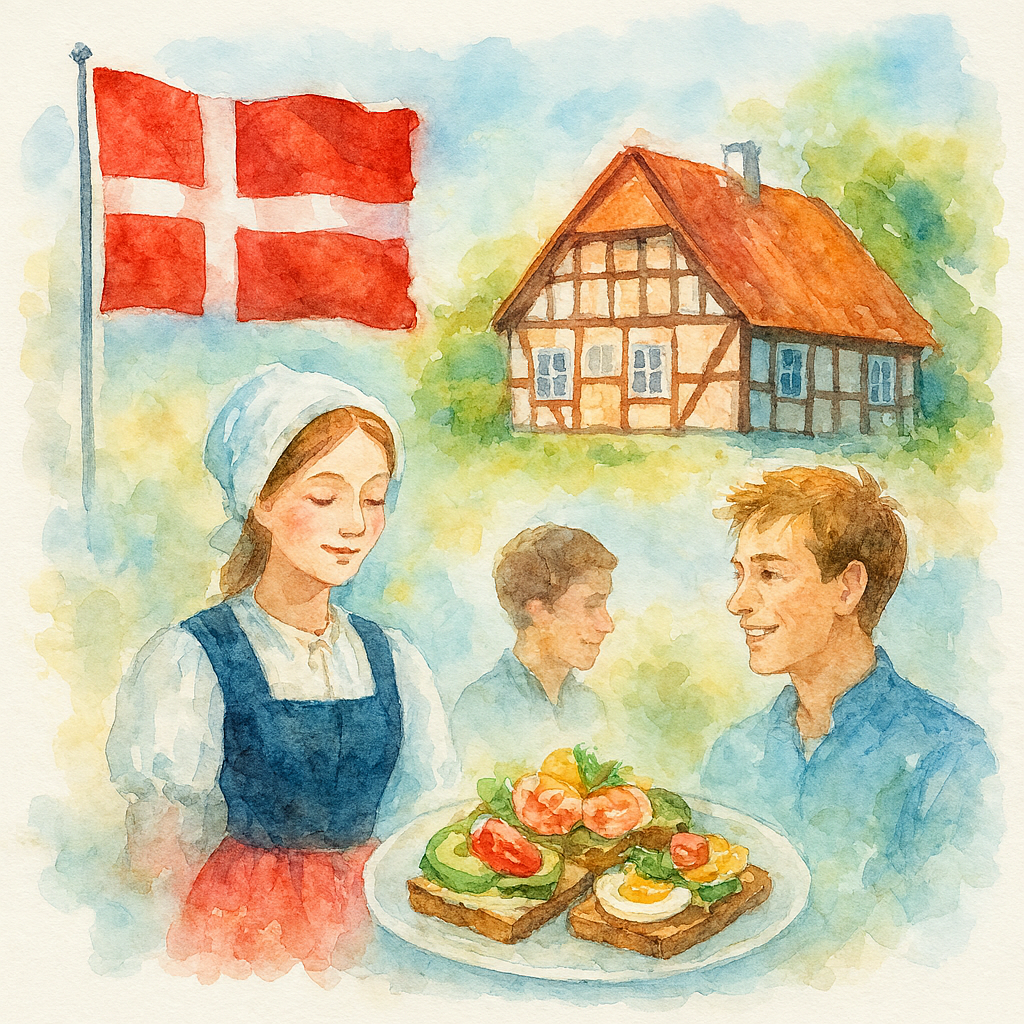
A Nordic Legacy of Clarity and Community Spanning the windswept Jutland Peninsula and an intricate archipelago of islands, Denmark is a nation whose identity is built on linguistic continuity, social cohesion, and a cultural ethos that blends ancien...
Read More
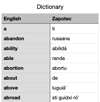
Zapotec Dictionary
On Sale
$1.99
Pay what you want:
(minimum $1.99)
$
The Zapotec languages, a group of approximately 50 closely related indigenous Mesoamerican languages, form a significant branch of the Oto-Manguean language family. These languages are spoken by the Zapotec people, primarily residing in the southwestern-central highlands of Mexico. According to a 2020 census, nearly half a million individuals speak Zapotec, with the majority residing in the state of Oaxaca. Additionally, Zapotec-speaking communities can be found in neighboring states such as Puebla, Veracruz, and Guerrero. Furthermore, labor migration has introduced a number of native Zapotec speakers to the United States, particularly in California and New Jersey. Notably, most Zapotec-speaking communities are highly bilingual, proficient in both Spanish and their native language.
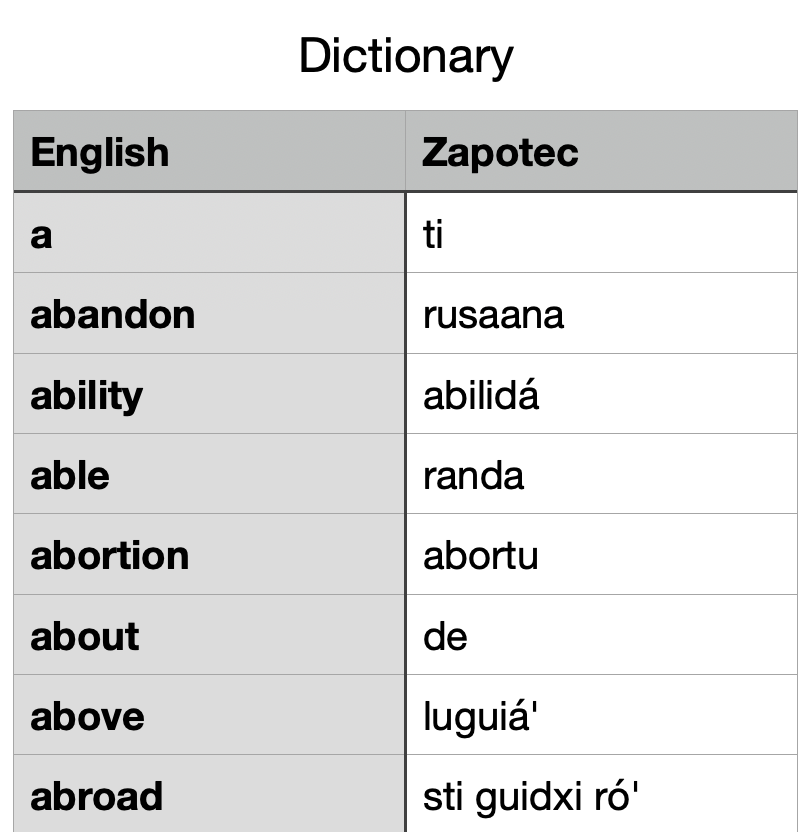
This English to Zapotec Dictionary includes:
- Over 2,800 word-to-word entries.
- Spreadsheet (Numbers/Excel) and PDF formats.
Disclaimer/Transparency:
This dictionary is a self-published, experimental project based on the NGSL (New General Service List) corpus, created as an informational resource rather than an authoritative source of translations. Users should verify entries with qualified translators or native speakers, as machine translation is limited by context sensitivity, synonym substitutions, polysemy, and the difficulty of accurately rendering colloquial, idiomatic, or lesser-documented languages. Some translations may be approximations, phonetic renderings, or affected by misspellings, non-standard orthographies, or colonial linguistic influence. All entries were produced using dedicated translation software, not general-purpose AI, and occasional typographical or interpretive errors may occur. Every effort has been made to ensure accuracy and cultural sensitivity, though any perceived inaccuracies or insensitivities are unintentional. This dictionary aims to support language preservation and learning for students, researchers, and enthusiasts, and readers are encouraged to adapt or expand upon it. Though not professionally published, it represents an ongoing effort toward linguistic accessibility, with proceeds supporting future editions and related projects.
Please be aware that your spreadsheet software or PDF viewer might render these files differently than shown in the samples. These files were created using Apple Numbers. You may need to adjust your document settings to ensure they function as intended. Since they are in spreadsheet format, you can also simply copy the data and recreate the spreadsheet to your preference.
Sorry, we are unable to accept returns or offer refunds on this product. All sales final.