
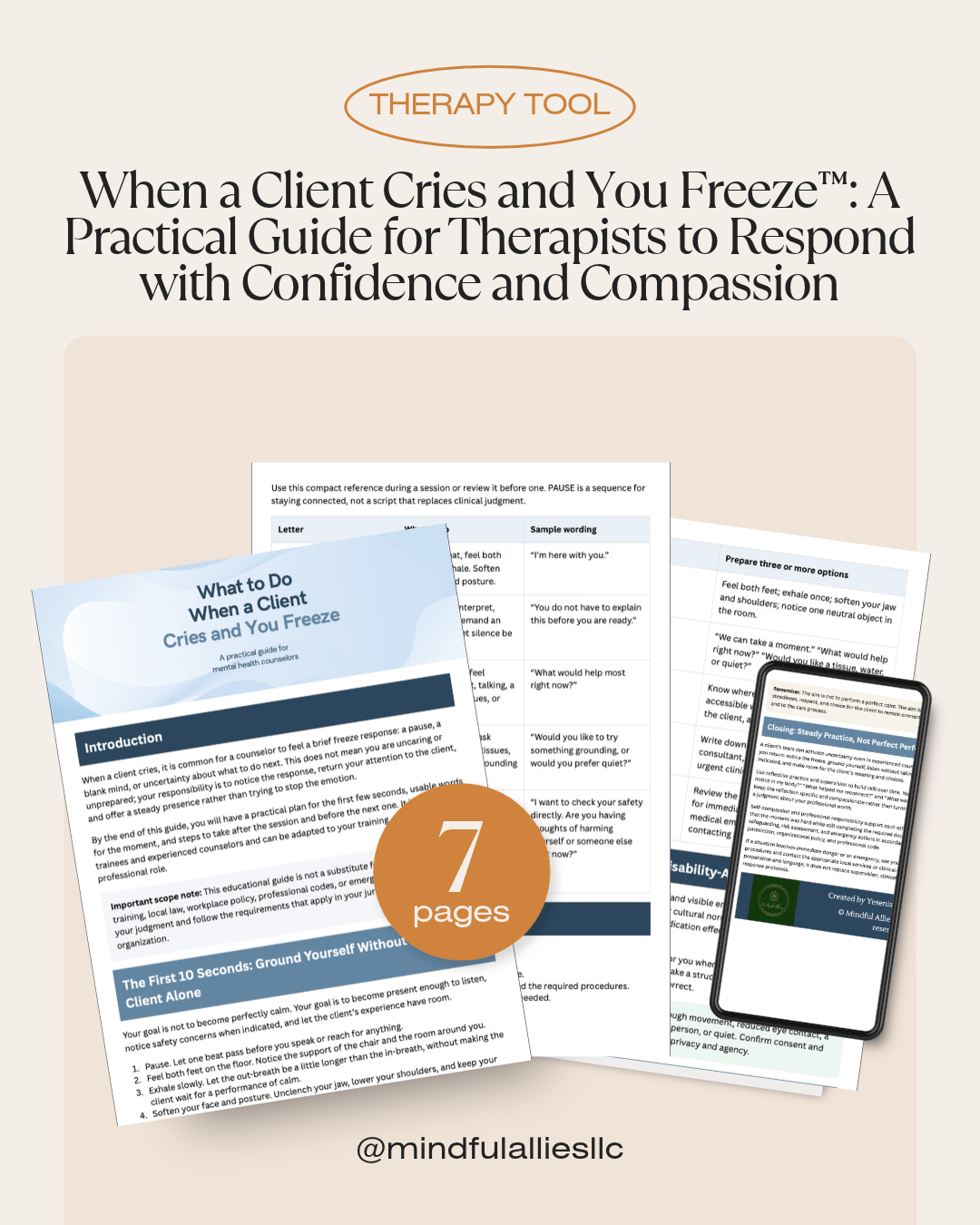
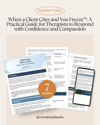

When a Client Cries and You Freeze™: A Practical Guide for Therapists to Respond with Confidence and Compassion
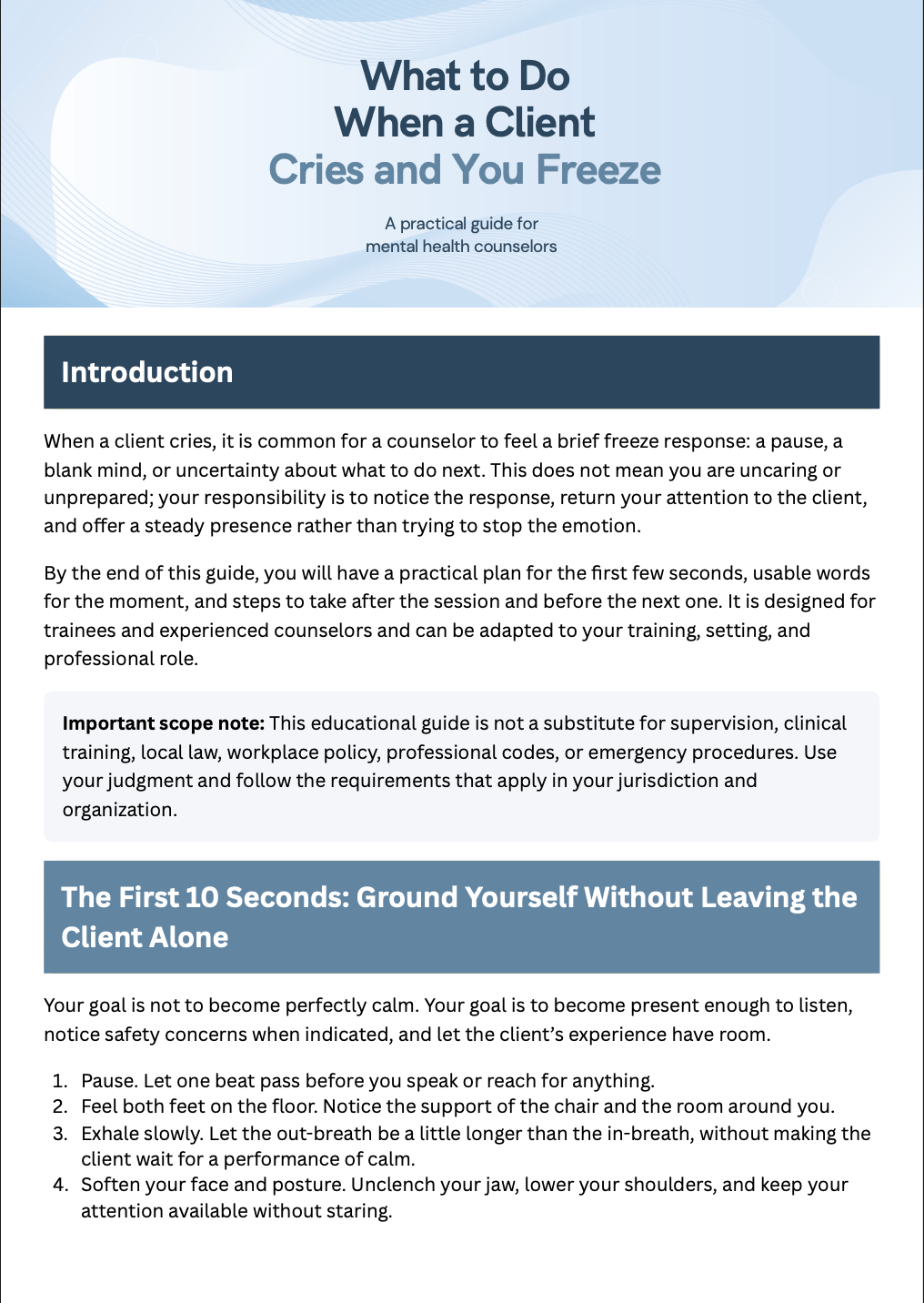
When a client cries and you suddenly don’t know what to say, you can still respond with compassion, steadiness, and professional care.
Created by a Licensed Mental Health Counselor (LMHC), What to Do When a Client Cries and You Freeze is a practical resource designed to help counseling trainees and experienced counselors navigate the moments when a client becomes tearful and the therapist feels uncertain, overwhelmed, or momentarily stuck.
A client’s tears can bring up many questions: Should I speak or stay quiet? Should I offer reassurance? What if I say the wrong thing? What if I freeze and cannot find the right words? This guide helps make those moments feel more manageable by offering simple grounding steps, usable language, decision-making support, and strategies for reflecting after the session.
Rather than expecting therapists to respond perfectly, this resource emphasizes presence, curiosity, cultural responsiveness, and thoughtful clinical judgment. It provides a flexible plan that can be adapted to your training, therapeutic setting, professional role, and the individual needs of the client.
What’s Included
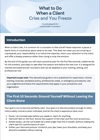
✔️ 1. The First 10 Seconds: Ground Yourself Without Leaving the Client Alone
Learn simple ways to notice your own stress response, reconnect with the present moment, and remain emotionally available to the client without feeling pressured to produce the perfect response.
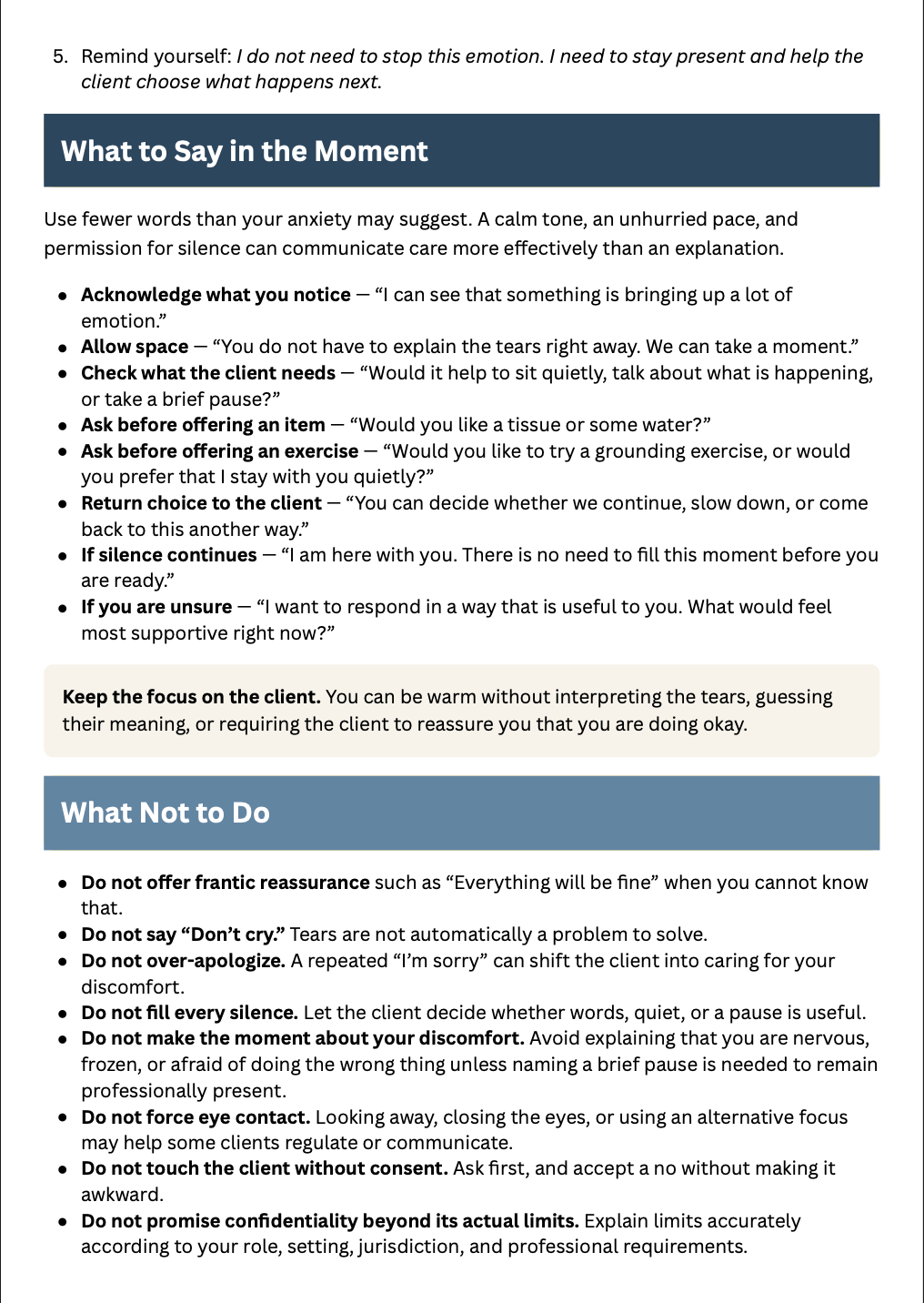
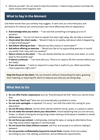
✔️ 2. What to Say in the Moment
Explore supportive, natural-sounding phrases that acknowledge the client’s emotions, communicate presence, and invite the client to proceed at a comfortable pace without rushing or minimizing their experience.
✔️ 3. What Not to Do
Review common responses that may unintentionally invalidate, pressure, distract, or overwhelm a tearful client—and consider more supportive alternatives.
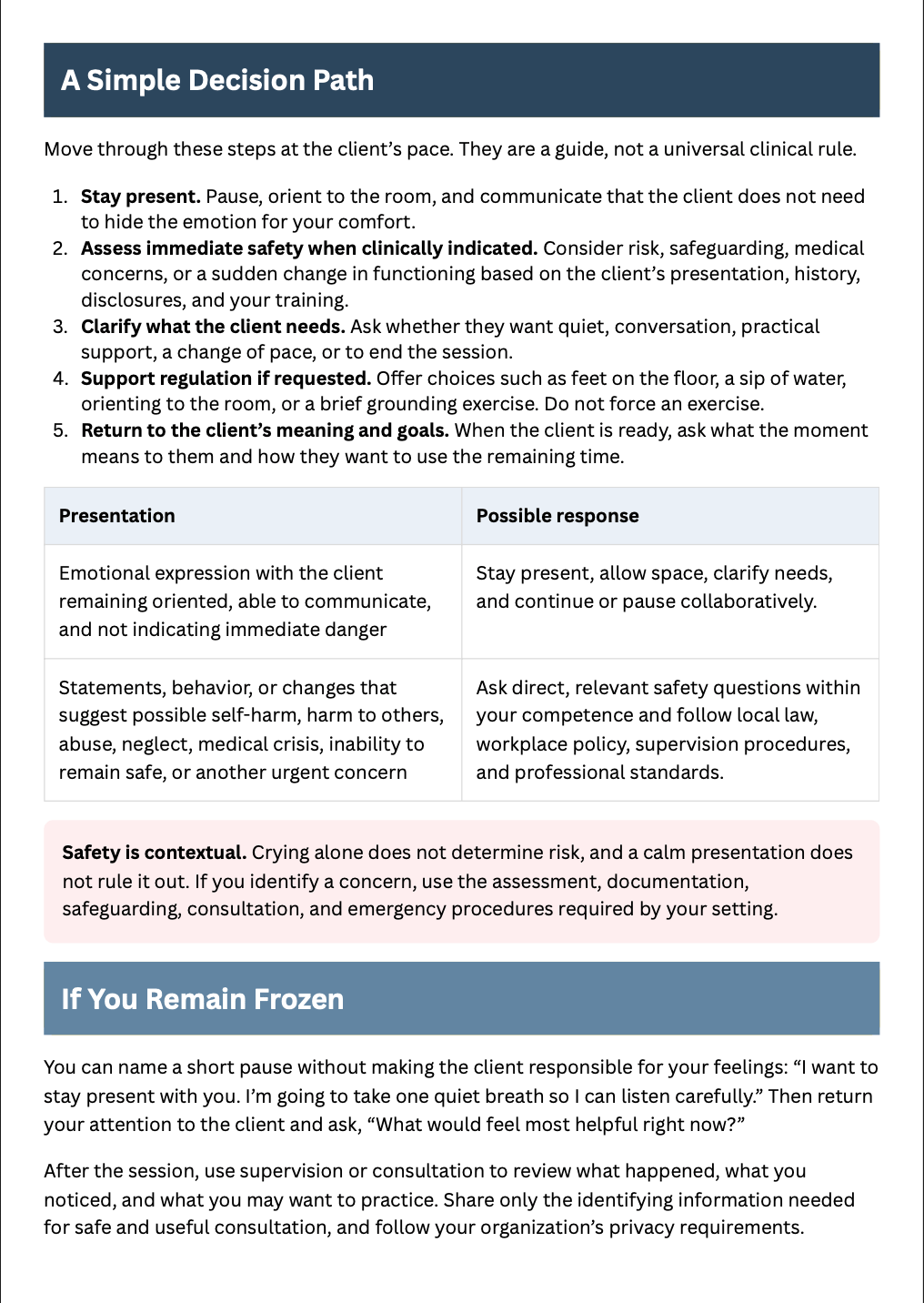
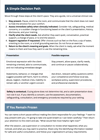
✔️ 4. A Simple Decision Path
Use a practical decision-making guide to help determine whether to pause, offer a brief reflection, check what the client needs, explore the emotion, or consider whether additional support is necessary.
✔️ 5. If You Remain Frozen
Identify small, realistic actions to take when words still do not come. Learn how to acknowledge a pause, return attention to the client, and recover your clinical footing without overexplaining your internal experience.
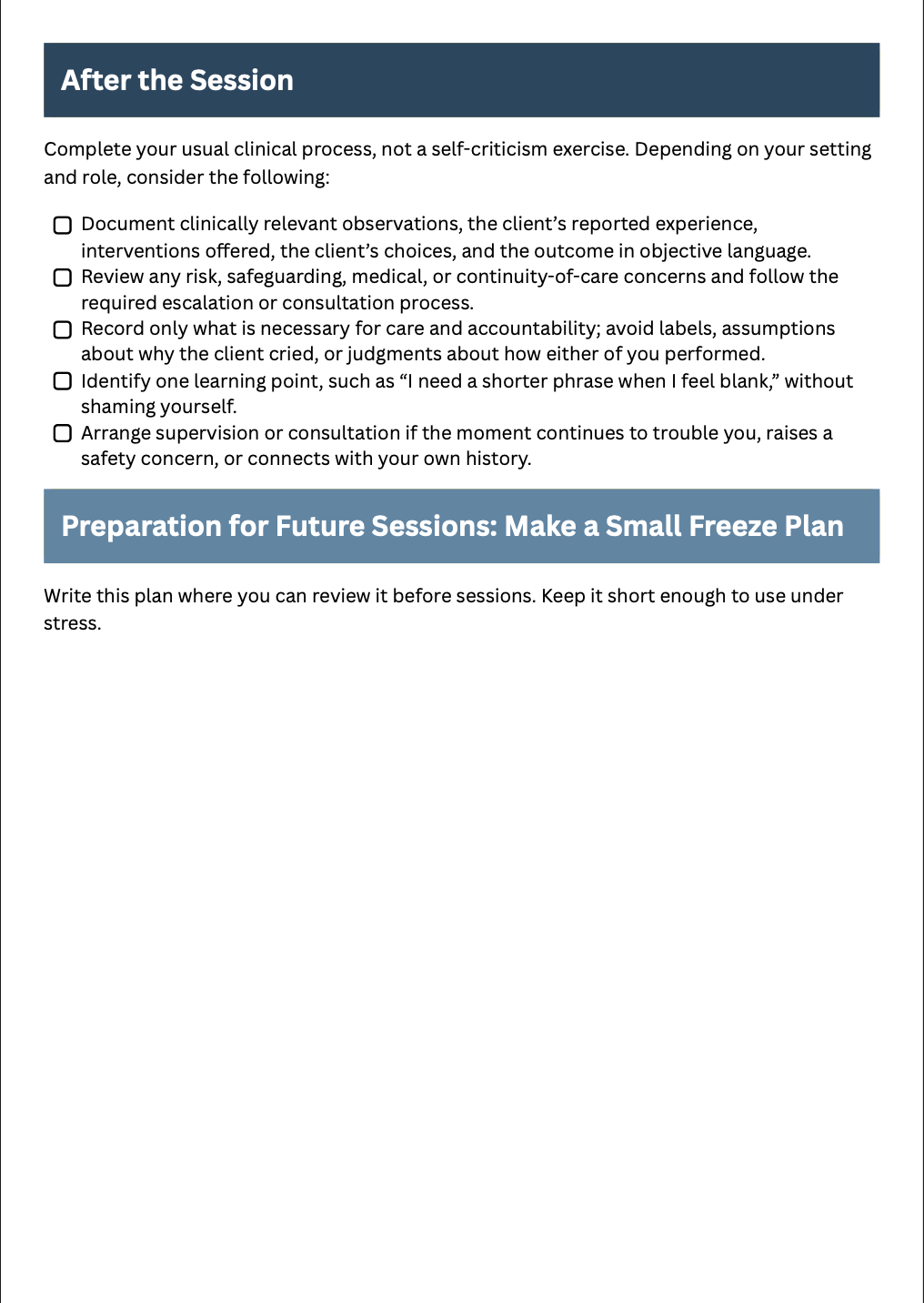
✔️ 6. After the Session
Reflect on what happened, notice your own emotional response, identify what felt difficult, and consider what you might do differently next time. This section encourages learning without unnecessary self-criticism.
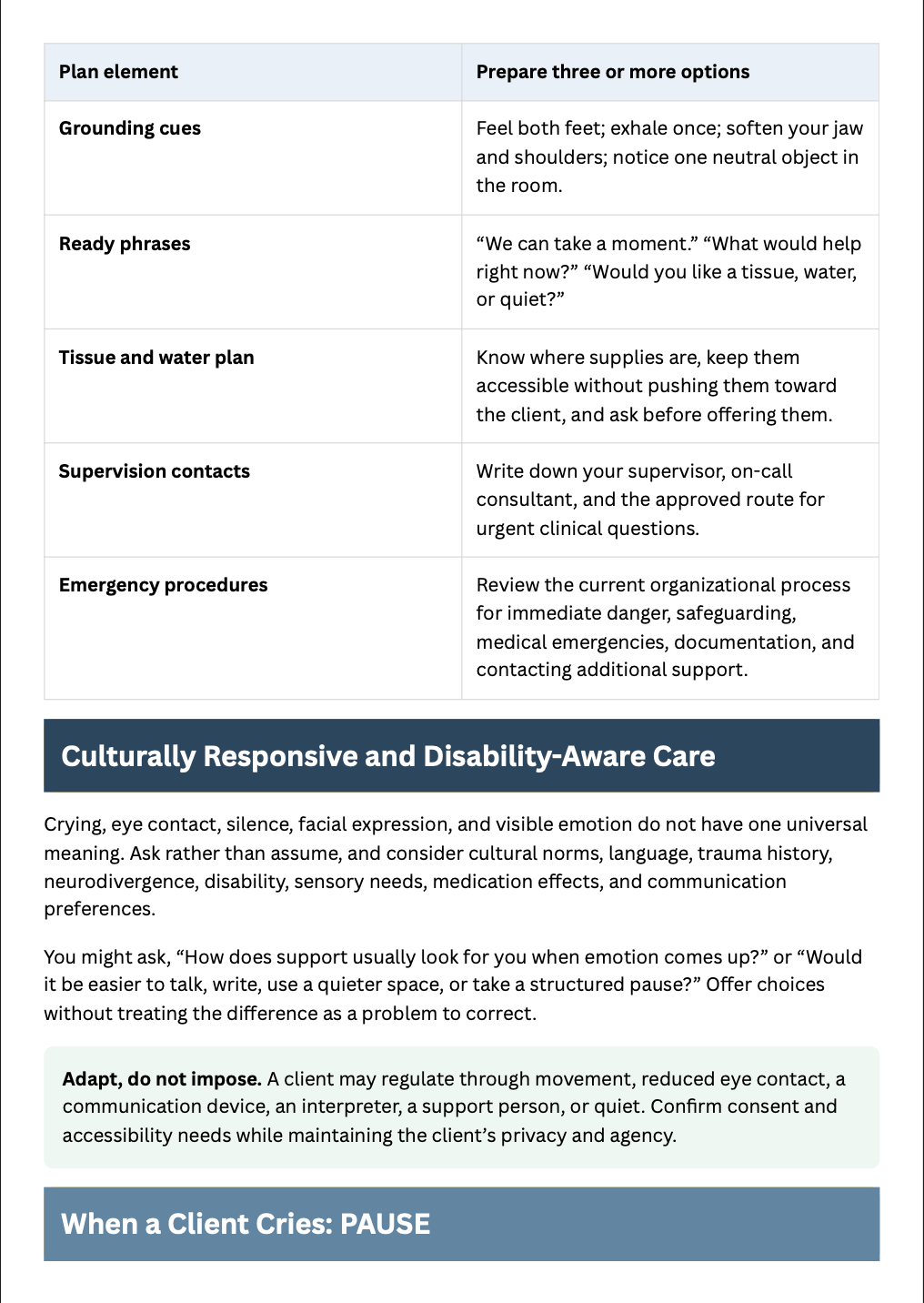
✔️ 7. Preparation for Future Sessions: Make a Small Freeze Plan
Develop a simple, personalized plan with grounding strategies, a few prepared phrases, and reminders you can revisit before sessions that may involve emotionally intense material.
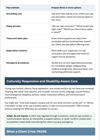
✔️ 8. Culturally Responsive and Disability-Aware Care
Consider how culture, communication preferences, neurodivergence, disability, trauma history, and individual expressions of emotion may influence how tears are experienced and responded to. Emphasizes asking rather than assuming what support a client needs.
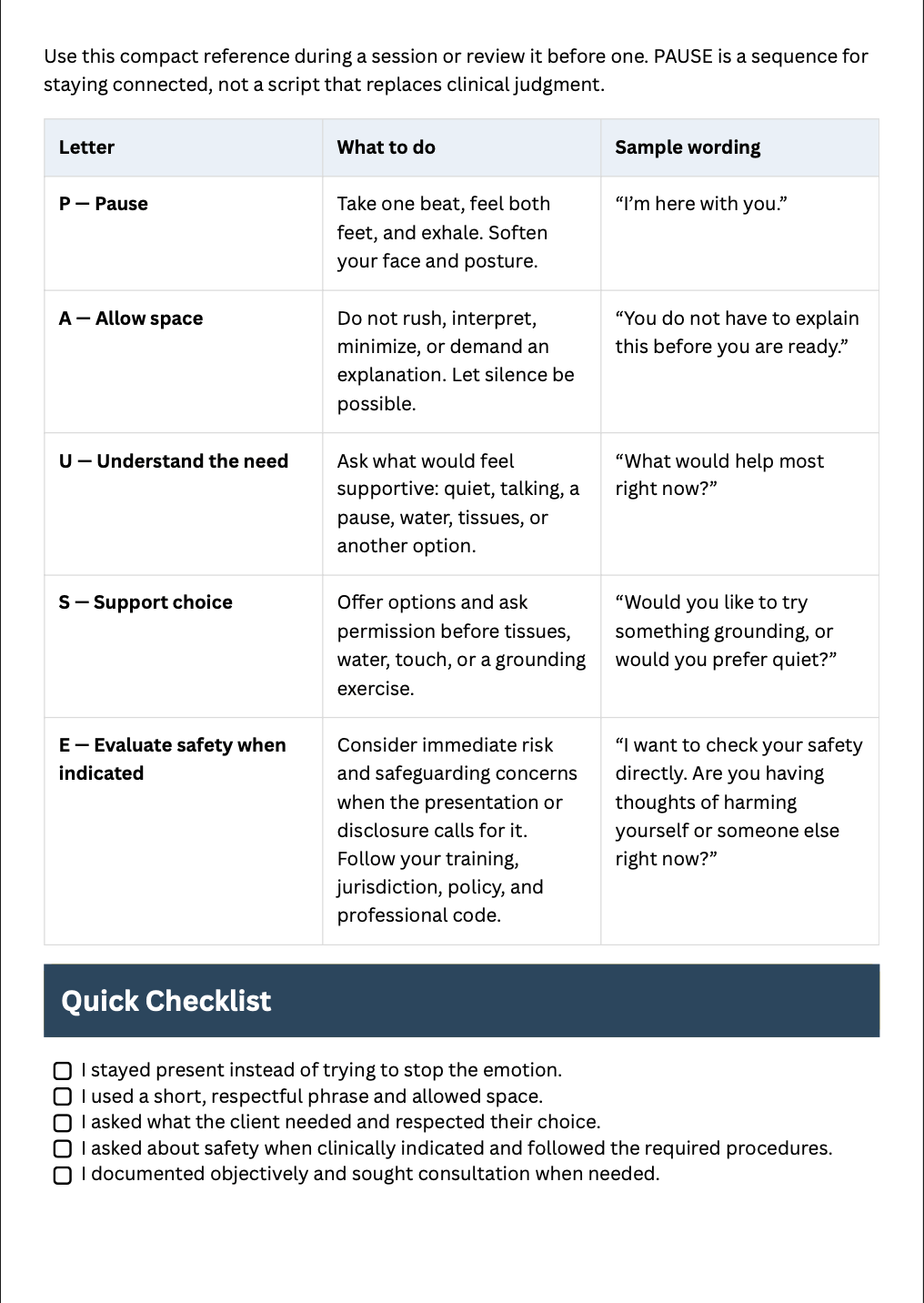
✔️ 9. When a Client Cries: PAUSE
Use a memorable framework to support a more intentional response: pause, attend to your own grounding, understand the client’s immediate needs, support their pace, and evaluate what may be helpful next.
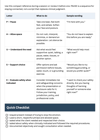
✔️ 10. Quick Checklist
Keep key reminders accessible for before, during, and after a session when you want a brief reference rather than a lengthy review.
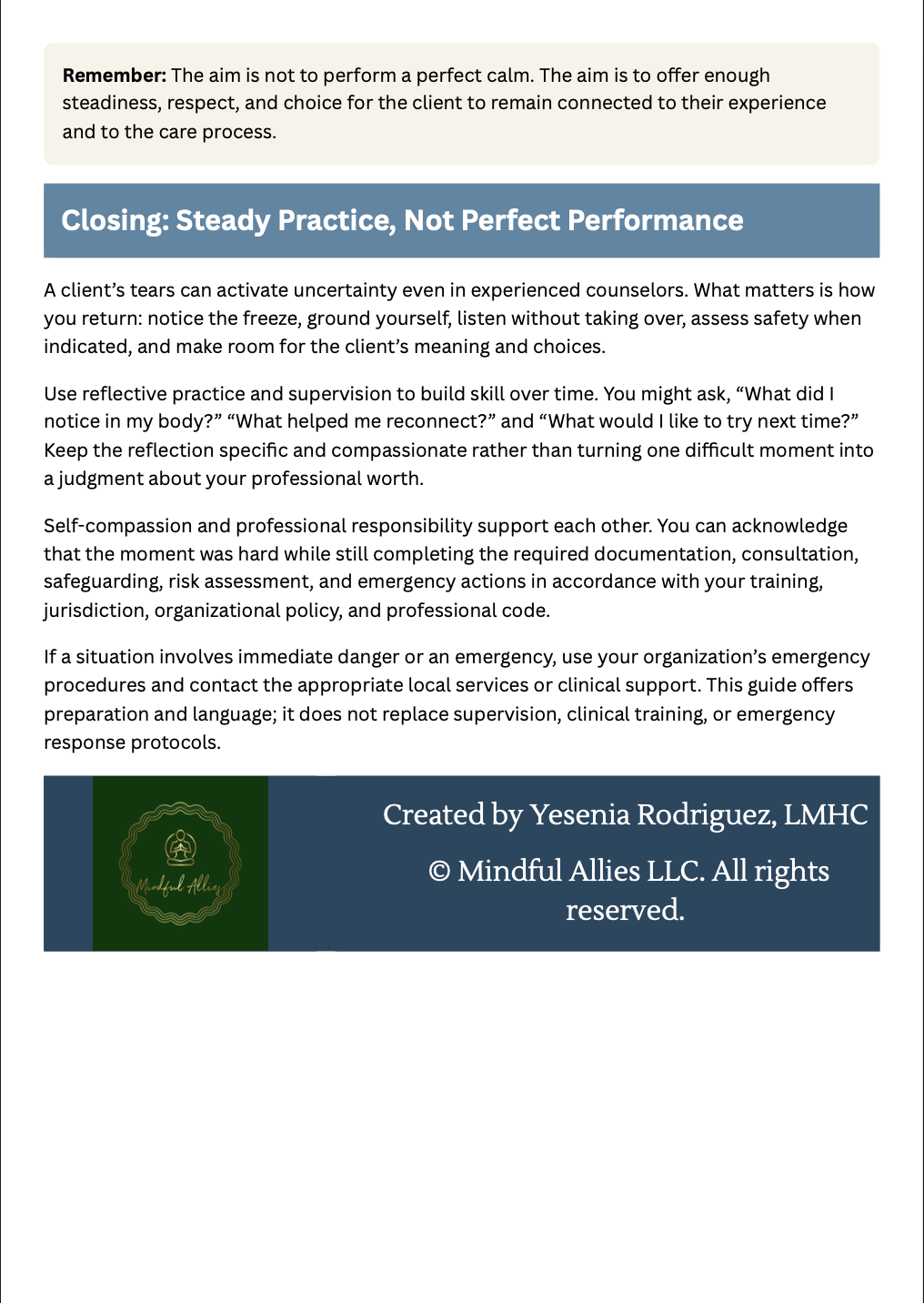
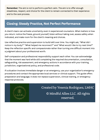
✔️ 11. Closing: Steady Practice, Not Perfect Performance
Reinforce the idea that effective therapeutic presence does not require flawless words or immediate certainty. Build a more compassionate approach to developing confidence and responding thoughtfully in emotionally charged moments.
Why Counselors and Counseling Students Download This Resource
- Feel more prepared: Have practical steps and supportive language ready for moments when emotions arise unexpectedly.
- Reduce performance pressure: Shift the focus from saying the perfect thing to remaining present, responsive, and attentive.
- Build clinical confidence: Practice ways to navigate uncertainty without abandoning the client’s emotional experience.
- Support reflective practice: Use post-session reflection to identify learning opportunities and prepare for future sessions.
- Strengthen therapeutic responsiveness: Consider the client’s preferences, context, communication style, and immediate needs.
- Keep guidance within reach: Refer to the quick checklist and personalized freeze plan when preparing for sessions.
Ideal For Individuals Who:
- Are counseling students, practicum students, or clinical interns developing foundational counseling skills.
- Are early-career therapists building confidence in emotionally intense sessions.
- Are experienced counselors who occasionally feel uncertain when a client cries.
- Want practical examples of what to say—and what to avoid—during moments of emotional vulnerability.
- Value culturally responsive, disability-aware, and client-centered care.
- Want a flexible resource they can adapt to their professional role, training, setting, and scope of practice.
You do not have to be perfect to be present. Download What to Do When a Client Cries and You Freeze for practical guidance that can help you approach tearful moments with greater steadiness, compassion, and clinical intention—one moment at a time.
Please note: This resource is intended for educational and professional development purposes. It does not replace clinical supervision, consultation, professional judgment, crisis protocols, or applicable ethical and legal requirements. Counselors should adapt the guidance to the client’s needs, clinical context, and their professional role.
Licensing & Usage
This digital product is licensed for personal and individual use only. Your download grants a single-user, non-transferable license to use the material for personal learning, educational support, or professional development.
This product may not be shared, copied, reproduced, resold, redistributed, uploaded, or distributed in any form—digital or physical—without prior written permission from the author.
All content is protected under copyright law. Unauthorized use or distribution is strictly prohibited.
Thank you for respecting the time, care, and professional expertise that went into creating this resource.