

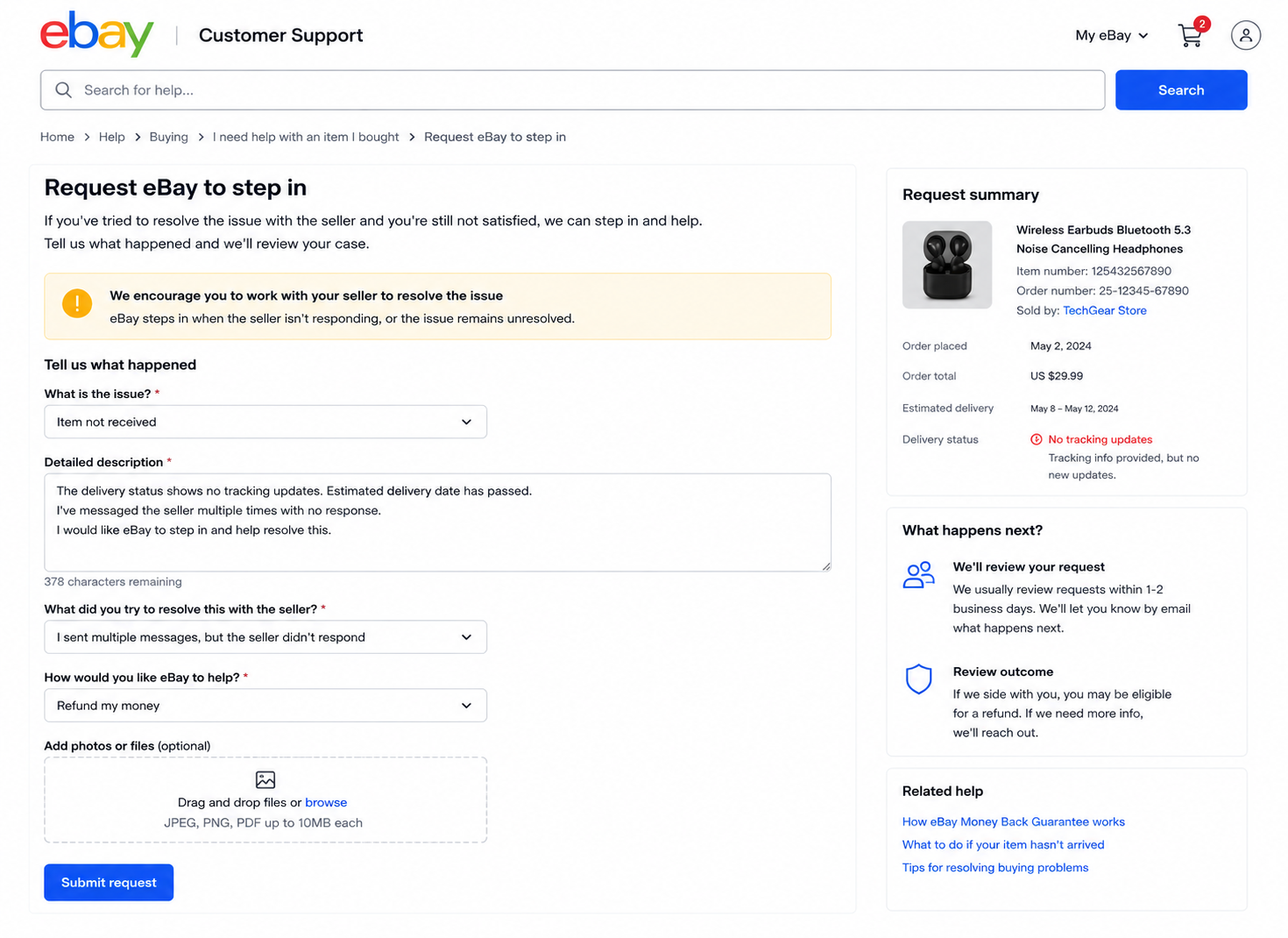
Learn why eBay case escalation often begins long before sellers realize buyers are frustrated. Discover how delayed responses, communication breakdowns, and declining buyer confidence increase dispute risk
"I Thought We Still Had Time."
That's one of the most common reactions from eBay sellers after a buyer escalates a case.
The seller thinks:
"I was going to reply today."
"The package is already on the way."
"I just needed one more day."
Then the notification arrives.
The buyer has asked eBay to step in.
What surprises many sellers isn't that a case exists.
It's how quickly it escalated.
The reality is this:
Cases rarely escalate because of one bad day.
They escalate because buyer confidence has been declining for several days—or even weeks.
By the time eBay becomes involved, the buyer has often already decided they no longer trust the process.
Buyers Usually Escalate Emotion—Not Just Problems
Most sellers believe buyers escalate because something went wrong.
Sometimes that's true.
But many buyers escalate even when the issue is already being resolved.
Why?
Because escalation is often driven by emotion rather than logistics.
The buyer isn't only asking:
"Where's my order?"
They're asking:
"Can I still trust this seller?"
That question determines whether a buyer waits patiently—or asks eBay to intervene.
Trust Breaks Quietly
Trust rarely disappears overnight.
It fades through small moments.
A message goes unanswered.
Tracking doesn't update.
A promised response never comes.
An estimated delivery date passes without explanation.
Each event may seem insignificant by itself.
Together, they tell the buyer a story.
"Maybe nobody is actually managing my order."
Once buyers begin telling themselves that story, escalation becomes much more likely.
Delayed Responses Change How Buyers Think
Many eBay sellers underestimate how powerful response time is.
Especially after reaching 10–30 orders per day, response delays become increasingly common.
The seller is busy.
Packing orders.
Managing inventory.
Handling suppliers.
Running the business.
The buyer sees something completely different.
Silence.
To the seller, a delayed response means:
"I've been busy."
To the buyer, it often means:
"I'm being ignored."
That difference changes everything.
Buyers Don't Need Immediate Solutions
Here's what surprises many experienced sellers.
Most buyers don't expect instant solutions.
They expect reassurance.
A simple message such as:
"I've seen the issue and I'm already looking into it."
can prevent far more escalations than many sellers realize.
Why?
Because reassurance restores confidence.
Confidence buys patience.
Patience prevents disputes.
Every Unresolved Concern Adds Pressure
Buyers rarely escalate after the first concern.
Pressure builds over time.
Consider this timeline.
Day 1
Tracking hasn't updated.
Day 2
The buyer sends a message.
Day 3
No response.
Day 4
Delivery estimate passes.
Day 5
The buyer sends another message.
Day 6
Still uncertain.
Day 7
The buyer asks eBay to step in.
Notice something important.
The case didn't escalate on Day 7.
It escalated a little every day before that.
Communication Breakdown Is Often the Real Trigger
Many disputes are described as shipping problems.
Returns.
Delivery issues.
Missing packages.
But underneath many of them lies something simpler.
A communication breakdown.
Buyers can tolerate delays.
They struggle to tolerate uncertainty.
When communication disappears, buyers begin creating their own explanations.
Those explanations are rarely positive.
eBay Doesn't Measure Intent—It Measures Outcomes
Many sellers believe effort should count.
"I was working on it."
"I planned to respond."
"I meant to fix it."
Unfortunately, buyers can't see effort.
They only experience outcomes.
eBay's systems work the same way.
Seller performance reflects:
- response consistency
- issue resolution
- buyer satisfaction
- fulfillment reliability
Not how hard the seller worked behind the scenes.
Operational consistency always matters more than good intentions.
Why Some Sellers Rarely Experience Escalations
High-performing sellers don't avoid every problem.
That's impossible.
Instead, they recognize something important.
The buyer's experience begins long before a dispute.
They monitor early warning signs such as:
- repeated buyer questions
- delayed replies
- stalled tracking
- fulfillment exceptions
- unresolved conversations
Instead of waiting for buyers to become frustrated, they reduce uncertainty before trust begins to fade.
That's why many potential disputes never become eBay cases.
Every Escalated Case Leaves Operational Clues
A case isn't just a problem.
It's feedback.
It reveals where confidence was lost.
After every escalation, ask questions like:
- Did communication slow down?
- Were expectations realistic?
- Did the buyer know what was happening?
- Were updates proactive or reactive?
- Have similar cases happened before?
The answers often reveal operational weaknesses that affect far more than one buyer.
The Goal Isn't Fewer Cases
The goal is stronger buyer confidence.
When buyers trust the process, they:
- wait longer
- ask fewer questions
- communicate more calmly
- escalate less frequently
Dispute prevention doesn't begin inside the Resolution Center.
It begins with the everyday operational decisions buyers experience throughout the transaction.
Final Thoughts
If eBay cases seem to escalate faster than expected, the problem may not be speed.
It may be trust.
Most escalations begin with:
- delayed responses
- unresolved concerns
- communication breakdowns
- declining buyer confidence
- growing uncertainty
By the time eBay becomes involved, buyers have often already decided they need someone else to help.
The sellers with the fewest escalations aren't always shipping faster or selling better products.
They're building confidence before buyers feel the need to ask eBay for it.
Because the moment trust disappears, escalation usually isn't far behind.
Related Reading
Why eBay Buyers Open "Item Not Received" Cases Even When Tracking Exists
The Real Reason eBay Buyers Leave Negative Feedback
Why Fast Shipping Doesn't Always Create Happy Customers
Why Customer Complaints Usually Start Before Customers Complain
Why eBay Seller Metrics Often Decline During Growth
Download the Free eBay Seller Compliance Risk Audit
Every escalated case tells a story about buyer confidence.
Strengthen your operational workflow with consistent communication, proactive issue management, and repeatable processes that reduce uncertainty before buyers feel the need to involve eBay.
👉 eBay Seller COmpliance Risk Audit
 About the Author
I work with Shopify and eBay sellers to identify and stabilize operational systems before fulfillment pressure turns into customer complaints, refunds, and margin loss.
My focus is helping stores handling 10–30 orders per day build resilient workflows that scale without creating hidden operational stress.
👉 Download the free fulfillment audit: eBay Seller Compliance Risk Audit
📢 Share This
Found this useful? Share it with other operators: