



Notion is the ultimate tool for team alignment until it becomes a cluttered digital attic. In the first month, everything feels clean, custom, and effortless. By month six, search results yield duplicate pages, database loading indicators spin endlessly, and team adoption plummets because no one knows where anything lives.
This slowdown isn't a limitation of the platform—it is an architectural flaw. When workspaces are built without scalable database foundations, performance bottlenecks and operational bloat are inevitable.
The 3 Silent Drivers of Workspace Bloat
- Page Nesting Over Database Relations: Creating nested sub-pages inside sub-pages mimics an outdated folder system. This makes global search slow and buries critical documentation.
- Heavy Rollup & Formula Chains: Running complex calculations across thousands of un-indexed relations forces Notion to recalculate data on every page view, causing noticeable lag.
- Ungoverned Permissions & Duplicate Databases: When team members lack clear guidelines on where master databases live, they create local copycat tables, fragmenting your company's single source of truth.
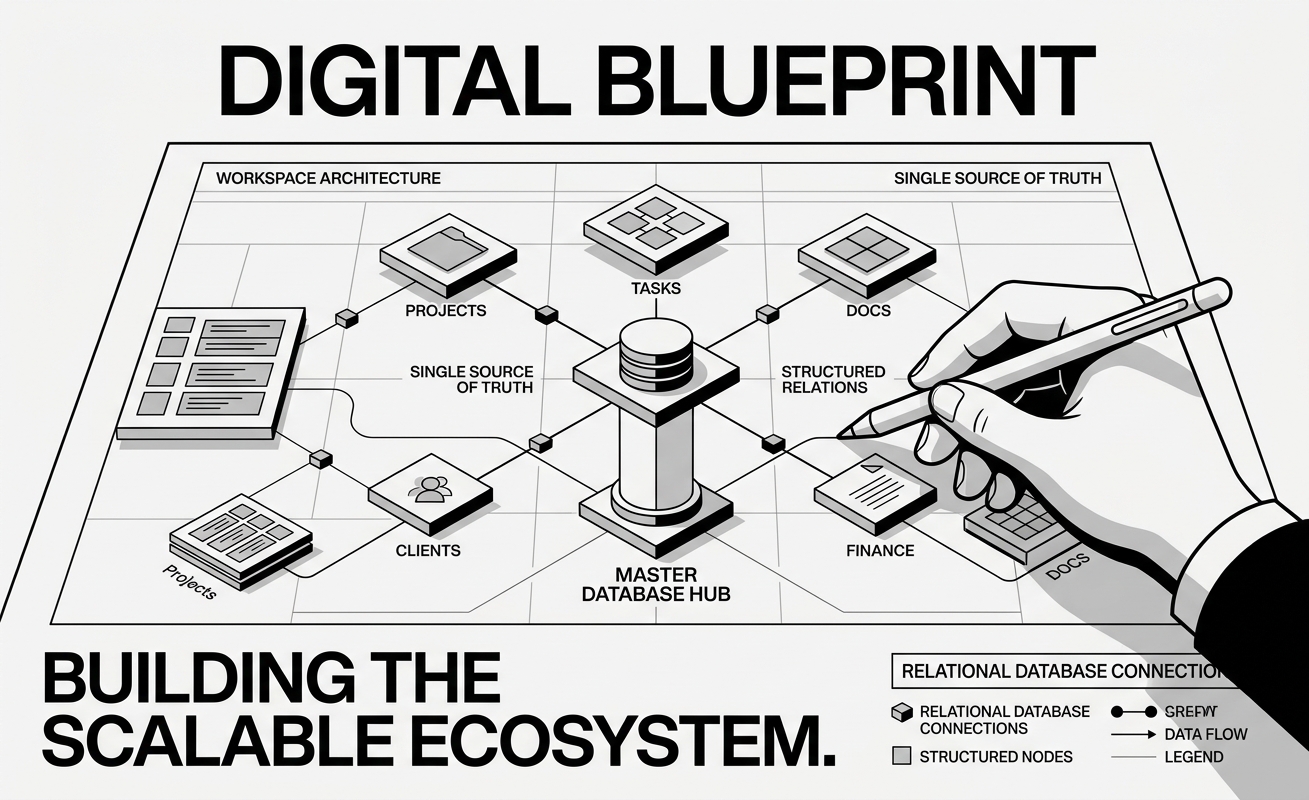
The Scalable Hub-and-Spoke Architecture
To keep your workspace operating at peak performance regardless of team size or data volume, implement these three structural shifts:
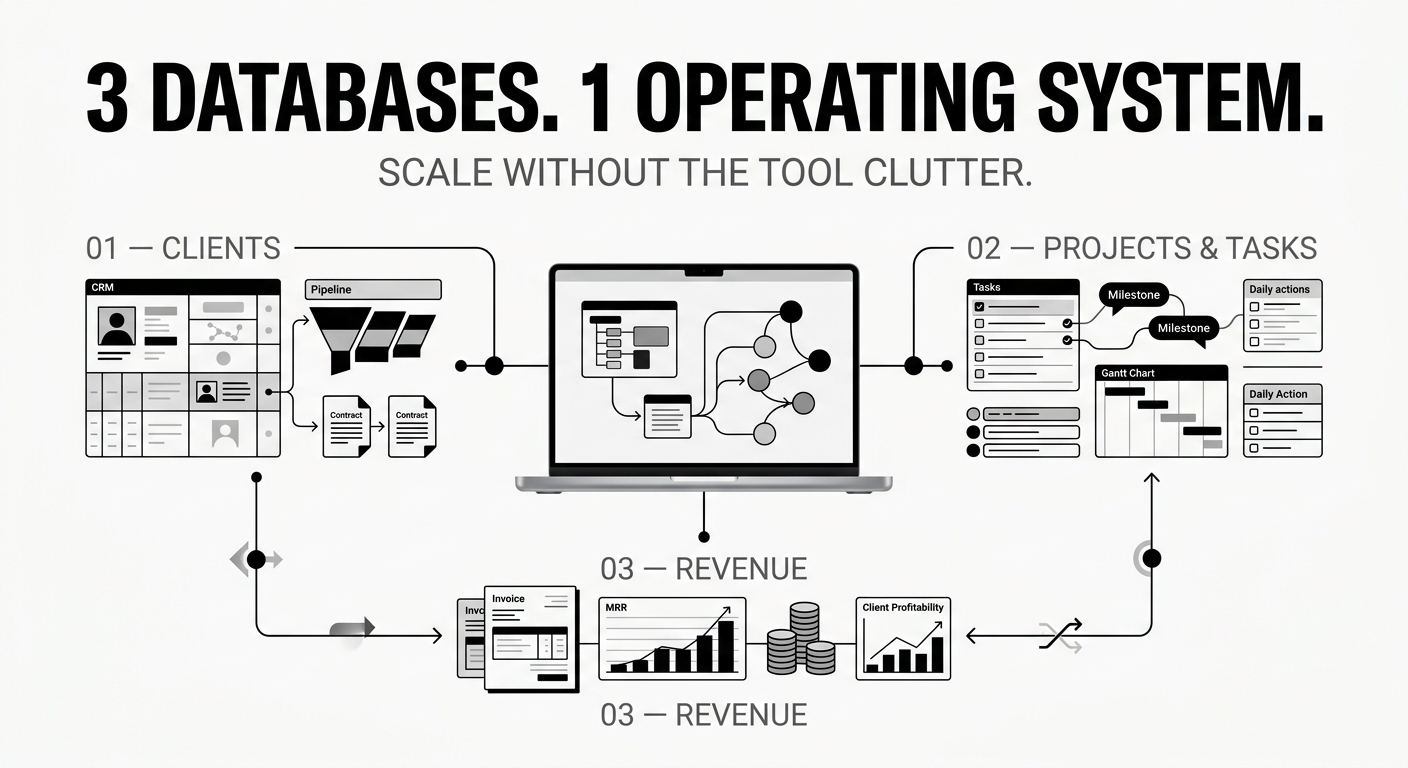
- Build Master Databases, Not Pages: Centralize your core business functions into 4–5 global master databases (e.g., Projects, Tasks, Clients, Docs). Use linked database views filtered by team or department instead of standalone pages.
- Flatten Your Workspace Depth: Keep your sidebar navigation to a maximum of 2 levels. Access to information should rely on filtered views and dashboards rather than deep folder hierarchies.
- Archive Stale Data Systematically: Set up automated views that filter out completed tasks or archived projects older than 90 days. Reducing active database records keeps load times instantaneous
A well-architected Notion workspace should save your team hours every week, not add technical friction. Take 15 minutes today to audit your workspace depth and clean up loose databases.








Comments ()