
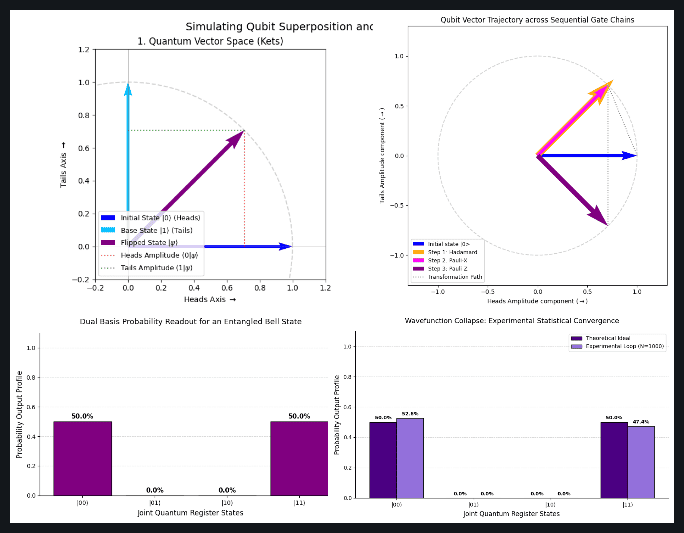
The analysis of quantum mechanics within the sources centers on a specialized mathematical framework that distinguishes between the physical state of a particle and the tools used to measure it. Subatomic particles are represented as existing in a fl...
Read More
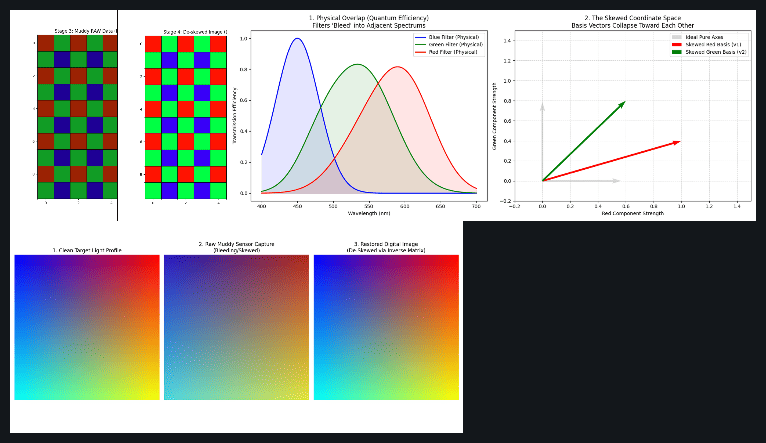
The visualization demonstrates how digital sensors use a dual basis framework to rectify "muddy" images caused by physical light filters that overlap and bleed into one another. In this model, raw data appears dull and grayed-out because the independ...
Read More
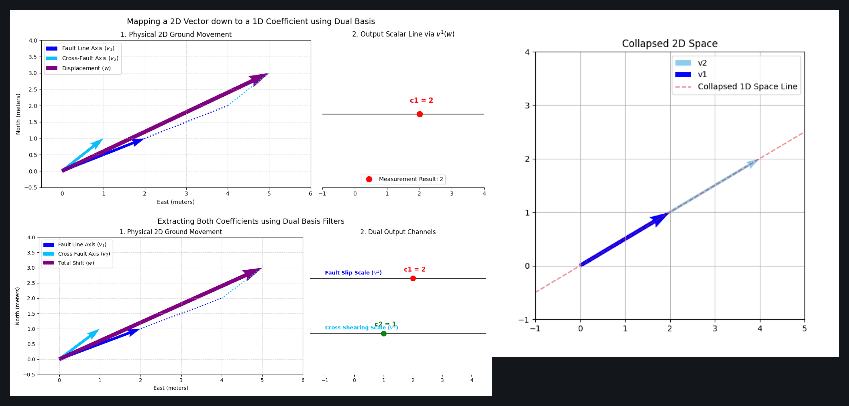
The framework operates through a reciprocal relationship between a physical tangent basis, which serves as the structural building blocks, and a specialized dual basis that acts as a mathematical sieve or scanner. These dual vectors are engineered wi...
Read More
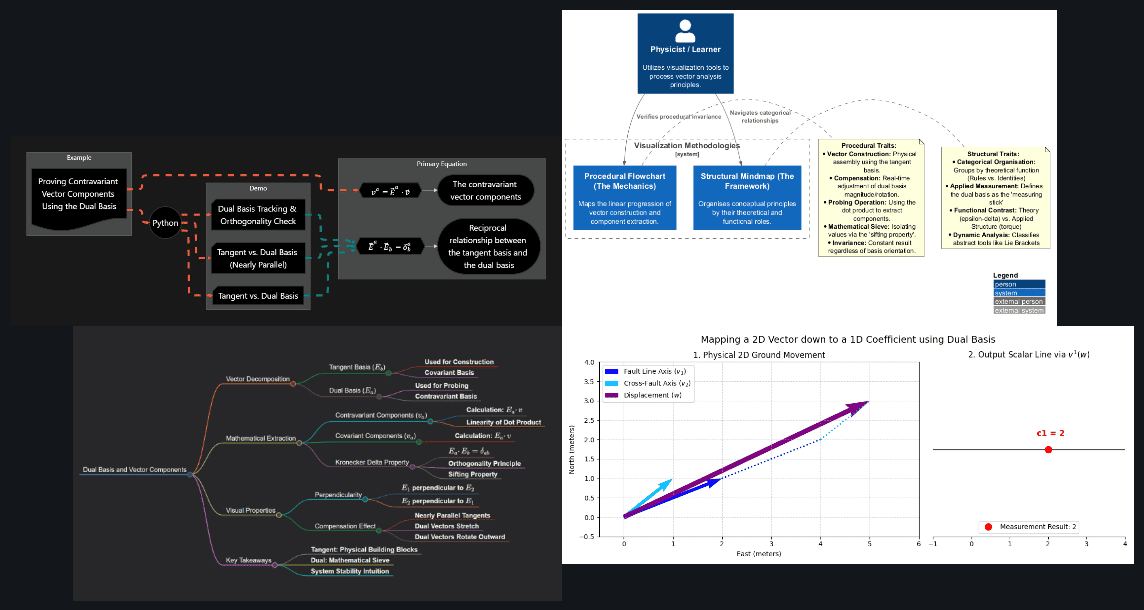
The system operates as a logical pipeline that bridges abstract frameworks with physical visualizations to extract precise data from complex, non-orthogonal environments. At its core, a specialized measurement tool—often described as a mathematical s...
Read More
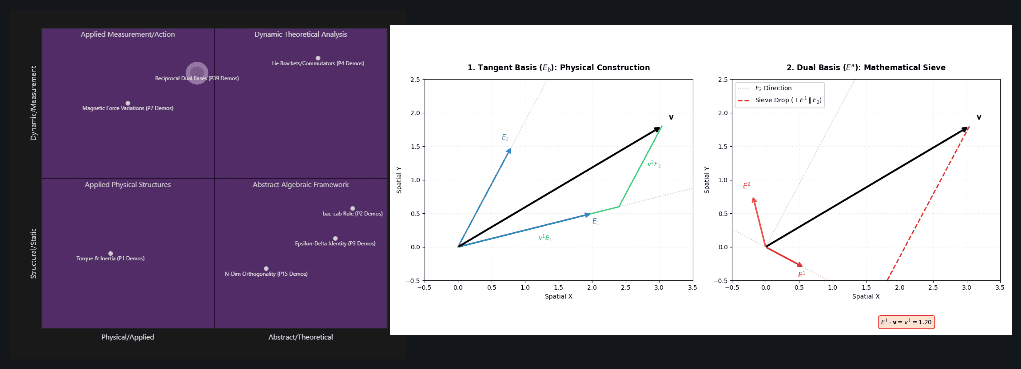
The P39 Demos illustrate the reciprocal relationship between a physical tangent basis and its corresponding dual basis, which serves as a specialized set of measuring sticks for extracting vector data. While the tangent basis is used for vector const...
Read More
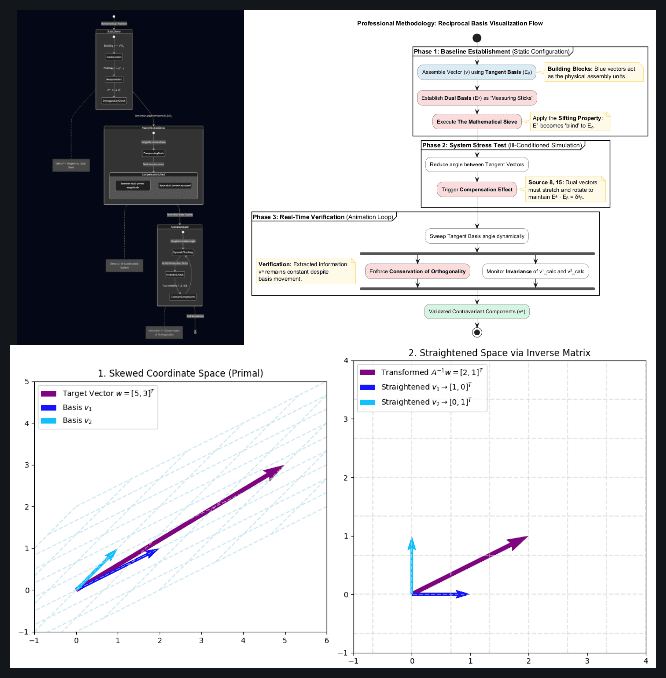
The system functions through a reciprocal relationship between a physical tangent basis and a corresponding dual basis that acts as a specialized measuring stick or "mathematical sieve",. In its baseline state, this dual basis uses a sifting property...
Read More
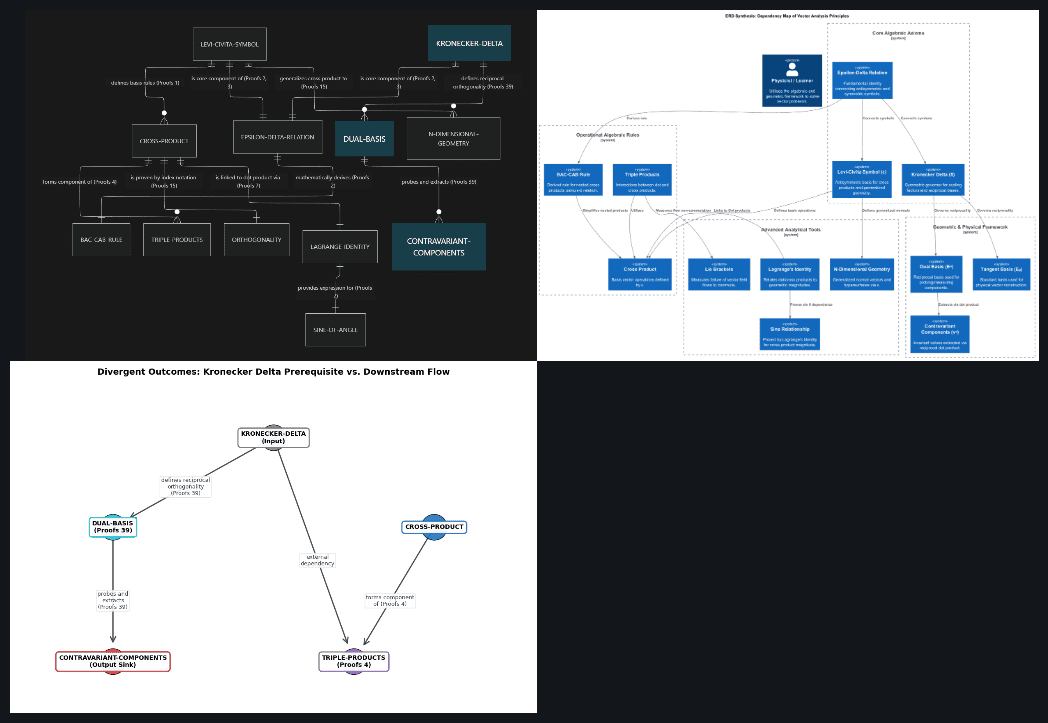
Proof 39 focuses on a systematic method for identifying contravariant vector components by utilizing a specialized dual basis as a framework. This process is governed by a fundamental reciprocal relationship between the primary tangent frame and its ...
Read More
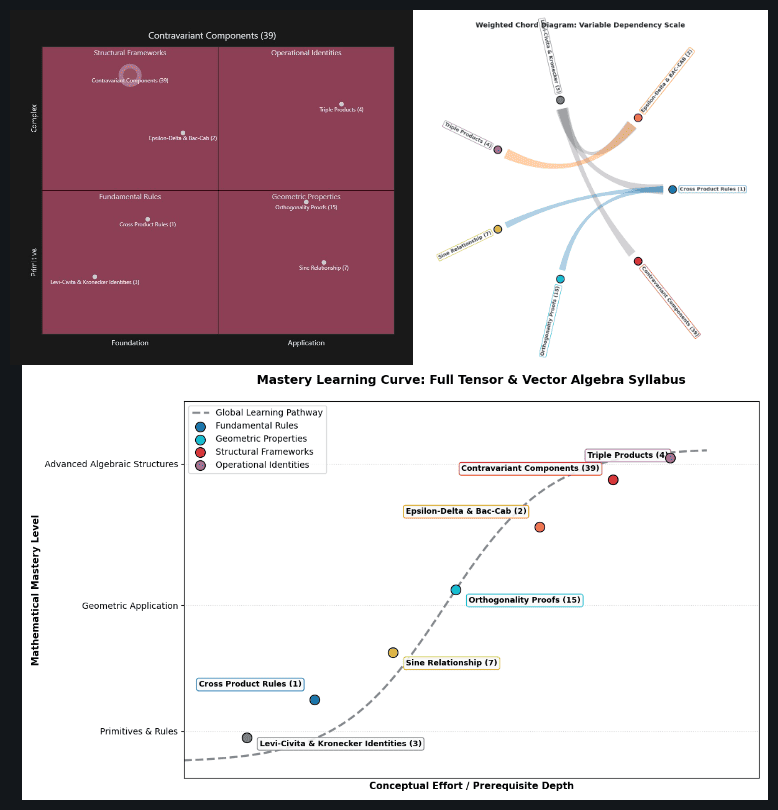
The study of contravariant components represents a significant structural leap within the curriculum, serving as a high-level framework that defines how vectors and tensors behave inside a coordinate system. This advanced topic moves beyond basic geo...
Read More
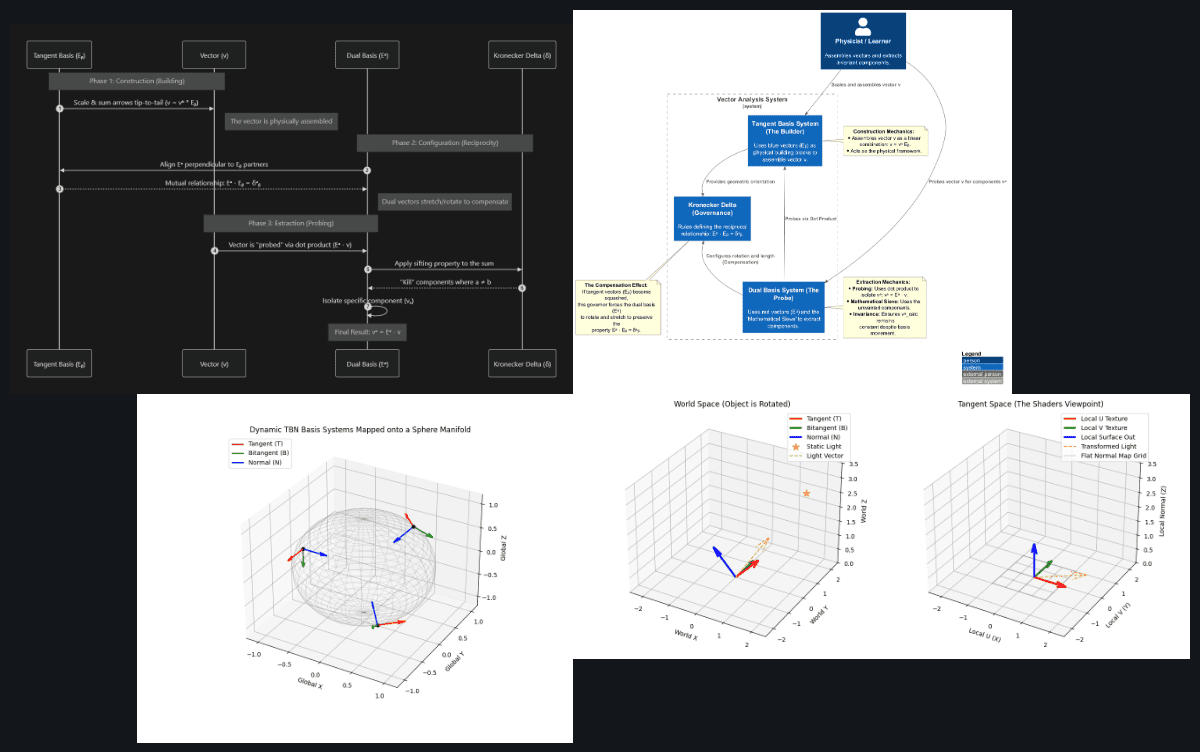
The process of measuring vectors relies on a specialized relationship between physical building blocks and a corresponding measurement system that acts as a mathematical filter. For these measurements to remain accurate, the measurement tools must dy...
Read More
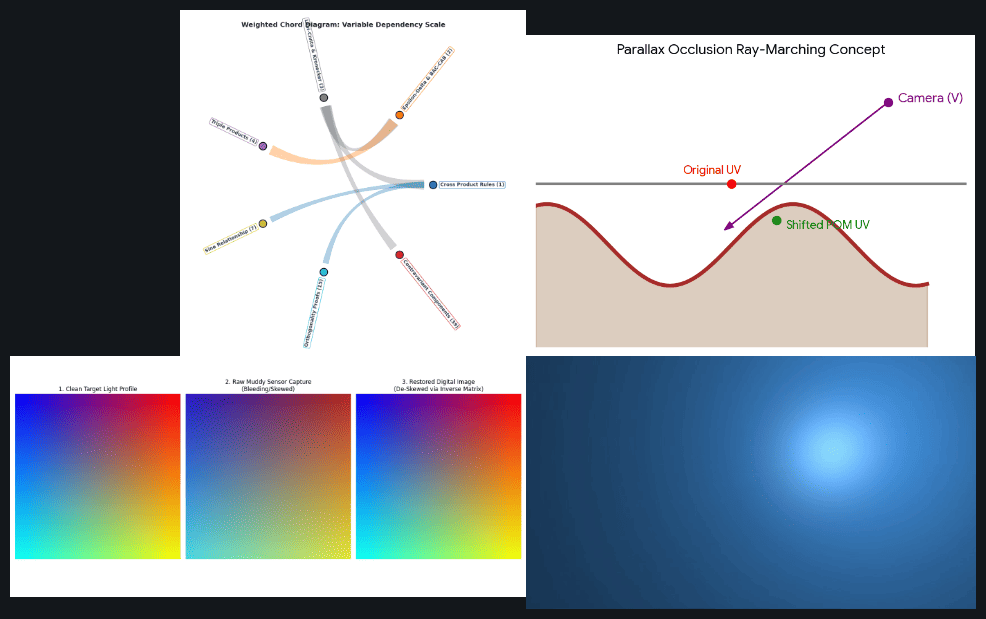
The documents define the dual basis as a specialized measurement tool, often referred to as a "measuring stick," that functions as a mathematical sieve to extract specific pieces of information from a vector. While a standard tangent basis provides t...
Read More
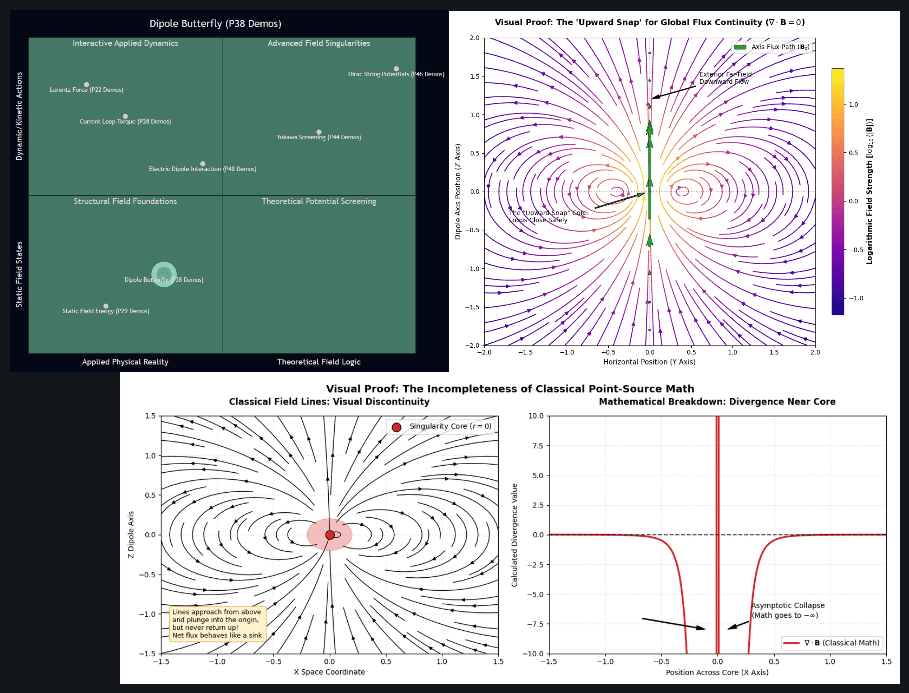
The evolution of the magnetic dipole model focuses on resolving the mathematical "blow-up" at the origin by transitioning from a flawed point-source idealization to a physically realistic current loop model. While classical formulas suggest field li...
Read More
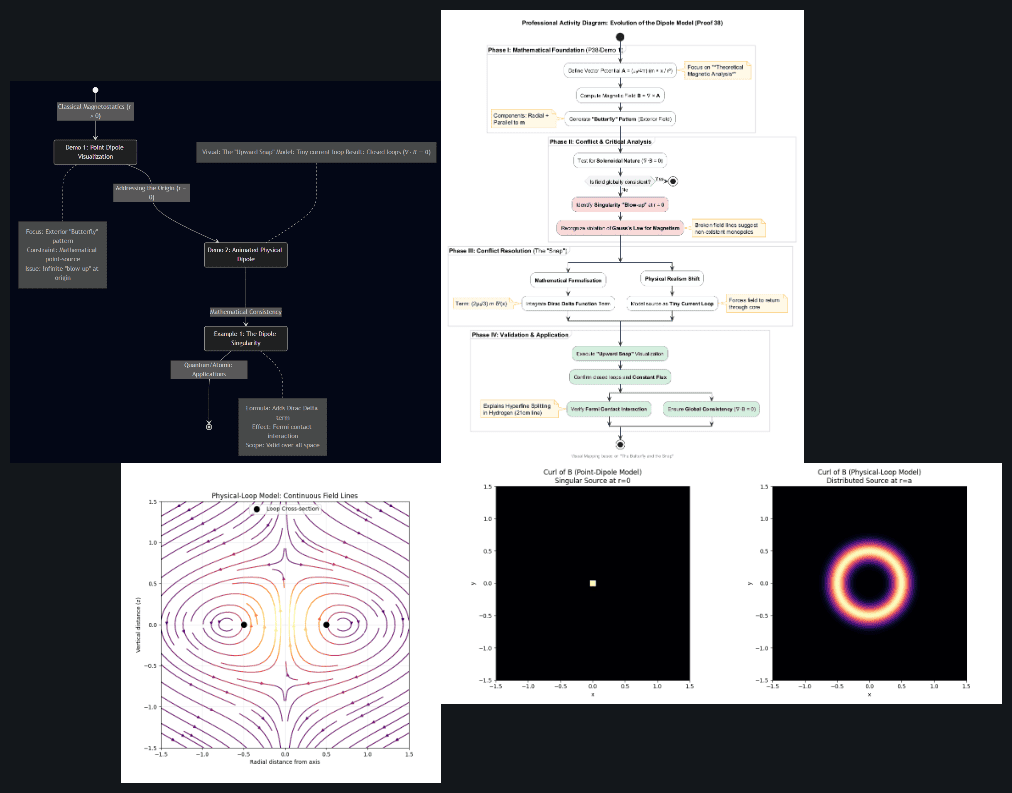
The conceptual understanding of the magnetic dipole model has evolved from a theoretical point-source model, which creates an infinite mathematical singularity at the origin, to a more realistic physical-loop model that resolves inconsistencies with...
Read More
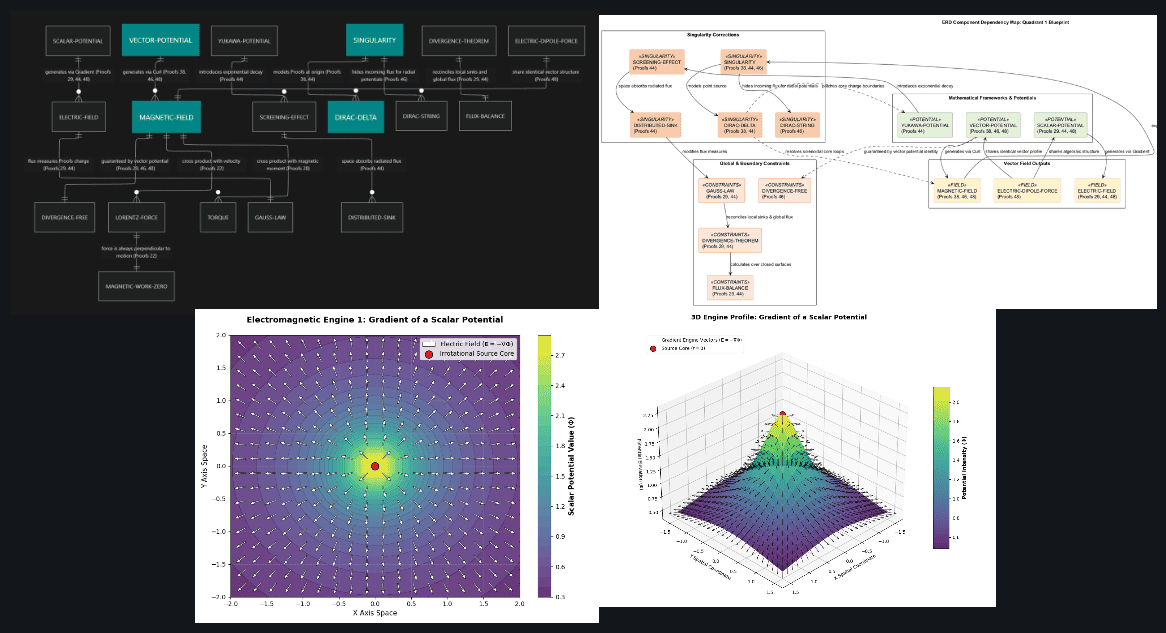
The Entity-Relationship Diagram (ERD) in Proof 38 serves as a comprehensive visual and mathematical architecture that bridges abstract potentials with physically consistent field models. It defines the two primary "engines" of electromagnetics: the ...
Read More
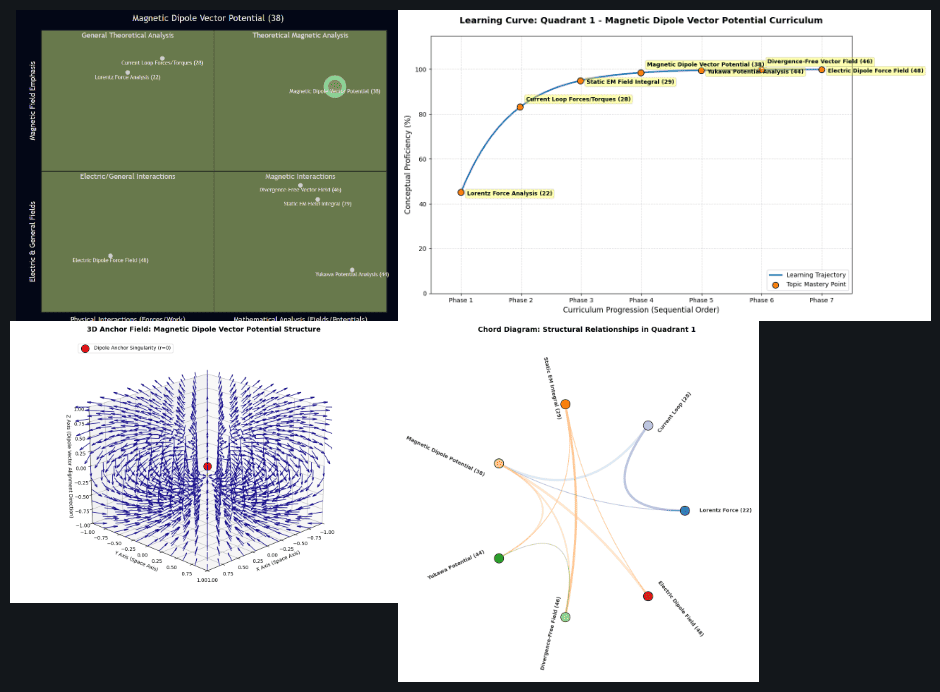
Quadrant 1 establishes the mathematical and physical foundations of electromagnetic fields, bisecting the study into physical interactions, such as the Lorentz Force and macro-loop torques, and the rigorous mathematical analysis of potentials. At th...
Read More
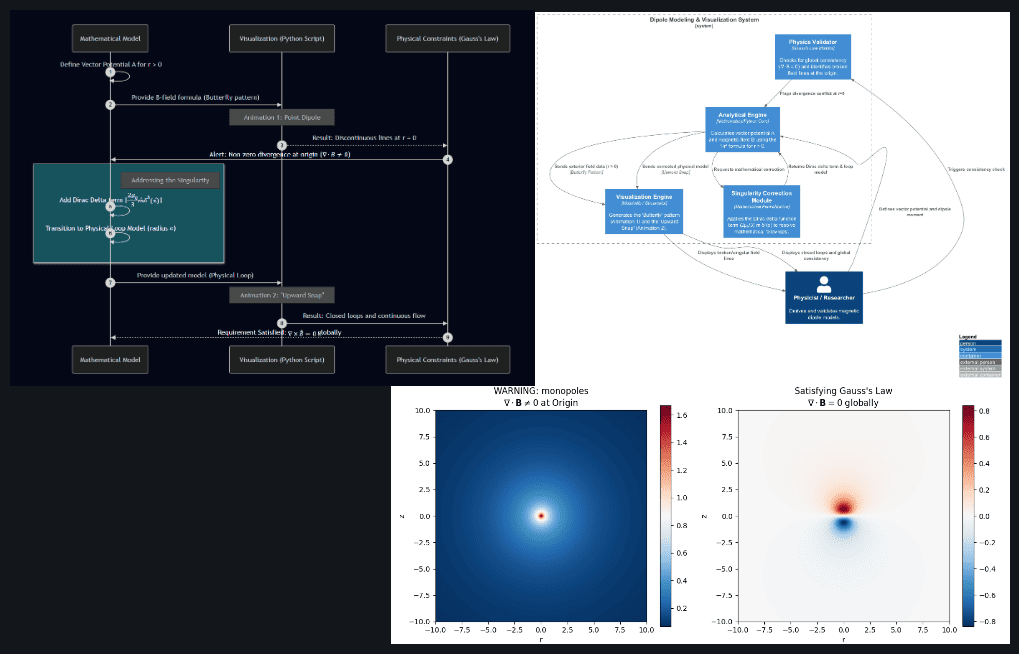
Theoretical models of magnetic dipoles often encounter a problem at their exact center where the field appears to break or become infinite, violating the physical requirement that magnetic field lines must form continuous, closed loops. To resolve t...
Read More