

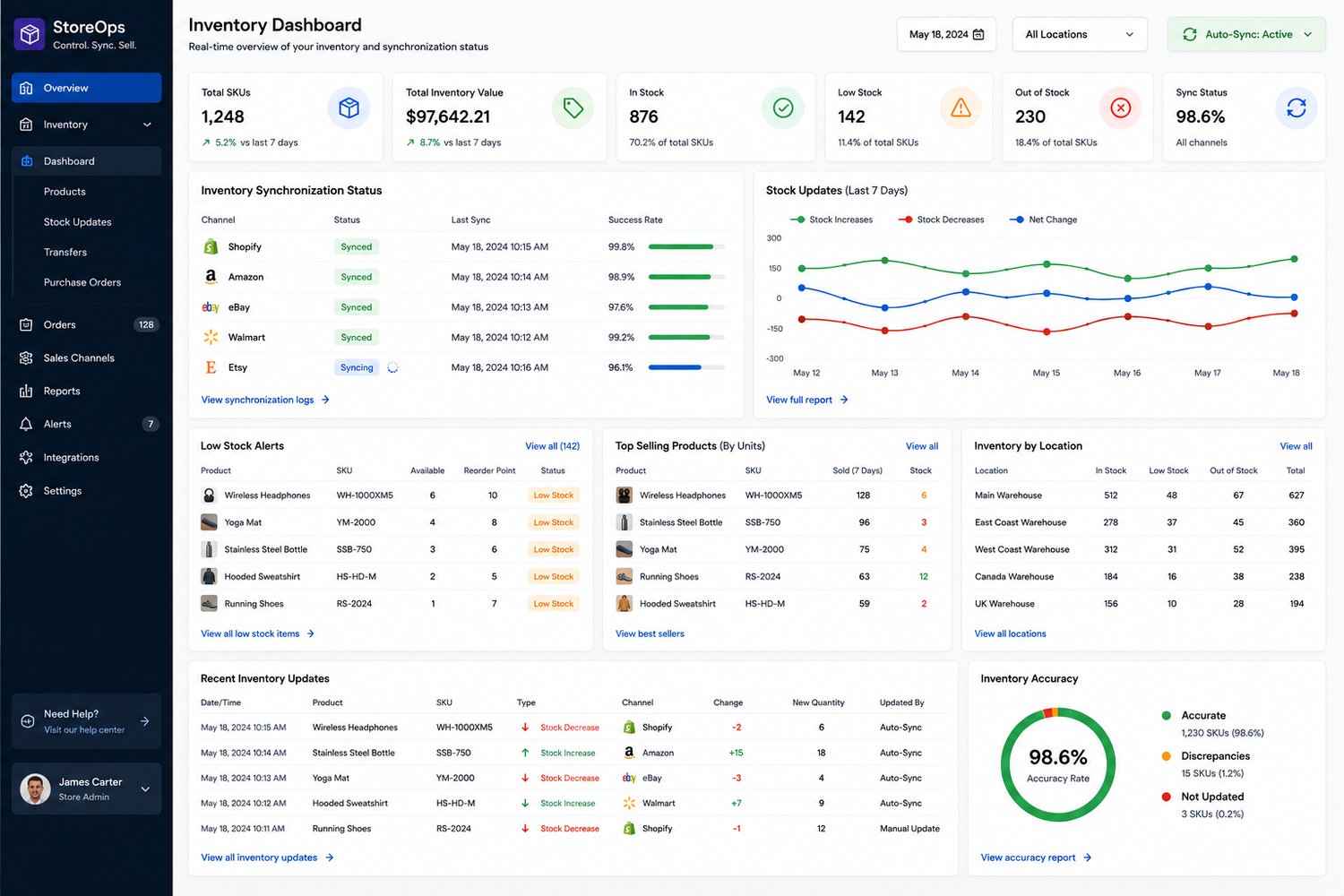
Discover why many eBay inventory management problems begin with workflow failures instead of stock counts. Learn how manual updates, listing synchronization, fulfillment adjustments, and operational visibility affect inventory accuracy.
"My Inventory Count Is Correct... So Why Am I Still Overselling?"
It's one of the most frustrating experiences for an eBay seller.
The inventory count looks accurate.
The shelves match the numbers.
Yet somehow you still experience:
- oversold listings
- canceled orders
- buyer complaints
- inventory adjustments
- fulfillment delays
The natural assumption is that inventory management is failing.
But in many cases, inventory isn't the real problem.
The workflow around inventory is.
Most inventory issues don't begin when someone counts stock.
They begin much earlier—inside the daily operational processes that move information between your listings, orders, and fulfillment.
Inventory Is More Than a Number
Many sellers think inventory management simply means knowing how many items are available.
In reality, inventory is information.
That information constantly moves between:
- active eBay listings
- incoming orders
- canceled orders
- returns
- replacement shipments
- fulfillment updates
Every time information changes, your workflow must keep inventory synchronized.
If that workflow breaks, your inventory becomes inaccurate—even when the physical stock is correct.
Manual Updates Become Risky as You Grow
Many eBay businesses begin with manual inventory updates.
At five orders a day, it's manageable.
At ten orders, it becomes challenging.
By the time many sellers reach 10–30 orders per day, manual inventory management starts creating hidden risks.
For example:
An item sells.
You plan to update the quantity later.
Another order arrives first.
Now you've sold inventory twice.
The problem wasn't counting inventory.
The problem was relying on manual timing.
Growth doesn't make manual updates impossible.
It makes them unreliable.
Listing Synchronization Is Often the Real Weakness
Many sellers focus on stock levels.
Far fewer think about listing synchronization.
Every active listing should accurately reflect available inventory.
Problems occur when updates don't happen consistently.
Examples include:
- relisted items with outdated quantities
- ended listings accidentally reactivated
- revised listings not reflecting recent sales
- multi-variation listings with incorrect stock levels
These issues create confusion before fulfillment even begins.
By the time a picker discovers missing inventory, the buyer has already completed the purchase.
Inventory accuracy failed long before the warehouse noticed.
Fulfillment Adjustments Affect Inventory More Than You Think
Inventory doesn't only change when something sells.
It changes throughout the fulfillment process.
Examples include:
- damaged products removed from stock
- replacement shipments
- canceled orders
- returned items
- packing mistakes
- warehouse corrections
If these adjustments aren't reflected consistently, inventory slowly drifts away from reality.
At first, the differences are small.
Eventually they become:
- stockouts
- overselling
- canceled orders
- buyer frustration
The issue isn't inventory.
It's information flow.
Process Gaps Create Invisible Inventory Errors
Many inventory problems don't happen because people make mistakes.
They happen because nobody owns the process.
Ask yourself:
- Who updates canceled orders?
- Who adjusts damaged inventory?
- Who verifies returned items?
- Who reviews stock discrepancies?
- Who confirms listing accuracy?
If ownership is unclear, inventory gradually becomes less reliable.
Every small gap creates another opportunity for inaccurate information.
The warehouse simply reveals the problem.
It rarely creates it.
Operational Visibility Is the Missing Piece
Many sellers monitor inventory counts.
Successful sellers monitor inventory movement.
They want visibility into questions like:
- What changed?
- Who changed it?
- When was it updated?
- Why did inventory change?
- Does every system reflect the same information?
Visibility transforms inventory management from guessing into decision-making.
Without visibility, sellers spend time correcting problems instead of preventing them.
Inventory Problems Usually Appear Somewhere Else First
One of the biggest misconceptions in ecommerce is that inventory errors begin in inventory.
They often begin somewhere completely different.
Examples include:
A delayed fulfillment update.
A listing that wasn't revised.
A canceled order that wasn't processed correctly.
A damaged item never removed from available stock.
A return added back before inspection.
Each event seems unrelated.
Together, they produce inaccurate inventory.
That's why many businesses struggle to solve inventory problems.
They're fixing the symptom—not the workflow that created it.
Why Inventory Errors Increase During Growth
Many sellers notice inventory issues becoming more frequent as sales increase.
This usually happens because operational complexity increases faster than operational control.
More orders create:
- more listing changes
- more fulfillment adjustments
- more returns
- more inventory movements
- more opportunities for communication failures
Without standardized workflows, inventory accuracy gradually declines.
Growth didn't break the inventory.
Growth exposed the workflow.
The Best eBay Sellers Build Inventory Systems, Not Inventory Habits
Successful sellers don't rely on memory.
They don't depend on checking listings "when they have time."
Instead, they build repeatable systems.
Those systems include:
- standardized inventory updates
- documented fulfillment workflows
- regular inventory audits
- clear ownership
- consistent listing reviews
- operational visibility across every stage
Their goal isn't simply knowing what's in stock.
Their goal is ensuring every operational process keeps inventory accurate automatically.
Final Thoughts
If your eBay inventory problems continue despite accurate stock counts, it's time to look beyond inventory management.
Many inventory issues actually originate from:
- manual updates
- listing synchronization failures
- fulfillment adjustments
- process gaps
- limited operational visibility
The businesses with the most accurate inventory aren't always counting better.
They're operating better.
Because inventory accuracy is ultimately the result of reliable workflows—not reliable memory.
Related Reading
- Why Inventory Errors Multiply as Stores Scale
- Why eBay Seller Metrics Often Decline During Growth
- Why Some eBay Stores Constantly Operate in Recovery Mode
- Why eBay Return Requests Increase Even When Product Quality Stays Consistent
- Why Fast Shipping Doesn't Always Create Happy Customers
Download the Free eBay Seller Compliance Risk Audit
Inventory accuracy doesn't begin with counting products.
It begins with controlling the workflows that update them.
Build operational systems that improve listing accuracy, reduce overselling, and give you the visibility needed to scale your eBay business with confidence.
👉 eBay Seller Compliance Risk Audit
 About the Author
I work with Shopify and eBay sellers to identify and stabilize operational systems before fulfillment pressure turns into customer complaints, refunds, and margin loss.
My focus is helping stores handling 10–30 orders per day build resilient workflows that scale without creating hidden operational stress.
👉 Download the free fulfillment audit: eBay Seller Compliance Risk Audit
📢 Share This
Found this useful? Share it with other operators: