

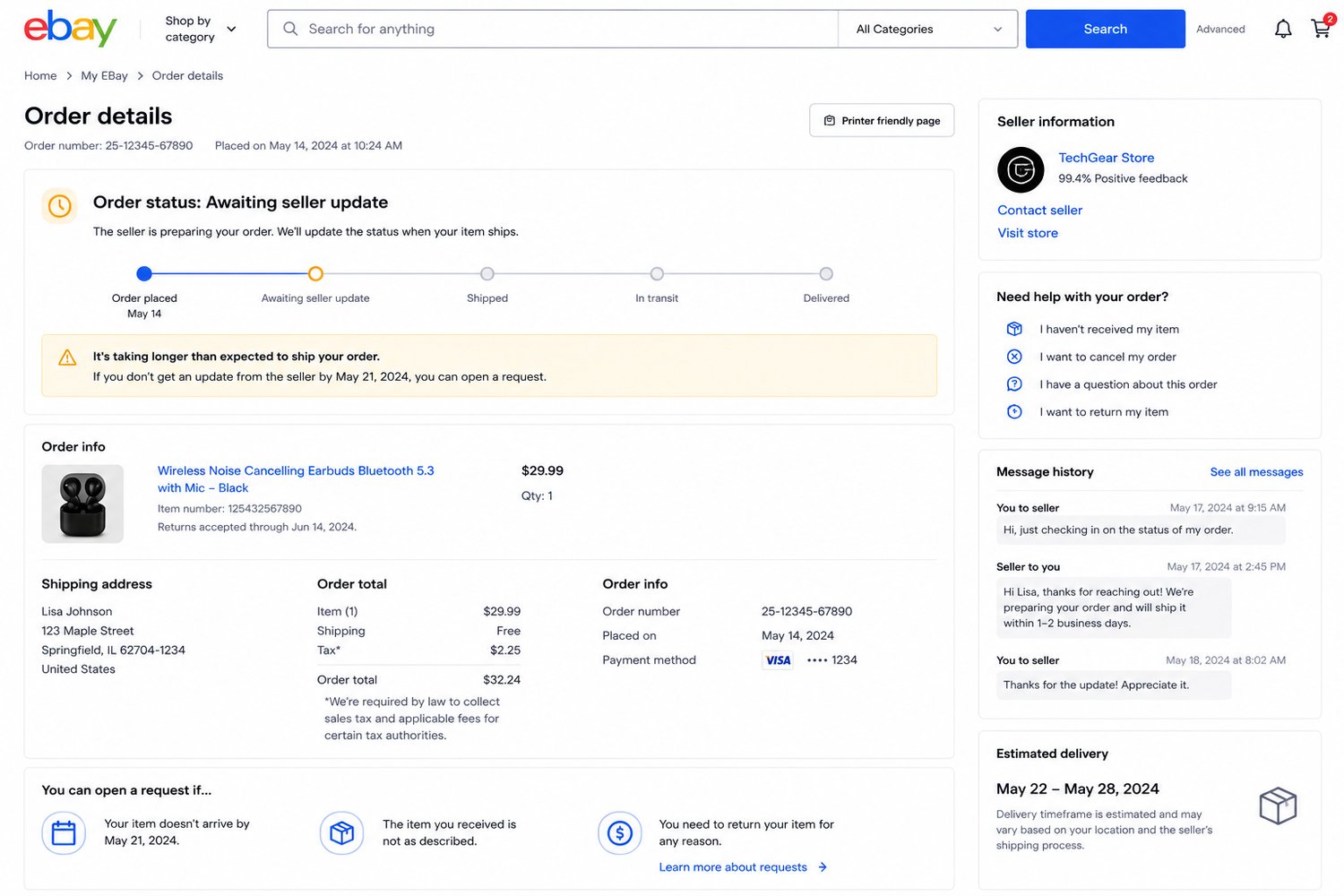
The Small Operational Mistakes That Quietly Damage Customer Confidence
Learn why eBay buyer trust declines through small operational failures instead of major mistakes. Discover how missed messages, delayed updates, inconsistent communication, and poor expectation management affect customer confidence.
Most Buyers Don't Lose Trust Overnight
Many eBay sellers assume buyer trust disappears after one major mistake.
A lost package.
A damaged item.
A canceled order.
Those events can certainly damage confidence.
But in most cases, trust doesn't disappear all at once.
It fades gradually through a series of small operational failures.
The buyer doesn't suddenly decide they no longer trust your store.
Instead, each unanswered question, delayed update, and inconsistent interaction slowly changes how they feel about the purchase.
By the time negative feedback, a return request, or an eBay case appears, buyer trust has often been declining for days.
Trust Is Built Through Every Interaction
Trust isn't created only when the product arrives.
It begins the moment a buyer clicks Buy It Now.
From that point forward, buyers continuously evaluate the experience.
They notice:
- how quickly messages are answered
- whether shipping updates arrive on time
- how clearly expectations are communicated
- how problems are handled
- whether the experience feels consistent
Every interaction either strengthens or weakens confidence.
Most sellers focus on shipping the order.
Successful sellers focus on building trust throughout the order lifecycle.
Missed Messages Leave Buyers Guessing
Many sellers underestimate the impact of unanswered messages.
When buyers don't receive a reply, they don't know why.
They simply notice the silence.
Questions like these quickly appear:
- Has the seller seen my message?
- Is my order still being processed?
- Should I be worried?
- Will I have to contact eBay?
Even if the order is progressing normally, uncertainty begins replacing confidence.
A missed message rarely creates an immediate dispute.
But it often becomes the first crack in buyer trust.
Delayed Updates Create Unnecessary Anxiety
Buyers don't expect constant updates.
They do expect to know what's happening.
Common situations that increase anxiety include:
- tracking uploaded with no movement
- shipping delays without explanation
- unexpected processing times
- no communication after purchase
The longer buyers go without information, the more likely they are to imagine the worst.
People naturally fill information gaps with assumptions.
Unfortunately, those assumptions are often negative.
Clear updates reduce uncertainty.
Uncertainty is one of the biggest threats to eBay buyer trust.
Inconsistent Communication Feels Unprofessional
Consistency matters just as much as speed.
Imagine this experience.
A buyer receives a friendly confirmation message immediately after ordering.
Then nothing.
Days pass without another update.
The sudden silence changes the buyer's perception.
The issue isn't necessarily poor customer service.
It's inconsistency.
Buyers feel more confident when communication follows a predictable pattern.
Even simple updates reassure customers that someone is actively managing their order.
Expectation Management Prevents Disappointment
One of the fastest ways to lose trust is allowing buyers to expect something you can't consistently deliver.
Examples include:
- unrealistic dispatch times
- vague delivery estimates
- unclear product descriptions
- incomplete condition details
- missing compatibility information
When expectations exceed reality, disappointment follows.
Even if the product is technically correct.
The strongest eBay sellers don't promise perfection.
They promise clarity.
Clear expectations reduce surprises.
Fewer surprises create stronger buyer confidence.
Customer Experience Starts Before Delivery
Many sellers think customer experience begins when the package arrives.
It actually begins much earlier.
Buyers remember:
- how easy the listing was to understand
- whether questions were answered promptly
- how confident they felt after purchasing
- whether updates were consistent
- how issues were handled
The product is only one part of the experience.
Operations shape everything around it.
Trust Problems Often Appear During Growth
Many sellers first notice declining buyer confidence after reaching approximately 10–30 orders per day.
At lower order volumes, it's easier to respond personally.
Every buyer receives attention.
Every shipment is monitored closely.
As sales increase:
- more messages arrive
- fulfillment becomes busier
- communication slows
- small mistakes become more common
Nothing seems dramatically different.
Yet buyer confidence gradually declines because consistency becomes harder to maintain.
Growth doesn't create trust problems.
It exposes operational weaknesses that were easier to hide at lower volumes.
Buyer Trust Is an Operational Metric
Many sellers track:
- sales
- feedback
- return rates
- seller performance
- account health
Few actively monitor buyer confidence.
Yet trust influences all of those outcomes.
When confidence declines, buyers are more likely to:
- leave negative feedback
- request returns
- open Item Not Received cases
- ask eBay to step in
- avoid future purchases
Trust isn't just an emotional concept.
It's an operational asset.
How High-Performing Sellers Protect Buyer Trust
The strongest eBay businesses don't simply avoid mistakes.
They reduce uncertainty.
They achieve this by:
- responding consistently
- providing proactive updates
- setting realistic expectations
- monitoring fulfillment exceptions
- documenting repeatable workflows
Their goal isn't perfection.
It's predictability.
Predictable experiences create confident buyers.
Confident buyers are more patient when unexpected issues occur.
Trust Doesn't Break During a Dispute
One of the biggest misconceptions among sellers is that buyer trust disappears when a case is opened.
In reality, the dispute is usually the final stage.
Trust often started declining much earlier through:
- missed messages
- delayed responses
- unclear communication
- inconsistent updates
- unmet expectations
The dispute simply makes the damage visible.
Final Thoughts
If you want to strengthen eBay buyer trust, don't focus only on avoiding major mistakes.
Pay attention to the small operational details buyers experience every day.
Trust often erodes through:
- missed messages
- delayed updates
- inconsistent communication
- poor expectation management
- avoidable customer frustration
These issues may seem minor individually.
Together, they shape how buyers remember your business.
The sellers who earn long-term loyalty aren't necessarily the fastest or the cheapest.
They're the ones who consistently make buyers feel informed, confident, and valued throughout every order.
Because trust rarely breaks all at once.
It breaks quietly.
Related Reading
- Why eBay Cases Escalate Faster Than Sellers Expect
- The Real Reason eBay Buyers Leave Negative Feedback
- Why eBay Buyers Open "Item Not Received" Cases Even When Tracking Exists
- Why Fast Shipping Doesn't Always Create Happy Customers
- Why Some eBay Stores Constantly Operate in Recovery Mode
Download the Free eBay Seller Compliance Risk Audit
Buyer trust isn't built by one perfect transaction.
It's built through hundreds of consistent operational decisions.
Strengthen your eBay workflow with clear communication, reliable fulfillment, and repeatable systems that create confidence before buyers ever have a reason to doubt your business.
👉 eBay Seller Compliance Risk Audit
 About the Author
I work with Shopify and eBay sellers to identify and stabilize operational systems before fulfillment pressure turns into customer complaints, refunds, and margin loss.
My focus is helping stores handling 10–30 orders per day build resilient workflows that scale without creating hidden operational stress.
👉 Download the free fulfillment audit: eBay Seller Compliance Risk Audit
📢 Share This
Found this useful? Share it with other operators: