MS: NGSS - Unit: Kinetic & Potential Energy
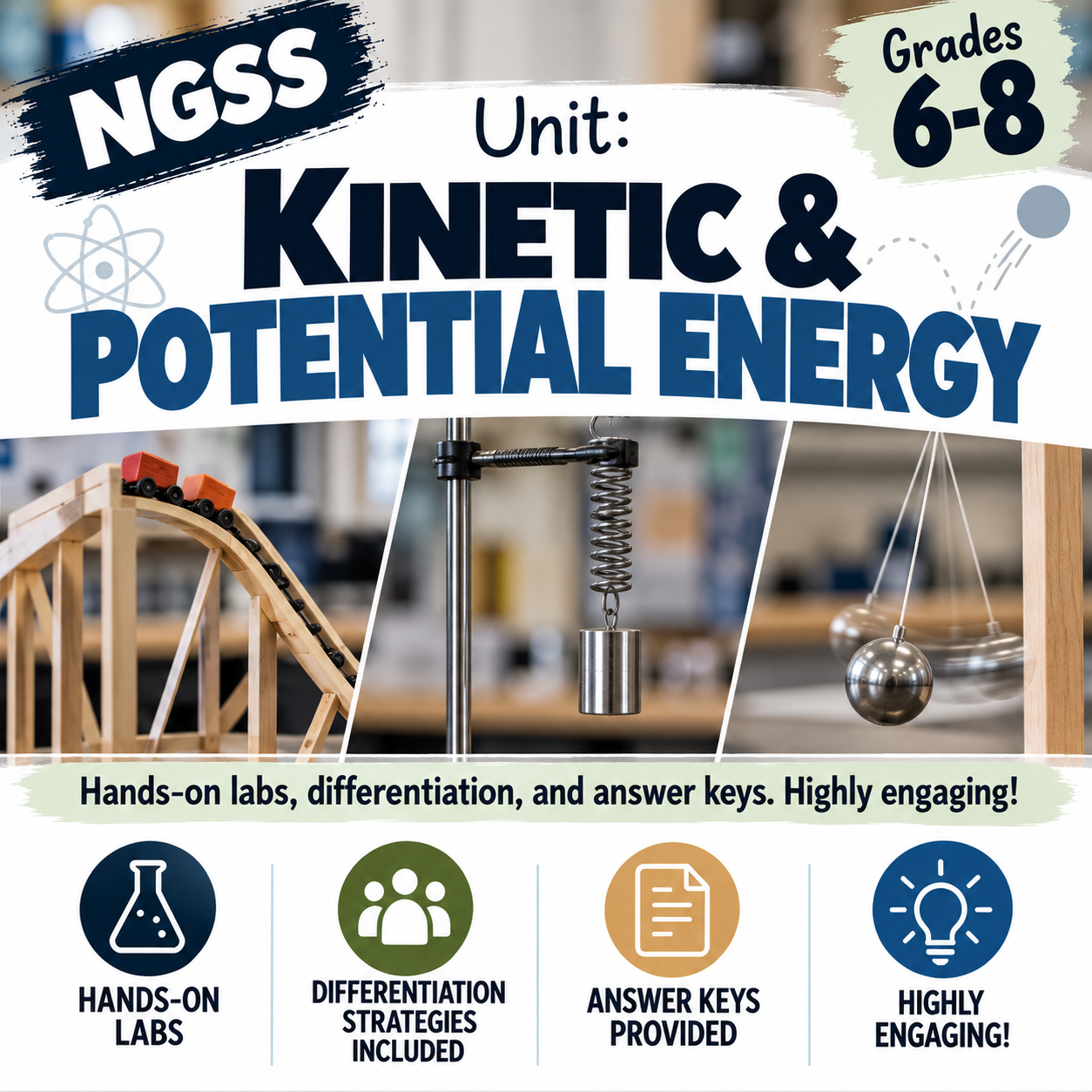
Kinetic & Potential Energy Unit | NGSS MS-PS3-1 & MS-PS3-2 | Labs, Station Cards, Assessments
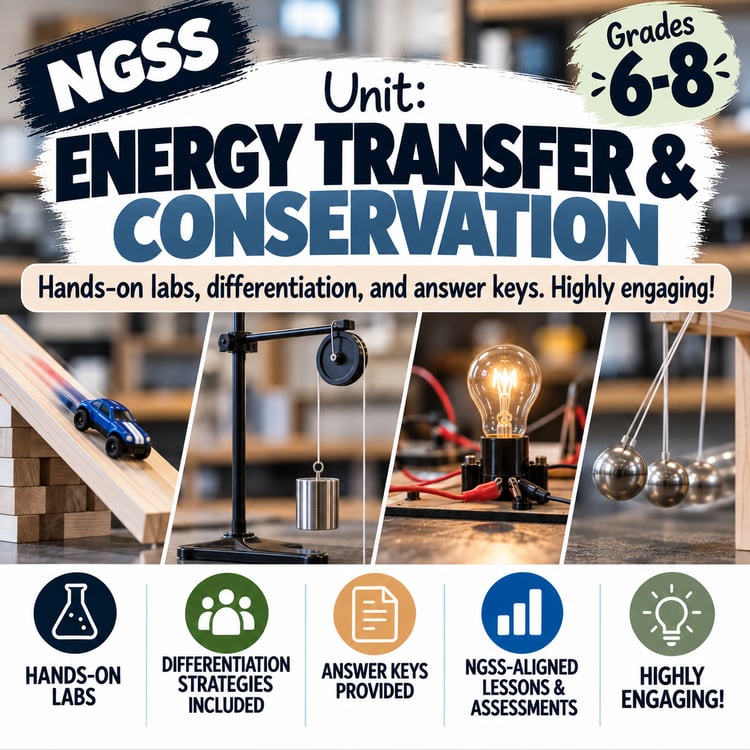
What makes a moving object powerful? Where does stored energy come from? In this hands-on, NGSS-aligned unit for grades 6–8, students answer those questions with evidence. They crash toy cars into cups to measure kinetic energy, graph how mass and speed change it, and drop golf balls into flour to see energy stored by height. They also explore the hidden energy between magnets and charged balloons. The unit ends with a marble coaster challenge, where students build an energy model and defend it with a Claim–Evidence–Reasoning (CER) explanation.
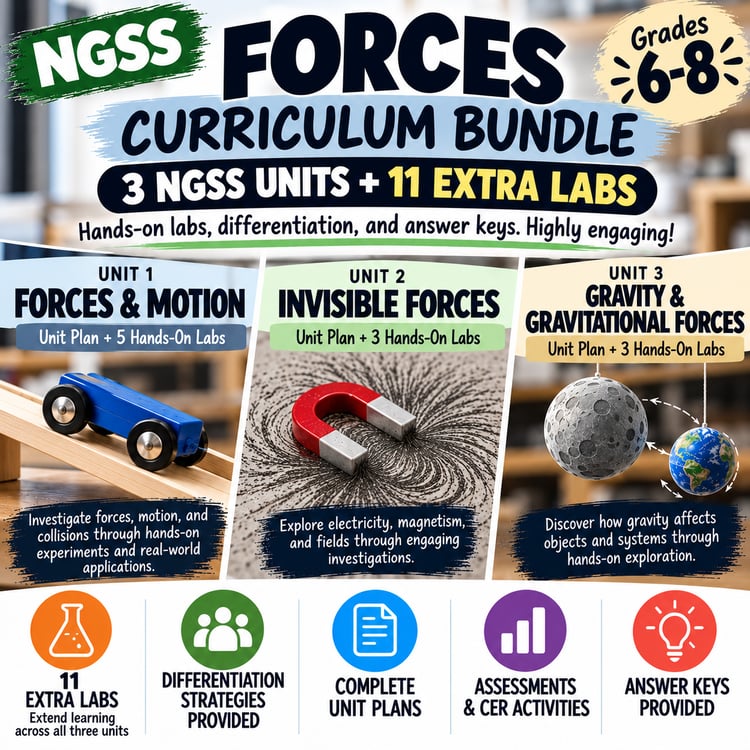
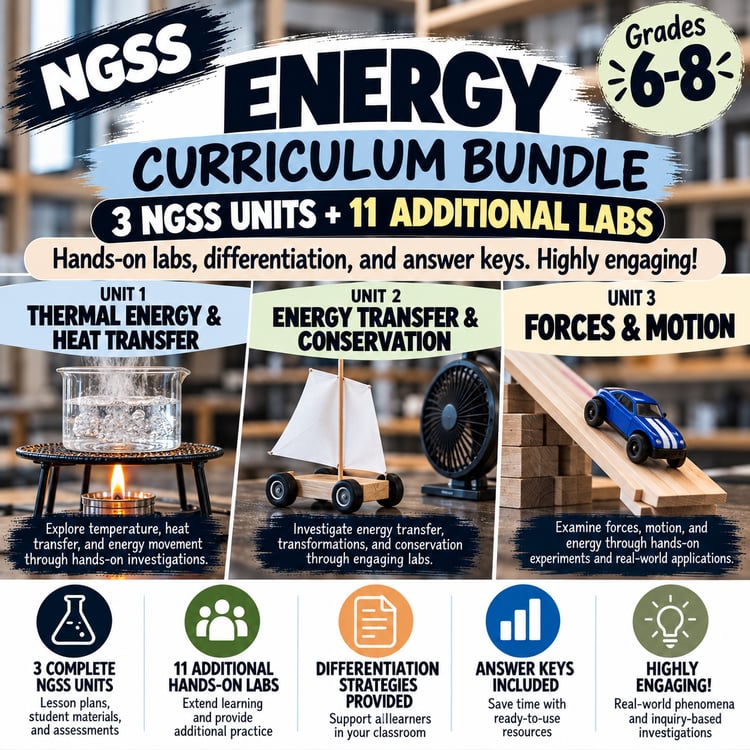
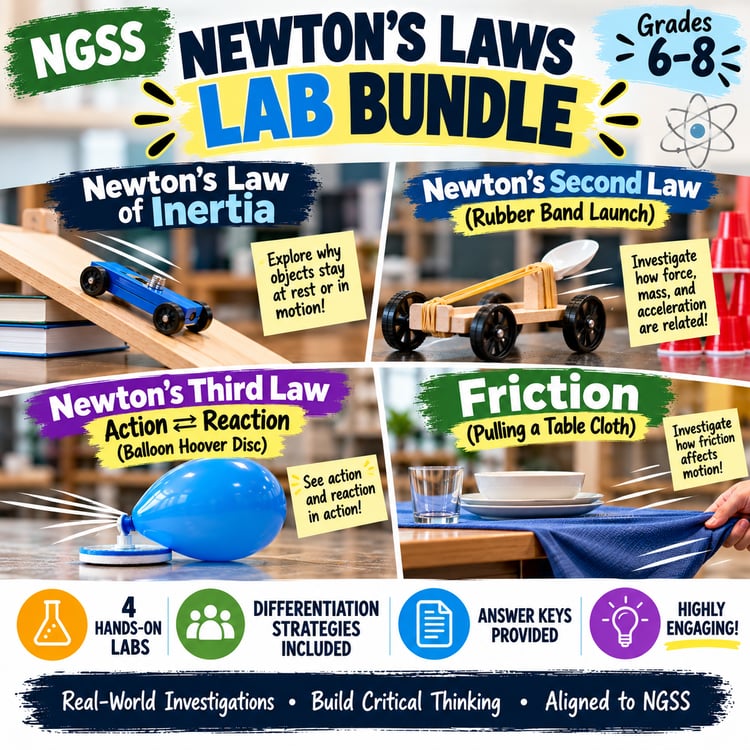
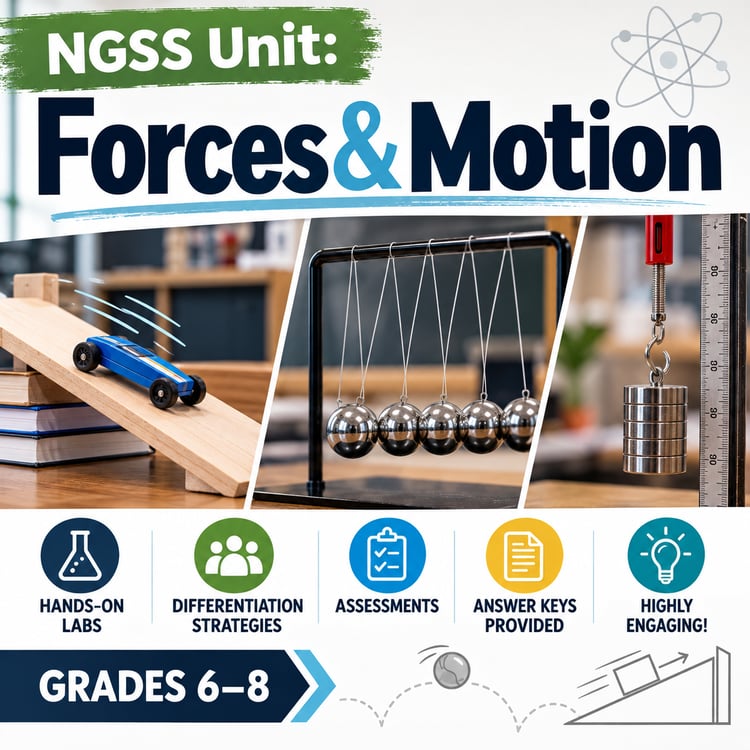
The unit picks up right where Forces & Motion ends and reuses many of the same materials, including toy cars, washers, ramps and meter sticks. That keeps your year's curriculum flowing from one unit to the next.
Driving Question: How do motion and position affect the energy of objects and systems?
What's Included
- Teacher Guide (28 pages): unit storyline, unit at a glance, NGSS standards with a lesson-by-lesson table, routines, and a one- to two-page plan for each lesson. Each plan has a timed lesson flow, "Listen for" and "Watch for" notes, and an exit ticket.
- 10 Lessons (about 65 minutes each): energy stations, kinetic energy investigations, graphing linear and nonlinear relationships, gravitational, magnetic and electric potential energy, and a final model + CER
- Student Notes for every lesson, including an Energy Model Rubric and a CER Rubric
- Exit Tickets for Lessons 1–9, printed 3 per page
- End-of-Unit Written Assessment (27 points): multiple choice, data analysis, graph interpretation, short response, and energy bar modeling
- Answer Keys: Student Notes, Exit Tickets (sample responses at three levels), and the End-of-Unit Assessment
- Printable Station Cards for Lessons 1, 7, and 8
- Read Me First guide with pacing, a full materials list, and teaching tips
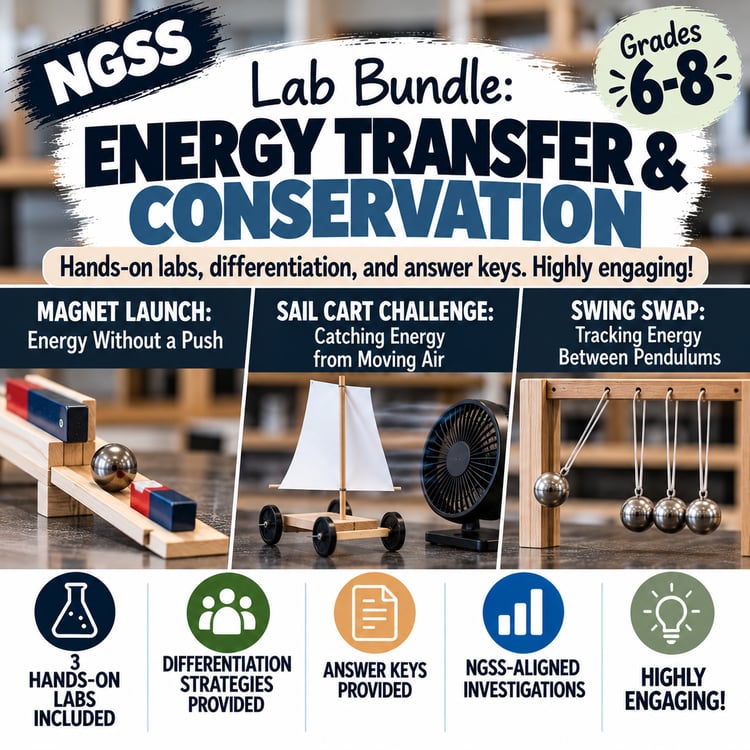
Pair It With the Four Energy Labs (included)
Each lab comes with a Teacher Guide, Student Lab Sheet, and Answer Key. Use them alongside the matching lessons for deeper practice, or on their own as review.
- Cup Crash: Kinetic Energy and Mass: students add washers to a toy car and measure how far it pushes a cup. Pairs with Lessons 3 and 5.
- Speed Zone: Kinetic Energy and Speed: students time a car through a 100 cm speed zone and discover that doubling the speed makes the cup slide about four times as far. Pairs with Lessons 4 and 5.
- Crater Drop: Gravitational Potential Energy: students drop a golf ball into flour from different heights and model the Earth–ball system. Pairs with Lessons 6–7.
- Magnet Gap: Magnetic Potential Energy: students compare repelling and attracting magnets to see how distance changes stored energy. Pairs with Lesson 8.
Built-In Differentiation
Every lesson and lab includes a Differentiation Menu with options for:
- ELL / Multilingual Learners: visual vocabulary, sentence frames, partner rehearsal, and labeled drawings accepted as evidence
- Neurodivergent Learners: predictable routines, visual timers, clear lab roles, chunked tasks, and choice in how to respond
- Advanced / Honors: predict from graphs, compare data sets, critique sources of error, and defend claims against counter-arguments
All students work toward the same performance expectations. Differentiation changes how they get there, not the standard they're held to. Always follow students' IEPs and 504 plans.
Standards: NGSS MS-PS3-1, MS-PS3-2 • DCI PS3.A, PS3.C • SEPs: Analyzing & Interpreting Data, Developing & Using Models • CCCs: Scale, Proportion & Quantity; Systems & System Models
Terms of Use
This purchase is for single-classroom use only. Please do not share, post, or distribute this resource. If colleagues would like to use it, additional licenses are available at a discount. See the included Terms of Use for full details.
Questions?
If you have questions or need support with this resource, please reach out to NextWave Science at nextwavescience@gmail.com before leaving feedback. I'm happy to help! Thank you for bringing hands-on science into your classroom.